As we approach the end of 2024, reviewing your retirement goals is a prime opportunity. One essential aspect to consider? Required Minimum Distributions (RMDs).

RMDs are a cornerstone of many retirement strategies, yet their complex rules and tax implications can make them challenging to navigate. Planning ahead can help you stay on track and optimize your retirement withdrawals.

With new RMD regulations set for 2025, understanding these changes can help you optimize your financial plans. In this blog, we’ll break down the fundamentals of RMDs, highlight the upcoming updates, and share practical tips to help you manage your distributions effectively.

Understanding Required Minimum Distributions (RMDs) 

RMDs are mandatory withdrawals from certain retirement accounts once you reach a specific age. These withdrawals, which have grown tax-deferred over time, help retirement funds become taxable income. RMDs apply to the following accounts:

  • Traditional IRAs
  • SEP IRAs
  • SIMPLE IRAs
  • 401(k), 403(b), and 457(b) plans (excluding Roth 401(k)s).

The annual amount you must withdraw is calculated based on your age, life expectancy, and account balance at the end of the previous year. Failing to take the required amount can result in significant tax penalties. Let’s take a look at key changes to look for in 2025.

Key Changes to RMDs for 2025

As retirement planning continues to evolve, the latest updates to RMDs reflect efforts to provide more flexibility and tax advantages for retirees. The SECURE 2.0 Act introduced several new rules that impact how and when retirees must take distributions from certain accounts and adjust penalties. Below are the main changes for 2025 and beyond, designed to give retirees more control over their withdrawals and tax planning:

1. Increased RMD Starting Age: The age at which individuals must begin taking RMDs has been raised. In 2023, the age increased from 72 to 73, and it will further rise to 75 beginning in 2033.

2. Reduced Penalties for Missed RMDs: The penalty for failing to take an RMD has been reduced from 50% to 25% of the missed amount. If the missed RMD is corrected promptly, the penalty can decrease to 10%. Remember that the IRS has waived penalties for failing to take RMDs for certain inherited IRAs. For more information, see here.

3. Elimination of RMDs for Roth 401(k)s: Previously, Roth 401(k) accounts were subject to RMDs. Under the new rules, RMDs are no longer required for Roth 401(k)s, aligning them with Roth IRAs. It’s important to note that post-death minimum distribution rules, which also apply to Roth IRAs, still apply.

4. Annuities and RMDs: The SECURE 2.0 Act introduces provisions to make certain annuities more attractive within retirement plans. It allows certain types of annuity payments and clarifies qualifying longevity annuity contracts (QLACs) rules, including increasing the dollar limit to $200,000 and removing the 25% account balance cap.

5. RMDs for Surviving SpousesSurviving spouses can now elect to be treated as the deceased account owner for RMD purposes, potentially delaying the start of RMDs if the surviving spouse is younger than the deceased. This election is irrevocable and requires notifying the account administrator.

6. Qualified Charitable Distributions (QCDs): The annual limit for QCDs, which count toward RMDs, is now indexed for inflation, starting at $105,000 in 2024. A one-time QCD of up to $50,000 is also allowed through certain charitable remainder trusts or gift annuities.

Why These Changes Matter 

The recent adjustments to RMD rules are more than just technical updates—they bring valuable flexibility that can significantly benefit retirees. Here are some of the primary advantages of these changes:

1. Enhanced Growth Potential for Retirement Savings: Delaying RMDs means retirement accounts can stay invested and grow tax-deferred for longer. This change can be particularly beneficial for retirees who do not immediately need income from their retirement accounts, as it gives their investments more time to compound, potentially increasing their overall retirement nest egg.

2. More Control Over Roth 401(k) Withdrawals: With the removal of RMD requirements for Roth 401(k) accounts, retirees now have the same control as they do with Roth IRAs. This means they can choose when or if they want to withdraw from these accounts, providing a tax-free income source that can be preserved and used strategically within their broader retirement plan.

3. Reduced Penalties for Missed RMDs: The lower penalties for missed RMDs, combined with an opportunity for further reduction if corrected promptly, provide relief for retirees who may inadvertently miss their RMD deadline. This change reduces the financial impact of an honest mistake, making the RMD system more forgiving and manageable.

4. Options for Legacy and Charitable Planning: The increased flexibility around QCDs and the inflation-indexed annual limits make charitable giving a viable strategy for retirees looking to meet their RMD requirements while supporting causes they care about.

How to Calculate Your RMD in 2025

Calculating your Required Minimum Distribution (RMD) in 2025 is straightforward, with a few key steps. The IRS provides tables that determine your life expectancy factor based on your age, which you’ll use to calculate your RMD. Here’s a step-by-step guide:

  1. Determine Your Account Balance: Start with your retirement account balance as of December 31st of the previous year. This amount will serve as the basis for your RMD calculation.
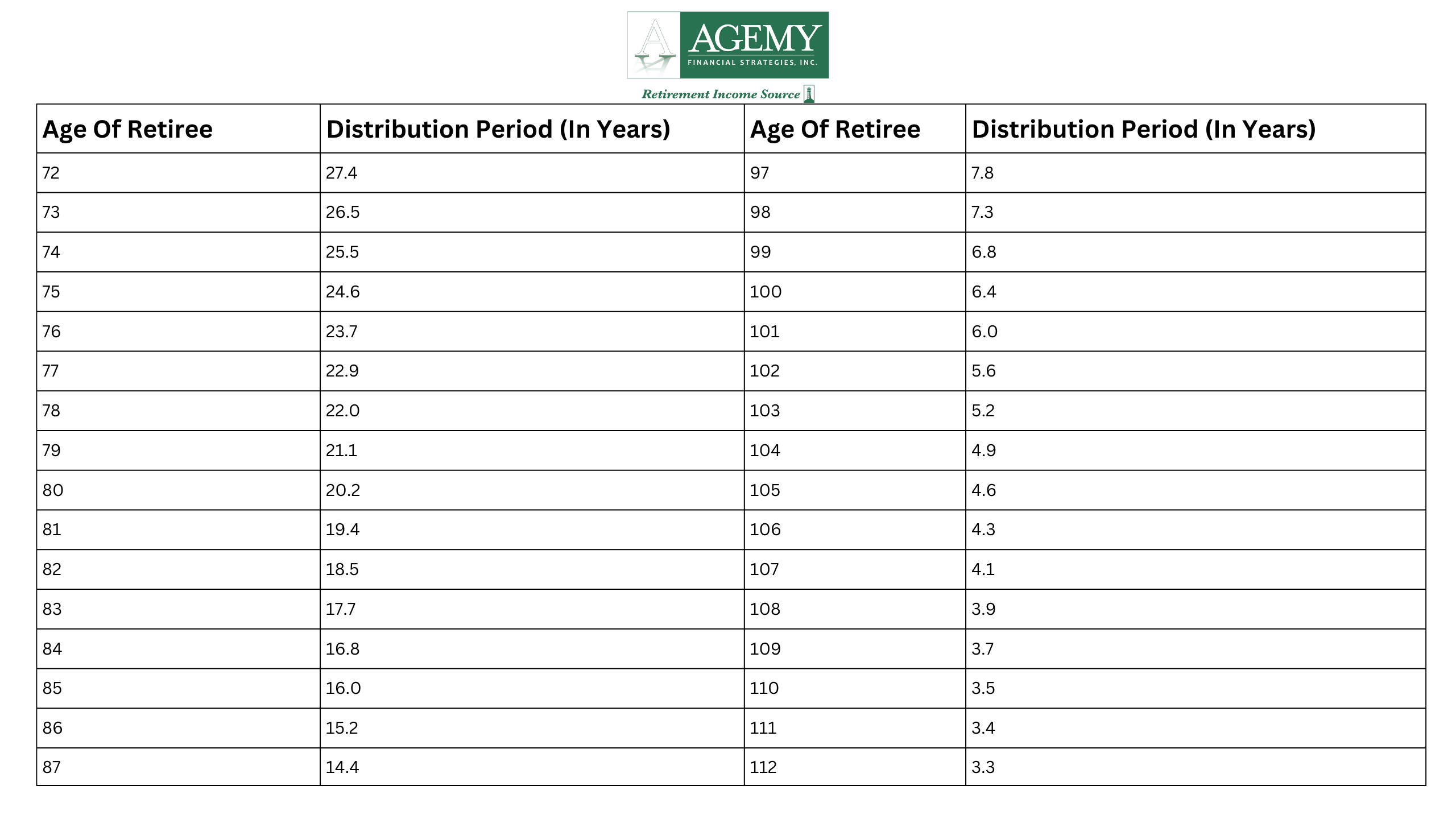
  2. Find Your Life Expectancy Factor: Using the IRS Uniform Lifetime Table, locate the life expectancy factor corresponding to your age. This factor is updated periodically, so make sure you use the latest table for accuracy.
  3. Calculate the RMD: Divide your account balance by the life expectancy factor. The result is the minimum amount you must withdraw from your account for the year.

Below is a portion of the IRS Uniform Lifetime Table to illustrate life expectancy factors by age:
Source: Internal Revenue Service (IRS)

Common Mistakes to Avoid

Navigating RMDs can be challenging; even small missteps can have significant financial consequences. Being mindful of some of the most frequent pitfalls can help you protect your retirement savings and maximize the benefits of these withdrawals. Here are three key mistakes to watch out for when planning your RMDs:

  • Missing the Deadline: Missing your RMD deadline can lead to hefty penalties. Know your required distribution date and withdraw the correct amount.
  • Not Planning for Taxes: RMDs can push you into a higher tax bracket. Working with a fiduciary advisor can help you create a strategy to manage these distributions in a tax-efficient manner.
  • Overlooking Beneficiary Designations: Your beneficiaries will have their own RMD requirements based on the inherited RMD rules. Regularly review your designations to align with your estate and financial goals.

Working with a fiduciary can help ensure that your RMDs are managed to align with your financial goals and help you make the most of your retirement savings.

Working With an Advisor 
New tax laws, potential shifts in Medicare premiums, income bracket adjustments, and evolving rules around charitable giving mean that your retirement income strategy may need some fine-tuning. Staying informed is essential for making the most of these adjustments and preparing your RMDs effectively.

At Agemy Financial Strategies, we provide personalized insights into your RMD responsibilities and tax-efficient strategies to help you manage these distributions. Our fiduciary advisors are dedicated to helping you meet your RMD obligations while optimizing your financial situation within IRS guidelines. We’ll work closely with you to assess your income needs in retirement and develop a plan that aligns with your financial goals and adapts to new regulations.

As part of our commitment to supporting your financial well-being, we offer tools like our free online RMD Calculator to help you estimate your required withdrawals. For more details on our services, please see our service offerings page here.

Final Thoughts

Navigating RMDs effectively requires staying informed about changing rules and understanding how these mandatory withdrawals impact your retirement income. Planning, keeping abreast of IRS updates, and consulting with financial advisors can help ensure that RMDs work in your favor while minimizing tax liabilities.

At Agemy Financial Strategies, our team is here to provide personalized guidance and support tailored to your financial needs and goals. Let us help ensure your tax obligations are appropriately managed throughout your retirement.

Preparing for 2025 doesn’t have to be overwhelming—let us help guide you toward a well-planned and prosperous new year. Contact us today to schedule your complimentary consultation.


Disclaimer: The information provided in this blog is for educational purposes only and is not intended as specific financial or investment advice. Each individual’s financial situation is unique, and any changes to your retirement income strategy or RMD planning should be discussed with a qualified financial advisor. We recommend consulting with our team at Agemy Financial Strategies to ensure your decisions align with your financial goals, risk tolerance, and the latest IRS regulations.


Financial independence often takes center stage in retirement planning for high-net-worth individuals (HNWIs), with 80% prioritizing it as their top personal finance goal. Building a portfolio that generates reliable income while preserving wealth is essential to achieving that independence.

In this blog, we’ll explore key strategies to help you maximize income from your investments and help a steady cash flow. We’ll also discuss how to strike the right balance between growth and income and how our fiduciary advisors can help tailor a plan that aligns with your unique financial needs and retirement goals. Here’s what you need to know.

What is Cash Flow Investment? 

Cash flow investing is a strategy focused on generating a steady and reliable income stream from various assets. Unlike growth-oriented investments, which aim primarily at capital appreciation, cash-flow investments help prioritize regular income through dividends, interest payments, or rental income.

Typical cash flow investments include dividend-paying stocks, bonds, real estate, and certain types of annuities. For HNWI approaching retirement, cash flow investments are essential for helping maintain a consistent income and meet living expenses without selling off assets. This strategy helps promote liquidity while preserving long-term financial security.

When selecting cash flow investments, HNWIs should carefully evaluate factors like:

  • Return on investment.
  • Payment frequency.
  • Tax efficiency.
  • Principal growth potential.
  • Risk management.

Let’s take a closer look at some of the best cash flow investments for HNWIs. Five options to discuss with your advisor include:

1. Real Estate Investments

Real estate investments, whether through direct ownership or Real Estate Investment Trusts (REITs), offer the potential for passive income and long-term growth. Rental properties, for example, can provide a steady monthly cash flow, while REITs give investors access to the real estate market without needing hands-on management.

Here’s why many investors choose to include real estate in their portfolios:

  • Steady Cash Flow: Investing in rental properties or certain real estate funds can generate consistent income through tenant payments.
  • Diversification: If your portfolio already includes stocks or bonds, adding real estate introduces diversification. Real estate tends to move independently from other asset classes, offering a different risk and return profile.
  • Tax Benefits: Owning rental property comes with tax advantages. For instance, depreciation on the property can reduce your taxable income. In some cases, property losses can be used to offset other taxes.
  • Tangible Asset: Unlike some investments that exist only on paper, real estate is a tangible asset. Even if property values fluctuate, it remains useful and can continue to generate income through rent.

Before investing in REITs, it’s essential to consult with an investment professional, such as a fiduciary advisor. They can help you evaluate potential risks and ascertain whether REITs align with your financial objectives and overall investment strategy.

2. Dividend-Paying Stocks

Dividend-paying stocks offer a combination of income and growth potential. These stocks represent shares of companies that regularly distribute a portion of their profits to shareholders in the form of dividends. For HNWIs, dividend stocks can provide a steady stream of income while still allowing for capital appreciation over time.

One of the greatest benefits of dividend-paying stocks is that they have historically outperformed their non-dividend-paying counterparts during market volatility. A report by Hartford Funds showed that from 1940 to 2023, dividend income contributed an average of 34% to the total return of the broader market. This makes them an appealing choice for retirees who want to protect their wealth in unpredictable markets.

While dividend-paying stocks can be valuable to a retirement income strategy, they are not without risk. Consulting with an advisor can help determine whether this investment aligns with your financial goals.

3. Bonds and Fixed-Income Securities 

Bonds are a reliable choice for generating a steady income. Government, corporate, and municipal bonds offer regular interest payments, providing predictable cash flow. With interest rates stabilizing in 2024, bonds remain viable for income-seeking investors. Beyond bonds, other fixed-income options include:

  • Certificates of Deposit (CDs): CDs are low-risk time deposits from banks and credit unions, offering fixed interest over a set term. While less flexible than bonds, they’re FDIC-insured up to $250,000, making them a safe investment.
  • Preferred Stocks: Preferred stocks are hybrids offering fixed dividends like bonds and potential capital appreciation. While they can provide higher yields, they come with more risk since dividends aren’t guaranteed.
  • Bond Funds: These offer diversification by investing in a mix of bonds (government, corporate, municipal). Bond funds provide a diversified income stream but may come with management fees and interest rate risk.

Collaborating with a fiduciary adds another layer of benefits and security. At Agemy Financial Strategies, our fiduciaries can assist you in carefully evaluating each investment opportunity and optimizing your financial strategy for retirement.

4. Consider Annuities for Guaranteed Income

Certain annuities can be a valuable addition to a portfolio for HNWIs looking for guaranteed income. An annuity is a contract with an insurance company that guarantees current or future payments in exchange for a premium or series of premiums.

Fixed Annuities offer guaranteed interest rates and predictable income payments, providing stability that isn’t influenced by market fluctuations. They are ideal for conservative investors who want a reliable cash flow throughout retirement without worrying about market volatility.

5. Dollar-Cost Averaging

Dollar-cost averaging requires the investor to invest the same amount of money in the same stock on a regular basis over time, regardless of the share price. The number of shares purchased each month will vary depending on the share price of the investment at the time of the purchase. The idea being when the share value rises, your money will buy fewer shares per dollar invested. When the share price is down, your money will get you more shares. Over time, the average cost per share you spend should compare quite favorably with the price you would have paid if you had tried to time it.

Partnering with an advisor can provide valuable guidance in making the right choice.

Having a Tax-Efficient Strategy

Maximizing income from your investments isn’t just about how much you earn but also how much you keep. Tax-efficient investing is vital in maintaining steady cash flow, especially for HNWIs who may be subject to higher tax brackets.

  • Utilizing Tax-Advantaged Accounts: Contributing to tax-advantaged accounts such as IRAs, 401(k)s, or Roth IRAs can help minimize the tax impact on your investment income. While traditional IRAs and 401(k)s allow for tax-deferred growth, Roth IRAs offer tax-free withdrawals in retirement, making them an excellent option for generating tax-efficient income later in life.
  • Tax-Loss Harvesting: This strategy can help reduce the taxes you owe on your investment gains. This involves selling underperforming investments at a loss to offset capital gains from other assets. By strategically harvesting losses, you can lower your overall tax bill and retain more investment income.

Creating a Withdrawal Strategy

Maintaining income without prematurely depleting your investment portfolio is key for HNWIs looking to develop a sustainable withdrawal strategy. Your approach will depend on your retirement goals and risk tolerance. A dynamic withdrawal strategy offers flexibility by adjusting withdrawals based on portfolio performance and market conditions.

When markets are strong, you can increase withdrawals slightly; reducing withdrawals helps preserve capital during downturns. Working with a fiduciary advisor can help you implement a dynamic strategy that balances your immediate income needs with the long-term health of your portfolio.

Work with a Fiduciary to Tailor Your Investment Strategy 

Each investor’s financial situation, risk tolerance, and retirement goals are unique. At Agemy Financial Strategies, we pride ourselves on providing personalized, fiduciary-based advice that prioritizes your best interests. Here are some of the areas we can help you with:

  • Investment Management: Our fiduciaries perform extensive research and analysis of financial instruments and market trends to make well-informed investment decisions. We craft and implement tailored strategies, allocate assets effectively, and manage risk to help optimize your portfolio.
  • Financial Planning: We offer financial services that consider your entire financial picture. This includes assessing your income needs and developing a strategy to generate steady cash flow while preserving your wealth for future generations.
  • Risk Management: As you approach retirement, managing risk becomes even more critical. Your advisor can help you optimize your asset allocation to meet your income needs while minimizing the risk of portfolio depletion.
  • Ongoing Portfolio Monitoring: Maximizing income from your investments requires ongoing portfolio monitoring and adjustments. We continuously review your investments to ensure they align with your financial goals, market conditions, and evolving retirement needs.

Final Thoughts

Maximizing income from your investments is essential for ensuring a successful and financially secure retirement, especially for high-net-worth individuals approaching this important life stage. At Agemy Financial Strategies, we craft tailored plans to meet your unique investment goals, helping provide stability and growth. Our team of dedicated fiduciary advisors is committed to guiding you through the complexities of investment management with advice and ongoing support.

Take the next step toward a secure financial future—contact us today to schedule your complimentary consultation.


Disclaimer: The information provided in this blog is for educational purposes only and should not be considered as specific investment advice. While we aim to provide valuable insights, every individual’s financial situation is unique, and changes to your investment portfolio or financial strategies should only be made after consulting with a qualified financial advisor. We encourage you to contact our team before making any investment decisions to help ensure they align with your personal goals and risk tolerance.

For high-net-worth individuals (HNWIs) nearing retirement, preparing for tax season now can make a significant difference in preserving your wealth.

Wealthy Americans contribute a significant share of the nation’s tax burden. According to a recent study, the top 1% of earners will contribute 23.9% of all taxes despite earning only 20.1% of total income. This disparity highlights the need for strategies that minimize tax liabilities and protect your hard-earned wealth.

Focusing on tax efficiency in your portfolio can help optimize your wealth preservation strategy and avoid surprises when tax laws shift. From smart asset location strategies to planning for long-term capital gains, now is the time to take proactive steps to keep more of what you’ve earned. Here’s what you need to know.

Why Tax Efficiency Matters in Retirement Planning 

Without proper planning, taxes can erode a significant portion of your retirement income. According to the Tax Foundation, high-income individuals in the U.S. can face marginal tax rates as high as 37% at the federal level. Factors in state taxes, capital gains taxes, possible future law changes, and the need for a tax-efficient portfolio become clear. For retirees, particularly HNWIs, managing tax liability is more than compliance; it’s about creating sustainable wealth for years. A tax-efficient approach can help you:

  • Minimize taxes on investment returns.
  • Protect long-term gains.
  • Align your portfolio with changing tax policies.

Understanding how and where your assets are invested can be key to achieving this. Let’s look at some strategies to help you prioritize tax efficiency.

1. Smart Asset Location: Putting Investments in the Right Accounts
One of the most powerful tax efficiency strategies is asset location, which involves strategically placing different types of assets in specific accounts to help minimize tax liability. Asset location is separate from asset allocation, which involves diversifying investments. Instead, asset location focuses on which accounts hold which investments.

Tax-Deferred Accounts (e.g., 401(k), Traditional IRA)

Tax-deferred accounts are ideal for investments that generate income or frequent dividends, as these will be taxed later when withdrawn, typically in retirement. Examples include bonds (interest payments), actively managed funds, and real estate investment trusts (REITs).

Taxable Accounts

Taxable brokerage accounts can be better suited for investments that are tax-efficient by nature, such as:

  • Certain individual stocks (held for long-term gains).
  • Certain index funds (low turnover and fewer taxable events).
  • Certain municipal bonds (potentially tax-free interest income).

Tax-Free Accounts (e.g., Roth IRA, Roth 401(k))

Tax-free accounts, where withdrawals in retirement are generally not taxed, are potentially valuable for assets with the potential for high growth, such as:

  • Certain stocks are expected to appreciate significantly over time.
  • Certain mutual funds or ETFs.

Placing your investments in the right accounts can help reduce the taxes you owe over your lifetime. As always, it’s important to consult your advisor to see if these investments are a good fit for you and your specific situation.

2. Leveraging Long-Term Capital Gains for Greater Tax Efficiency

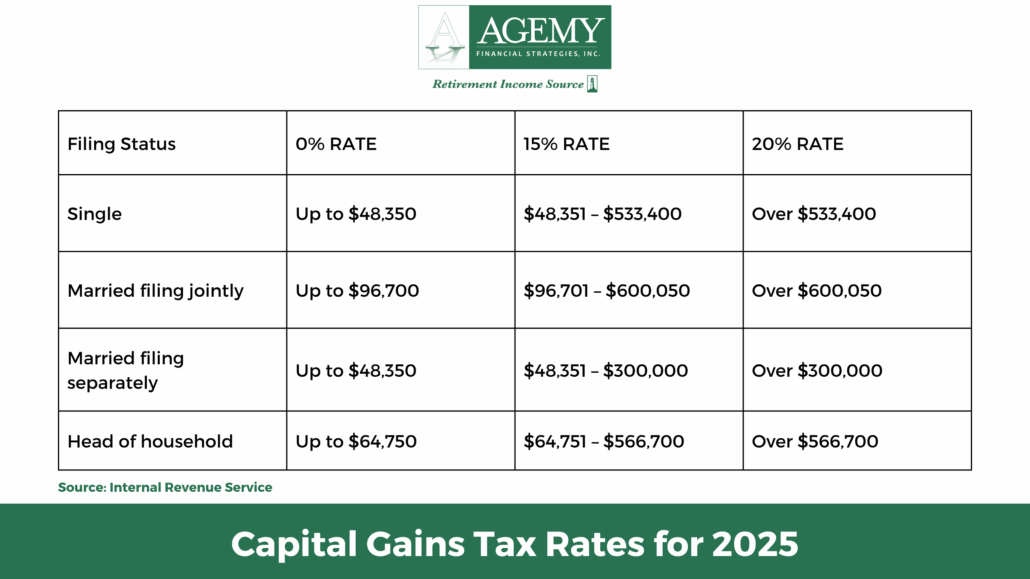
Understanding the distinction between short-term and long-term capital gains is essential when creating a tax-efficient portfolio. Short-term capital gains (on assets held less than one year) are taxed as ordinary income, while long-term capital gains (on assets held for more than a year) enjoy significantly lower rates. The table below shows the capital gains tax rates for 2025:

Capital gains tax


For HNWIs, long-term strategies are particularly important. Here are some ways to help you optimize:

  • Hold Investments Longer: You can benefit from lower long-term rates by holding onto assets for over a year.
  • Tax-Loss Harvesting: Offsetting capital gains with losses from other investments can help reduce your taxable income.
  • Gifting Appreciated Assets: Gifting long-term appreciated assets to family members in lower tax brackets can help minimize overall tax exposure while supporting your loved ones.

3. Proactively Planning for Future Tax Law Changes 

Tax laws can change, and for HNWIs, staying informed and flexible is key to tax efficiency. For instance, the Tax Cuts and Jobs Act (TCJA) lowered tax rates but will sunset at the end of 2025, which could mean higher taxes for many individuals. Being proactive now can help mitigate the impact of these changes later. Here are some key strategies to consider:

  • Roth Conversions: Converting assets from a traditional IRA to a Roth IRA can help you pay taxes at today’s lower rates, locking in tax-free growth for the future.
  • Diversifying Tax Buckets: Balancing your investments across taxable, tax-deferred, and tax-free accounts can help you remain flexible as tax laws change.
  • Monitor Income Thresholds: Keeping taxable income below certain thresholds can help you avoid the Medicare surtax and other income-related taxes.

Working closely with a fiduciary advisor who monitors the tax landscape can help ensure you remain one step ahead.

4. Maximizing Retirement Account Contributions

Retirement accounts provide valuable tax advantages, and maximizing your contributions now can lead to significant long-term benefits. For 2025, contribution limits are as follows:

  • 401(k): Up to $23,500, with an additional $7,500 catch-up contribution for those aged 50 and older.
  • IRA: Up to $7,000, with an additional $1,000 catch-up contribution for individuals aged 50 and older.

Maximizing contributions to tax-advantaged accounts can defer income taxes and allow your investments to grow tax-deferred or tax-free, depending on the account type. To make the most of these opportunities, consider consulting a fiduciary advisor who can help you develop a strategy tailored to your financial goals.

5. Prioritizing Tax-Efficient Investments

Certain types of investments are inherently more tax-efficient than others, making them more ideal for taxable accounts.

  • Index Funds and ETFs: These investments are known for low turnover and fewer capital gains distributions, helping reduce your tax burden.
  • Municipal Bonds: For investors in high tax brackets, municipal bonds offer interest income often exempt from federal taxes (and sometimes state taxes).
  • Tax-Managed Funds: These funds are actively managed to help minimize capital gains distributions, making them suitable for taxable accounts.

Prioritizing tax-efficient investments can help you enhance after-tax returns and preserve more of your wealth.

The Importance of Proactive Tax Planning 

Tax efficiency is not a once-a-year activity; it requires a year-round, proactive approach. At Agemy Financial Strategies, we pride ourselves on providing personalized, fiduciary-based advice that prioritizes your best interests. Here are some areas where we can help:

  • Continuously monitor the tax implications of your investments to identify opportunities to save.
  • Adjust your strategies as tax laws evolve, allowing your portfolio to remain optimized under current regulations.
  • Implement charitable giving, Roth conversions, and tax-loss harvesting techniques at the right time to help minimize your tax burden.
  • Provide personalized guidance to help you balance short-term needs with long-term tax planning strategies tailored to your financial goals.

Our team is dedicated to helping you incorporate tax efficiency into your retirement planning strategy, which can help you prepare for tax season and a tax-optimized future.

Plan Now for a Tax-Efficient Retirement

Getting ahead of tax season means more than filing your return early. It means building a retirement portfolio to minimize taxes and maximize long-term wealth. Focusing on strategies like asset location, long-term capital gains, and proactive planning can help you take control of your tax liability and create a more stable financial future.

At Agemy Financial Strategies, we help individuals optimize their portfolios for tax efficiency. Our fiduciaries understand the importance of wealth preservation and proactive planning for HNWIs approaching retirement.

Contact us today to learn more about how we can help you navigate tax-efficient strategies tailored to your financial goals.


Disclaimer: This blog is for informational purposes only and does not constitute financial, tax, or investment advice. The content is not intended to be a solicitation or recommendation for any specific financial product or service. Tax laws and regulations are subject to change, and the information presented may not apply to your individual circumstances. Please consult the fiduciary advisors at Agemy Financial Strategies for personalized advice regarding your financial situation.