Posts

For high-net-worth individuals (HNWIs) nearing retirement, preparing for tax season now can make a significant difference in preserving your wealth.

Wealthy Americans contribute a significant share of the nation’s tax burden. According to a recent study, the top 1% of earners will contribute 23.9% of all taxes despite earning only 20.1% of total income. This disparity highlights the need for strategies that minimize tax liabilities and protect your hard-earned wealth.

Focusing on tax efficiency in your portfolio can help optimize your wealth preservation strategy and avoid surprises when tax laws shift. From smart asset location strategies to planning for long-term capital gains, now is the time to take proactive steps to keep more of what you’ve earned. Here’s what you need to know.

Why Tax Efficiency Matters in Retirement Planning 

Without proper planning, taxes can erode a significant portion of your retirement income. According to the Tax Foundation, high-income individuals in the U.S. can face marginal tax rates as high as 37% at the federal level. Factors in state taxes, capital gains taxes, possible future law changes, and the need for a tax-efficient portfolio become clear. For retirees, particularly HNWIs, managing tax liability is more than compliance; it’s about creating sustainable wealth for years. A tax-efficient approach can help you:

  • Minimize taxes on investment returns.
  • Protect long-term gains.
  • Align your portfolio with changing tax policies.

Understanding how and where your assets are invested can be key to achieving this. Let’s look at some strategies to help you prioritize tax efficiency.

1. Smart Asset Location: Putting Investments in the Right Accounts

One of the most powerful tax efficiency strategies is asset location, which involves strategically placing different types of assets in specific accounts to help minimize tax liability. Asset location is separate from asset allocation, which involves diversifying investments. Instead, asset location focuses on which accounts hold which investments.

Tax-Deferred Accounts (e.g., 401(k), Traditional IRA)

Tax-deferred accounts are ideal for investments that generate income or frequent dividends, as these will be taxed later when withdrawn, typically in retirement. Examples include bonds (interest payments), actively managed funds, and real estate investment trusts (REITs).

Taxable Accounts

Taxable brokerage accounts can be better suited for investments that are tax-efficient by nature, such as:

  • Certain individual stocks (held for long-term gains).
  • Certain index funds (low turnover and fewer taxable events).
  • Certain municipal bonds (potentially tax-free interest income).

Tax-Free Accounts (e.g., Roth IRA, Roth 401(k))

Tax-free accounts, where withdrawals in retirement are generally not taxed, are potentially valuable for assets with the potential for high growth, such as:

  • Certain stocks are expected to appreciate significantly over time.
  • Certain mutual funds or ETFs.

Placing your investments in the right accounts can help reduce the taxes you owe over your lifetime. As always, it’s important to consult your advisor to see if these investments are a good fit for you and your specific situation.

2. Leveraging Long-Term Capital Gains for Greater Tax Efficiency

Understanding the distinction between short-term and long-term capital gains is essential when creating a tax-efficient portfolio. Short-term capital gains (on assets held less than one year) are taxed as ordinary income, while long-term capital gains (on assets held for more than a year) enjoy significantly lower rates. The table below shows the capital gains tax rates for 2025:
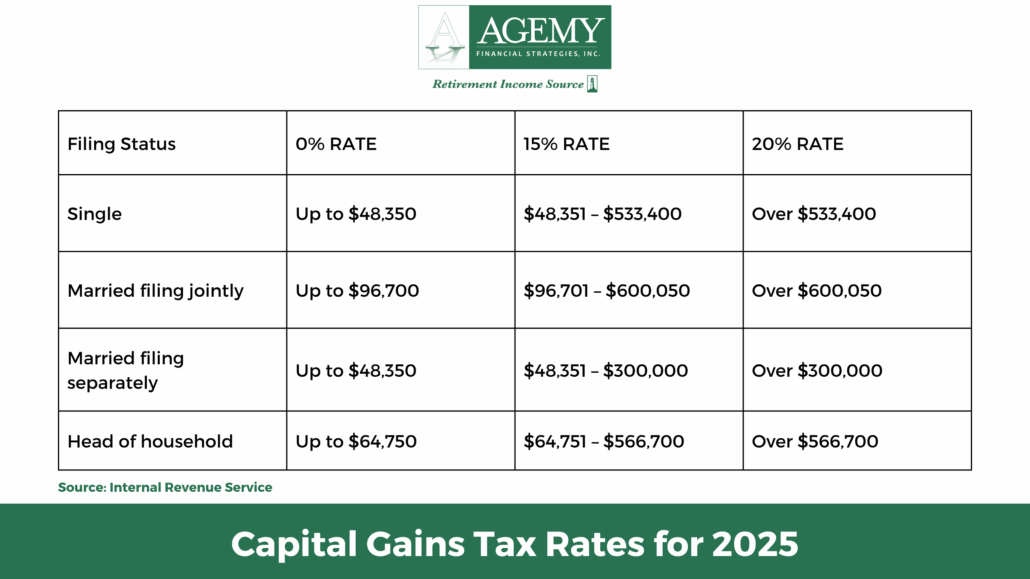
Capital gains tax


For HNWIs, long-term strategies are particularly important. Here are some ways to help you optimize:

  • Hold Investments Longer: You can benefit from lower long-term rates by holding onto assets for over a year.
  • Tax-Loss Harvesting: Offsetting capital gains with losses from other investments can help reduce your taxable income.
  • Gifting Appreciated Assets: Gifting long-term appreciated assets to family members in lower tax brackets can help minimize overall tax exposure while supporting your loved ones.

3. Proactively Planning for Future Tax Law Changes 

Tax laws can change, and for HNWIs, staying informed and flexible is key to tax efficiency. For instance, the Tax Cuts and Jobs Act (TCJA) lowered tax rates but will sunset at the end of 2025, which could mean higher taxes for many individuals. Being proactive now can help mitigate the impact of these changes later. Here are some key strategies to consider:

  • Roth Conversions: Converting assets from a traditional IRA to a Roth IRA can help you pay taxes at today’s lower rates, locking in tax-free growth for the future.
  • Diversifying Tax Buckets: Balancing your investments across taxable, tax-deferred, and tax-free accounts can help you remain flexible as tax laws change.
  • Monitor Income Thresholds: Keeping taxable income below certain thresholds can help you avoid the Medicare surtax and other income-related taxes.

Working closely with a fiduciary advisor who monitors the tax landscape can help ensure you remain one step ahead.
4. Maximizing Retirement Account Contributions

Retirement accounts provide valuable tax advantages, and maximizing your contributions now can lead to significant long-term benefits. For 2025, contribution limits are as follows:

  • 401(k): Up to $23,500, with an additional $7,500 catch-up contribution for those aged 50 and older.
  • IRA: Up to $7,000, with an additional $1,000 catch-up contribution for individuals aged 50 and older.

Maximizing contributions to tax-advantaged accounts can defer income taxes and allow your investments to grow tax-deferred or tax-free, depending on the account type. To make the most of these opportunities, consider consulting a fiduciary advisor who can help you develop a strategy tailored to your financial goals.

5. Prioritizing Tax-Efficient Investments

Certain types of investments are inherently more tax-efficient than others, making them more ideal for taxable accounts.

  • Index Funds and ETFs: These investments are known for low turnover and fewer capital gains distributions, helping reduce your tax burden.
  • Municipal Bonds: For investors in high tax brackets, municipal bonds offer interest income often exempt from federal taxes (and sometimes state taxes).
  • Tax-Managed Funds: These funds are actively managed to help minimize capital gains distributions, making them suitable for taxable accounts.

Prioritizing tax-efficient investments can help you enhance after-tax returns and preserve more of your wealth.

The Importance of Proactive Tax Planning 

Tax efficiency is not a once-a-year activity; it requires a year-round, proactive approach. At Agemy Financial Strategies, we pride ourselves on providing personalized, fiduciary-based advice that prioritizes your best interests. Here are some areas where we can help:

  • Continuously monitor the tax implications of your investments to identify opportunities to save.
  • Adjust your strategies as tax laws evolve, allowing your portfolio to remain optimized under current regulations.
  • Implement charitable giving, Roth conversions, and tax-loss harvesting techniques at the right time to help minimize your tax burden.
  • Provide personalized guidance to help you balance short-term needs with long-term tax planning strategies tailored to your financial goals.

Our team is dedicated to helping you incorporate tax efficiency into your retirement planning strategy, which can help you prepare for tax season and a tax-optimized future.

Plan Now for a Tax-Efficient Retirement

Getting ahead of tax season means more than filing your return early. It means building a retirement portfolio to minimize taxes and maximize long-term wealth. Focusing on strategies like asset location, long-term capital gains, and proactive planning can help you take control of your tax liability and create a more stable financial future.

At Agemy Financial Strategies, we help individuals optimize their portfolios for tax efficiency. Our fiduciaries understand the importance of wealth preservation and proactive planning for HNWIs approaching retirement.

Contact us today to learn more about how we can help you navigate tax-efficient strategies tailored to your financial goals.


Disclaimer: This blog is for informational purposes only and does not constitute financial, tax, or investment advice. The content is not intended to be a solicitation or recommendation for any specific financial product or service. Tax laws and regulations are subject to change, and the information presented may not apply to your individual circumstances. Please consult the fiduciary advisors at Agemy Financial Strategies for personalized advice regarding your financial situation.

Are you making the most of your 401(k)? A well-managed 401(k) is the cornerstone of a secure retirement, yet many people miss out on maximizing its potential. A recent survey reveals that while 57% of workers contribute to a 401(k) or company-sponsored savings plan, a staggering 41% are leaving money—and peace of mind—on the table.

In this blog, we’ll break down essential strategies to help ensure your 401(k) works harder for you. We will cover everything from smart asset allocation to minimizing fees. Here’s what you need to know to help protect your future and avoid common retirement pitfalls.

Understanding Your 401(k): The Basics

A 401(k) is a retirement plan employers offer that lets you save and invest part of your paycheck before taxes are taken out. One of its biggest benefits is tax-deferred growth, which allows your savings to grow over time without being taxed until you withdraw them in retirement. Here’s a breakdown of the key features of a 401(k):

  • Tax Advantages: Your 401(k) contributions are made pre-tax, lowering your annual taxable income. For 2024, you can contribute up to $23,000 as an employee or $69,000 when combining employee and employer contributions. If you’re 50 or older, you can add an extra $7,500 as a catch-up contribution, raising your limit to $30,500.
  • Employer Matching: Many companies will match a portion of what you contribute to your 401(k), which is essentially free money. However, about 25% of workers don’t contribute enough to get their full match. Ensure you’re contributing enough to get the full match and take advantage of this opportunity.
  • Investment OptionsMost 401(k) plans offer a variety of investment choices, such as stocks, bonds, and mutual funds. Selecting a mix that fits your risk tolerance and long-term retirement goals is key.

Diversify Your Investments

Diversification is a fundamental principle of investing that involves spreading your money across different asset classes, such as stocks, bonds, and cash, to help minimize risk. For 401(k) holders, diversification can provide a potential cushion against market volatility and help reduce the impact of a downturn in any single investment.

A well-diversified portfolio might include a mix of:

  • Equities (Stocks): These offer the potential for higher returns but come with increased risk. Consider allocating a percentage of your portfolio to stocks depending on your age and risk tolerance.
  • Bonds: These are generally considered safer investments, providing steady income with lower risk. As you near retirement, increasing your allocation to bonds can help protect your portfolio from market fluctuations.
  • Cash or Cash Equivalents: These provide stability and liquidity but usually offer lower returns. It’s advisable to keep a small portion of your portfolio in cash or cash equivalents for emergencies.

Consider Roth 401(k) Contributions

While traditional 401(k) contributions are made pre-tax, some employers offer a Roth 401(k) option, where contributions are made after-tax. This means you pay taxes now, but qualified withdrawals in retirement are tax-free. This strategy can be effective for high-net-worth individuals, especially if you anticipate a higher retirement tax bracket. To determine whether Roth contributions are right for you, consider the following:

  • Current vs. Future Tax Rates: If you expect your retirement tax rate to be higher, Roth contributions might be more beneficial.
  • Diversification of Tax Treatment: By having both traditional and Roth savings, you can have more flexibility to manage your tax liability in retirement.
  • Required Minimum Distributions (RMDs): Traditional 401(k)s require you to begin taking required minimum distributions (RMDs) once you reach age 73, which can push you into a higher tax bracket if you’re forced to withdraw more than you’d like. On the other hand, Roth 401(k)s don’t have RMDs during your lifetime, allowing your money to continue growing tax-free for as long as you want.

Ultimately, deciding between traditional and Roth 401(k) contributions—or a combination of both—depends on your financial situation and long-term retirement goals. Consulting a fiduciary advisor can help tailor a strategy that maximizes your tax savings and helps ensure you’re on track for a successful retirement.

Consider Rolling Over to an IRA

Effectively managing your retirement accounts, such as 401(k)s and Roth IRAs, requires a strategic approach that maximizes tax benefits. Many individuals choose to roll their 401(k) into an Individual Retirement Account (IRA) upon retirement. This move can offer several key benefits:

  • Increased Contribution Limits: In 2024, more Americans will qualify for Roth IRA contributions, with the adjusted gross income (AGI) limits rising. For single filers, the AGI range will increase to $146,000–$161,000, up from $138,000–$153,000 in 2023. For married couples filing jointly, the range will rise to $230,000–$240,000, up from $218,000–$228,000.
  • Wider Range of Investment Options: IRAs typically provide more investment choices than 401(k) plans, offering the potential for greater diversification flexibility.
  • Consolidation: If you have multiple 401(k) accounts from different employers, rolling them into a single IRA can simplify account management.

However, be mindful of potential downsides, such as losing certain creditor protections unique to 401(k) plans. Consult a fiduciary advisor to help weigh the pros and cons based on your specific situation.

Regularly Review and Adjust Your Plan

Over time, market movements can cause your retirement portfolio to stray from its intended asset allocation. Rebalancing is the process of selling assets that have performed well and buying those that have underperformed to help restore your portfolio to its original target allocation. This practice helps maintain your preferred risk level so that your 401(k) remains aligned with your retirement goals.

Regular reviews of your 401(k) and similar accounts are essential to keeping your plan on track. It’s a good idea to set a schedule to review your account at least once a year, making adjustments as necessary based on:

  • Life Changes: Significant events like marriage, divorce, or the birth of a child may require you to rethink your financial strategy.
  • Retirement Goals: As your goals evolve, you may need to adjust your contributions, asset allocation, or even your retirement timeline.
  • Market Conditions: Shifts in the economic environment can prompt necessary changes to your investment strategy.

Working with a fiduciary advisor can help you navigate timely adjustments that will help ensure your 401(k) stays on course as your circumstances and the market evolve.

Seek Professional Guidance

Properly managing a 401(k) requires knowledge and ongoing attention. Consulting with a fiduciary advisor can help you make informed decisions tailored to your unique circumstances. At Agemy Financial Strategies, our team of fiduciary advisors is here to walk you through the process of achieving renewable wealth so that your money can work hard for you and you can reap the benefits of a comfortable retirement.

Here are just some of the many ways we can help our clients:

  • Goal Setting: We will help you establish clear and attainable retirement goals, crafting a personalized financial blueprint to realize your retirement lifestyle aspirations.
  • Risk Assessment: Identifying potential financial risks is the cornerstone of our approach. 401(k) plans come with specific rules and regulations that must be followed to maintain their tax-advantaged status. A fiduciary can help ensure that your plan complies with ever-changing tax laws and regulations, reducing the risk of penalties and setbacks.
  • Portfolio Management: We’re highly experienced in implementing and managing a diversified investment portfolio meticulously aligned with your long-term objectives and risk tolerance.
  • Regular Reviews: Beyond managing your 401(k), a fiduciary can help you develop a comprehensive financial plan encompassing your entire financial picture. This includes tax management, estate planning, and other critical components contributing to your financial well-being.

Last Thoughts

In the quest for financial independence, your 401(k) stands out as a promising tool for a secure financial future. Its high contribution limits and tax advantages can significantly boost your retirement savings. However, partnering with a fiduciary is valuable in navigating the complexities for long-term success.

At Agemy Financial Strategies, you can rest assured knowing that your financial affairs are in capable hands. Our priority is helping you take care of yourself and your family. We want to learn more about your situation, identify your dreams and goals, and provide you with the highest level of service.

If you want to learn more about how we can help you manage your wealth, schedule a complimentary strategy session here today.


Disclaimer: This content is for educational purposes only and should not be considered financial or investment advice. Please consult with the fiduciary advisors at Agemy Financial Strategies before making any investment decisions.