Posts

If you have substantial wealth, the need for estate planning becomes even more significant due to the complexity of your financial situation. But when should you start estate planning if you fall into the HNWI category?

Estate planning is crucial for managing your wealth and protecting your assets so that they are distributed according to your wishes after your passing.  In this blog, we will explore the importance of early estate planning for high-net-worth individuals and the key considerations to remember. Here’s what you need to know…

The Importance of Early Estate Planning

Estate planning is a solid guide on how you wish your assets to be distributed after passing. Whether your goal is to establish a lasting legacy or secure the financial well-being of your loved ones, starting estate planning early helps to ensure that your intentions are documented and legally binding.

A recent survey showed 73% of respondents had no estate plan. What’s even more surprising is that among respondents aged 75 and older, 72% were found to be without an estate plan. While it can be an uncomfortable topic to think about and discuss, postponing estate planning for too long can lead to potential complications and difficulties.

Let’s look deeper at some of the benefits of estate planning for high-net-worth individuals.

The Benefits of Establishing A Trust

As a HNWI, establishing a trust can be a powerful tool for achieving various financial goals and protecting your assets. Trusts offer flexibility, control, and numerous benefits, making them popular among individuals with substantial wealth.

There are various types of trusts, each designed to serve different purposes. Common types include revocable living trusts, irrevocable trusts, charitable trusts, and special needs trusts. Trusts can help shield your assets from creditors, lawsuits, and other threats. High-net-worth individuals can benefit from using irrevocable trusts for asset protection and estate tax planning.

Some trusts allow you to serve as the trustee, maintaining control while enjoying the benefits of asset protection and tax planning. The federal estate tax ranges from 18% to 40% and generally only applies to assets over $12.92 million in 2023 or $13.61 million in 2024. It’s important to consult with a financial advisor who can help you navigate the complexities of trusts to preserve, protect, and distribute your wealth according to your wishes.

Selecting Trustees and Beneficiaries

Estate planning transcends the mere allocation of assets; it involves pivotal decisions regarding the inheritors of your wealth. For high-net-worth individuals, the meticulous selection of trustees and beneficiaries is paramount in crafting a robust estate plan.

Beneficiaries, slated to inherit your assets upon your passing, can encompass a range of individuals or entities, from beloved family members and friends to charitable organizations close to your heart.

Trustees, on the other hand, assume the pivotal role of overseeing and executing the distribution of assets in alignment with your meticulously outlined estate plan. Their role is instrumental in ensuring the proper management of your wealth.

By thoughtfully handpicking both beneficiaries and trustees, you lay the foundation for effectively realizing your estate plan’s objectives. Furthermore, this strategic selection significantly reduces the likelihood of conflicts and delays, assuring you that your assets will be disbursed precisely as you intended.

Minimizing Tax Liabilities

Reducing taxes on what you leave behind is a common estate-planning goal. Estate planning is about protecting your loved ones from potential IRS tax burdens. Essential to estate planning is transferring assets to heirs to create the smallest possible tax burden. Here are some key points to consider:

  • Asset Distribution: An estate plan allows you to specify how you want your assets, including property, investments, and personal belongings, to be distributed among your beneficiaries. Without a clear plan, your assets might be subject to intestate laws, which can lead to unintended outcomes.
  • Business Succession Planning: If you own a business, an estate plan can outline how it will be managed or transferred to successors, providing its continuity and your family’s financial future.

Life is constantly changing, and so should your estate plan. Changes in your family structure, financial situation, or legal regulations might necessitate updates to your plan to guarantee it remains aligned with your goals. A fiduciary advisor can help you with any changes that life may bring and help you adapt your plan accordingly.

Regularly Review and Update Your Plan

Estate planning can be challenging — especially for those with a high net worth. You want to protect your family, assets, and business and gain peace of mind knowing you’re prepared and in control. Therefore, it’s essential to regularly review and update your estate plan to confirm it remains aligned with your goals and takes advantage of any new tax-saving opportunities.

An experienced fiduciary advisor can provide valuable advice and guidance regarding estate planning. At Agemy Financial Strategies, our team of skilled fiduciaries excels in assisting clients with creating robust estate plans. We are committed to providing our clients with the highest level of service, and we will work with you every step of the way to confirm that your estate plan needs are taken care of.

Last Thoughts

Estate planning is not just about wealth preservation; it’s about leaving a lasting legacy that reflects your values and priorities. Working with professionals to establish trust is essential to help guarantee your wishes are met, and your assets are protected.

At Agemy Financial Strategies, you can rest assured knowing that your financial affairs are in capable hands. If you want to learn more about how trusts can benefit your estate planning needs, schedule a complimentary strategy session with us today.


Disclaimer: This content is for educational purposes only and should not be considered financial or investment advice. Please consult with the fiduciary advisors at Agemy Financial Strategies before making any investment decisions.

For high-net-worth individuals (HNWIs) nearing retirement, preparing for tax season now can make a significant difference in preserving your wealth.

Wealthy Americans contribute a significant share of the nation’s tax burden. According to a recent study, the top 1% of earners will contribute 23.9% of all taxes despite earning only 20.1% of total income. This disparity highlights the need for strategies that minimize tax liabilities and protect your hard-earned wealth.

Focusing on tax efficiency in your portfolio can help optimize your wealth preservation strategy and avoid surprises when tax laws shift. From smart asset location strategies to planning for long-term capital gains, now is the time to take proactive steps to keep more of what you’ve earned. Here’s what you need to know.

Why Tax Efficiency Matters in Retirement Planning 

Without proper planning, taxes can erode a significant portion of your retirement income. According to the Tax Foundation, high-income individuals in the U.S. can face marginal tax rates as high as 37% at the federal level. Factors in state taxes, capital gains taxes, possible future law changes, and the need for a tax-efficient portfolio become clear. For retirees, particularly HNWIs, managing tax liability is more than compliance; it’s about creating sustainable wealth for years. A tax-efficient approach can help you:

  • Minimize taxes on investment returns.
  • Protect long-term gains.
  • Align your portfolio with changing tax policies.

Understanding how and where your assets are invested can be key to achieving this. Let’s look at some strategies to help you prioritize tax efficiency.

1. Smart Asset Location: Putting Investments in the Right Accounts
One of the most powerful tax efficiency strategies is asset location, which involves strategically placing different types of assets in specific accounts to help minimize tax liability. Asset location is separate from asset allocation, which involves diversifying investments. Instead, asset location focuses on which accounts hold which investments.

Tax-Deferred Accounts (e.g., 401(k), Traditional IRA)

Tax-deferred accounts are ideal for investments that generate income or frequent dividends, as these will be taxed later when withdrawn, typically in retirement. Examples include bonds (interest payments), actively managed funds, and real estate investment trusts (REITs).

Taxable Accounts

Taxable brokerage accounts can be better suited for investments that are tax-efficient by nature, such as:

  • Certain individual stocks (held for long-term gains).
  • Certain index funds (low turnover and fewer taxable events).
  • Certain municipal bonds (potentially tax-free interest income).

Tax-Free Accounts (e.g., Roth IRA, Roth 401(k))

Tax-free accounts, where withdrawals in retirement are generally not taxed, are potentially valuable for assets with the potential for high growth, such as:

  • Certain stocks are expected to appreciate significantly over time.
  • Certain mutual funds or ETFs.

Placing your investments in the right accounts can help reduce the taxes you owe over your lifetime. As always, it’s important to consult your advisor to see if these investments are a good fit for you and your specific situation.

2. Leveraging Long-Term Capital Gains for Greater Tax Efficiency

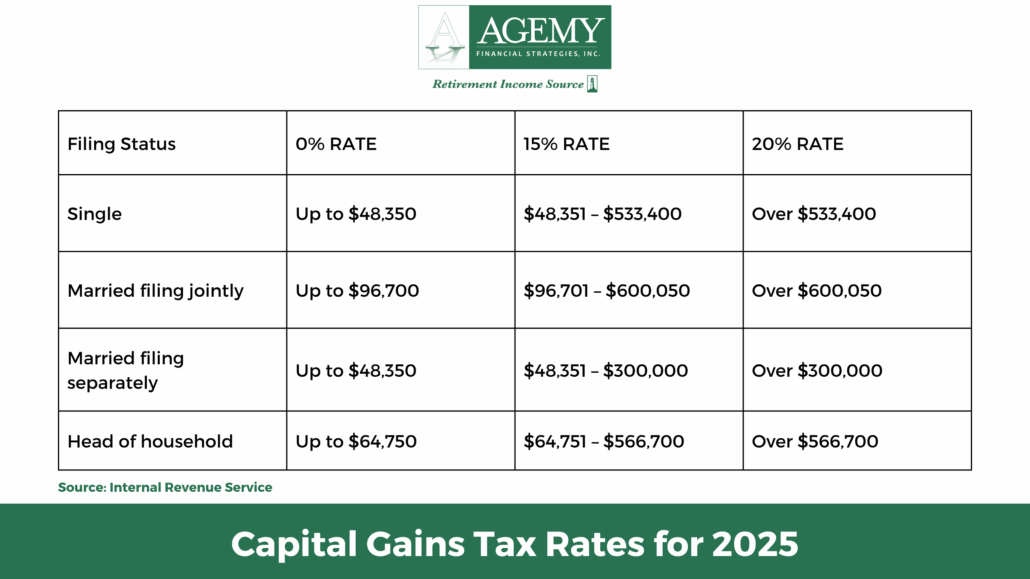
Understanding the distinction between short-term and long-term capital gains is essential when creating a tax-efficient portfolio. Short-term capital gains (on assets held less than one year) are taxed as ordinary income, while long-term capital gains (on assets held for more than a year) enjoy significantly lower rates. The table below shows the capital gains tax rates for 2025:

Capital gains tax


For HNWIs, long-term strategies are particularly important. Here are some ways to help you optimize:

  • Hold Investments Longer: You can benefit from lower long-term rates by holding onto assets for over a year.
  • Tax-Loss Harvesting: Offsetting capital gains with losses from other investments can help reduce your taxable income.
  • Gifting Appreciated Assets: Gifting long-term appreciated assets to family members in lower tax brackets can help minimize overall tax exposure while supporting your loved ones.

3. Proactively Planning for Future Tax Law Changes 

Tax laws can change, and for HNWIs, staying informed and flexible is key to tax efficiency. For instance, the Tax Cuts and Jobs Act (TCJA) lowered tax rates but will sunset at the end of 2025, which could mean higher taxes for many individuals. Being proactive now can help mitigate the impact of these changes later. Here are some key strategies to consider:

  • Roth Conversions: Converting assets from a traditional IRA to a Roth IRA can help you pay taxes at today’s lower rates, locking in tax-free growth for the future.
  • Diversifying Tax Buckets: Balancing your investments across taxable, tax-deferred, and tax-free accounts can help you remain flexible as tax laws change.
  • Monitor Income Thresholds: Keeping taxable income below certain thresholds can help you avoid the Medicare surtax and other income-related taxes.

Working closely with a fiduciary advisor who monitors the tax landscape can help ensure you remain one step ahead.

4. Maximizing Retirement Account Contributions

Retirement accounts provide valuable tax advantages, and maximizing your contributions now can lead to significant long-term benefits. For 2025, contribution limits are as follows:

  • 401(k): Up to $23,500, with an additional $7,500 catch-up contribution for those aged 50 and older.
  • IRA: Up to $7,000, with an additional $1,000 catch-up contribution for individuals aged 50 and older.

Maximizing contributions to tax-advantaged accounts can defer income taxes and allow your investments to grow tax-deferred or tax-free, depending on the account type. To make the most of these opportunities, consider consulting a fiduciary advisor who can help you develop a strategy tailored to your financial goals.

5. Prioritizing Tax-Efficient Investments

Certain types of investments are inherently more tax-efficient than others, making them more ideal for taxable accounts.

  • Index Funds and ETFs: These investments are known for low turnover and fewer capital gains distributions, helping reduce your tax burden.
  • Municipal Bonds: For investors in high tax brackets, municipal bonds offer interest income often exempt from federal taxes (and sometimes state taxes).
  • Tax-Managed Funds: These funds are actively managed to help minimize capital gains distributions, making them suitable for taxable accounts.

Prioritizing tax-efficient investments can help you enhance after-tax returns and preserve more of your wealth.

The Importance of Proactive Tax Planning 

Tax efficiency is not a once-a-year activity; it requires a year-round, proactive approach. At Agemy Financial Strategies, we pride ourselves on providing personalized, fiduciary-based advice that prioritizes your best interests. Here are some areas where we can help:

  • Continuously monitor the tax implications of your investments to identify opportunities to save.
  • Adjust your strategies as tax laws evolve, allowing your portfolio to remain optimized under current regulations.
  • Implement charitable giving, Roth conversions, and tax-loss harvesting techniques at the right time to help minimize your tax burden.
  • Provide personalized guidance to help you balance short-term needs with long-term tax planning strategies tailored to your financial goals.

Our team is dedicated to helping you incorporate tax efficiency into your retirement planning strategy, which can help you prepare for tax season and a tax-optimized future.

Plan Now for a Tax-Efficient Retirement

Getting ahead of tax season means more than filing your return early. It means building a retirement portfolio to minimize taxes and maximize long-term wealth. Focusing on strategies like asset location, long-term capital gains, and proactive planning can help you take control of your tax liability and create a more stable financial future.

At Agemy Financial Strategies, we help individuals optimize their portfolios for tax efficiency. Our fiduciaries understand the importance of wealth preservation and proactive planning for HNWIs approaching retirement.

Contact us today to learn more about how we can help you navigate tax-efficient strategies tailored to your financial goals.


Disclaimer: This blog is for informational purposes only and does not constitute financial, tax, or investment advice. The content is not intended to be a solicitation or recommendation for any specific financial product or service. Tax laws and regulations are subject to change, and the information presented may not apply to your individual circumstances. Please consult the fiduciary advisors at Agemy Financial Strategies for personalized advice regarding your financial situation.