Gold looks attractive in 2026 as a long‑term diversifier and potential inflation hedge, but it is volatile, richly priced, and should be used as a supporting asset, not a core growth engine. 

For Agemy Financial Strategies clients, many of whom are pre‑retirees or retirees, the key question is not “Is gold good?” but “How much, in what form, and for what purpose?” within an overall financial plan.

Where Gold Stands in Early 2026

Is Gold a Good Investment (2)

Gold has just come through one of its strongest multi‑year runs on record, dramatically outpacing many traditional assets. Gold has surged past $5,000 — and forecasts from major banks are calling for $6,000 or more by year’s end. 

A few big forces are behind this surge:

  • Strong central bank buying, especially from emerging markets that are diversifying away from the U.S. dollar.
  • Rising allocations by retail investors and ETFs seeking a safe haven amid market volatility and policy uncertainty.
  • Expectations of lower real interest rates as central banks, including the Federal Reserve, continue or contemplate rate cuts.

At the same time, analysts stress two important realities: gold rallies can be sharp and emotional, and the same is true of corrections. That means investors considering gold in 2026 need a clear, plan‑driven rationale, not fear or greed.

Why Many Experts Still Like Gold

Professionals often describe gold as “portfolio insurance” rather than a speculative trade. Here are the main reasons 2026 still looks constructive for gold.

1. Hedge against inflation and currency risk: Gold has historically tended to hold its purchasing power over long periods, even as paper currencies lose value. With years of aggressive monetary policy behind us and ongoing concern about fiscal deficits, many investors see a continued role for hard assets like gold.

2. Diversification and crisis protection: Gold often behaves differently than stocks and, to a lesser degree, bonds, especially during periods of stress. When equities experience sharp drawdowns, gold has frequently held value or risen, which can help cushion portfolio losses for retirees drawing income.

  • Supportive macro backdrop
    • Central banks are expected to continue buying hundreds of tonnes of gold annually, representing a meaningful share of yearly mine output.
    • Retail and ETF demand jumped in 2025 and is projected to remain robust as investors seek safe‑haven exposure.
    • Forecasts from major banks cluster around the idea that gold can remain elevated, with many calling for prices at or above $5,000 per ounce by late 2026 if current trends persist.

3. Favorable real‑rate and dollar dynamics: Gold often has a negative relationship with real interest rates and the U.S. dollar. Analysts expect further rate cuts and a softer real‑rate environment, which historically has supported gold prices, especially if the dollar weakens.

For long‑term, risk‑aware investors, these factors make gold a reasonable candidate for a modest allocation in 2026.

The Major Risks and Drawbacks in 2026

Our advisors would emphasize what gold is not: it is not a guaranteed winner, a substitute for income‑producing assets, or a one‑way bet.

  1. Elevated prices and the risk of buying “after the run”: Gold’s huge gains in 2025 and early 2026 mean new buyers are entering at historically high levels. Some analysts warn that if sentiment shifts, a sharp pullback is possible, especially for investors focused on short‑term gains.
  2. High volatility: Recent years have shown that gold can swing sharply in both directions within short periods. Those fluctuations can be unsettling for retirees who need stability around withdrawals, particularly if gold is over‑weighted.
  3. No income, no dividends: Unlike bonds or dividend‑paying stocks, gold does not produce interest or cash flow. For income‑oriented investors, this means gold must be funded by other assets that do produce income, or it risks undermining a retirement paycheck strategy.
  4. Opportunity cost if rates rise again: If inflation cools or central banks turn more hawkish, real yields could rise, making cash and bonds relatively more attractive than gold. In that scenario, gold prices could stagnate or decline while interest‑bearing assets provide positive income.
  5. Behavioral risk: Because headlines about “record highs” are so attention‑grabbing, investors may be tempted to chase gold late in the cycle, then panic‑sell at the first pullback. That pattern, buying high, selling low, is generally the opposite of what our planning‑driven approach aims to achieve.

Ways to Invest in Gold in 2026

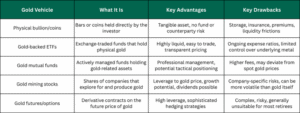
If gold fits into your plan, the next decision is how to gain exposure. Different vehicles carry different risks, costs, and logistical considerations. 
Is Gold a Good Investment (2)

For many retirement‑focused investors, a simple combination of a low‑cost, gold‑backed ETF or fund and possibly a modest amount of physical bullion is often the most practical approach. More speculative vehicles, such as futures or highly leveraged mining stocks, are usually better left to experienced, risk‑tolerant traders, not those relying on their nest egg.

How Agemy Might Position Gold in a 2026 Plan

From the perspective of a holistic retirement planning firm like Agemy Financial Strategies, the decision is less about timing the perfect entry point and more about integrating gold thoughtfully into an overall strategy.

  1. Clarify your purpose for owning gold
    • Hedge against inflation and currency risk.
    • Diversify equity and bond exposure.
    • Provide psychological comfort (“sleep‑at‑night” insurance).
      Each goal may justify a different target allocation and vehicle.
  2. Right‑size your allocation: Many experts view gold as a “satellite” holding rather than a core position, with allocations often in the mid‑single‑digit to low‑double‑digit percentage range depending on risk tolerance and objectives. Too little may not move the needle; too much can crowd out productive assets and add volatility.
  3. Integrate with income and withdrawal planning: For retirees, a key question is how gold interacts with income‑producing holdings. One approach is to let gold sit as a long‑term store of value while using dividends, interest, and systematic withdrawals from other assets to fund lifestyle needs.
  4. Set expectations and time horizon: Experts frequently stress that gold works best as a long‑term holding, not a short‑term trade. That means being prepared for periods when gold underperforms stocks or even declines in price, while keeping the focus on its role as insurance rather than as a primary growth engine.
  5. Stay diversified and disciplined: Even with bullish forecasts pointing toward the possibility of gold moving higher into and beyond 2026, concentration in any single asset is dangerous. A disciplined rebalancing plan, trimming gold after large run‑ups and adding modestly after pullbacks, can help manage risk and keep the allocation aligned with your plan.

So, Is Gold a Good Investment in 2026?

Is Gold a Good Investment (2)

For many, the answer is: gold can be a good investment in 2026 as part of a diversified, plan‑driven portfolio, not as a stand‑alone bet. The macro backdrop of strong central bank demand, elevated geopolitical and economic uncertainty, and a potentially favorable interest‑rate environment all support a constructive long‑term outlook for gold.

At the same time, today’s high prices and the possibility of sharp corrections mean investors should approach gold thoughtfully, with realistic expectations and a long‑term mindset. The most appropriate allocation, vehicle, and timing will depend on your age, risk tolerance, income needs, and broader retirement goal, factors that a personalized plan can help you balance.

If you’re wondering whether gold belongs in your 2026 portfolio, the next step is to review your current holdings, risk profile, and retirement timeline with an advisor who understands how to use tools like gold as part of a comprehensive income and wealth‑protection strategy.

Contact us at agemy.com.


Investment advisory services are offered through Agemy Wealth Advisors, LLC, a Registered Investment Advisor and fiduciary to its clients. Agemy Financial Strategies, Inc. is a franchisee of Retirement Income Source®, LLC. Agemy Financial Strategies, Inc. and Agemy Wealth Advisors, LLC are associated entities. Agemy Financial Strategies, Inc. and Agemy Wealth Advisors, LLC entities are not associated with Retirement Income Source®, LLC. The information contained in this e-mail is intended for the exclusive use of the addressee(s) and may contain confidential or privileged information. Any review, reliance or distribution by others or forwarding without the express permission of the sender is strictly prohibited. If you are not the intended recipient, please contact the sender and delete all copies. To the extent permitted by law, Agemy Financial Strategies, Inc and Agemy Wealth Advisors, LLC, and Retirement Income Source, LLC do not accept any liability arising from the use or retransmission of the information in this e-mail.

A K-shaped economy means different groups of Americans are experiencing very different financial realities, and that split is now showing up clearly in 2025 income and 2026 tax return outcomes. 

If you are a high earner, investor, or homeowner, your tax picture in this environment may look very different from that of workers with flat wages and rising everyday costs.

What Is a K-Shaped Economy?

In a K-shaped economy, some people and industries move upward, with rising incomes, investment gains, and job stability, while others trend downward, facing stagnant wages, job insecurity, and higher living costs.

Key characteristics include:

  • Strong profits and stock gains in sectors like technology, healthcare, and AI-related infrastructure.
  • Slower wage growth or job losses in areas such as manufacturing, some services, and housing-related industries.
  • Rising wealth for households that own financial assets or real estate, while non-owners struggle with higher prices and limited savings.

This divergence has intensified in recent years as stock markets and data-center construction surge, even as many families report weak confidence and pressure from everyday expenses.

How the K-Shaped Economy Shows Up in Today’s Tax Refunds

K Shaped Economy

The same forces driving the K-shaped split in income and wealth are now visible in 2026 tax refunds, especially under the “One Big Beautiful Bill” tax changes enacted in 2025.

Recent analysis shows:

  • The “average” refund is expected to rise to roughly the high-$3,000s, boosted by new and expanded tax breaks.
  • The typical taxpayer may see an increase of about $700–$750 in their refund compared with last year.
  • Higher-income households are projected to receive disproportionately larger refund increases, often several thousand dollars, due to expanded deductions and credits that scale with income, investment activity, and itemized deductions.
  • Lower-income households (roughly under $33,000 of income) may see only a modest additional refund, on the order of a few tens of dollars on average, despite facing greater strain from inflation and housing costs.

One study highlighted that households in the top 5% of earners could see their refunds rise by nearly $3,800 on average, while the lowest 20% may gain less than $20 compared to last year. That is a textbook example of a K-shaped outcome: the same tax law produces very different benefits depending on where you sit on the “K.”

Who May See Larger Refunds and Why

If you’re on the “upper” leg of the K, several factors may combine to boost your 2026 refund.

1. Higher and More Volatile Income: Many higher-earning professionals have seen wages, bonuses, or equity compensation rebound with strong sectors like technology, finance, and specialized services. Volatile income can create:

  • More opportunities to use above-the-line deductions and retirement contributions.
  • Larger itemized deductions (for example, mortgage interest and state taxes).
  • More room to benefit from phase-ins or expansions in new tax incentives tied to income or investment activity.

2. Expanded Deductions, Especially SALT: The 2025 legislation substantially lifted the cap on state and local tax (SALT) deductions to around $40,000 for many households, up from the prior $10,000 cap. While this phases out for the very top earners, higher-income taxpayers in high-tax states stand to benefit significantly.​

That can mean:

  • A larger itemized deduction total.
  • Reduced taxable income.
  • A bigger gap between taxes withheld and final tax due, resulting in a larger refund.

3. Asset Ownership: Stocks and Real Estate: Because the wealthiest 10% of Americans own the vast majority of the stock market, the strong performance of large technology and AI-related names has primarily lifted their balance sheets. That has several tax implications:

  • More capital gains to manage, but also more opportunities for tax-loss harvesting or strategic realization.
  • Greater use of tax-advantaged accounts (IRAs, 401(k)s, HSAs) thanks to higher incomes.
  • The ability to time income and deductions to maximize new tax breaks.

Put together, these dynamics mean many higher-income households will see refunds rise by hundreds or even thousands of dollars more than the average.

Who May See Smaller Refunds and Why

On the lower leg of the K, workers struggling with flat pay, reduced hours, or rising costs often experience the tax system very differently.

Key pressures include:

  • Slower wage growth compared to inflation, eroding real take-home pay.
  • Less room in the budget to contribute to retirement accounts or health savings accounts, which means fewer deductions.
  • Limited itemized deductions because they rent instead of owning, or live in areas with lower property and income taxes.

As a result:

  • Many lower- and moderate-income households rely primarily on the standard deduction.
  • Their main tax benefits come from refundable or partially refundable credits such as the Child Tax Credit or Earned Income Tax Credit, which may not have expanded as much as higher-income deductions.
  • The incremental refund increase from the latest law may be small, sometimes only a few dollars per month when averaged out.

In one widely cited analysis, the lowest earners saw an average increase in refunds of around $18, compared with hundreds or thousands of dollars for higher-earning groups. That difference amplifies the feeling that the economy, and the tax code, are working better for some than for others.

Practical Ways the K-Shaped Economy May Affect Your Tax Return

K Shaped Economy

How all of this shows up on your own return depends on your specific income, assets, and life stage. Here are several practical channels where the K-shaped environment can influence what you owe or receive.

1. Your Wage and Bonus Pattern

If your income has increased or become more variable, through raises, overtime, commissions, or bonuses, you may see:

  • Higher total tax owed for the year as you move into higher brackets.
  • Withholding that does not keep pace, which may reduce or eliminate your refund unless you adjust your Form W-4.
  • More value from planning moves like deferring bonus income, increasing retirement contributions, or bunching deductions.

Conversely, if your wages have stagnated or hours have been cut, your tax liability may not rise much, but you also have fewer levers to reduce it.

2. Investment Gains and Losses

Households with meaningful investment portfolios, stocks, mutual funds, ETFs, or rental properties are seeing very different tax realities than those living paycheck to paycheck.

  • Strong markets can generate substantial capital gains, which increase your tax bill unless offset by realized losses.
  • Tax-loss harvesting can help investors on the “upper” leg of the K manage their liability strategically, sometimes turning a large tax bill into a more modest one or even preserving a refund.
  • If you don’t own assets, you miss those planning opportunities but also avoid the added complexity and potential surprise bills.

3. Housing, Debt, and Deductions

Homeowners with larger mortgages and higher property taxes often benefit more from itemizing deductions, especially with a higher SALT cap. Renters typically cannot access those same deductions.

This can affect your return by:

  • Increasing the deduction for mortgage interest and property taxes for homeowners, which can translate into bigger refunds.
  • Leaving renters with the standard deduction, which, while helpful, may not grow as quickly as the new itemized opportunities for higher-income homeowners.

4. Small Business and Gig Work

The K-shaped economy has also widened the gap between thriving and struggling small businesses. Some owners in growing niches are enjoying record years, while others are fighting just to break even.

For your tax return, that can mean:

  • Larger deductions if you can write off business expenses, retirement contributions, or health insurance premiums.
  • Eligibility for qualified business income (QBI) deductions in certain circumstances.
  • More complexity in estimated payments and year-end tax reconciliation increases the risk of underpayment penalties without careful planning.

Workers in gig roles or side hustles often face self-employment taxes and may miss employer benefits such as 401(k) matches or pre-tax health coverage, which can shrink refunds if not carefully managed.

5. Tax Credits and Phase-Outs

Tax credits, especially those tied to children, education, and work, are often structured with income thresholds and phase-outs.

In a K-shaped economy:

  • Lower-income households may not have enough taxable income to fully benefit from certain nonrefundable credits.
  • Middle-income households may qualify for a mix of credits and deductions, but see only modest refund changes year to year.
  • Higher-income households may lose some credits due to phase-outs but gain more from expanded deductions and planning strategies under the new law.

The net result is that the same law produces widely different tax outcomes, depending on whether your income and wealth place you on the upward or downward branch of the “K.”

How Agemy Financial Strategies Can Help You Navigate the K-Shaped Economy

K Shaped Economy

You cannot control the shape of the overall economy, but you can control how prepared you are for the opportunities and risks it presents. Agemy Financial Strategies focuses on building tax-smart, resilient plans that respond to changing economic and legislative conditions.

Here are ways a guided approach can help in today’s environment:

1. Integrated Tax and Investment Planning: Agemy models the tax impact of your portfolio decisions, such as realizing gains, harvesting losses, or shifting between asset classes, before you act, so you can see how those moves may change your tax bill and refund. The goal is to help maximize after-tax outcomes, not just headline returns.

2. Tailored Strategies for Your “Leg” of the K: Whether your household is experiencing strong growth or feeling squeezed, a customized plan can:

  • Help higher earners manage bracket creep, deductions, and complex returns tied to equity compensation, business income, or large portfolios.
  • Help those under pressure prioritize cash flow, emergency savings, and the most impactful tax moves available at their income level.

3. Coordinated Professional Support: Agemy works alongside your CPA and estate planning attorney so that tax planning, retirement planning, and legacy planning reinforce each other rather than working at cross purposes. This coordination can be especially important when new legislation changes deductions, credits, or estate thresholds.

4. Long-Term, Tax-Smart Portfolio Design: In a world where economic and tax conditions evolve unevenly, Agemy emphasizes diversified asset allocation, thoughtful use of tax-advantaged accounts, and regular reviews to keep your strategy aligned with your goals and the current law. That can make your future refunds and tax bills more predictable, and your overall financial life simpler.

If you’re unsure which side of the “K” your household is currently on, or how the latest tax law might affect your 2026 refund, this is an ideal time to review your situation with a fiduciary financial professional. 

Agemy Financial Strategies can help you clarify where you stand, identify the levers you can pull, and design a plan that aims to keep more of what you earn in any economic environment.

Contact us today at agemy.com.


Investment advisory services are offered through Agemy Wealth Advisors, LLC, a Registered Investment Advisor and fiduciary to its clients. Agemy Financial Strategies, Inc. is a franchisee of Retirement Income Source®, LLC. Agemy Financial Strategies, Inc. and Agemy Wealth Advisors, LLC are associated entities. Agemy Financial Strategies, Inc. and Agemy Wealth Advisors, LLC entities are not associated with Retirement Income Source®, LLC. The information contained in this e-mail is intended for the exclusive use of the addressee(s) and may contain confidential or privileged information. Any review, reliance or distribution by others or forwarding without the express permission of the sender is strictly prohibited. If you are not the intended recipient, please contact the sender and delete all copies. To the extent permitted by law, Agemy Financial Strategies, Inc and Agemy Wealth Advisors, LLC, and Retirement Income Source, LLC do not accept any liability arising from the use or retransmission of the information in this e-mail.

An educational guide for retirees and pre‑retirees, prepared by Agemy Financial Strategies

Estate planning is about far more than drafting a will. For those approaching and in retirement, it is a critical part of protecting what you’ve built, caring for loved ones, and helping ensure your money is transferred according to your wishes — not default rules or unnecessary taxes. One of the most misunderstood areas of estate planning is estate tax law.

While many retirees assume estate taxes only affect the ultra‑wealthy, the reality is more nuanced. Federal exemptions are high, but state estate taxes, income tax implications for heirs, and changing laws can still create unintended consequences without proper planning.

This guide explains estate tax laws retirees should understand, how current rules work, common misconceptions, and practical strategies to help preserve your legacy with confidence.

What Is an Estate Tax?

An estate tax is a tax imposed on the transfer of assets at death. It applies to the total value of everything you own at the time of your passing, known as your gross estate. This may include:

  • Cash and bank accounts
  • Investment portfolios
  • Retirement accounts (IRAs, 401(k)s, Roth accounts)
  • Real estate, including primary and vacation homes
  • Business interests
  • Life insurance proceeds (in certain situations)
  • Personal property such as vehicles, collectibles, and jewelry

If the value of your estate exceeds certain exemption thresholds, taxes may be owed before assets are distributed to heirs.

Importantly, estate taxes are different from inheritance taxes. Estate taxes are paid by the estate itself before assets are distributed. Inheritance taxes, which only apply in certain states, are paid by the beneficiary receiving the inheritance.

Estate Tax Laws

Federal Estate Tax Laws: The Basics for Retirees

Current Federal Estate Tax Exemption

Under current U.S. law, federal estate taxes apply only to estates above a generous exemption amount. As of 2026:

As of 2026: The federal estate/gift tax exemption is permanently set at $15 million per individual ($30 million for married couples), indexed for inflation going forward. This stability creates clear long-term planning—though state taxes, income tax basis planning, and asset growth still demand proactive strategies.

Only the portion above the exemption faces 40% federal tax.

Federal Estate Tax Rates

Federal estate tax rates are progressive, with a top rate of 40% on amounts above the exemption. While this rate is significant, proper planning can dramatically reduce — or eliminate — exposure.

The Unified Gift and Estate Tax System

The estate tax is unified with the gift tax. This means:

  • Gifts made during your lifetime count toward your lifetime exemption
  • The same exemption protects lifetime gifts and transfers at death

Large gifts do not usually trigger immediate tax, but they reduce the exemption available later.

Why Estate Tax Planning Still Matters for Retirees

Many retirees assume estate tax planning is unnecessary because their estate falls below federal thresholds. However, focusing only on the federal estate tax can be misleading.

Estate planning for retirees should also account for:

  • State estate or inheritance taxes
  • Income taxes heirs may owe on inherited assets
  • Distribution timing and control
  • Family dynamics, including blended families
  • Charitable goals
  • Protection against creditor or legal risk

Estate tax laws intersect with all of these considerations.

Estate Tax Laws

State Estate and Inheritance Taxes: A Hidden Risk

Even if your estate is not large enough to trigger federal estate tax, state‑level taxes may still apply.

Some states impose their own estate taxes with exemptions far lower than the federal level. Others levy inheritance taxes on beneficiaries, depending on their relationship to the deceased.

For retirees, this means:

  • An estate that owes no federal tax may still owe state tax
  • Planning strategies must account for where you live — and sometimes where your heirs live

State tax exposure is a common blind spot in retirement estate planning.

Estate Taxes and Retirement Accounts

Retirement accounts often represent one of the largest portions of a retiree’s estate — and they come with unique tax considerations.

Income Taxes for Heirs

Traditional IRAs and 401(k)s are funded with pre‑tax dollars. When heirs inherit these accounts, withdrawals are generally taxed as ordinary income.

Under current rules, many non‑spouse beneficiaries must withdraw inherited retirement accounts within a limited timeframe, accelerating income taxes.

This creates a double consideration:

  • The value of the account may count toward your taxable estate
  • Your heirs may face significant income taxes after inheriting

Roth Accounts

Roth IRAs offer different advantages. While still included in your estate value, qualified withdrawals by heirs are generally income‑tax‑free, making them a powerful legacy asset when coordinated properly.

Step‑Up in Basis: A Critical Tax Benefit for Heirs

One of the most valuable features of estate planning is the step‑up in cost basis.

Assets that pass through your estate typically receive a new tax basis equal to their fair market value at the date of death. This may reduce capital gains taxes for heirs who later sell the asset.

For example:

  • An investment purchased decades ago for $50,000 may be worth $500,000 at death
  • With a step‑up in basis, heirs may owe little or no capital gains tax if sold soon after

This is why gifting appreciated assets during life must be evaluated carefully — lifetime gifts do not receive a step‑up in basis.

Portability: What Married Retirees Should Know

Portability allows a surviving spouse to use any unused portion of a deceased spouse’s federal estate tax exemption.

This can be a powerful tool for married retirees, but it is not automatic. Certain elections must be made after the first spouse’s death to preserve unused exemptions.

While portability simplifies some planning, it may not replace the benefits of trusts, particularly when state taxes, asset protection, or remarriage risks are involved.

Trusts and Estate Tax Planning for Retirees

Trusts remain one of the most effective estate planning tools, even for retirees who do not expect to owe federal estate tax.

Common trust strategies include:

Credit Shelter (Bypass) Trusts

These trusts preserve the first spouse’s exemption while allowing the surviving spouse access to income or principal under defined terms.

Irrevocable Life Insurance Trusts (ILITs)

ILITs remove life insurance proceeds from the taxable estate, which can be critical for retirees with large policies.

Charitable Trusts

Charitable remainder and charitable lead trusts can provide income, tax benefits, and long‑term philanthropic impact.

Trust selection should align with your tax exposure, income needs, and family goals.

Estate Tax Laws

Charitable Strategies That Help Reduce Estate Taxes

For retirees with charitable intentions, philanthropy can be an effective estate planning tool.

Options may include:

  • Direct bequests to charities
  • Donor‑advised funds
  • Qualified charitable distributions (QCDs) from IRAs
  • Charitable trusts that provide lifetime income

Charitable gifts may reduce estate size while allowing you to support causes you value.

Common Estate Tax Mistakes Retirees Make

Even well‑intentioned retirees can make costly mistakes, including:

  • Assuming estate taxes will never apply
  • Failing to update beneficiary designations
  • Overusing joint ownership without understanding the consequences
  • Ignoring state estate or inheritance taxes
  • Not coordinating retirement income planning with estate planning

Estate planning should be revisited regularly, especially after retirement, the death of a spouse, or major tax law changes.

When Should Retirees Review Their Estate Plan?

You should review your estate plan:

  • At retirement
  • After major changes in tax law
  • After a significant change in net worth
  • Following marriage, divorce, or remarriage
  • After the birth of grandchildren
  • When relocating to a new state

Estate planning is not a one‑time event — it is an ongoing process.

Estate Tax Laws

How Agemy Financial Strategies Helps Retirees Plan Confidently

At Agemy Financial Strategies, estate tax planning is integrated into your broader retirement strategy. We help retirees:

  • Understand how estate taxes fit into their full financial picture
  • Coordinate income planning with legacy goals
  • Adjust strategies as laws and life circumstances evolve

Our goal is clarity, confidence, and continuity — so your wealth supports both your retirement and your legacy.

Final Thoughts

Estate tax laws may seem complex, but understanding how they apply to retirees is essential to protecting what you’ve earned. With thoughtful planning, most retirees can minimize taxes, reduce stress for loved ones, and help ensure assets are transferred efficiently and intentionally.

A proactive approach today can make a meaningful difference for generations to come.

If you’re approaching or already in retirement, now is the time to ensure your estate plan reflects current laws, your financial reality, and your long‑term wishes.

Contact us at agemy.com


Investment advisory services are offered through Agemy Wealth Advisors, LLC, a Registered Investment Advisor and fiduciary to its clients. Agemy Financial Strategies, Inc. is a franchisee of Retirement Income Source®, LLC. Agemy Financial Strategies, Inc. and Agemy Wealth Advisors, LLC are associated entities. Agemy Financial Strategies, Inc. and Agemy Wealth Advisors, LLC entities are not associated with Retirement Income Source®, LLC. The information contained in this e-mail is intended for the exclusive use of the addressee(s) and may contain confidential or privileged information. Any review, reliance or distribution by others or forwarding without the express permission of the sender is strictly prohibited. If you are not the intended recipient, please contact the sender and delete all copies. To the extent permitted by law, Agemy Financial Strategies, Inc and Agemy Wealth Advisors, LLC, and Retirement Income Source, LLC do not accept any liability arising from the use or retransmission of the information in this e-mail.

For individuals with substantial retirement savings — especially those navigating multi-million-dollar portfolios — Required Minimum Distributions (RMDs) can be one of the most complex and impactful aspects of retirement planning. 

RMDs are mandated by the IRS to help ensure that tax-deferred retirement assets eventually generate taxable income. While the rules can be straightforward for smaller portfolios, when you’re managing significant wealth, RMDs intersect with broader tax planning, estate strategies, income management, investment allocation, and legacy goals.

At Agemy Financial Strategies, we believe that RMDs should not be treated as a compliance exercise; they must be integrated into a thoughtful long-term financial plan. This blog unpacks what RMDs are, how they function in large portfolios, key strategies for management, and how proactive planning can minimize taxes, maximize flexibility, and support your broader financial goals.

1. Understanding RMD Fundamentals

What Are RMDs?

Required Minimum Distributions refer to the minimum amount that individuals must withdraw annually from certain tax-deferred retirement accounts once they reach a specific age. These include:

The purpose of RMDs is to ensure that retirement savings are eventually taxed. The IRS views these assets as tax-deferred, meaning contributions and earnings grow without annual tax until withdrawn.

When Do RMDs Start?

Following recent tax law changes, RMDs generally begin at age 73 for those who reach 72 after December 31, 2022; for those who reached 72 before this date, the prior RMD age still applies. The rules change over time, so periodic review with a financial advisor is critical.

How Are RMDs Calculated?

RMD amounts are based on your account balance as of December 31 of the prior year and your life expectancy factor from IRS tables. For high-net-worth individuals with multi-million-dollar accounts, this calculation often results in substantial distributions that can significantly impact taxable income.

For example, if your IRA balance was $4 million on December 31 and your IRS life expectancy divisor is 25.6 (a hypothetical from IRS tables), your RMD would be approximately:

$4,000,000 ÷ 25.6 = $156,250

This distribution is taxable as ordinary income and must be taken before the RMD deadline (generally December 31).

RMDs

2. RMD Challenges for Multi-Million-Dollar Portfolios

When account balances are significant, RMDs present unique challenges:

Tax Liability Can Increase Dramatically

Large distributions can push you into higher marginal tax brackets, increasing your overall tax burden. Even if you don’t “need” the money for living expenses, the IRS requires you to take these withdrawals and pay taxes on them.

Bracket Creep and the Impact on Cash Flow

“Bracket creep” occurs when RMDs increase your taxable income significantly enough to move you into a higher tax bracket. This shift can also affect how Social Security benefits are taxed, Medicare premiums, and eligibility for certain tax deductions or credits.

Compounding Effects Over Time

Because RMDs are recalculated annually based on the prior year’s balance, poor market performance or strategic rebalancing can increase or decrease future RMDs unpredictably.

3. Strategic Approaches to RMD Management

To stay ahead of RMD issues and optimize outcomes, high-net-worth investors should consider a suite of strategies:

A. Roth Conversions Before RMD Age

One of the most powerful tools in RMD planning is the Roth IRA conversion. Unlike traditional IRAs, Roth IRAs do not have RMDs during the owner’s lifetime.

How it helps:

  • Reduces future RMD amounts because assets moved to a Roth no longer count toward RMD calculations.
  • Grew absolutely tax-free — qualified withdrawals, including earnings, are not taxable.
  • Converts when tax rates are relatively low, potentially saving more in the long run.

Considerations:

  • Roth conversions are taxable events. You’ll owe income tax the year of conversion.
  • Timing matters: converting too much in a single year can spike your tax bracket.
  • A well-timed conversion plan can balance tax liability while reducing future RMDs.

B. Qualified Charitable Distributions (QCDs)

Charitable giving can be both philanthropic and tax-efficient through Qualified Charitable Distributions (QCDs).

What is a QCD?

  • A direct transfer from your IRA to a qualified charity.
  • Only available for individuals age 70½ and older.
  • Up to $100,000 per year can count toward your RMD without being included in taxable income.

Why it matters:

  • QCDs help reduce taxable RMD income.
  • They satisfy your RMD requirement while supporting causes you care about.
  • Especially useful for wealthy retirees with philanthropic goals.

C. Timing and Frequency of RMDs

Although RMDs must be completed by year-end, you have flexibility in when and how often withdrawals occur:

  • Lump sum: simple, but can spike income.
  • Periodic distributions (monthly, quarterly): smooths income and may help with tax planning.
  • Planned timing with cash flow needs: aligns distributions with expenses or investment rebalancing.

D. Tax Diversification: Balance Between Account Types

A diversified retirement portfolio should include:

  • Tax-deferred accounts (Traditional IRA/401k)
  • Tax-free accounts (Roth IRAs)
  • Taxable investment accounts

With these layers, you gain flexibility in withdrawal strategies that can help minimize the tax impact of RMDs. For example:

  • Use taxable accounts to fund spending needs early in retirement.
  • Defer tax-deferred withdrawals until required.
  • Use Roth assets strategically to manage income in high tax years.

E. Strategic Asset Location

This involves placing investments in the accounts where they’re most tax-efficient:

  • High-growth assets (like equities) may be better in tax-free or tax-deferred accounts.
  • Low-yield assets may live in taxable accounts.
  • Municipal bonds often suit taxable accounts because of tax-free interest.

Proper asset location can help reduce taxes over time and affect RMD outcomes.

RMDs

4. RMDs and Estate Planning

For high-net-worth individuals, RMDs intersect strongly with estate planning. The decisions you make now will shape how your assets pass to heirs, how taxes are applied, and how your legacy is preserved.

A. Stretch or Inherited IRAs

Prior to the SECURE Act of 2019, beneficiaries could “stretch” IRA distributions over their lifetime. Today, most non-spouse beneficiaries must distribute accounts within 10 years, accelerating taxable income.

Key impacts:

  • Heirs may face steep tax bills if distributions are large.
  • Strategic planning during your lifetime can mitigate tax shock for beneficiaries.

B. Trusts and Beneficiary Designations

Aligning beneficiary designations and trust structures with your overall estate plan helps ensure that assets flow as intended.

  • Carefully drafted trust language, especially for retirement accounts, can prevent unintended tax consequences.
  • Coordination between your financial advisor and estate attorney is vital.

C. Gifting Strategies

Gifting retirement assets before death can help reduce the size of your RMD base.

  • Lifetime gifts reduce the value of your taxable estate.
  • Some clients use gifts to transfer assets to children or trusts, aligning with legacy plans.

RMDs

5. Navigating RMD Pitfalls and Avoiding Costly Mistakes

Given the complexity of RMD rules, even sophisticated investors can make costly errors. Here are common pitfalls we help clients avoid:

A. Missing the Deadline

The deadline for taking an RMD is usually December 31, with one exception for the first RMD, which can be delayed until April 1 of the year after you reach the required age. However, delaying can lead to two RMDs in one year, doubling taxable income in that tax year.

Penalty for missing an RMD?
The IRS penalty used to be a shocking 50% of the amount not withdrawn. While it has been reduced (to 25% or potentially 10% for corrected distributions), it’s still significant.

B. Miscalculating the Amount

Using incorrect life expectancy tables or outdated IRS rules can lead to under-distribution, exposing you to penalties.

We always verify:

  • Current IRS life expectancy tables
  • Correct account values
  • Proper calculation methods
  • Updated rules after legislative changes

C. Ignoring Market Impact

If market values drop, RMDs based on prior high valuations can force distributions during unfavorable conditions:

Example:
If a portfolio fell 20% after December 31, you may be forced to liquidate assets at a loss to meet your RMD.

Solution?

  • Maintain sufficient liquidity outside of your retirement account.
  • Rebalance regularly to avoid forced selling.

D. Overlooking State Tax Implications

State income taxes vary widely. Some states tax retirement income; others do not. For high-net-worth retirees who split time between states or relocate in retirement, state tax planning is crucial.

6. Modeling RMD Impact: A Hypothetical Case Study

To illustrate the strategic power of RMD planning, let’s consider a hypothetical scenario.

Client Profile

  • Age: 74
  • Traditional IRA: $6,500,000
  • Roth IRA: $1,500,000
  • Taxable Investments: $3,000,000
  • Tax bracket: 32%
  • Charitable goals: $50,000/year

Scenario: No Strategy Applied

  • RMD calculated at $6.5M ÷ 22.0 (hypothetical divisor) = $295,455
  • Total taxable income jump due to RMD
  • No QCDs or Roth conversions
  • Result: higher tax bracket, increased Medicare premiums, reduced flexibility

Tax consequence? Potentially several tens of thousands more in taxes annually.

Strategic Plan Implemented

Year 1:

  • Roth conversion of $500,000
  • QCD of $50,000
  • RMD adjusted with a mix of periodic distributions and QCDs

Result:

  • Smaller future RMD base
  • Reduced taxable income year over year
  • Philanthropic goals met tax-efficiently

Long-term impact:

  • Reduced tax drag over decades
  • More assets left to heirs with favorable tax positioning
  • Greater control over income timing

7. Partnering with Agemy Financial Strategies for RMD Excellence

RMD planning isn’t one-and-done. It’s continuous. Changes in tax rules, market performance, personal goals, and estate priorities all influence the plan. That’s why high-net-worth investors choose a proactive partner.

What We Provide

  • Customized RMD modeling and forecasting
  • Roth conversion strategy tailored to your tax situation
  • Charitable planning using QCDs and donor-advised funds
  • Tax-efficient withdrawal sequencing
  • Coordination with estate and tax professionals
  • Ongoing review as laws and circumstances evolve

RMDs

8. Final Thoughts: RMDs as a Strategic Lever, Not a Mandate

For many retirees, RMDs are viewed with frustration as an unavoidable headache. But for wealthy investors, they are also a strategic lever for:

  • Tax planning
  • Cash flow management
  • Legacy design
  • Charitable impact

With thoughtful planning, RMDs don’t have to be a tax burden; they can be an opportunity to align retirement income with your long-term goals.

At Agemy Financial Strategies, we help our clients see beyond the numbers to the impact those withdrawals have on lifestyle, family, and legacy. If you’re managing a multi-million-dollar portfolio and want to ensure your RMD strategy is optimized for tax efficiency, flexibility, and peace of mind, we’re here to help.

Contact us today at agemy.com. 

Investment advisory services are offered through Agemy Wealth Advisors, LLC, a Registered Investment Advisor and fiduciary to its clients. Agemy Financial Strategies, Inc. is a franchisee of Retirement Income Source®, LLC. Agemy Financial Strategies, Inc. and Agemy Wealth Advisors, LLC are associated entities. Agemy Financial Strategies, Inc. and Agemy Wealth Advisors, LLC entities are not associated with Retirement Income Source®, LLC. The information contained in this e-mail is intended for the exclusive use of the addressee(s) and may contain confidential or privileged information. Any review, reliance or distribution by others or forwarding without the express permission of the sender is strictly prohibited. If you are not the intended recipient, please contact the sender and delete all copies. To the extent permitted by law, Agemy Financial Strategies, Inc and Agemy Wealth Advisors, LLC, and Retirement Income Source, LLC do not accept any liability arising from the use or retransmission of the information in this e-mail.