Breaking a leg, needing heart surgery, or suffering from chronic illnesses like diabetes and arthritis: What hurts the most as you age? While all of these medical incidents include extreme suffering, the biggest pain you could face in retirement is covering healthcare costs.

Planning for healthcare in retirement can be daunting, as it often comes with substantial costs that need careful consideration.

Health insurance premiums typically account for most retirees’ yearly healthcare expenses, making up around 70% to 81%. While most premiums can be managed using your monthly retirement income and federal healthcare programs, not being ready for unexpected out-of-pocket expenses can derail your retirement.

To navigate this complex landscape, you need the right strategy in place. Here’s how you can secure a financially stable and healthy retirement.

Assess Your Current Health and Healthcare Needs

The percentage of people in the United States who are 65 years and older has increased noticeably in recent years. And it’s expected to reach 20% of the US population by 2030. Because folks 65 and older typically spend more on healthcare than any other age group, this increase in older Americans will likely increase healthcare costs in the long run.

Assessing your current health and healthcare needs is a crucial initial step when planning for predicted costs in retirement. This process involves taking stock of your current well-being, as well as anticipating potential health issues in the future:

  1. Evaluate Your Current Health Status: Consider factors such as your overall physical fitness, existing medical conditions, family genetic disorders, and general well-being. Are you in good health or do you have any ongoing health concerns? Understanding your health status and potential issues down the road provides a baseline for future planning.
  2. Medical History: Take note of any surgeries, hospitalizations, or significant health events you have experienced. Understanding your medical history can help you anticipate potential health issues or complications that may arise as you age. Take note of any hereditary illnesses or conditions in your family, as these may influence your health outlook and potential healthcare costs.
  3. Chronic Conditions: If you have any chronic health conditions, assess their severity and the ongoing treatment they require. Chronic conditions often demand regular doctor visits, medications, and specialized care, all of which can significantly impact your healthcare expenses in retirement.
  4. Lifestyle Factors: Consider your lifestyle choices, such as diet, exercise, and stress management. As you age, these factors can substantially impact your overall health and healthcare needs.

By thoroughly assessing your past, present, and potential future health and healthcare needs, you’ll be better prepared to make informed decisions about your retirement healthcare budget. This process can also help you explore options for health insurance, long-term care insurance, and other financial strategies to ensure you have adequate resources to cover your healthcare expenses in retirement.

It’s essential to periodically revisit and adjust your healthcare plan as your circumstances change.

Understanding Medicare Coverage

Medicare is a federal health insurance program designed for those aged 65 and older, along with some younger individuals with disabilities. This coverage ranks as the second-largest program in the federal budget. After accounting for offsetting receipts in 2022, its expenditures reached $747 billion, 12 percent of the total federal spending.

As of March 2023, The Centers for Medicare & Medicaid Services (CMS) released the latest enrollment figures. As of March 2023, a noteworthy 65,748,297 individuals have become beneficiaries of Medicare. This number underlines how significant this coverage is, with nearly 100,000 more people enrolling since the previous report in September.

Medicare comprises four distinct parts, labeled A, B, C, and D, each addressing specific aspects of healthcare. Let’s look deeper at the different parts of Medicare to understand what it covers.

  • Medicare Part A: Often referred to as hospital insurance, Part A covers inpatient hospital stays, skilled nursing facility care, hospice care, and some home healthcare services.
  • Medicare Part B: As medical insurance, Part B covers outpatient care, doctor’s visits, preventive services, and medical supplies like durable medical equipment.
  • Medicare Part C (Medicare Advantage): These are private health insurance plans approved by Medicare, offering the same coverage as Parts A and B, often with added benefits such as prescription drug coverage and dental services.
  • Medicare Part D: This is the prescription drug coverage plan, available through private insurance companies, that helps cover the cost of prescription medications.

While Medicare provides substantial coverage, it’s important to know that it doesn’t cover everything. Many retirees opt for supplemental Medigap insurance or Medicare Advantage plans to fill the gaps. But you may need additional coverage beyond these plans.

Exploring Long-Term Care

Effective insurance planning can help preserve your retirement savings while ensuring you’re prepared for this crucial aspect of your healthcare needs. One of the most significant potential healthcare expenses in retirement is long-term care. Someone turning 65 today has almost a 70% chance of needing some type of long-term care services and support in their remaining years.

Planning for this expense is crucial, as Medicare only covers limited long-term care costs under specific conditions. According to a Genworth survey, the median cost for a private room in a nursing home exceeds $100,000 annually, while an in-home health aide could cost $60,000 or more annually.

Some individuals self-fund their long-term care expenses by relying on retirement savings, investments, and other assets. However, this can be risky, as long-term care costs can quickly deplete these resources. Developing a comprehensive retirement plan that accounts for potential long-term care needs is essential.

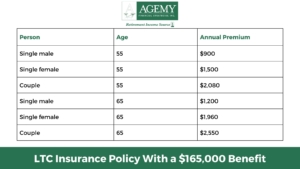
A long-term care insurance policy helps cover the costs of that care when you have a chronic medical condition, disability or disorder such as Alzheimer’s disease. Most policies will reimburse you for care given in a variety of places, such as:

  • Your home.

  • A nursing home.

  • An assisted living facility.

  • An adult day care center.

Considering long-term care costs is an important part of any long-range financial plan. But don’t wait: you won’t qualify for long-term care insurance if you have a debilitating condition, and long-term care insurance carriers won’t approve most applicants older than 75. Most people with long-term care insurance buy it in their mid-50s to mid-60s.

By taking a detailed approach to healthcare coverage in your retirement plan, individuals can help ensure they have the resources necessary to pay for the care they may require. Given the complexity of long-term care planning, consulting with a financial advisor can be valuable in developing a personalized strategy that addresses your unique needs and circumstances.

Working With a Financial Advisor

Healthcare costs and your health needs can change over time. It’s essential to regularly review and update your retirement healthcare plan to ensure it aligns with your current situation. Working with a Financial Advisor can help you navigate the complex world of healthcare costs and retirement savings strategies.

At Agemy Financial Strategies, our team of Fiduciary Advisors helps individuals navigate the complexities of long-term care planning. We’ll evaluate your current financial and healthcare situation, identify potential risks, and develop a personalized plan to meet your long-term care needs.

By recognizing that healthcare costs can pose a significant threat to your retirement nest egg, we will identify potential risks and costs associated with your health and insurance needs. This includes factors like inflation, potential health changes, and the impact of long-term care expenses on your savings.

Our trusted Financial Advisors will provide you with ongoing support by regularly reviewing your retirement plan and making necessary adjustments so you can enjoy your retirement years without worry.

Final Thoughts

Securing an enjoyable retirement requires careful planning–especially with today’s monumental healthcare expenses. By gaining insights into the healthcare cost landscape, you can proactively prepare yourself for these financial setbacks in your golden years.

If you’re seeking assistance crafting a retirement plan that considers hidden healthcare costs, speak with your dedicated Fiduciary advisors at Agemy Financial Strategies. We can help you decide what insurance plans are the best option for you.

If you’re ready to get started, contact us today and schedule your complimentary strategy session here.


Disclaimer: This content is for educational purposes only and should not be considered financial or investment advice. Please consult with the fiduciary advisors at Agemy Financial Strategies before making any investment decisions.

Renewable energy has garnered widespread popularity across various industries, sparking innovation and sustainability. What if we approach wealth-building with a similar mindset?

Renewable wealth is a concept that involves making mindful financial decisions that serve our best interests – while helping the next generations’ needs. In a society marked by environmental concerns, social responsibility, and economic uncertainty, pursuing wealth has taken on a new dimension. Building renewable wealth is a conscious strategy to encompass ongoing financial prosperity and future peace of mind.

Let’s explore 5 key tips for building renewable wealth and how they interconnect to create a sustainable and purpose-driven approach to financial success. But first…

What is Renewable Wealth?

Renewable wealth is a financial strategy that focuses on leveraging your resources for optimal financial growth. It redefines traditional notions of wealth by highlighting the importance of conscious decision-making in tandem with financial growth. A fitting way to describe/explain this idea is through the chicken and egg analogy:

Consider savings (or income) as the egg and investing (like in stocks) as the chicken. Savings, the eggs, offer a consistent return, much like the sustenance provided by food. When you reinvest those savings, it’s akin to acquiring more chickens, which, in turn, produce more eggs. This cycle consistently repeats: the more chickens (investments) you have, the more eggs (returns) you get. Over time, due to the magic of compounding, this leads to exponential growth in your investments. It’s a balance between steady income (the eggs) and accelerating growth (acquiring more chickens), culminating in sustainable long-term wealth.

So, how do you create the right balance and build a “renewable wealth portfolio”? It all starts with your mindset.

1. Having The Right Mindset 

The renewable wealth strategy involves adopting a specific mindset that aligns with ethical and innovative social initiatives. Ultimately, renewable wealth seeks to create a harmonious synergy between financial growth, environmental preservation, and the betterment of society for future generations.

We often think wealth is only about money, but it is more than that. Your positive or negative mindset plays a crucial role in your wealth-building journey. Coined the “Millionaire Mindset,” being wealthy isn’t just about having a lot of money. It’s more about adopting a specific mindset. For its followers, this mindset means shifting how you see the world to reach your dreams and requires consistently adopting purposeful habits and thoughts.

Essentially, wealthy retirees often operate from a mindset of plenty, which boosts their confidence and success. To help you reach your goals, act as if you’ve already achieved them. In that space, your success fuels more success.

2. Maximizing Income 

Maximizing income to pursue renewable wealth involves a two-fold approach: seeking financial opportunities and ensuring they align with your goals. The higher your income, the more you can allocate towards savings and investments, accelerating your wealth-building journey.

Moreover, a higher income allows you to comfortably meet your daily needs while setting aside substantial retirement funds. Here are a few tips to help you maximize your income:

  • Diversify Your Renewable Wealth Portfolio: A typical portfolio could include bonds, bond funds, CDs, and dividend-paying stocks. If you are seeking to invest for a greener future, you can align your investments with your values by investing in products that seek attractive returns while benefiting society, such as investing in clean energy stocks. Furthermore, ESG investing means buying the shares of companies that score highly on environmental and societal responsibility metrics.
  • Utilize Individual Retirement Accounts (IRAs):  IRAs are tax-advantaged retirement savings accounts that individuals can contribute independently. IRAs allow you to tailor your renewable portfolio to risk tolerance and financial and personal goals.
  • Explore Real Estate Investments: Real estate investments offer retirees a diverse range of options to consider. From owning rental properties that provide steady cash flow to investing in Real Estate Investment Trusts (REITs), you have various avenues to leverage the potential benefits of real estate in your investment portfolios. What’s more, investing in “green buildings” and eco-friendly developments not only helps reduce carbon emissions but also provides financial returns through energy savings, tax incentives, and higher property values.

When combined with prudent financial planning and strategic investments, maximizing your income is a powerful means to secure a comfortable retirement.

3. Timing the Market

Financial markets are unpredictable, and staying patient when your investments are on the line can be challenging. Take the example of the S&P 500 index: after reaching its lowest point in October 2022, it has managed to recover most of the losses suffered during the bear market. The previous year was marked by a decline of at least 20% from its highest value. By the end of July 2023, the S&P 500 was down by just 4.4% from its peak in January 2022. This recovery showed improvement compared to the notable 25% drop experienced in October 2022.

This lesson shows that if you leave the market too early or a market drop never materializes, you could miss out on significant additional positive returns. By staying invested rather than trying to time it — it could yield better results over the long term.

Staying patient and waiting out volatility is key to building renewable wealth.

4. Preserve Your Legacy

Renewable energy is all about creating a safe and sustainable future for the next generations. In order to create renewable wealth for your loved ones, you need to protect your hard-earned assets to pass down.

Estate planning entails creating various documents, outlining the designating of healthcare proxies, and establishing powers of attorney if you were to pass away. This level of preparation can bring peace of mind to you and your family. Without a clear estate plan, the distribution of assets can lead to conflicts and disputes among family members. Other benefits of having an estate plan include the potential to minimize tax burdens, help secure your family business continuity, and have the power to help ensure your loved ones receive their inheritance.

5. Working With a Financial Advisor

An experienced financial advisor can help you chart a course that aligns with your financial goals and values. As economic conditions, tax laws, and personal circumstances change, you must revisit your retirement strategy and make necessary adjustments. This may involve reevaluating your investment allocations and risk management approach to ensure they align with your evolving needs and financial situation.

Staying informed about market trends and working closely with your financial advisor can provide valuable insights and guidance. At Agemy Financial Strategies, our team of financial advisors is here to walk you through the process of achieving renewable wealth so that your money can work hard for you and you can reap the benefits of a comfortable retirement.

By regularly reviewing and adjusting your plan, you can make informed decisions to help maximize your retirement savings and help ensure financial security for loved ones – and future generations.

Last Thoughts

Building renewable wealth transcends the traditional pursuit of financial success. At Agemy Financial Strategies, we understand that building wealth that survives more than one generation requires more than financial assets.

With the proper planning, you can set up your renewable wealth portfolio to bring financial success for hundreds of years.

Set up your complimentary strategy session here today.


Disclaimer: This content is for educational purposes only and should not be considered financial or investment advice. Please consult with the fiduciary advisors at Agemy Financial Strategies before making any investment decisions.

Big changes are likely coming for Americans’ retirement savings. From RMD changes to 401(k) financial incentives, here’s what you need to know.

Many retirement savings accounts have slowly dwindled down due to rising inflation. The cost of food, gas and even rent have skyrocketed. Older Americans and those looking to retire soon are left dealing with the aftermath of trying to find a retirement solution to counteract the damages of 2022.

Here is what you need to know about retirement in 2023 and how to make the most of the new changes to your retirement plan.

Retirement Reform

Retirement reforms were passed by Congress in order to help relieve the pressure of rising inflation for retirees. In 2023, retirees must take out RMDs from their tax-advantaged retirement accounts when they turn 73. This is up from 72, and that age will bump up to 75 in 2033.

Legislation also provides a 500 tax credit for small businesses that meet the following criteria:

  • Allow military spouse employees to become eligible for the employer’s retirement plan within two months of starting a job.
  • Allow these workers to get employer matches before two years of service.
  • Make these workers 100% immediately vested in all employer contributions.

The new bill includes a host of other changes to the retirement system. Which will go into effect later than 2023.

Key Medicare Changes

Medicare is becoming cheaper for millions of retirees, in 2023.

The monthly premium for Medicare Part B will be $164.90 in 2023, a decrease of 3%, or $5.20 a month, from $170.10 in 2022. The annual deductible for all Medicare Part B beneficiaries will be $226 in 2023, down from the annual deductible of $233 in 2022.

Thanks to provisions in the Inflation Reduction Act, 3.3 million Medicare Part D beneficiaries with diabetes will benefit from a guarantee that copays for insulin will be capped at $35 for a month’s supply. Another huge change in 2023? Vaccines covered under Part D will come with no copays or deductibles. That will ease the cost of pricey vaccinations, such as the shingles vaccine.

Social Security Increase

If you receive Social Security benefits, you might be getting a raise next year.

The Social Security Administration announced that the cost-of-living adjustment (COLA) for 2023 will be 8.7%, the largest since 1981. The COLA increase means that average monthly benefits will go up by more than $140 per month in January, according to the SSA.

This is great news for people who depend on their Social Security checks to pay their bills and make ends meet, especially since the U.S. economy has been growing at a slow pace recently and many retirees are struggling to make ends meet with their current income levels.

Retirement Plan Contributions

The Internal Revenue Service announced the annual contribution limits for 401(k)s, IRAs, and other retirement accounts for 2023. If you have one of these accounts, this is good news!

Workers who have a 401(k), 403(b), most 457 plans, and the federal government’s Thrift Savings Plan can contribute up to $22,500 next year—that’s up 9.8% from this year’s limit of $20,500. For those 50 and over, they can save an additional $7,500 in their 401(k), up from last year’s $6,500 catch-up contribution limit. In total, workers who are 50 and older can contribute up to $30,000 starting in 2023.

The annual contribution limit for IRAs next year also increased to $6,500 from $6,000—an increase of 8.3%. Individuals 50 and over can save an additional $1,000 in their IRAs as well—this remains unchanged from last year.

Since the start of the year, Congress has been busy making changes to your retirement options. Here are some of the most important ones:

  • If you’re looking to set up a traditional IRA, you can make contributions that are tax-deductible as long as you meet IRS rules, including income limits. IRA contributions are fully deductible if you (and your spouse) aren’t covered by a retirement plan at work.
  • For 2023, IRA deductions for singles covered by a retirement plan at work aren’t allowed after their modified adjusted gross income (MAGI) hits $83,000, versus $78,000 in 2022. The deduction disappears for married couples filing jointly when their MAGI hits $136,000, up from $129,000 in 2022.
  • Individuals can only contribute to Roth IRAs if they meet certain income conditions. The income phase-out for Roth IRA contributions next year for singles and heads of household will be from $138,000 to $153,000, up from $129,000 to $144,000 in 2022. Married couples filing jointly will see the phaseouts starting at $218,000 to $228,000, up from $204,000 to $214,000.

HSA Changes

Health savings accounts just got a little more generous. The IRS announced that the annual inflation-adjusted limit on HSA contributions for self-only coverage under a high-deductible health plan will be $3,850, up from $3,650 in 2022. The HSA contribution limit for family coverage will be $7,750, up from $7,300.

That’s a 5.5% increase over 2022 contribution limits. A health savings account option is available for people enrolled in a high-deductible health care plan. You can also open an account as a self-employed freelancer or business owner if you have an HDHP.

The IRS sets the parameters for these accounts annually. With a high-deductible plan, you pay a lower premium per month than other types of plans but a higher annual deductible — the amount you pay for covered medical costs before insurance kicks in. Money you don’t use can roll over year after year and can be used for non-qualified expenses after turning 65.

Final Thoughts

While there are a lot of notable changes happening to retirement plans this year, it’s important to have a sound understanding and strategy in place to prepare for 2023.

With this in mind, it’s important to have a financial advisor you can trust. At Agemy Financial Strategies, we specialize in investment strategies and retirement planning. These two go hand in hand when it comes to planning your retirement –present and future!

For over 30 years, Agemy Financial Strategies has helped our clients plan and prepare. This way, when the unforeseen occurs like in 2022, our clients are uniquely positioned for success. We work hard to deliver a dependable retirement income strategy, in any market, so that you can enjoy the “best” of their lives during retirement.

Interested in learning more about retirement planning in 2023? Contact us here today.

It’s that time of the year… tax season. For the vast majority of Americans who aren’t tax-savvy, dealing with it can be overwhelming. Here’s our top tips to make this year’s tax returns as stress-free as possible. 

Tax filing season is here and many don’t know how to file back their taxes. Many tax payers don’t fulfill their tax filing responsibilities in due time because they look at the whole procedure and may find the process daunting. But if you don’t file correctly, it could cost you big bucks and offset your retirement plan.

Tax Changes from Last Year’s Returns

Stimulus Payments: Unlike 2020 and 2021, there were no new stimulus payments for 2022 so taxpayers should not expect to get an additional payment in their 2023 tax refund. Some tax credits return to 2019 levels. This means that taxpayers will likely receive a significantly smaller refund compared with the previous tax year.

Charitable Deductions: This filing season there will be no above-the-line charitable deductions. During COVID, taxpayers were able to take up to a $600 charitable donation tax deduction on their tax returns. However, for tax year 2022, taxpayers who don’t itemize and who take the standard deduction, won’t be able to deduct their charitable contributions.

How Retirement Contributions Impact Your Tax Bill

If you’ve started contributing to a retirement plan, at work or on your own, the next thing you’ll want to know is how to deal with it on your tax return. Fortunately, entering retirement contributions on your tax return, if necessary, is pretty simple.

Generally, you can deduct contributions of up to $6,000 to a traditional IRA ($7,000 if you are age 50 or older by the end of the tax year) on 2021 and 2022 returns.

Other plans have different limits, which vary based on your age and type of plan. They may also be limited based on your income level.

Considerations and Strategies

Tax filing lasts through April 18, three days later than the normal April 15 deadline for filing taxes. April 18 is also the deadline for requesting an extension, which gives taxpayers until Oct. 16 to file their returns for 2022.

If you’re getting ready to file, try adding some of these tips to your tax preparation this season to make filing easier:

  1. Review your income and deductions: Take a look at your income and deductions for the year to see if there are any opportunities to lower your tax liability. For example, you may be able to claim deductions for charitable donations or for business expenses if you are self-employed.
  2. Consider tax-loss harvesting: If you have realized losses on your investments, you may be able to use tax-loss harvesting to offset any capital gains you have realized during the year. This can help to reduce your tax liability.
  3. Contribute to tax-advantaged accounts: Contributions to accounts like 401(k)s and IRAs can lower your taxable income and potentially reduce your tax burden. If you haven’t already done so, consider making contributions to these accounts in order to take advantage of the tax benefits.
  4. Review your filing status: Your filing status can affect your tax rate and the amount of taxes you owe. If you are married, consider whether it makes sense for you and your spouse to file jointly or separately.
  5. Take advantage of tax credits and deductions: There are many credits and deductions available that can help reduce your tax liability. Make sure to take advantage of all the credits and deductions that you are eligible for in order to minimize your tax burden.

Remember to consult your financial advisor to ensure that you are taking advantage of all available tax benefits.

Ready, Set, File

Once you have factored in the above considerations, here’s how to file your 2022 income taxes:

  1. Start gathering your tax documents: As soon as possible, start collecting all the documents you’ll need to file your taxes, such as W-2 forms, 1099s, and receipts for deductions. This will make the process of preparing and filing your taxes much easier.
  2. Use tax preparation software: Tax preparation software can make the process of filing your taxes much easier and more accurate. There are many options available, ranging from free options for simple tax situations to paid options for more complex situations.
  3. Double-check your work: Before you file your taxes, make sure to double-check all the information you have entered to ensure that it is accurate. This will help to reduce the chances of errors and potentially save you time and money in the long run.
  4. File your taxes electronically: Filing your taxes electronically is generally faster and more accurate than filing a paper return. Plus, you’ll get your refund faster if you choose to have it deposited directly into your bank account.

By following these tips, you can help to make the process of filing your 2022 income taxes as smooth and stress-free as possible.

Don’t Forget to Do Your Homework

Give your future self a hand and prepare for next year’s taxes by considering any and all missteps you experienced this year that made filing your taxes more difficult. For example, making an appointment with your financial advisor, keeping better track of important documents, and updating the amount of tax withheld from your paycheck in the upcoming year can make filing next year that much easier.

While paying attention to tax strategies for your retirement income is important, there is no single right strategy. Read up on the updates to the taxes to make sure you’re familiar with them and fully understand what they’ll mean as you file.

Finally, consult with your Fiduciary advisor to make sure you’re not missing out on further tax-strategies that could help boost your retirement savings. From reassessing your investments to postponing RMDs, Agemy Financial Strategies has over 32 years of experience in tax-strategizing to maximize retirement income in your golden years.

Let’s put together your personalized plan with a complimentary strategy session. Set yours up here today.

Retirement planning during a bear market is challenging enough. But the 2023 retirement outlook includes a host of other major threats, such as high inflation and rising interest rates. Here are our top six suggestions when setting financial goals for the year ahead.

Looking back over the past few years, we have learned more than ever how important it is to be financially prepared. Financial preparedness is all about setting goals, but how often are these goals being reached?

When it comes to financial goal setting in 2023, it’s important to reflect your intentions and aspirations so you can achieve your intentions in confidence. Here’s what you need to know about goal setting if you are near retirement.

List and Prioritize Your Financial Goals

One of the best ways to set goals is to list them out and identify each one. Prioritize your goals from most important to least important. Write down specific details about each goal like the timeline and the amount of money you’ll need / how much you have already saved.

It’s easy to think of saving as a one-and-done activity. But you can actually save for more than one goal at a time, especially if those goals are short-term and long-term. For example, you could put money away for a vacation while continuing to contribute to retirement accounts.

Take Care of Financial Basics

Once you have identified your goals, ensure that your basics are covered. Depending on where you are at with your financial planning, you may have already accomplished these steps. Here are a couple financial basics that you can keep in place that will help you build a strong foundation in the long run.

  • Build an emergency fund
  • Have a healthcare gameplan
  • Pay off debt
  • Save for retirement
  • Create an Estate Plan

By making sure these are covered, it will help you pursue other goals with confidence.

Tackle Inflation Head-On

Nothing strikes as much fear into the hearts of retirees as inflation, and for good reason. The best-laid retirement plans can be wrecked by the rapid decline in value of the dollars you’ve socked away in your golden years. But inflation isn’t always the big bad wolf it is portrayed to be.

According to analysis performed by the U.S. Bank Asset Management Group, stocks have held up well against inflation over the last 30 years. And while you may think of inflation simply meaning higher prices on everyday goods, for investors, it means moving some of their money to assets that benefit from inflation or at least keep up with its pace.

The following investments tend to fare well during periods of inflation:

  • Commodities like gold, oil, and even soybeans should increase in price along with the finished products that are made with them.
  • Inflation-indexed bonds and Treasury Inflation-Protected Securities (TIPS), tend to increase their returns with inflationary pressures.
  • Consumer staples stocks mostly do well because price increases are passed on to consumers.
  • Mortgage-backed securities (MBS) and collateralized debt obligations (CDOs) are risky choices but tend to perform well under inflationary pressure.
  • Investment real estate is traditionally a safe haven but should be approached cautiously in 2022 and 2023 given the unsettled state of the industry.

Retired Americans should worry more about local property tax rates or the rising cost of health care. It’s really important not to let the emotional part of the inflation situation dictate your retirement planning strategy.

Understand Sequence of Returns Risk

You face plenty of risks when investing for retirement. Markets crash, inflation can eat into your returns, you might even worry about outliving your savings. But there’s one big retirement risk that gets very little attention: Sequence of returns risk.

Sequence-of-returns risk, or sequence risk, is the risk that an investor will experience negative portfolio returns very late in their working lives and/or early in retirement. Sequence-of-returns risk is a significant threat because retirees have little time to make up for losses that are compounded by the simultaneous drawdown of income distributions.

Protecting against sequence risk means anticipating a worst-case scenario. Don’t assume that a bull market will reign throughout your golden years.

  • Consider working as late as you can in order to contribute more to your retirement account, particularly in your peak earning years.
  • Keep saving and investing even after you retire. If you’re past age 70½, you can’t use a traditional IRA but you can contribute to a Roth IRA or, for that matter, open a personal investment account.
  • Diversify your portfolio. Nobody ever went broke investing in high-quality corporate and government bonds.

Create a Financial Plan to Each Your Financial Goals

Now that you have your goals and motivations, it’s time to start mapping out how they all fit together in a financial plan. 

The good news is you don’t have to do this alone! You can either do the work yourself or get help from a financial professional. Either way, it’s important to understand how you’re positioned to achieve your goals.

To get started, take inventory of what you have and consider what you need. Document your income sources and expenses. Knowing how much money you can allocate to different goals each month gives you clear direction on how to move forward. Then, use your goals and their timelines as drivers for your financial plan.

Perhaps you count yourself among the self-sufficient crowd who never sought professional assistance during your working years. Maybe you’ve done just fine that way. But now that you have to deal with retirement math and estate planning, it’s maybe time to lean on the experience of others. That’s where the Fiduciary advisors at Agemy Financial Strategies can help.

We can help you understand your current financial reality, and where you would ideally want to be, based on your current age and financial goals. Not sure what your goals are? We can help you with those as well. Furthermore, we can provide great insights on how to structure your finances so that you’re better able to meet your goals.

Final Thoughts

Once you learn how to identify financial goals and have a plan in place, it will slowly evolve over time. Life is a constant ebb and flow and many factors can affect your financial goals. As long as you review your goals and achievements once a year with your trusted advisor, you can review and make changes where necessary.

At Agemy Financial Strategies, we sit down with you and take the time to reflect on the purpose behind your financial goals. We will help craft a financial plan that works for you.

Looking to get your financial plan for 2023 started? Contact us to set up your complimentary consultation today.

Our firm exists for the purpose of helping people achieve their personal and financial goals. Our philosophy is to deliver quality financial programs and teach principles for successful living. Here’s a look back at 2022 and what to expect for 2023 and beyond. 

Can you believe we’re wrapping up the year? And what a year it has been; Inflation, war, a Bear market… just to name a few! Amid these challenges, it is more important than ever that individuals and families have their financial lives in order.

Despite the hurdles, Agemy Financial Strategies has been hard at work this year helping all our clients achieve their retirement goals and navigate the financial storm of 2022. As we ring in the new year, here’s how our experienced, tireless and talented team of Fiduciaries can help you, too.

  1. Financial Podcasts

You can never be too money smart, and one easy way to boost your financial IQ is to tune into some really great, and often even entertaining, podcasts. Our Financial Strategies Podcast, Andrew Agemy and son Daniel Agemy combine their expertise, knowledge (and often humor) to educate retirees and assist them in reaching their retirement goals. Covering important topics that affect your golden years, Andrew brings his 30+ years of experience helping retirees with their finances and Daniel brings his ever-expanding knowledge and technical skills.

Together they prepare retirees with the FINANCIAL STRATEGIES they need to stay happily retired. You can now listen to the show on the radio or as a podcast on Spotify and Apple Podcasts! 

  1. Large Variety of Financial Blogs

More into reading than podcasts? While necessary, retirement planning isn’t easy and can get very confusing. Trying to learn best practices and derive meaning from financial and healthcare jargon can be burdensome. With our complimentary online financial blogs, you’ll find a wealth of information on financial planning, tax planning, healthcare planning, estate planning and more to help you learn everything you need in an easily digestible format. Our financial planning blogs give you a rare insight into the financial world, while explaining strategies in a clear manner that make sense.

Whether it’s trying to plan for retirement or learning how to create a sustainable estate plan, we had you covered. Providing the correct information to our clients is something we strive for. Our financial blogs are written by our financial experts in the field and they provide the best information available on the market. We hope you continue to enjoy them in 2023.

  1. Youtube Shows 

It’s been a wild year for Agemy Financial Strategies. We’ve been helping our clients plan for retirement and build their wealth, but we’ve also been thinking about legacy planning, wealth management and how to help people get the most out of the money they make.

We know that the world is changing fast, and that means that you need to make sure your money is working for you in the best way possible. Having our Youtube shows incorporated into your learning materials is one of the best ways to educate clients. Financial literacy is a big part of a fruitful retirement, and sharing the information via Youtube shows is just another way to learn from Andrew and Daniel Agemy’s experience in this field.

At the end of the day, helping our clients get smarter about their finances will help them make better decisions in order to reach their financial goals sooner. Subscribe to our Youtube channel here. 

  1. Financial Resources

Finally, we’re grateful for all the love we get from clients who have utilized our new large array of online financial resources. At Agemy Financial Strategies, our areas of expertise are Estates, Insurance, Investments, lifestyle Balance, Money, Retirement, and Taxes. All of these areas are crucial to building a secure financial road to success.

Forms and information are updated as policies change, so it’s a great way to get ahead of the retirement game with some complimentary learning tools. What have you got to lose? Check them out here.

Ready for 2023?

If you live in Connecticut or Colorado, hiring a retirement income advisor is only half the job done. The other half is to make sure the advisor is able to deliver on your expectations. At Agemy Financial Strategies, we are an indispensable part of your financial planning process and can add immense value to your life with our Fiduciary expertise and acumen. This is why we encourage all clients to set up an annual review. Why? Regularly meeting with us can help you maximize your money and keep on top of your long-term financial goals. Our goal is to help you save more, reduce your debt and invest more wisely for retirement. 

In your review, we’ll cover topics such as:

  • How your cash flow is going.
  • Life changes that affect finances, such as marriage, divorce or a death in the family. 
  • Updating beneficiaries to your estate plan.
  • Tax plans and changes for the year ahead.
  • Review your investment strategy and make changes where needed.
  • Checking short and long-term goals are on track and your wealth is growing as expected.

At the end, we should leave the meeting with a clear action plan for the next 12 months ahead! Set up your review here today.

Final Thoughts

As 2022 winds down, it’s time to look forward to 2023—and put yourself on the best financial footing possible for the new year.

When you work with us, you get a lifelong partner – a dedicated financial planner who creates strategies designed to evolve with you.It’s been a great year at Agemy Financial Strategies. Our mission is simple: we want our clients to feel confident knowing they have someone looking out for them and their financial needs. As Fiduciaries, it is our obligation to always put you and your needs first. 

It is a pleasure helping each of our valued clients, thank you for all your trust in our work, once again wishing you a Happy and Prosperous New year!

To schedule a consultation and discuss your financial strategies and goals for 2023,contact Agemy Financial Strategies here today.


Having a comprehensive retirement plan is one of the most important ways to help ensure financial freedom. But don’t forget to include an Estate Plan.

Retirement planning paves the way for achieving life goals, managing medical emergencies, and becoming financially independent. Imagining life at 70 or older is one of the most challenging aspects of retiring. What many Americans don’t realize is that, in addition to investing, estate planning is a crucial component of your retirement planning. Many people ignore succession planning or put it off until the last minute. Both are developing an estate plan, and a retirement plan is crucial. Your retirement plan will enable you to establish a sizable corpus for your stress-free retirement life.

What is Estate Planning?

Effective estate management enables you to manage your affairs during your lifetime and control the distribution of your wealth after death. An effective estate strategy can spell out your healthcare wishes and ensure that they’re carried out – even if you are unable to communicate. It can even designate someone to manage your financial affairs should you be unable to do so.

Being intentional with your estate planning is a gift to your loved ones. Doing so not only benefits them, but it can also provide a great deal of peace for you, too. Consider these five tips below to determine whether you feel your estate planning is up to speed and to help ensure a seamless transition of assets once you’re gone.

Who Needs Estate Planning?

Everyone with assets should have an estate plan. Whether that be millions of dollars tied up in real estate or your family car, an asset needs to be passed down.

Having an estate plan ensures your wishes, goals, hopes and dreams are possible for your family well after you are gone. An estate plan is the foundation to leave a legacy for your community and the world around you.  As you think about using your assets to benefit your loved ones after you’re gone, consider having these items in place.

A Will

A Will is essential to ensuring that your decisions are honored after you are gone. You’ll need to select decision-makers, people who will act as executor and/or trustee of any trusts created in your Will. Without a will, most of the assets you own will go through your state’s probate process, which could be a confusing, drawn-out experience for your loved ones. And it’s unlikely that the results will reflect your wishes for your assets.

Retirement Plan Beneficiaries

If you own an IRA or employer plan account, like a 401(k), you probably designated a beneficiary when you opened it, which could have been decades ago. Take a look at the beneficiaries your financial companies have on file and make sure they reflect your current wishes.

Power of Attorney

The most basic tool to ensure that if you become disabled mentally or physically, your assets can be accessed and managed with the least expense and without court intervention is a power of attorney. The powers that you grant in a power of attorney are broad and are intended to permit the attorney-in-fact to step into your shoes.

Healthcare Directives

Healthcare decision making is also an important part of estate planning. Like the power of attorney, having documents in place in advance ensures that you’re able to retain control and have a voice in your own health care decision-making for as long as possible.

Other Considerations – Note Your State’s Estate Tax Laws

Estate planning is often a way to minimize estate and inheritance taxes. But most people won’t pay those taxes.

  • At the federal level, only very large estates are subject to estate taxes. For 2021, up to $11.07 million of an estate is exempt from federal taxation. In 2022, up to $12.06 million is exempt. What if you have a larger estate that surpasses the federal tax exemption limits? You may want to consider a grantor retained annuity trust, or GRAT, a type of irrevocable trust that can help reduce the amount of taxes your heirs pay.

  • Some states have estate taxes. They may levy estate tax on estates valued below the federal government’s exemption amount. If you live in Connecticut, the exclusion amount in 2022 is $9.1 million. Even though there is no Colorado estate tax, Colorado death tax, or Colorado inheritance tax, there are still tax-related concerns for many people when it comes to estate planning.Some states have inheritance taxes. This means that the people who inherit your money may need to pay taxes on it.

Final Thoughts

Estate planning is not simply who gets your stuff when you die. Sure, that’s a part of it and an important part. But estate planning also includes planning for yourself in the event of your incapacity.

Working with a financial planner is a great way to ensure that your finances are in good standing now and in the future. It’s important to have a trusted advisor at your side when it comes to your family’s finances—someone who can help you make informed decisions about estate planning, retirement planning, and everything else in between. At Agemy Financial Strategies, we’re here for you! We’ve been helping our clients live better lives for over 30 years and we’re ready to help you, too.

Our mission is simple: we want our clients to feel confident knowing they have someone looking out for them and their estate planning needs. To schedule a consultation and discuss your options for estate planning, contact Agemy Financial Strategies here today.

“Before anything else, preparation is the key to success” – Alexander Graham Bell. Recession is very likely in America’s future, but it will take its time arriving. Here’s how to plan accordingly.

There are some key economic indicators pointing to a recession in 2023. The most prominent being the Fed’s decision to continue to raise interest rates in the face of rising inflation. The October job report continued to show historic lows in unemployment, with over a quarter of a million jobs being added. Facts like these show that a recession could be considered likely. That makes preparation more important than ever. Ensuring that your family is in the best financial position possible will benefit you even if we do experience a recession.

Read on to learn a few ways to stay one step ahead of a potential recession in 2023.

Know the Warning Signs

Stay informed. There are a handful of indicators that can point to a recession. While none of these signs indicate a recession with 100% certainty, they are worth paying attention to.

Consumer spending is one such sign. While most won’t have access to all of the data, a simple search can point to the fact that October’s online spending was roughly on par with last October. If we see a considerable dip in money spent, this can indicate the public has concerns about spending money vs saving it.

Unemployment reports are also a major indication. Currently unemployment is around 3.7%  which is near historic lows. To put this in perspective, at the height of the great recession, unemployment was as high as 10%.

Finally, watch housing prices. If they begin to plummet, this can show a similar thought process to consumer spending. The general public – as a whole – may feel buying a home is a risky proposition and holding off may be a better option in the face of economic uncertainty.

Prepare an Emergency Fund

A six-month emergency fund is always worth having, but with inflation, have you adjusted your fund?

If your six-month fund was prepared in May of 2020, when inflation was essentially zero, then that money is simply worth less today than it was then. Ensure that your emergency fund is keeping up with inflation, so that in a worst case scenario you and your loved ones are covered while you regroup.

Review Your Budget

As interest rates creep up, major purchases like cars and homes may be something to put on hold. Instead, focus on other debt such as an existing car payment or other personal loans.

Beyond this, it’s worth evaluating your “kitchen table” budget – things like food, entertainment, allowances, etc. Small changes to unnecessary expenses can add up over time and put you ahead.

Evaluate Bonds

Investors who have already endured one of the most challenging years ever must now confront the question of how to invest when the U.S. and other major economies may be headed toward a recession. While financial market volatility is likely to persist, we believe the case for bonds is stronger than it has been in years, bolstered by significantly higher starting yields and bonds’ strong track record during economic downturns.

Currently a two-year United States Treasury note has a 4.4% yield, while a 10-year note has a 3.9% yield. While bonds are not going to offer the immediate satisfaction of a skyrocketing stock, they can offer a steady return in the face of a recession. Considering that most stocks are down across the board, bonds can help counteract this dip and be a low-risk position for a portion of your assets.

Final Thoughts

As Alexander Graham Bell said, preparation is the key to success. Whether a recession occurs or not is unknown, but being prepared for one is absolutely in your control.

By knowing the warning signs, and taking proper financial steps, you can put yourself and your loved ones in the best possible position if the economy takes a turn for the worse.

Schedule a call with the Agemy Team today. We will secure your financial assets to ensure the health & longevity of your portfolio.

Many Americans nearing retirement may think they have all their I’s dotted and t’s crossed. But what many fail to recognize is the importance of maximizing their 401(k)s and IRAs. Here’s how to make sure you’re not missing out on your well-deserved retirement money. 

If you’re reading this, chances are you’re already contributing to your 401(k) account. That’s great! But with the IRS increasing the annual contribution limits in 2023 for most 401ks and Roth IRAs, to $22,500 from $20,500, most retirees or people nearing retirement might feel pressure to put more money into retirement savings.

If you haven’t looked at your account in a while or have never checked it out before, now is a great time to check out how much you’re contributing and take stock of whether or not that amount is enough. If it isn’t—or if you’ve always wanted to contribute more but haven’t been able to—it might be worth considering upping your contributions now that the ceiling has increased.

Here is what you need to know about maxing out your 401ks and Roth IRAs.

401(k) Contribution Limits for 2023

In order to combat rising inflation, the IRS has increased the maximum contribution limit for 401(k)s to $22,500 in 2023. However, the IRS did not raise catch-up contributions for traditional or Roth IRAs.

The biggest take away from this is people above the age of 50 are eligible for catch-up contributions to their 401(k). This means that this age group can contribute above the $22,500 limit. The IRS also increased the catch-up contribution value in 2023, from $6,500 in 2022 to $7,500. In total, employees above the age of 50 can contribute up to $30,000 to their 401(k).

Should you be maximizing your contributions? The savings would be wild to pass up. Let’s take a look at IRA and Roth contributions for 2023 before we dive in.

IRA and Roth IRA Contribution Limits for 2023

The annual contribution limit for traditional IRAs and Roth IRAs is increasing in 2023, which means you’ll be able to save more for retirement this year.

For people who have a retirement account outside of their employer, the limits are going up for both traditional IRAs and Roth IRAs. In 2023, eligible individuals can contribute up to $6,500, up from $6,000, to their IRAs.

Roth IRAs have income limits, so individuals making above a certain income threshold are eligible for reduced contributions. Individuals who make above the upper range of that threshold are not eligible at all. In 2023, the income phase-out range for single filers is $138,000 to $153,000. For married couples filing jointly, it’s $218,000 and $228,000.

Should You be Maximizing Your 401(k) and IRA Contributions?

Having a 401(k) or IRA account puts you in a better position for retirement compared to many Americans. If you’re wondering if you need to contribute more money to your 401(k) or IRA now, it depends on your finances.

For example, If your employer offers to match a percentage of your contributions, your first priority should be contributing enough to earn the match. By not taking advantage of the match, you’re essentially losing out on free money.

After that, you’re ready to invest your money. You can choose from a number of different investment vehicles, such as a Roth IRA. The important thing is to start saving early and to contribute consistently. The earlier you begin investing, the longer time your money has to grow through compound interest.

Ready to Retire?

Maybe not quite, there are many ways to invest outside of your 401(k) and IRA:

– Upgrade Your Savings: Stashing your extra money in a certificate of deposit (CD), high-yield savings account, or money market account might be the least risky investment you can make.

– HSA: Some experts say an HSA is one of the most tax-favored, yet underused, investment vehicles.

– A 529 savings plan is a tax-advantaged savings account designed to encourage saving for qualified future education costs, such as tuition, fees, and room and board. Much like a 401(k) or IRA, a 529 savings plan allows you to invest in mutual funds or similar investments.

– Open a Brokerage Account: If you’ve paid off your credit card debt, established an emergency fund, and exhausted all your tax-advantaged accounts, you can open a regular old brokerage account to squirrel away some more money.

– Invest: Whether in real estate or stocks, strategic investing could be a good place to tap into if you are looking to diversify your portfolio.

Please note: Wherever you put your money, remember that each type of investment comes with drawbacks. You should understand your risk tolerance and be comfortable with the potential pitfalls involved before getting started with a new investment. Asset diversification is a way to offset the potential risks — do not put all your eggs in one basket.

Final Thoughts

There are many different strategies you can use to max out your 401(k) and Roth IRA accounts. Starting in 2023, you’ll be able to contribute more to your 401(k) and other retirement accounts than you could before.

With this in mind, it’s important to have a financial advisor you can trust. At Agemy Financial Strategies, we specialize in investment strategies and retirement planning. These two go hand in hand when it comes to planning your financial future in order for you to enjoy your golden years.

Have questions about retirement planning or building up your retirement accounts? Contact us today.

The IRS recently announced a number of changes to retirement savings accounts, social security and tax brackets for 2023. Additionally, the IRS issued technical guidance regarding the cost-of-living adjustments affecting dollar limitations for pension plans and other retirement-related items for the 2023 tax year. 

Planning for retirement is one of the most important financial tasks most Americans have to consider. With so many moving parts, it can be difficult to keep up with all the changes that frequently occur in the retirement landscape. To make sure you get the most out of your retirement plan, it’s essential to be aware of everything that’s going. Here are 5 retirement tax changes you need to know for 2023.

Social Security 

The cost of living adjustment (COLA) for Social Security payments has been increased to 8.7% in 2023. This is substantially higher than last year, when the payout was out 5.9%. This adjustment results in an average increase of $146 per monthly benefit. For the average retired worker, their monthly check will increase from $1,681 to $1,827.

New 401(k) Contribution Limits

For 2023, the annual contribution limit for 401(k)s, 403(b)s, most 457 plans and Thrift Savings Plans have been bumped up from $20,500 to $22,500 in 2023. Additionally, individuals above the age of 50 will be eligible for catch-up contributions for up to $7,500. In total, employees above the age of 50 can contribute up to $30,000 to their 401(k). And for those that work for companies with match programs, the total annual contribution limit is now up to $66,000.

New IRA Contribution Limits

For those who have retirement funds outside of their employers, annual contribution limits have increased for traditional IRAs and Roth IRAs as well. Next year, individuals will be able to contribute up to $6,500 to their IRAs. However, catch-up contributions have not been raised, remaining at $1,000.

IRA Income Phase-Out Range

For traditional IRAs, the phaseout range in 2023 starts at $73,000 and ends at $83,000 for single taxpayers covered by a workplace retirement plan. This means single filers who earn more than $83,000 in 2023 cannot contribute to an IRA if they are covered by a workplace plan.

For couples filing jointly, the new phase-out range is $116,000 to $136,000, only if the spouse making the contribution is covered by a workplace plan. If one spouse does not have a workplace plan, but the other does, the phase-out range is $218,000 to $228,000.

Roth IRA Income Phase-Out Range

There are income limits, so individuals making above a specified threshold are eligible for reduced contributions. Those in an upper range of the threshold may not be eligible at all.

For single filers or heads of household, the 2023 Roth IRA phase-out range is now $138,000 to $153,000.

Final Thoughts

From increased government payments to higher limits for savings, make sure you know what’s new ahead so you can successfully plan for retirement. But remember, you should never contribute more than you can afford. If you haven’t yet done so, check out our complimentary Tax Resources here where you’ll find forms, explanations, and other tools to help you manage your taxes.

Oftentimes, it’s best to consult a financial professional to ensure you’re making the best financial decisions for your situation. If you’re interested in getting started on building a strong retirement plan, Agemy Financial Strategies can help. No matter where you are in your financial journey, we can create a plan tailored just to you.

Learn more, and request an appointment with us today.