Latest News
Everything thats going on at Enfold is collected here
Hey there! We are Enfold and we make really beautiful and amazing stuff.
This can be used to describe what you do, how you do it, & who you do it for.

Fiduciary Guidance: Navigating Retirement For Older Americans
NewsMay 21, 2024
The end of May signals the end of Older Americans Month, honoring the seniors in our communities and reflecting upon the retirement challenges they often encounter.
With the last of the 73 million baby boomers hitting 65 in the next six years (2030), the pressures on the retirement system will only intensify. With its myriad savings, investments, and estate decisions, navigating retirement planning can be overwhelmingly complex. This is where a fiduciary advisor steps in to provide valuable assistance. Here’s what you should know.
When asked whether the nation is grappling with a retirement crisis, 79% of Americans agree. Additionally, over 55% harbor concerns about their ability to attain financial security during retirement. In such an environment, protecting your retirement funds becomes paramount. Collaborating with a fiduciary is a powerful strategy to help protect and preserve your financial future.
The term “fiduciary” signifies trust, as a fiduciary advisor is legally and ethically obligated to act in their client’s best interests. What sets a fiduciary advisor apart from other financial professionals is their commitment to prioritizing their clients’ well-being. This level of trust and integrity is particularly reassuring when navigating the intricate landscape of retirement planning.
One of the key advantages of working with a fiduciary advisor is their personalized approach. They invest time in comprehensively understanding each client’s financial situation, goals, and concerns. Whether you’re approaching retirement, already retired, or supporting an aging loved one through their golden years, a fiduciary advisor can craft a retirement plan that reflects your needs and goals. Let’s explore how a fiduciary can assist you in planning for retirement.
Retirement Income Planning
Have you ever wondered where your retirement money will come from? For most, it’s a mix of qualified retirement plans, Social Security, personal savings, and investments. Planning for retirement involves identifying your income sources, tallying up expenses, devising a savings strategy, and managing assets. Monitoring your potential income sources is crucial once you’ve estimated your retirement needs.
A fiduciary advisor will take the time to understand your specific financial situation. Together, you’ll craft a retirement plan tailored to your retirement age, desired lifestyle, healthcare requirements, and long-term aspirations. It’s important to note that everyone’s retirement income approach differs. The ultimate goal is to create a sustainable income plan that ensures financial security and peace of mind throughout your retirement journey.
Investment Management
Managing investments during retirement requires a delicate balance between growth and preservation of capital. While seeking more stable and low-risk investments is natural, balancing risk and return is crucial. Consider incorporating investments that offer steady income, such as bonds or dividend-paying stocks, into your portfolio. These options provide a regular income stream to supplement your retirement funds.
However, evaluating the risks associated with these investments and having them align with your risk tolerance and financial goals is essential. A fiduciary advisor can help you craft a well-diversified investment portfolio tailored to help meet your needs and goals. They consider factors like your risk tolerance and time horizon when developing a strategic investment plan.
Market fluctuations can alter the composition of your investments over time, potentially disrupting the initial asset allocation. By conducting regular reviews and rebalancing your portfolio, fiduciary advisors can help you adapt to shifting market dynamics.
Tax-Efficient Strategies
In retirement, your income will likely consist of a blend of resources. This includes an array of investments and personal savings like 401(k)s and IRAs. Yet, it’s common to underestimate the intricate connection between these income sources and their tax implications. Here are just a few tax-efficient strategies to consider:
Remember, these strategies’ effectiveness depends on your financial situation and goals. Working with a fiduciary advisor can help tailor these strategies to best suit your needs.
Estate planning is another crucial aspect of retirement planning as it allows retirees to set a blueprint for the distribution of their assets after their passing. Without an estate plan, retirees risk leaving their loved ones without clear instructions on handling their estate. This can lead to confusion, disputes, and potentially costly legal battles.
As life changes, so will your estate plan. It’s important to periodically review your estate plan to help ensure everything is current and meets your requirements. Here are some factors to consider when it’s time to update your estate plan:
A fiduciary advisor can work with you and your estate planning attorney to develop an estate plan that minimizes taxes, ensures your wishes are fulfilled, and provides for your loved ones.
Choosing The Right Advisor
When choosing a fiduciary advisor, look for professionalism, experience, transparency, and a strong ethical foundation. It’s important to know if they have a proven track record and are willing to provide references. A good fiduciary advisor is not just a professional in finance but also an excellent communicator who can explain complex concepts in understandable terms. To showcase our professionalism, see our client reviews:
“I have found the team at Agemy Financial Strategies to be very professional and caring. They are always looking out for what is best for me. If you are planning for retirement or just investing, this is the place. Andrew has always made time to meet with me and answer questions. If you want what’s best for your financial portfolio, look no further.” – Vincent B.
“We have been clients of Andrew for over 30 years. His team are professionals who truly care about our financial future. He has demonstrated results and earned our trust. He is representing the next generation as our daughter is also now a client.” – David B.
“The entire Agemy team has always been professional, courteous, and friendly. But most importantly, they have made the road to retirement and beyond financially stable for me. They have taken the worry out of navigating my financial path. I highly recommend their services.” – Roleen S.
Working With Agemy Financial Strategies
Retirement planning is not a one-time event but an ongoing process that requires regular monitoring and adjustment. A fiduciary advisor can offer assistance by making adjustments based on changes in life events, market conditions, tax laws, and more. For over 30 years, Agemy Financial Strategies has helped clients plan and prepare for retirement.
Our fiduciary advisors offer customized retirement planning services so our clients can get sound advice and gain knowledge in the following areas:
We understand that retirement planning looks different for each individual, and with that in mind, we carefully craft your plan to meet your specific needs. For a complete list of our service offerings, see here.
Contact us today for more information on our retirement and financial planning services.
Exploring Inflation-Proof Investments for Your Portfolio
NewsMay 20, 2024
Millions of households still face the prospect of paying higher interest rates, as the Reserve Bank continues its fight against inflation; making now a crucial time to reassess your investments.
Consumer prices rose 0.3% from March to April, the Labor Department said last week, down slightly from 0.4% the previous month. Measured year-over-year, inflation ticked down from 3.5% to 3.4%. A measure of underlying inflation, which excludes volatile food and energy costs, fell to the lowest level in three years.
Inflation had been unexpectedly high in the first three months of this year after having steadily dropped in the second half of 2023. The elevated readings had dimmed hopes that the worst bout of inflation in four decades was being rapidly tamed.
However, the fight against inflation is far from over, and volatility remains rife.So, how can you protect your investment portfolio? In this blog, we’ll explore strategies and assets that can strengthen your portfolio against the impact of inflation. Here’s what you need to know.
Understanding Inflation
Inflation is a broad and sustained rise in the prices of products and services. The inflation rate is calculated as the average price increase of a basket of selected goods and services over one year. High inflation means that prices are increasing quickly, while low inflation means that prices are increasing more slowly.
So, what causes inflation? One big reason is when there’s more money floating around. This can happen in different ways:
Regardless of the causes, when there’s a surplus of money in circulation, its purchasing power diminishes, leading to inflation. Let’s take a look at how it can impact your investments.
What Does Inflation Mean for Your Investments?
Understanding the relationship between risk and reward and your comfort level is crucial when building your investment portfolio. The rate of inflation represents the rate at which the real value of an investment is eroded and the loss of spending or purchasing power over time. This means that if your investments cannot keep pace with inflation, the real value of your portfolio will decline over time.
Maintaining a diversified approach to your portfolio can help protect its value. By spreading investments across different asset classes, investors can help reduce overall exposure to inflation risk. Additionally, certain market sectors, such as commodities and real estate, tend to perform well during periods of rising inflation, providing a hedge against inflationary pressures.
Given that inflation has both advantages and drawbacks, working with a fiduciary advisor can help provide guidance based on your goals and risk tolerance. By understanding the implications of inflation on your investments, you can develop a resilient investment strategy that preserves your assets and withstands inflationary pressures.
Treasury Inflation-Protected Securities (TIPS) are bonds issued by the U.S. Department of the Treasury that offer protection against inflation. Unlike traditional bonds, the value of TIPS is based on changes in the Consumer Price Index (CPI). When inflation rises, the principal value of TIPS increases. This means the interest payments also increase because they are calculated based on the adjusted principal value. This feature helps ensure that investors receive a return that keeps pace with inflation, providing a hedge against the erosion of purchasing power over time.
TIPS are available in maturities ranging from 5 to 30 years and pay interest semiannually. The interest payments fluctuate with changes in inflation. Investors can expect higher interest payments when inflation is high and lower payments when inflation is low. At maturity, investors can receive either the adjusted principal value or the original principal value. This feature can help protect investors from experiencing a loss of principal due to inflation.
This type of investment is considered relatively low-risk because they are backed by the U.S. government. However, like any investment, evaluating the pros and cons of investing in TIPS is important. Working with a fiduciary advisor can help you find the right strategy for your risk tolerance and goals.
I Bonds
U.S. Treasury issues these savings bonds specifically designed to protect against inflation. They have a unique yield of a fixed interest rate and an inflation-based component that adjusts every six months. The inflation-based element is contingent on changes in the Consumer Price Index (CPI), a widely used measure of inflation.
I bonds are a safe choice to help shield yourself from inflation while earning a reasonable return. Although they might not yield the high returns of riskier options such as stocks, they offer a low-risk alternative. However, it’s important to note that I Bonds have some limitations. In a calendar year, one Social Security Number or Employer Identification Number may purchase up to $10,000 in electronic I bonds and up to $5,000 in paper I bonds (using your tax refund).
As of May 2024, I bonds have a savings rate of 4.28%, including a fixed rate of 1.30%. Ultimately, whether or not I Bonds is a good fit for your portfolio depends on several factors, including your goals, risk tolerance, and current market conditions. Working with a fiduciary advisor can help you evaluate your investment strategy that aligns with your needs and goals.
REITs
Ultimately, REITs can help ensure rental income keeps up with the pace of inflation, possibly providing investors with a steady source of income and the potential for long-term growth. As with any investment, evaluating the risks and potential rewards of investing in REITs demands careful consideration. Working with a fiduciary advisor can help develop a comprehensive investment strategy that aligns with your unique needs and goals is essential.
Commodities
Commodities are another popular option if you’re looking to protect your portfolio against inflation. Commodities are physical goods often used to produce other goods and services, such as oil, gold, and wheat. However, investing in commodities can also be done through exchange-traded funds (ETFs) or futures contracts. ETFs track the performance of a specific commodity or a basket of commodities, providing investors with diversified exposure to the commodity markets.
During periods of inflation, the prices of commodities often rise as demand increases and the purchasing power of currencies declines. This can make investing in commodities an attractive option for investors looking to hedge against inflation. Additionally, commodities can be more challenging than other asset classes, as they often require technical knowledge and access to specific markets.
As with any investment, it’s essential to carefully evaluate the risks and potential rewards of investing in commodities and to work with a fiduciary advisor to develop a comprehensive investment strategy that aligns with your unique needs and goals.
Savings, CDs, and Money Market Accounts
Traditionally, savings, CDs, and money market accounts have yet to be considered high-growth investments. However, as inflation rates have risen, these lower-risk options have become more appealing to investors. Finding savings accounts with interest rates from reputable banks in the 5.35% range is possible, providing a competitive return on cash holdings.
Final Thoughts
If you’re concerned about the impact of inflation on your retirement savings, consider inflation-proof investments like the options listed above. However, evaluating your investment options and developing a comprehensive strategy that aligns with your unique needs and goals can be complex. That’s where working with a trusted fiduciary advisor can be valuable. At Agemy Financial Strategies, we provide tailored solutions for your investment portfolio, retirement plan, and lifestyle management needs.
We can help you navigate the markets, adjust your asset allocation, and develop a plan to help weather inflation and other market forces. By working with our fiduciary advisors, we can help you navigate complex market conditions and make informed investment decisions.
Contact our team today to develop a comprehensive investment strategy for a stress-free retirement.
10 Retirement Saving Strategies During Volatility
NewsThe unpredictability of financial markets can disrupt even the best-laid retirement plans. Here are our top ten strategies to consider when retiring in a volatile market.
Navigating retirement savings during volatile markets can be unnerving. Fortunately, planning ahead can go a long way toward helping you protect your retirement when market volatility hits. And Americans are understandably anxious.
According to the 2023 Retirement Confidence Survey by the Employee Benefit Research Institute, retirees’ and workers’ confidence of having enough funds for a comfortable retirement has fallen to the lowest level in five years.
How to Maximize $1 Million in Tax-Deferred Investments
NewsMay 13, 2024
Making sure your nest egg lasts throughout retirement requires assessing your personal situation, balancing risk, securing reliable income streams, and understanding how distributions affect your finances.
When securing your financial future through investing and wealth accumulation, the old saying “it’s not about how much you make, but how much you keep” often rings true.
If you have achieved one million dollars through investing, congratulations. But the work doesn’t stop there – not if Uncle Sam has anything to do with it. Maintaining your wealth requires careful planning and strategic decision-making. Skillfully managing your investments can help minimize tax liabilities but also help maximize earnings, and preserve wealth for both yourself and future generations.
In this blog, we will explore the crucial role of tax-deferred investments and outline key strategies to help optimize your wealth potential. Here’s what you need to know.
Understanding Tax-Deferred Investments
Tax-deferred investments, such as 401(k) plans, traditional IRAs, and certain annuities, allow individuals to postpone paying taxes on their contributions and investment gains until withdrawal. This tax-deferral feature can help enhance the growth of your investments over time, allowing you to reinvest earnings that would otherwise be allocated toward taxes.
But why are tax-deferred investments so essential for your retirement portfolio? Without tax-deferred investments, your retirement savings strategy may be susceptible to several challenges, including:
Let’s explore some strategies to help you support your long-term financial goals.
One effective strategy for helping optimize your tax-deferred investments is considering a Roth conversion. A Roth conversion involves transferring funds from a traditional IRA or 401(k) into a Roth IRA. While you’ll still need to pay taxes on the converted amount in the year of the conversion, the funds can grow tax-free, and qualified withdrawals in retirement are tax-exempt.
By strategically converting a portion of your tax-deferred investments to a Roth IRA over time, you can help diversify your tax exposure and help reduce your tax burden in retirement. This strategy is particularly beneficial if you expect to be in a higher tax bracket during retirement or want to leave your heirs tax-free assets.
Strategy 2: Avoid Paying High Insurance Premiums
For individuals with substantial tax-deferred investments, navigating insurance premiums becomes crucial to helping protect investment returns over time. While the primary function of insurance is to protect your loved ones after your passing, it can also help offer strategic tax management opportunities.
Let’s take a look at the benefits of life insurance and other permanent insurance policies:
While insurance undoubtedly plays a vital role in any comprehensive financial plan, it’s crucial to weigh the cost-effectiveness of policies against your broader financial goals. Thoroughly assessing your insurance needs can help you optimize your insurance strategy to preserve wealth and help ensure financial security.
Strategy 3: Implement a Charitable Giving Plan
Charitable giving can be an impactful way to help reduce your taxable income while supporting causes you care about. Incorporating charitable giving into your financial plan can help you achieve both philanthropic goals and tax benefits. Here’s how to implement a charitable giving plan effectively:
Incorporating charitable giving into your financial plan can help reduce your taxable income, optimize your tax situation, and positively impact the causes and organizations you support. This strategy can help benefit your financial well-being and contribute to the betterment of society, aligning with your values and long-term objectives.
Strategy 4: Working with a Fiduciary
Navigating the complexities of tax-deferred investments and retirement planning can be challenging, especially as your wealth continues to grow. A fiduciary advisor can provide you with valuable guidance to help you make informed decisions and optimize your financial strategy. A fiduciary advisor must act in your best interests, providing unbiased advice and recommendations tailored to your unique financial situation and goals.
At Agemy Financial Strategies, our fiduciaries help by offering objective advice on investment options, estate planning, tax optimization, and other critical financial decisions. Our first priority is helping you take care of yourself and your family. With our knowledge and ongoing support, you can feel confident that you are making informed choices and maximizing your financial well-being now and in the future.
Last Thoughts
The combination of Social Security benefits plus withdrawals from tax-deferred accounts can wreak havoc on your nest egg, which is why accumulating (and keeping the majority of) at least $1 million in tax-deferred investments is a significant financial security and retirement readiness milestone.
Having someone you can trust by your side is essential in achieving this monetary goal. Agemy Financial Strategies is dedicated to providing retirement planning services designed to educate clients on the best options for meeting their current financial needs and enjoying a lifetime of financial stability.
Let us help you incorporate sound financial strategies into your financial plan so you can enhance your wealth-building efforts and enjoy a more secure and prosperous retirement journey. Contact us today to get started.
Demystifying RMDs: Your FAQ Guide
NewsMay 10, 2024
One crucial financial consideration for accumulating wealth as we approach retirement age is Required Minimum Distributions (RMDs). These mandatory withdrawals apply to individuals with certain retirement accounts once they reach a specified age. Here’s what you need to know.
On our weekly Financial Strategies podcast and radio show, we often have callers ask about RMDs. And we get it! The rules of RMDs can be complex, leaving many people questioning how they work and what they mean for retirement planning. If you’re ready to navigate RMDs effectively, join us as we address frequently asked questions about this important topic.
FAQ #1: What are RMDs & When Do I Need to Take Them?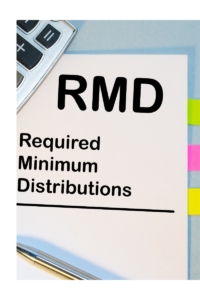
Required Minimum Distributions (RMDs) are mandatory withdrawals from certain tax-advantaged retirement accounts that owners must make at retirement age.
The IRS mandates this age threshold to help ensure retirees begin drawing down their retirement savings and paying taxes on deferred income.
As of 2023, the age for starting RMDs changed to age 73. The first RMD must be taken by April 1st of the year after you turn 72 (or age 73 if you reach 72 in 2023 or later). Each year after that, RMDs must be withdrawn by December 31st. Understanding the timing and requirements for RMDs is crucial for retirement planning. As always, it is important to consult a financial advisor to ensure compliance with RMD rules.
FAQ #2. How is the RMD Amount Calculated?
The RMD amount is determined by dividing your retirement account balance as of December 31st of the previous year by your life expectancy factor. The IRS uses a specific formula to calculate your RMD, considering your account balance and factors related to life expectancy. To estimate your specific RMD amount, refer to the IRS’s Uniform Lifetime Table. It’s worth noting that the IRS has additional tables for account holders and beneficiaries whose spouses are considerably younger.
Each account’s RMD must be calculated separately, but you can combine the total RMD amount and withdraw it from any of your traditional IRAs to meet the requirement. This flexibility allows you to choose the most advantageous approach for your withdrawals. If you need clarification on your RMD, use our free online RMD Calculator for personalized guidance.
FAQ #3. What Happens If I Don’t Take My RMD?
Suppose you fail to withdraw your Required Minimum Distribution (RMD) by the December 31st deadline. In that case, the IRS imposes a significant penalty—an excise tax of 25% on the amount that should have been withdrawn; possibly 10% if the RMD is timely corrected within two years.
If you miss taking an RMD, you must complete IRS Form 5329. Specifically, Part IX of this form addresses the additional tax on excess contributions due to missed RMDs. It’s essential to rectify missed RMDs promptly to mitigate penalties and fulfill tax obligations. Additionally, consulting with a financial advisor can guide you on corrective actions if you miss your RMD deadline.
Required Minimum Distributions (RMDs) primarily apply to traditional retirement accounts and employer-sponsored retirement plans, including:
It’s important to note that Roth IRAs do not require RMDs during the account owner’s lifetime, as they are funded with after-tax dollars. However, beneficiaries inheriting Roth IRAs may have RMD obligations based on IRS rules and guidelines. Understanding which accounts require RMD distributions is essential for retirement planning and providing compliance with IRS regulations. If you have questions about RMDs related to your retirement accounts, consult a financial advisor for guidance.
FAQ #5. Can I Take RMDs From One Account to Satisfy Another?
While RMDs must be calculated separately for each IRA account, the total required amount can be withdrawn from one or more IRA accounts of your choosing. It’s important to note that RMDs cannot be directly rolled over into a Roth IRA. However, any withdrawn RMD amount can be used for living expenses. If eligible based on income requirements, you can contribute a portion of your income to a Roth IRA separately.
For employer-sponsored 401(k)s plans, RMDs must be taken separately from each specific plan. This means you cannot combine RMDs from different employer-sponsored plans to satisfy the requirement from a single source.
FAQ #5. Can I Withdraw More Than the RMD Amount?
You can withdraw more than the Required Minimum Distribution (RMD) amount from your retirement account without penalties. However, it’s important to consider that withdrawing additional funds beyond the RMD can increase your taxable income for the year.
Before making any additional withdrawals, it’s advisable to consult with a financial advisor to understand the tax implications fully. They can provide personalized guidance based on your financial situation and help you make informed decisions regarding your retirement withdrawals. Remember that strategic planning can help optimize your retirement income while minimizing unnecessary tax liabilities.
Working With a Fiduciary Financial Advisor
When it comes to preparing for a worry-free retirement, it’s crucial to understand how RMDs work. One part of that is staying on top of the ever-evolving landscape of retirement laws and legislation updates. Working with a trusted financial advisor can be a game-changer in effectively managing—and understanding—your RMDs. They can help you fulfill your legal obligations and provide personalized guidance to optimize your financial situation within the bounds of IRS regulations.
At Agemy Financial Strategies, we are here to offer in-depth insights into your specific RMD responsibilities and explore tax-efficient strategies for RMD management. We work with you to assess your retirement income needs and craft a tailored plan aligned with your unique financial goals. Furthermore, as a fiduciary firm, we always act in your best financial interest, not our own. Please refer to our service offerings page for a comprehensive list of our services.
Final Thoughts
Navigating Required Minimum Distributions (RMDs) can be complex, especially for retirees with substantial retirement account balances. Remember, RMDs are a tool that can help you access and enjoy the savings you’ve diligently built over your working years. At Agemy Financial Strategies, our team is here to provide personalized guidance and support tailored to your financial needs and goals. Let us help ensure your tax obligations are appropriately managed throughout your retirement.
If you want to learn more about navigating RMDs and planning for a secure retirement, contact us here today.
Tips for Boosting Your Retirement Income
NewsPlanning for retirement can be overwhelming, primarily when investing your hard-earned savings. While there are countless formulas and strategies, taking a step back and considering the big picture is essential.
This blog will review practical tips and insights to help you make informed investment decisions that align with your retirement goals. From managing risk to diversifying your portfolio, we will cover everything you need to know to make your retirement investing more accessible and effective. So, let’s dive in and start securing your financial future. Here’s what you need to know.
Set Financial Goals
When investing for your financial future, you are essentially allocating your money to an asset that is created with the intention of allowing your money to grow over time. If you’re thinking about investment goals, you’ve probably got a good idea of what you want to get out of your money. Knowing yourself, your needs and objectives, and your appetite for risk is a good start. But you’ll also need to consider factors such as your income, age, and future outlook, all of which will influence your motivations for investing.
Your goals should ultimately be divided into short-term, mid-term, and long-term ones.
Among your short-term goals might be to:
Your mid-term goals might include:
Then review your long-term goals, including:
Setting objectives you hope to achieve can help you stay on track with your retirement planning. You’ll have something to look forward to, and be ready to enjoy new opportunities in retirement.
Manage Your Risk
As you approach retirement, your investment strategy should shift to prioritize capital preservation and generating income. This means you may need to adjust your portfolio to reduce your exposure to risky assets and focus on investments that can provide reliable income streams. For example, investing in high-quality bonds can provide steady income with lower risk than stocks.
However, it’s important to remember that too much caution can harm your retirement savings. If you avoid all risks, your investments may not keep up with inflation, which can erode the value of your savings over time. To balance risk and reward, consider diversifying your portfolio across different asset classes. The following assets can help you capture growth while also managing risk:
Remember that your risk tolerance may change over time, and you may need to adjust your investments accordingly. As you age, you may become more risk-averse, requiring you to shift your portfolio towards more conservative investments. On the other hand, if you have a long retirement horizon, you may need to maintain a higher level of risk to generate enough growth to support your retirement needs.
Focus on Income
In retirement, generating income is crucial for sustaining your lifestyle and meeting your expenses. Investing in assets that produce income, such as dividend-paying stocks, bonds, and annuities, can be a wise strategy to generate a reliable income.
Notably, during the transition to retirement, a significant proportion of individuals were familiar with annuities (57%, as per Figure 3). Approximately 48% were aware of using interest and dividends from an investment portfolio to generate income. By investing in these income-producing assets, retirees can secure a reliable cash flow to support their retirement needs.
Dividend-paying stocks are shares of companies that distribute a portion of their profits to shareholders in the form of dividends. These stocks can provide a reliable source of income as many companies have a history of paying dividends and increasing them over time. However, remember that dividend-paying stocks may be more volatile than other investments.
Bonds are another option for generating income during retirement. These debt securities issued by governments or companies can provide regular income through interest payments. They are generally less risky than stocks, but the value of bonds can fluctuate with changes in interest rates and inflation.
Annuities are a popular option for retirees seeking to generate income. They are contracts between you and an insurance company that provide regular payments in exchange for a lump sum or a series of payments. Annuities can provide a guaranteed source of income for life, which can help protect against the risk of outliving your savings. However, some annuities can be complex and expensive (like Variable Annuities), so it’s essential to consider the terms and fees carefully before investing.
Staying on Top of Taxes
To ensure that taxes do not eat into your retirement income, it’s crucial to understand the tax implications of your investment decisions. One way to reduce your tax liability is to invest in tax-advantaged accounts, such as IRAs or 401(k)s, which offer tax benefits such as tax-deductible contributions or tax-free withdrawals in retirement. However, it’s important to remember that if you are 72 or older, you must take your required minimum distributions; otherwise, you will face a hefty penalty.
Contributing to tax-advantaged accounts can not only reduce your taxable income but also defer taxes until you withdraw the money in retirement, potentially when you’re in a lower tax bracket. To develop a tax-efficient investment strategy that aligns with your retirement goals, consider consulting with a financial advisor. They can provide valuable guidance on managing taxes and maximizing your retirement income.
Staying Diversified
Diversification is crucial for managing risk and achieving retirement goals. It spreads investments across multiple asset classes, reducing the impact of market fluctuations on retirement savings. A diversified portfolio includes a mix of asset classes with different risk and return characteristics, such as stocks, bonds, real estate, and commodities.
Regular review and rebalancing of a diversified portfolio are essential. Consult a financial advisor to develop a well-diversified portfolio that aligns with your risk tolerance and retirement goals.
Investing With Agemy Financial Strategies
Investing should be easy – just buy low and sell high – but most of us have trouble following that simple goals. Understanding these principles and strategies can help you avoid some of the pitfalls that snare some investors.
In the past, market volatility has been an opportunity to pick up more income-producing assets at a good price. But now we are entering a period where market volatility is likely to be higher than normal and economic conditions could be rough. So some investors would like to put some of their assets into investments of greater security.
We are able to help you find a low-risk investment strategy that focuses on cash flow and security first. It’s important to look at your finances and see if any of the above strategies could help you in the long run.
At Agemy Financial Strategies, we want you to know we’re here to help you navigate retirement and answer any questions that come up during your retirement process. As Fiduciary advisors, it’s our duty to act on your behalf in finding the right solutions for your individual wants and needs.
For more information on our investing, retirement and financial planning services, contact us here today.