The great wealth transfer, or intergenerational wealth transfer, is the transmission of family assets from generation to generation. Baby Boomers are on the verge of transferring trillions of dollars in wealth to younger generations in the coming years, signifying a notable shift in financial dynamics. Is your family ready to navigate and benefit from this historic transfer of wealth?

Over the next two decades, a massive amount of wealth is set to fall into the hands of Generation X and Millennials. The great wealth transfer recipients are estimated to inherit $84 trillion in assets by 2045, with $72.6 trillion going directly to heirs and $11.9 trillion to charity.

So, what can we expect as this wealth transfer takes place? And how can we best prepare for the changes to come? Today, we’ll explore the answers to these questions and more as we explore the impact of intergenerational wealth transfer on our society and economy.

How Intergenerational Wealth Was Born

This new era of intergenerational wealth began unfolding in the mid-2010s, coinciding with the Baby Boomer generation’s retirement. Born into unprecedented prosperity following World War II, Boomers entered the workforce during an economic boom in history, helping them amass wealth through investments in real estate and the stock market.

Between 1983 and 2023, the value of homes soared by 500%, with stock market gains even more impressive. Americans have roughly $156 trillion in assets, but half of that wealth — $78.1 trillion — belongs to the baby boomers. The rest is spread across Generation X, the Silent Generation, and Millennials. Understanding how intergenerational wealth works is important as it is key in protecting assets that will one day be passed down to you.

How Intergenerational Wealth Works

Intergenerational wealth can be passed down through inheritance, gifting, or other means, and it is accumulated over time through a combination of hard work, wise investments, and other factors. The transfer of intergenerational wealth can significantly impact both the receiving and giving generations.

For the receiving generation, it can provide financial stability, educational opportunities, and the ability to pursue personal goals and passions. For the giving generation, it can offer a secure feeling of passing on a legacy and helping their loved ones achieve their dreams. With deliberate financial planning, the process doesn’t have to be overwhelming.

Starting The Conversation Early

This topic has become an increasingly important issue, especially for those nearing retirement. If you find yourself in this situation, you may wonder how to pass your wealth to your children and grandchildren. Even if your children and grandchildren are young, you can set aside money in a trust or savings account for their future.

This can help you maximize the power of compound interest and grow your wealth over time. However, dealing with multiple assets across generations can sometimes make adopting an open communication approach challenging.

Nonetheless, due to the size of the task, it is essential to have a clear plan in place. Seeking the help of a trusted fiduciary advisor can be particularly useful in sensitive family circumstances as they can offer unbiased advice. It is crucial to establish a solid financial plan that helps protect the interests of all parties involved. This can help secure the transfer of wealth within your family and protect the wealth for future generations.

Understanding Your Options

Seeking the professional guidance of a fiduciary advisor is one of the most significant measures you can take to establish a successful wealth transfer strategy. By working with a fiduciary and taking a thoughtful, strategic approach, you can create a plan that aligns with your values and helps protect your legacy. Together, you can investigate your options regarding:

  • Establishing a Trust: A trust is an additional valuable asset that can help protect your wealth and guarantee it is allocated to your wishes. You can set up a trust that pays out income to your heirs for a specified time or until they attain a specific age. You can also include provisions determining how the funds are utilized, such as education or medical expenses.
  • Using gift tax exemptions: You can give up to a certain amount of money each year to your children and grandchildren without incurring gift taxes. Taking advantage of these exemptions allows you to transfer your wealth while helping minimize your tax liability (more on this below).
  • Thinking beyond cash: While cash gifts are certainly appreciated, there are other ways to transfer wealth. You can gift stocks, real estate, or other assets that have the potential to appreciate over time. This can help your heirs build their wealth and help provide a lasting legacy.
  • Educating your heirs: It’s important to talk to your children and grandchildren about your wealth and your wishes for using it. By educating them about financial planning and responsibility, you can help ensure they are equipped to handle the wealth you pass on to them.

Avoiding Common Mistakes

When figuring out the best way to pass along assets to the next generation, there are certain mistakes you should avoid. A few to watch out for include:

  • Leaving estate planning to your loved ones: Being intentional with your estate planning is a gift to your loved ones. Doing so not only benefits them, but it can also provide a great deal of peace for you, too.
  • Transferring the entirety to one individual: Being left with large amounts of wealth can be daunting, leaving beneficiaries feeling overwhelmed and unable to meet expectations. Plus, if something happened to that beneficiary, the rest of the family could be left scrambling on where to turn.
  • Not reviewing your plan: Up until the day you pass away, estate plans can be legally changed if the changes are done so without coercion and under the right frame of mind. Reviewing your plan regularly – and keeping your advisor up-to-date on any life changes – will help ensure your plan continues to work.

Don’t Forget About Taxes

Taxes can take a significant bite out of your wealth at the federal and state levels. Several types of taxes can come into play and affect the value of your estate passed on to your heirs.

  • Inheritance tax is a state levy Americans pay when they inherit an asset from someone who’s died and is deemed a tax on your right to transfer property at your death. Only six states currently have inheritance tax: Iowa, Kentucky, Maryland, Nebraska, New Jersey, and Pennsylvania.
  • Gift tax applies to financial gifts made from you to someone else. As the gift giver, you’re responsible for paying the gift tax. However, the IRS allows you to make gifts up to an annual exclusion limit before the gift tax applies.
  • The federal estate tax is a tax that’s levied on the transfer of property when someone passes away. At the upper range, the federal estate tax can reach 40%. A taxable estate includes all of the decedent’s property minus any allowed costs, losses, exclusions, or deductions.

Whether you pay estate tax might come down to the state you live in. If you reside in Connecticut, the estate tax exemption for 2023 is $12,920,000 per individual. You can repay those amounts over your lifetime without paying federal income tax. Any amount above is taxed at 12%.

There is no estate or inheritance tax in Colorado. Though taxes are not always completely avoidable, the best wealth transfer strategies work to help minimize this tax liability.

Creating Your Wealth Transfer Plan

An intergenerational wealth transfer plan is an important part of the estate planning processAgemy Financial Strategies offers experienced financial advising services to help individuals and families create and implement financial plans tailored to their unique needs and goals.

Our trusted financial advisors will help you create a plan that positively impacts all family members to help ensure your loved ones are better off in the long term.

Contact us today to learn more and schedule your complimentary consultation

Unlocking additional income streams during retirement is not only about financial security but also about embracing newfound passions and experiences.

More than 1 in 4 retirees say they’re spending more than they can afford, according to an October 2022 survey by the Employee Benefit Research Institute. With inflation rates’ unpredictability in 2023, it’s not surprising that savings aren’t going as far as they used to. But there are ways to bring in extra income without taking on a full-time job. 

In this blog, we will explore strategies to help wealthy retirees generate extra income while basking in the golden years. Let’s explore what you need to know.

Invest Wisely

Investing is a key strategy for retirees seeking to generate additional income during their retirement years. With ample financial resources, retirees can explore various investment avenues, including stocks, real estate, and bonds, to maximize returns and create a steady stream of passive income.

According to ICI.org, Americans had $6.8 trillion invested in 401(k)s and $12.5 trillion in IRAs in the first quarter of 2023. This number further Illustrates the importance of retirement savings and the potential for significant wealth generation through wise investment decisions.

However, making sound investment choices during retirement requires careful consideration of individual circumstances and financial goals. This is where the guidance of a trusted financial advisor becomes invaluable. About 4 in 10 retirees use a personal financial advisor for retirement planning information and advice, which underlines the need for more retirees to seek help. A qualified advisor can assess a retiree’s risk tolerance, income needs, and desired lifestyle to tailor an investment strategy that aligns with their retirement objectives. See here for further investment strategies.

Rental Properties

Investing in rental properties can be a lucrative strategy for retirees to generate additional income during their retirement years. Real estate offers unique advantages, such as a reliable source of rental income and the potential for long-term appreciation. Owning properties in desirable locations can provide consistent cash flow and potential for capital appreciation.

In 2022, there was a notable shift in investment trends among Americans. The percentage of investments in target-date funds increased to 45%, while equity and balanced funds accounted for 55% of investments. This rise in popularity of target date funds also increased Real Estate Investment Trusts (REITs) ownership, leading to a growing number of Americans investing in REITs.

Moreover, real estate investments have the potential for capital appreciation over time. As property values increase, retirees can benefit from the growth in the market value of their properties. This appreciation can further bolster their wealth and provide a valuable asset to future generations.

Dividend-Paying Stocks

Investing in dividend-paying stocks can be an attractive option for retirees seeking a steady income stream. Dividend stocks are shares of companies that distribute a portion of their earnings back to shareholders in the form of regular dividends. These dividends can be reinvested to compound wealth over time or used to cover living expenses.

The allure of dividend stocks lies in their ability to provide a reliable income, especially when investing in companies with a history of stable and consistent dividend payouts. Companies with a track record of increasing dividends over time are often referred to as “dividend aristocrats” and can be particularly appealing to retirees looking for a dependable source of income.

Additionally, dividend-paying stocks offer the potential for capital growth. As the company’s stock price appreciates over time, retirees can benefit from both the income generated by dividends and the potential increase in the value of their investments.

High Yield Bonds

High-yield bonds, also known as “junk bonds,” are another income-generating option for retirees. These bonds typically offer higher interest rates than government or investment-grade corporate bonds, making them an attractive source of income for those seeking higher yields.

However, retirees must be mindful of the associated risks with high-yield bonds. Because companies that issue these bonds with lower credit ratings carry a higher default risk than investment-grade bonds. In other words, there is an increased chance that the issuing company may be unable to fulfill its debt obligations.

Retirees should work closely with a financial advisor to navigate the risks associated with high-yield bonds. A qualified advisor can help select suitable bonds that align with the retirees’ financial goals and risk tolerance. Diversification is also key when investing in high-yield bonds to spread the risk across various issuers and industries.

Philanthropic Investments

Philanthropic investments offer retirees a unique and fulfilling opportunity to align their financial goals with social impact. Impact investing involves supporting companies and projects that aim to generate financial returns and strive to make a positive difference in society or the environment.

Through impact investing, retirees can direct their financial resources towards causes they are passionate about, such as education, healthcare, environmental conservation, and more. This approach allows them to make a meaningful contribution to the betterment of society while potentially earning additional income.

These investments can encompass various sectors, including renewable energy and social enterprises, to name a few. Engaging in philanthropic investments can foster a sense of purpose and fulfillment during retirement. For retirees who have achieved financial success, impact investing provides a meaningful way to leave a lasting legacy by contributing to the greater good and creating a positive impact for future generations.

Working with experienced financial advisors or impact investing professionals can help retirees identify reputable and impactful investment opportunities that align with their values and financial objectives.

CDs

If you are retired and need to fill a gap in your monthly income stream, save for other medium-to-long-term goals or supplement your existing investment mix, Certificates of Deposit (CDs)– including Discover’s CDs and tax-advantaged Individual Retirement Account (IRA) CDs — is one of the safest and easiest ways to make retirement income.

One CD strategy for generating cash flow is called a CD ladder. Open a series of CDs that mature at different times. When the first CD matures, harvest the interest income, but reinvest the principal in another CD at the top of your “ladder.” This approach can create a consistent and ongoing income stream to last throughout your retirement years. With Discover CDs, you always have convenient renewal options at maturity, making it easy to put this income-management practice into effect.

The downside is that interest rates are just above all-time lows, making it a not especially lucrative time for CD investors. That said, CDs are easy to buy, and CDs at FDIC-backed banks are practically completely safe.

Working With a Fiduciary Advisor

Fiduciary Advisor provides invaluable guidance in determining investment objectives, creating personalized retirement plans, and offering ongoing portfolio management. When choosing an advisor to help see you through retirement, asking relevant questions about their experience and approach to retirement planning is a great first step. By doing so, you can find out if the advisor/firm aligns with your goals, needs, and beliefs.

At Agemy Financial Strategies, our team of Fiduciary Advisors is well-versed in comprehensive retirement planning services to help you reap a steady stream of income throughout your golden years. We are dedicated to helping clients navigate the intricacies of investment management during retirement to help ensure you never outlive your savings, so you and your family can gain peace of mind knowing that your retirement income plan is in capable hands.

In today’s volatile economy, it’s not the easiest thing to generate income these days. But some legwork and a lot of planning ahead of time can help you find the best returns out there.

Contact us today to take the first step towards a prosperous and rewarding retirement!

There are a lot of critical steps to preparing for retirement. One of the most important can be understanding the tax implications of your savings and planning for them accordingly.

It’s not just about figuring out how much income you’ll need to cover your post-retirement expenses; it’s also about understanding how taxes will affect your financial well-being during those years of relaxation.

In this blog, we’ll delve into the tax implications of retirement savings, equipping you with the knowledge you need to make informed financial decisions for your golden years. Here’s what you need to know.

Understanding Taxes and Retirement Income Sources

In retirement, your income will likely be a blend of resources, including Social Security, investments, and personal savings like 401(k)s and IRAs. Yet, it’s common for soon-to-be retirees to underestimate the intricate connection between these income sources and the tax implications they carry.

By acquiring a solid understanding of how taxes interplay with your retirement income, you gain the ability to make more informed financial choices. Making smart financial decisions can help you optimize your financial situation, help minimize tax liabilities, and help guarantee your retirement nest egg lasts so it can support the lifestyle you desire during your golden years. Let’s explore some of the key tax rules to keep in mind as you navigate retirement.

Taxes on Retirement Income

In retirement, different kinds of income are taxed differently:

  • Most interest on bank deposit accounts (such as CDs or checking and savings accounts) is taxed at the same federal income tax rate as the money you receive from paid work.
  • Distributions from traditional 401(k)s and IRAs are typically subject to the tax rates associated with your current marginal tax bracket.
  • Dividends paid or gains from the sale of stocks are taxed at 0%, 15%, or 20%, depending on how long you’ve held the stock, your taxable income, and your tax filing status.
  • Other income—such as qualified withdrawals from a Roth IRA, a Roth 401(k), or a health savings account (HSA)—are not subject to federal income taxation and do not factor into how your Social Security benefit is taxed. (Roth IRA distributions must meet the 5-year aging requirement to be tax-free and HSA withdrawals are only tax-free when used to pay for qualified health expenses.)

Retirement accounts like 401(k)s and IRAs are powerful tools for building your nest egg, but they come with rules, especially regarding withdrawals and taxes. Investing in Roth accounts can help shield you from unexpected taxes in retirement. However, if you’re using a traditional account and your withdrawals, be prepared to manage these extra costs on top of your regular expenses.

What About RMDs?

Required minimum distributions (RMDs) are the minimum amounts you must withdraw from your retirement accounts each year. Required Minimum Distributions (RMDs) are for investors who have reached age 73 and have a traditional 401(k) or individual retirement account (IRA). For years, the age threshold was 70½, but it was raised to 72 following the passage of the Setting Every Community Up for Retirement Enhancement (SECURE) Act. The RMD age was increased again at the end of 2022 to 73 as part of SECURE 2.0.

The onset of RMDs can put eligible taxpayers in between the rock and the hard place. If you don’t take them or withdraw the right amount, you’ll owe major penalties. But if you do take them, they’ll boost your taxable income—and hence, your income taxes for the year (unless the account in question is a Roth IRA or 401(k) that has been funded with after-tax dollars).

So, how can you navigate these potential tax challenges? Here are some tips:

  • Diversify Your Savings: Instead of putting all your savings into tax-deferred accounts, diversify into accounts with different tax treatments, such as Roth IRAs, where withdrawals are tax-free in retirement.
  • Consider Roth Conversions: Before age 72 (or 73, if you reach age 72 after Dec. 31, 2022), consider gradually converting portions of your tax-deferred accounts to Roth accounts. While this requires paying taxes on the converted amount at your current tax rate, it can reduce future RMDs and provide tax-free income in retirement.
  • Plan Your Withdrawals: Collaborate with a financial advisor to strategize withdrawals from various accounts to help minimize your tax liability.
  • Use RMDs for Charitable Giving: If you’re inclined to give to charity, consider using your RMDs for charitable donations through a Qualified Charitable Distribution. This helps meet the RMD requirement without increasing your taxable income.

By staying mindful of the potential tax implications and adopting a strategic plan, you can secure your retirement savings and reach your financial goals without an unnecessary tax burden.

Reduced Social Security Benefits

Many older adults in the United States have been surprised by the higher-than-expected Social Security payments and the substantial taxes accompanying them. Social Security benefits are subject to taxation in eleven states, such as Colorado and Connecticut, and the amount you may owe in taxes can reach up to 85% of your Social Security benefits, depending on the rules set by the Internal Revenue Service (IRS). Here’s how it works:

  • If your combined income falls between $25,000 and $34,000, up to 50% of your benefits may be taxable.
  • For individuals with an income exceeding $34,000, as much as 85% of their benefits could be subject to taxation.
  • Joint filers with a combined income of $32,000 to $44,000 might face taxes on up to 50% of their benefits.
  • If joint income exceeds $44,000, up to 85% of their benefits may be taxable.

The primary way to reduce the income tax on your Social Security benefits is by keeping your combined income below the specified threshold. Some effective strategies to help you lower your threshold include:

  • Investing in Roth IRAs for your retirement income.
  • Tapping into taxable income sources before retirement.
  • Exploring options for gifting or transferring assets to reduce the taxable portion of your estate.

By exploring and combining these strategies, you can work towards minimizing the taxes on your Social Security benefits and improving your financial situation in retirement.

Estate Planning for Gifting and Legacies

A sizeable nest egg can position you well to financially assist family members or contribute to causes close to your heart. This could range from contributing to a grandchild’s college fund, helping with a relative’s medical expenses, or donating to your preferred charities. Transferring wealth can help you avoid high estate taxes, which can exceed income tax rates. Some states also impose inheritance taxes on what your heirs inherit. Here are some key points to remember:

  • Connecticut has its own estate tax rules. For those who passed away before 2023, the estate tax rate varied between 10.8% and 12%, depending on the estate’s total value. However, starting in 2023, Connecticut has implemented a flat estate tax rate of 12%, regardless of the estate’s size.
  • While Colorado has no estate tax, you might still need to pay federal estate tax. This tax only applies to individuals who pass away in 2022 if your estate is worth over $12.06 million. In 2023, the exemption rises to $12.92 million. Additionally, married couples can share this exemption, effectively doubling the amount they can pass on tax-free.

A strategic approach to mitigate over-saving is taking full advantage of annual and lifetime gift tax exclusions. In 2023, the annual tax-free gift limit is $17,000 per recipient, increased from $16,000 in 2022. You can give this amount to multiple individuals without incurring federal gift tax. Married couples can jointly give up to $34,000 per recipient. Staying within these limits eliminates the need to file a gift tax return for the year. Working alongside a trusted Advisor can aid in helping secure your financial legacy.

Work With A Financial Professional

If you’re worried about retirement planning, working with a Fiduciary Advisor can be beneficial. They can offer personalized plans and investment strategies to help you reach your retirement goals with ease.

At Agemy Financial Strategies, we are committed to educating our clients on various financial matters, including retirement planning, legacy planning, and wealth management, and we even provide support during the transition to retirement. With over 30 years of experience helping individuals retire, our unwavering dedication to educating and serving our clients remains at the core of our mission.

Final Thoughts

Tax planning is an important aspect of retirement planning that cannot be overlooked. Retirees who take the time to understand their tax obligations early can enjoy a more secure financial future.

While certain taxes may be deferred, others can be minimized through tax-efficient investment planning. This is why a Fiduciary advisor can be a valuable resource for those seeking to navigate the complexities of tax planning.

At Agemy Financial Strategies, we can help you explore your options to help ensure you’re not missing out on tax strategies that could help boost your retirement savings.

Let’s put together your personalized plan with a complimentary strategy session. Set yours up here today.

Inheriting wealth can be both a blessing and a daunting responsibility. While it provides financial security and opportunities, it also comes with the challenge of managing and preserving that wealth for future generations.

Whether you’ve recently inherited a significant sum or anticipate it in the future, understanding the steps to take after inheriting money is crucial to help ensure that you make the most of this windfall while protecting your financial well-being. In this blog post, we’ll explore some key considerations for navigating wealth transfer effectively. Here’s what you need to know.

Navigating An Inheritance Windfall

The first step after inheriting money is to take a moment to breathe and come to terms with the emotions that often accompany the loss of a loved one. Grief, relief, or a mix of emotions can be overwhelming during this period. According to the Federal Reserve’s Survey of Consumer Finances, slightly over 20% of U.S. households had experienced an inheritance at some point.

A financial windfall, or “sudden wealth”, is an unexpected and substantial financial gain that arrives suddenly. Financial windfalls can materialize through various methods, including inheritances, lottery winnings, successful investments, or generous gifts.

An inheritance windfall can usher in a significant and abrupt change in one’s financial situation, offering newfound opportunities, financial security, and the potential to achieve long-standing financial goals. Nonetheless, effective management of a financial windfall is important. This can help ensure your newfound wealth is preserved, grown, and utilized for the recipient’s benefit to enhance their financial future.

Sudden Wealth Syndrome (SWS)

“Sudden wealth syndrome” is not a recognized medical or psychological disorder, but it is a term used colloquially to describe the psychological and emotional challenges that can arise when individuals come into a large amount of money or wealth suddenly, often through events like winning the lottery, receiving a large inheritance, or experiencing a significant financial windfall.

While not an official diagnosis, sudden wealth syndrome refers to a range of emotional and behavioral issues that some people may experience when their financial circumstances change dramatically. These issues can include:

  1. Anxiety: The sudden influx of wealth can create anxiety about managing and protecting the newfound assets.
  2. Stress: Managing finances, taxes, investments, and dealing with the complexities of wealth can be stressful.
  3. Family and relationship problems: Sudden wealth can strain relationships with family and friends, as they may expect financial support or have differing views on how the money should be used.
  4. Identity and self-esteem issues: Some individuals may struggle with their self-worth or identity when their self-image is closely tied to their financial situation.
  5. Impulsive spending: A sudden increase in wealth can lead to impulsive spending and financial mismanagement.
  6. Unrealistic expectations: Expectations of perpetual wealth can lead to disappointment when financial realities set in.
  7. Lack of financial knowledge: Many people who experience sudden wealth may not have the financial knowledge or experience to manage it effectively.

Resisting the impulse to make hasty decisions regarding your inheritance is crucial. Take the time to research and carefully contemplate major financial choices thoroughly. Seek advice from a financial professional and gather all necessary information before making substantial financial decisions.

Long-term Impact of Your Inheritance

When you receive an inheritance, it’s important to consider the long-term effects. Once you’re in a clear state of mind, start by evaluating your current financial situation and setting your goals. It’s important to understand your inheritance clearly. For example, knowing how much you receive and what assets are included. This includes cash, real estate, stocks, bonds, or business interests. A complete picture of your financial situation is crucial before making any decisions.

Inheriting money can bring both good opportunities and potential issues. Think about how it might affect your relationships with family and others. Decide on the best way to handle the assets. This could mean selling real estate and other assets or retaining them for rental income. Throughout this process, it’s essential to prioritize the needs of all beneficiaries and remain attentive to potential tax implications. This can help provide a balanced approach to your wealth management.

Understanding Tax Implications

Estate Tax is a tax on property (cash, real estate, stock, and other assets) transferred from deceased persons to their heirs. A state applies a tax rate to the value of an estate that exceeds a certain threshold. The rate and the exemption threshold differ by state. A typical state with an estate tax exempts $2 to $5 million per estate and applies rates ranging from 1 percent to 16 percent to the value of property left to any heirs except a spouse. On average, fewer than 3 percent of estates — very large ones owned by the wealthiest individuals — owe state estate taxes.

For 2024, the federal estate tax threshold is $13.61 million for individuals, which means married couples don’t have to pay estate if their estate is worth $27.22 million or less.

It’s important to note that an estate tax differs from an inheritance tax. They are often referred to as the “death tax,” The inheritance tax is levied after the money has been passed on to the heirs of the recently deceased. While there is no inheritance tax in Colorado or Connecticut, some states might charge an inheritance tax if the decedent dies in the state, even if the heir lives elsewhere.

In Colorado, there is no estate tax, but if you live in Connecticut, there is an estate tax. As of 2024, there is a flat estate tax rate of 12%.

Seek Professional Advice

Seeking professional advice is crucial when it comes to inheritance for many reasons. Here are a few reasons why:

  • Legal considerations – it is important to consult with a financial advisor and attorney to confirm that your estate plan is legally sound and that your beneficiaries are protected.
  • Tax implications – As seen above, it’s also greatly beneficial to understand the tax implications of these assets to help ensure that you are making the most of your inheritance.
  • Investment and asset management – Inheriting assets, such as real estate or stocks, can be a great opportunity. Still, it can also be a source of stress and conflict if not handled properly.
  • Communication –  Proper communication with beneficiaries can help prevent misunderstandings and conflicts.

Getting a professional point of view on your inheritance situation is a wise choice. Financial professionals can help you address legal, tax, investment, and communication aspects, ultimately contributing to a smoother and more successful wealth transfer process.

Final Thoughts

It is important to carefully consider who you want to inherit your wealth and how you wish it distributed. By carefully considering who you want to inherit your wealth, you can help protect your legacy and support your family and the causes you care about.


With Agemy Financial Strategies, you can have full confidence in discussing your new financial situation with our fiduciaries because it is our duty to never disclose customer details to a third party. Our mission is simple: we want our clients to feel confident knowing they have someone looking out for them and their estate planning needs. When you work with our team of fiduciaries, you can rest assured knowing your finances are secured for the years to come. Our advisors are here to guide you in making well-informed decisions on estate planning, retirement planning, and every other financial consideration.

To schedule a consultation and discuss your options for estate planning, contact us here today.

December 16, 2024

Winter is a season of preparation, both in life and in your finances. As the chill settles in, it’s the perfect time to help ensure your investments are resilient enough to weather 2025’s financial storms.

A recent study found that 59% of investors are looking to add more protection to their portfolio after recent market volatility, highlighting the need for a proactive approach to financial planning. Ready to fortify your investments for the year ahead? Here are key tips to help you winterize your portfolio and confidently face any financial storm.

Why Reevaluate Your Investment Strategy?


The financial landscape is constantly in flux, shaped by shifting economic indicators, fluctuating interest rates, and unpredictable geopolitical events. These factors can significantly impact market performance and, in turn, the value of your investments. Regularly reevaluating your investment strategy helps align your portfolio with your current goals, risk tolerance, and the ever-changing market conditions.

51% of investors reported adjusting their portfolios to reduce risk or adopt a more conservative stance due to market volatility. This shows the importance of taking a proactive approach to investment management. By periodically reassessing your strategy, you can better protect yourself against uncertainties and position your portfolio for resilience, even during turbulent times.

Key Considerations When Reviewing Your Investment Strategy

  1. Market Trends and Economic Outlook

With 2025 around the corner, the financial landscape is expected to present new challenges, including potential inflationary pressures and shifts in monetary policy. Staying informed about key market trends is crucial for making informed investment decisions. The Federal Reserve cut its benchmark short-term rate by a combined 0.75 percentage point at its last two meetings to a range between 4.5% and 4.75% last month. Such increases can significantly impact bonds and other interest-sensitive assets, potentially leading to decreased bond prices and higher yields. Investors should consider the implications of these changes on their portfolios and explore strategies to help mitigate interest rate risk.

  1. Asset Allocation

In times of market uncertainty, a well-thought-out asset allocation strategy is essential for managing risk while maximizing potential returns. Diversification—spreading investments across various asset classes—acts as a buffer, helping to stabilize your portfolio against market volatility. Balancing equities, fixed income, and alternative investments can create a robust financial strategy tailored to weather-shifting economic conditions. Consider the following to help strengthen your portfolio:

  • Equities: Focus on diverse growth sectors like technology or renewable energy.
  • Fixed Income: Opt for shorter-duration bonds to help manage potential interest rate risk.
  • Alternatives: Diversify with real estate or commodities for stability during potential market fluctuations.
  1. Tax Implications

Evolving tax laws make it increasingly important to focus on tax-efficient investment strategies. Approaches like tax-loss harvesting can potentially offset capital gains, reducing your overall tax burden, while contributions to Roth IRAs or tax-advantaged accounts can boost your savings potential. For 2025, the IRS increased contribution limits for IRAs and 401(k)s:

  • 401(k)s, 403(b)s, and Most 457 Plans: The contribution limit has increased to $23,500 for 2025, up from $23,000 in 2024—a modest $500 increase that allows for a slightly higher savings potential.
  • SIMPLE Plans and SIMPLE IRAs: Contribution limits for these plans have risen to $16,500 for 2025, up from $16,000 in 2024. This adjustment offers participants an additional avenue to grow their retirement funds.
  • IRAs: The annual contribution limit for IRAs remains unchanged at $7,000 for 2025, consistent with the 2024 limit.

Steps to Reevaluate Your Investment Strategy 

  1. Assess Your Goals

Your investment strategy should always align with your current financial goals, which often evolve with life’s changes.

For instance, as you approach retirement, your focus may shift from growth-oriented investments to income preservation and distribution strategies.

Regularly revisiting and refining your goals helps your portfolio align with your priorities, including maintaining your lifestyle in retirement, funding a grandchild’s education, or building generational wealth.

Partnering with a trusted advisor can also provide valuable guidance, helping you confidently clarify and achieve these objectives.

  1. Review Your Risk Tolerance

Market volatility is a constant, but your ability to withstand it isn’t. Age, financial obligations, and overall net worth can influence risk tolerance. However, a more conservative approach might be prudent if you’re closer to retirement or reliant on your investments for income.

Periodically reassessing your risk alongside a fiduciary advisor can help ensure your investment portfolio aligns with your capacity to handle losses during turbulent times.

  1. Incorporate New Opportunities

Diversifying into emerging sectors can provide growth potential while helping to future-proof your portfolio.

The investment world is dynamic, with new opportunities constantly on the horizon. Trends like sustainable investing and ESG (Environmental, Social, and Governance) funds have gained traction as investors increasingly prioritize ethical and environmental considerations. Likewise, technological advancements like artificial intelligence (AI) and Bitcoin could offer significant growth potential. However, it’s important to approach these opportunities with caution.

A fiduciary advisor can help you understand the risks and determine whether they align with your long-term financial goals.

  1. Plan for the Long Term

While short-term trends matter, it’s crucial to maintain a long-term perspective. An emphasis on consistent contributions, disciplined saving, and strategic planning can position you for enduring financial success. You can develop a well-rounded and adaptable investment strategy that addresses your evolving financial needs while positioning you for long-term success.

Common Challenges Investors Face in 2025


  1. Inflation and Purchasing Power

Persistent inflation erodes purchasing power, affecting everything from household budgets to investment returns. Diversifying into inflation-resistant assets, such as Treasury Inflation-Protected Securities (TIPS) or commodities, can be prudent.

Additionally, commodities like gold or energy resources can act as a hedge, preserving wealth during rising prices.

  1. Volatility and Emotional Decision-Making

The unpredictability of markets can test even the most seasoned investors. Emotional reactions—such as panic selling during downturns or overenthusiastic buying during market highs—often lead to poor investment outcomes. These impulsive decisions can result in locking in losses or missing out on recovery gains.

Developing and sticking to a disciplined investment strategy, possibly with the guidance of a fiduciary advisor, can help you maintain perspective and avoid costly mistakes.

  1. Longevity Risk

With life expectancies rising, preparing your portfolio to sustain you through decades of retirement has never been more critical. Longevity risk—the possibility of outliving your savings—requires careful planning. Incorporating income-generating investments, such as certain annuities, dividend-paying stocks, or real estate, can create potential income streams. Coupled with a thoughtful withdrawal strategy, these tools can provide financial security for the long term while helping maintain a comfortable lifestyle.

How Agemy Financial Strategies Can Help 

At Agemy Financial Strategies, we help guide high-net-worth individuals through the intricacies of wealth management, retirement planning, and investment strategies. We understand that every financial journey is unique, and our goal is to provide you with a comprehensive, customized roadmap to achieve your financial aspirations.

Investing always carries some risk, but our team of fiduciaries helps you strike the right balance between risk and reward. Through regular portfolio reviews and adjustments, we help ensure your investment strategies remain aligned with your goals and market conditions. Our focus on downside protection helps protect your assets against unexpected market shifts. To see a full list of our services, see here.

Seize the Season to Strengthen Your Finances

Winter is a season of preparation, and your investments deserve the same care and attention. By taking proactive steps to reassess your strategy now, you can help ensure your portfolio is well-positioned to weather market fluctuations and achieve your long-term financial goals. Agemy Financial Strategies is here to guide you every step of the way.

Contact us today to schedule a consultation, and let us help you make the most of your investments in 2025 and beyond.

FAQs: Preparing Your Portfolio for 2025

Q: How often should I rebalance my portfolio?
A: Generally, reviewing your portfolio at least annually is recommended. Significant market changes or life events may warrant more frequent rebalancing. Agemy Financial Strategies can help you stay on track by regularly monitoring your portfolio and adjusting to help you remain aligned with your evolving goals and market conditions.

Q: Should I shift all my assets to “safe” investments like bonds?
A: While safety is important, diversification is key. Agemy Financial Strategies can guide you in creating a balanced portfolio that reflects your risk tolerance while optimizing growth opportunities.

Q: What tax-efficient strategies can I use to maximize my investments?
A: Consider strategies like Roth conversions, tax-loss harvesting, and maxing out contributions to tax-advantaged accounts. Agemy Financial Strategies can help you navigate tax-smart investing and develop a tailored plan to help minimize your tax liabilities while maximizing potential investment returns.

Q: How can I prepare my portfolio for rising interest rates?
A: To mitigate the impact of rising rates, consider shorter-duration bonds, Treasury Inflation-Protected Securities (TIPS), or dividend-paying equities. These can provide income and stability without overexposing your portfolio to interest rate risk. Agemy Financial Strategies can help you navigate interest rate fluctuations with a strategy designed to protect your assets and achieve your financial goals.

Q: Are alternative investments worth considering?
A: Yes, alternatives like real estate, commodities, and private equity can potentially diversify your portfolio and reduce correlation with traditional assets. These options may provide stability and growth potential during periods of market volatility. However, they often require thorough research and a longer time horizon. Agemy Financial Strategies can evaluate these opportunities, helping align with your objectives and risk tolerance while enhancing portfolio diversification.


Disclaimer: The information provided in this blog is for educational purposes only and does not constitute specific investment advice. Investment decisions should be based on your unique financial situation, goals, and risk tolerance. We recommend consulting with a qualified financial advisor, such as our team at Agemy Financial Strategies, to help ensure your strategy aligns with your objectives and current market conditions.

In pursuing financial independence and retirement security, many Americans are turning to self-employment and entrepreneurship. For those who venture into solo businesses, the Solo 401(k) emerges as a powerful tool, offering unique benefits and opportunities for long-term wealth accumulation.

A Solo 401(k) offers all the perks of big employer-sponsored 401(k) plans – tax breaks for savings, tax-deferred or tax-free growth, and a generous annual maximum contribution. The best part? You can enjoy these benefits even if you’re running a small business.

These advantages make the Solo 401(k) better than other self-employed programs like the SEP-IRA and SIMPLE IRA. Here’s what you need to know.

What Is A Solo 401(k)?

The Solo 401(k), also called Solo-k, Uni-k, or One-participant k, is designed for individuals who operate their businesses without employees, except for a spouse. It is an excellent retirement savings option, empowering entrepreneurs with a tax-advantaged method to prepare for the future.

A standout feature of the Solo 401(k) is its generous contribution limits. Contributions can be made to the plan in both capacities. The owner can contribute:

  • Elective deferrals of up to 100% of compensation (also known as “earned income” for self-employed individuals) up to the annual contribution limit of $22,500 in 2023.
  • Employer nonelective contributions of up to 25% of compensation as defined by the plan. For self-employed individuals, specific guidelines apply. 

As of 2023, individuals can contribute up to $66,000 annually as an employee and an additional 25% of their net income as an employer contribution. This higher ceiling allows for accelerated wealth accumulation, putting you on a faster track to achieving your retirement goals.

Understanding Solo 401(k) Tax Advantages

Unlike traditional employer-sponsored 401(k) plans, a Solo 401(k) often provides a broader range of investment options. This flexibility allows you to diversify your portfolio and tailor your investments to align with your risk tolerance and financial goals. This dual tax advantage can significantly enhance your overall wealth-building strategy.

One notable distinction between the solo 401(k) and other self-employed retirement plans is employee contribution limits. With the solo 401(k), individuals can contribute their entire salary to the annual maximum without being confined to just 25 percent of their salary, as seen in other plans. While this feature can help minimize taxes, it’s important to note that these contributions don’t exempt them from the self-employment tax.

Beyond this, the solo 401(k) functions similarly to other 401(k) plans, whether it’s a traditional or a Roth 401(k). Suppose you opt for tax-deductible contributions when setting up your solo 401(k). In that case, it operates like a traditional 401(k), allowing you to contribute pre-tax funds and enjoy tax benefits in the current year. Conversely, if you choose a Roth option, you’ll make after-tax contributions but reap the rewards of tax-free withdrawals during retirement.

Potential Drawbacks of A Solo 401(k)

The Solo 401(k) shares many drawbacks of typical 401(k) plans, along with a few specific to itself. Like other 401(k) plans, early withdrawals from a Solo 401(k) before retirement age 59½ may incur taxes and penalties. While loans and hardship withdrawals are options, they should be considered as last resort.

Additionally, setting up a Solo 401(k) may require more paperwork, although it’s manageable. Unlike opening a typical brokerage account online in just 15 minutes, the Solo 401(k) process may be slower. You’ll also need to obtain a tax ID from the IRS, which can be done online. Furthermore, you’ll manage the plan, select investments, and help ensure compliance with annual contribution limits.

Another consideration is that once the assets in your Solo 401(k) cannot exceed $66,000 by the end of the year. While these drawbacks aren’t overly unmanageable, it’s important to know them before deciding on a Solo 401(k).

How to Open a Solo 401(k)

If you wish to open a Solo 401(k) on your own, here is our 4-step “how-to” guide. If you require assistance in managing the funds within your solo 401(k), our fiduciary advisors are here to help.

  • Step 1: Determine Eligibility
    • No age or income requirements; must be a business owner with no employees.
    • Businesses must be actively engaged in a for-profit enterprise.
    • Self-employed individuals eligible, including sole proprietors, independent contractors, and partners.
  • Step 2: Find a Provider
    • Choose a Solo 401(k) provider offering direct and affordable plans with diverse investment options.
    • Consider factors like costs, plan options, and investment variety.
  • Step 3: Gather Documents
    • Employer Identification Number (EIN)
    • EIN for Solo 401(k)
    • Beneficiary Information
    • Personal Identification
    • Bank Account Information
  • Step 4: Open Your Account
    • Ensure all necessary documents are ready.
    • Open an account before April 15th for tax benefits or after year-end for prior-year contributions.

Keep in mind that as your plan progresses, additional paperwork may be necessary—specifically, the IRS mandates an annual report on Form 5500-SF if your 401(k) plan holds $250,000 or more in assets at the conclusion of a given year.

Is A Solo 401(k) Worth It?

The flexibility surrounding contributions, investment choices, and minimal management requirements of a Solo 401(k) make it an appealing option for small business owners or sole proprietors actively looking to save for retirement.

Both salary deferral and income-sharing contributions are discretionary and can be adjusted as needed. Depending on your business’s varying profitability, you can contribute through either method or choose not to contribute in a particular year.

Moreover, contributions to your Solo 401(k) offer opportunities to capitalize on other tax incentives, potentially leading to significant long-term savings. Working with a fiduciary advisor can be beneficial in deciphering if this plan is right for you.

How A Fiduciary Can Help

The Solo 401(k) can be a powerful vehicle for retirement savings. However, navigating the complexities of investments, compliance, and regulatory requirements can be challenging. This is where a fiduciary comes into play. Their experience can guide you in selecting the most suitable investment options within your Solo 401(k) to align with your risk tolerance, time horizon, and financial goals.

At Agemy Financial Strategies, our team of fiduciary financial advisors is here to walk you through the process of achieving renewable wealth so that your money can work hard for you and you can reap the benefits of a comfortable retirement. Here are just some of the many ways we can help our clients:

  • Goal Setting: We will help you establish clear and attainable retirement goals, crafting a personalized financial blueprint to realize your retirement lifestyle aspirations.
  • Risk Assessment: Identifying potential financial risks is the cornerstone of our approach. Solo 401(k) plans come with specific rules and regulations that must be followed to maintain their tax-advantaged status. A fiduciary can help ensure that your plan complies with ever-changing tax laws and regulations, reducing the risk of penalties and setbacks.
  • Portfolio Management: Our experience extends to implementing and managing a diversified investment portfolio meticulously aligned with your long-term objectives and risk tolerance.
  • Regular Reviews: Beyond managing your Solo 401(k), a fiduciary can help you develop a comprehensive financial plan encompassing your entire financial picture. This includes tax planning, risk management, estate planning, and other critical components contributing to your financial well-being.

Last Thoughts

The perks of self-employment are plenty, but there’s at least one significant drawback: the lack of an employer-sponsored retirement plan like a 401(k). In the quest for financial independence, the Solo 401(k) stands out as a promising tool for solo entrepreneurs. Its high contribution limits and tax advantages can significantly boost your retirement savings. However, partnering with a fiduciary is valuable in navigating the complexities for long-term success.

At Agemy Financial Strategies, you can rest assured knowing that your financial affairs are in capable hands. Our priority is helping you take care of yourself and your family. We want to learn more about your situation, identify your dreams and goals, and provide you with the highest level of service.

If you want to learn more about how we can help you manage your wealth, schedule a complimentary strategy session here today.

Setting up a good nest egg may seem intimidating, but there are steps you can take to make the process painless.

Retirement is a time when you can finally sit back and enjoy the fruits of your labor. As exciting as retirement is, it may also feel a daunting task to make sure you and your savings are ready.

To truly make the most of your retirement, it’s crucial that you have a solid financial plan in place. This means creating a healthy and stable financial portfolio. In this blog, we’ll explore the key elements of a healthy financial portfolio and provide tips for retirees looking to take control of their financial future.

What is a Financial Portfolio?

A financial portfolio is a collection of assets and can include investments like stocks, bonds, mutual funds and exchange-traded funds. Because each investor is unique in terms of goals, risk tolerance and age, there’s no standardized template for ensuring a successful portfolio. Instead it takes work and careful planning.

Here are four tips for creating a portfolio that will go the distance.

Identify Your Investment Profile

The first step to a healthy financial portfolio is to identify your long-term and short-term goals. Prioritize your goals from most important to least important. Write down specific details about each goal like the timeline and the amount of money you’ll need / how much you have already saved.

Once you have identified each goal with a respected timeline, you’ll need to establish investment objectives for pursuing those goals. A great example of this is what kind of portfolio do you want to create? Do you want a portfolio that is conservative, moderate or aggressive? To achieve this you will need to understand risk tolerance and how it affects the value of your portfolio.

Understanding Risk Tolerance

Your risk tolerance is your ability and willingness to accept uncertainty, volatility, and the potential for losses in your investment portfolio.

A higher risk tolerance may lead to a portfolio that is heavily weighted towards equities, while a lower risk tolerance may result in a more balanced portfolio with a higher allocation towards fixed income securities. Your risk tolerance can be influenced by many factors, including age, income, investment goals, and personal circumstances.

It’s especially important for retirees to regularly assess and reassess risk tolerance as it can change over time due to life events, market conditions, and other factors. If your risk tolerance decreases, it may be necessary to reallocate your portfolio to align with your current level of comfort.

Striking A Balance Between Income and Growth

Balancing income and growth in your retirement portfolio is a crucial step in ensuring your financial stability and reaching your long-term goals. The goal is to find the right mix of investments. This way, it can help provide a steady stream of income and growth in the future. Here are some ways you can balance income and growth:

  • Asset Allocation:The way you allocate your assets will affect your income and growth potential. Generally, stocks provide more growth potential than bonds, while bonds provide more income potential. Consider your goals, risk tolerance, and time horizon when determining your asset allocation.
  • Diversification: Diversifying your investments is crucial for balancing income and growth. Consider a mix of stocks, bonds, and cash to reduce your overall portfolio risk. This way, you can benefit from the potential for growth in stocks, the stability of bonds, and the safety of cash.
  • Regular Income: Consider investments that provide regular income, such as dividend-paying stocks, bonds, and annuities. Regular income can help cover your living expenses and provide financial stability.
  • Long-term Growth: To ensure that your portfolio has enough growth potential to last throughout your retirement, consider investing in a mix of growth-oriented stocks and bonds. This will help you maintain the value of your portfolio over time and protect against inflation.

Protect Your Portfolio From Downturns

In order to protect your retirement savings during market downturns, consider adding two safety nets to your portfolio. A year’s worth of spending cash will act as your first line of defense. At the start of each year, make sure you have enough cash to supplement your regular annual income from things like:

  • Annuities
  • Pensions
  • Social Security
  • Rental Income
  • Other regular income

Your second line of defense will be having two to four years worth of living expenses saved. According to this analysis, the average peak-peak recovery time for diversified stocks in bear markets is three and a half years. By keeping two to four years’ worth of living expenses in short-term bonds, CDs, or even your dedicated emergency fund, you can help access cash when needed without having to sell stocks during a market decline.

Tax Efficiency

Did you know that asset allocation can also be optimized for tax-efficiency?

Asset location determines the proper account in which to place investments for the most favorable overall tax treatment. The best location for a particular security depends on your financial profile, prevailing tax laws, investment holding periods, and the tax and return characteristics of the underlying securities.

With that being said, tips to help reduce taxes in your portfolio could include:

  1. Holding dividend-paying U.S. stocks in a taxable account to take advantage of lower taxes on qualified dividends.
  2. Placing international stocks in a taxable account to claim back a foreign tax credit on the amount withheld from dividends.
  3. Placing income-paying assets like bonds or real estate investment trusts (REITs) in a tax-advantaged account.
  4. Selecting stocks/funds with closely correlated yet different counterparts for tax-loss harvesting opportunities.
  5. Holding assets with high distributions or high turnover (such as commodities funds) in a tax-advantaged account.

Further ways to help minimize taxes on your retirement savings include:

  • Contribute to a 401(k).
  • Contribute to a Roth 401(k).
  • Contribute to an IRA.
  • Contribute to a Roth IRA.
  • Make catch-up contributions.
  • Take advantage of the saver’s credit.
  • Avoid the early withdrawal penalty.
  • Remember required minimum distributions.
  • Delay 401(k) withdrawals if you are still working.
  • Time your retirement account withdrawals.

Final Thoughts

As you approach retirement, it’s important to have a solid financial plan in place to ensure a secure and comfortable future. Saving money to fund a comfortable retirement is perhaps the main reason people invest. Finding the right balance between investment risk and return is vital to a successful retirement savings strategy.

If you would like assistance in creating a healthy financial portfolio, the Fiduciary advisors here at Agemy Financial Strategies can work with you to create a stable income in retirement.

Ready to get started?  Contact us to set up your complimentary consultation today.

As the end of the year approaches, many high-net-worth investors may be considering ways to impact the world through charitable giving. Charitable giving benefits the causes you care about and offers potential tax advantages.

In this blog, we’ll explore some valuable tips for high-net-worth investors (HNWI) looking to enhance their end-of-year giving strategies. Here’s what you need to know.

Assess Your Goals and Values

Before diving into charitable giving, reflecting on your values and philanthropic goals is essential. Think about the impact you aspire to create and whether you lean towards supporting local, national, or international charities.

Driven by their deeply-held values and beliefs, affluent households maintain their prominent role in charitable giving, with a remarkable 85% actively contributing to charitable causes in 2022. Additionally, 54% of affluent households in the United States emphasized that their giving is closely tied to the issues they care most about.

While financial contributions are essential, consider getting personally involved with the charities you support. Serving on the board of a nonprofit organization or volunteering your time can be just as valuable as monetary donations. Your experience and knowledge can help charities achieve their goals more effectively.

It’s crucial to research charities and organizations thoroughly. Look into their financial transparency, effectiveness, and track record. Ultimately, your giving strategy should be aligned with your passions and beliefs.

Create a Sustainable Giving Plan

Developing a sustainable giving plan is a thoughtful and purposeful approach to charitable contributions, allowing individuals and organizations to make a lasting and meaningful impact on the causes they care about. At its core, a sustainable giving plan is a well-structured roadmap that guides your philanthropic efforts so that your donations are effectively utilized and continue to make a difference over time.

Diversifying your support among various causes or organizations can provide a more balanced approach to your giving, allowing you to address multiple issues that matter to you. Establishing a giving schedule can create consistency in your contributions. A clear giving plan helps charities plan their activities more effectively and makes your support ongoing.

Working alongside a fiduciary advisor can help you evaluate how well your contributions align with your goals. Be open to adjusting your giving strategy as your circumstances and priorities evolve.

Maximize Tax Benefits

Charitable giving can be a tax-smart strategy, particularly for retirees with substantial assets. It can lower withdrawal taxes from your tax-deferred retirement accounts, including Required Minimum Distributions (RMDs). Additionally, it can help reduce your taxable estate and minimize the tax liability for your account beneficiaries. However, it’s important to note that generally, you should be over the age of 59½ to avoid early withdrawal penalties.

To make the most of these tax benefits, consider seeking advice from a financial advisor. They can provide insights into optimizing your tax advantages. Strategies such as grouping charitable donations into a single year, donating appreciated assets, or establishing a charitable remainder trust are effective ways to enhance the tax benefits of your charitable giving.

Explore Donor-Advised Funds

Donor-advised funds (DAFs) are a popular charitable giving vehicle for high-net-worth individuals. They allow you to contribute assets such as cash, stocks, or real estate to a tax-advantaged fund, which can be distributed to multiple charities over time. DAFs offer flexibility, potential tax deductions, and the ability to centralize your giving. Some options to consider include:

  • Direct Donations: This involves making one-time or recurring cash donations to charitable organizations of your choice. It allows you to impact and support specific programs or initiatives immediately.
  • Planned Giving: Planned giving involves making charitable donations as part of your overall financial and estate planning. It often includes strategies like bequests in wills, charitable gift annuities, and charitable remainder trusts. Planned giving allows you to support causes you care about while potentially providing you or your beneficiaries with income or tax benefits.
  • Donor-Advised Funds: Donor-advised funds (DAFs) are philanthropic vehicles that allow you to contribute to a fund, receive an immediate tax deduction, and recommend grants to charitable organizations over time. DAFs provide flexibility and strategic giving opportunities, especially for those who want to involve their family in philanthropy.
  • Charitable Trusts: Charitable trusts, such as charitable remainder trusts (CRTs) or charitable lead trusts (CLTs), provide unique ways to give while offering potential tax advantages and estate planning benefits. These trusts allow you to provide income to beneficiaries during your lifetime while leaving a lasting legacy for charitable causes.
  • In-Kind Donations: In-kind donations involve giving non-cash assets, such as stocks, real estate, or valuable items, to charitable organizations. These donations provide tax advantages and allow you to contribute assets that may benefit the organization’s mission.

Each method has advantages and considerations, and the best choice depends on your circumstances and philanthropic goals. It is recommended to consult with financial advisors or professionals with experience in charitable planning to determine the most suitable gifting method for your specific situation.

Review Your Giving Plan Annually

Charitable giving is not a static endeavor but an evolving and dynamic process. As such, conducting an annual review of your giving plan is crucial so that it remains in sync with your financial goals. If your giving plan has become more complex or you’re considering substantial contributions, seek advice from a fiduciary to optimize your strategy.

Fiduciaries can assess and manage the risks associated with your charitable giving.  At Agemy Financial Strategies, our fiduciaries can oversee your charitable giving and provide peace of mind. Here are just some of the ways our advisors can help you optimize your giving plan:

  • Risk Management: We meticulously vet and evaluate potential beneficiaries to secure your contributions to reputable and financially stable organizations. This thorough due diligence minimizes the risk of your funds being misappropriated or misused.
  • Customized Strategies: We understand that each giver has unique financial circumstances and philanthropic goals. Our team works closely with you to develop a personalized giving strategy that aligns with your values, maximizes the impact of your contributions, and optimizes your tax benefits.
  • Legacy Planning: If you aspire to create a lasting philanthropic legacy, our fiduciaries can guide you. We assist in setting up trusts, endowments, or foundations that perpetuate your giving beyond your lifetime.
  • Compliance and Reporting: Agemy Financial Strategies is well-versed in the complex regulations and reporting requirements associated with charitable giving. We handle all compliance matters so that your donations adhere to legal guidelines and that you receive the full range of tax benefits available to you.

Final Thoughts

End-of-year charitable giving is a powerful way for high-net-worth individuals to impact society while enjoying potential tax benefits. As you plan for retirement and consider the legacy you want to leave behind, remember that every contribution can significantly impact, no matter how big or small.

Agemy Financial Strategies is dedicated to providing knowledgeable guidance on charitable giving on your road to retirement. We understand the importance of your generous contributions and the lasting impact they can have.

Our team advisors are here to help you every step of the way, helping ensure that your retirement years are filled with immense fulfillment. With our guidance, you can leave a meaningful legacy that will endure for years, and save a few tax dollars in the process.

Contact us today to get started and schedule your complimentary strategy session here.

February 16th is National Caregivers Day, a day that honors individuals who selflessly provide care and support to those who need it most. If you are approaching retirement or even a care provider yourself, it’s also a great time to think about your own needs in your later years and how to navigate the challenges that come with it. 

The inevitability of needing care in our later years is a reality that many approaching retirement grapple with. With each passing day until 2030, a staggering 10,000 Baby Boomers will turn 65, and statistics tell us that seven out of ten will, at some point, require long-term care services. This underlines the pressing need to address the complexities associated with long-term care, a critical component in the roadmap to aging gracefully.

Planning for long-term care costs is an essential aspect of planning for one’s post-working years that cannot be ignored. As we recognize the caregivers on this special day, let’s also acknowledge the importance of self-care in preparing for the journey ahead.

What Is Long-Term Care?

Long-term care refers to the ongoing support and assistance required by people who cannot perform daily activities due to chronic illness, disability, or old age. It includes a range of services like bathing, dressing, eating, and more. As the population ages and life expectancy increases, the need for long-term care becomes more prevalent, making it a crucial concern for retirees.

Currently, over 818,800 Americans reside in assisted living communities, representing about 2% of seniors over the age of 65. While it may not seem like it, assisted living is still a relatively new concept. It emerged in the 1980s as a more person-centered care model, diversifying options beyond traditional nursing homes.

Currently, The United States has over 30,600 assisted living facilities, offering nearly 1.2 million licensed beds. The rapid growth of the senior population necessitates additional assisted living communities, driven not only by the aging baby boomer generation but also by middle-aged adults planning for future senior housing. Now, more than ever, it is crucial to proactively take control of your long-term care planning and gain a comprehensive understanding of the various types of available care.

Understanding the Types of Long-Term Care

It’s important to understand the differences between types of long-term care facilities. When people hear the term “long-term care,” it’s often misinterpreted to mean a senior is very ill and can’t take care of themselves. However, long-term care can refer to anything from helping with daily activities to those in a nursing home that require around-the-clock care. There are three main types of long-term care facilities in America:

  • Nursing Homes: These care facilities provide skilled nursing, rehabilitation, and 24-hour health services.
  • Assisted Living Residences: This combines home, health, and supportive services while promoting self-direction and resident independence.
  • Residential Care Homes: These facilities provide room, board, personal care, medication management, and some nursing “overview” but are restricted in the level of care they can provide and generally do not provide full-time nursing care.

Each type of care provides varying levels of support and assistance. Independent living facilities, for example, offer a more self-sufficient lifestyle. At the same time, assisted living communities and continuing care retirement communities fall somewhere in between. It is important to note that providing varying levels of care is based on an individual’s needs.

Long-Term Care is Costly

The cost of long-term care can be substantial, and it’s not covered by traditional health insurance or Medicare. On average, a year in a nursing home can cost around $108,408 per year for a private room. In 2024, without insurance, monthly long-term care costs might include:

  • $5,148 for a home health aide
  • $1,690 for adult day care
  • $4,500 for assisted living
  • $7,908 for a semi-private room in a nursing home
  • $9,034 for a private room in a nursing home

It’s crucial to remember that nursing home costs vary significantly by location, emphasizing the importance of checking specific rates in your area. The financial commitment associated with long-term care necessitates careful consideration and planning to help ensure both the well-being of your loved ones and your financial stability.

Long-Term Care Insurance Options

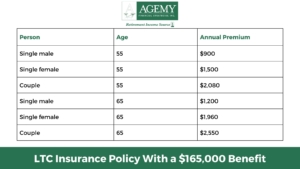
Long-term care insurance can help retirees pay for the cost of care without dipping into their savings. Before deciding, research and understanding the different types of policies available and their coverage is important. According to the American Association for Long-Term Care Insurance, you should expect to pay the following for a long-term care insurance policy with a $165,000 benefit:

Long-term care insurance can be significantly more costly than other types of insurance, but as we saw earlier, long-term care will likely cost thousands of dollars per month without insurance. Therefore, these premiums can be expensive, but they’re worth it for people anticipating a need for LTC.

Medicare Does Not Cover Most Long-Term Care Expenses

Medicare does not pay for most long-term care expenses because it is primarily designed to cover acute care services for short-term illnesses and injuries. Long-term care is more focused on providing support for individuals with chronic conditions or disabilities that require ongoing assistance with activities of daily living, such as bathing, dressing, and eating. This type of care is considered custodial and is not covered by traditional Medicare.

Medicare only covers a limited amount of skilled nursing facility (SNF) care following a hospital stay, and even then, the covered care must be considered medically necessary. In-home care assisted living facilities and Medicare does not cover adult day care.

Many individuals opt for private long-term care insurance, Medicaid, or a combination of both to cover the cost of long-term care. Medicaid is a joint federal-state program that provides health coverage for individuals, but eligibility requirements and covered services vary by state. Long-term care insurance, on the other hand, is a private insurance product that individuals can purchase to help cover the cost of long-term care services.

Retirees should understand what their Medicare coverage includes and plan accordingly. Working with a fiduciary advisor can help you differentiate between the available types of care.

Strategic Planning For Long-Term Care

Planning for long-term care needs is essential to ensure that retirees have the necessary resources to receive the care they require. This can involve creating a financial plan, researching care options, and discussing wishes with loved ones.

At Agemy Financial Strategies, our team of fiduciary advisors helps individuals navigate the complexities of long-term care planning. We’ll evaluate your current financial and healthcare situation, identify potential risks, and develop a personalized plan to meet your long-term care needs.

By recognizing that healthcare costs can pose a significant threat to your retirement nest egg, we will identify potential gaps in your current retirement plan and make adjustments where needed. This includes factors like inflation, insurance coverage, potential health changes, and the impact of long-term care expenses on your savings.

Let’s Get Started

Agemy Financial Strategies can help individuals navigate the complexities of long-term care planning. Our team of fiduciaries can assist you in evaluating your current financial situation and developing a customized plan to meet your long-term care needs.

By working with the Agemy team, you can have peace of mind knowing that you have a solid plan to address the potential challenges of needing – and paying – for care throughout your golden years.

If you have any questions or want to set up a complimentary strategy session, contact the retirement income experts at Agemy Financial here today.

February 17th is National Caregivers Day – a day that honors individuals who selflessly provide personal care, and physical and emotional support to those who need it most. It’s also a great time to think about your own care needs in retirement, and what you can do to prepare for the monumental costs that come with it. 

If you know a caregiver, show them some extra love today. While it can bring a lot of joy, caregiving can also take a toll on emotional and physical well-being.

While no one approaching retirement likes to think they’ll necessarily want or need caregiving as they age, it’s a probability many cannot deny. In fact, someone turning 65 today has almost a 70% chance of needing some type of long-term care services and support in their remaining years.

Long-term care is an essential aspect of planning for one’s later years. It offers the necessary support to help seniors live as independently and safely as possible, even as their health and abilities decline.

What is Long-Term Care?

Long-term care refers to the ongoing support and assistance required by people who are unable to perform daily living activities due to chronic illness, disability, or old age. It includes a range of services like bathing, dressing, eating, and more. As the population ages and life expectancy increases, the need for long-term care becomes more prevalent, making it a crucial concern for retirees.

There are about 65,600 regulated long-term care facilities in the United States, according to a study from the National Center for Health Statistics. Together, these institutions serve over 8.3 million residents, including:

  • 286,300 people in day-based caregiving
  • 811,500 people in assisted living facilities
  • 1,347,600 people in nursing homes

Over the next 10 years, the number of residents in each of these facilities is expected to grow sharply. If trends hold up, the number of nursing home residents could double by 2030.

Understanding the Types of Long-Term Care

It’s important to understand the differences between types of long-term care facilities. When people hear the term, “long-term care” it’s often misinterpreted to mean a senior is very ill and can’t take care of themselves. However, long-term care can refer to anything from helping with daily activities, to those in a nursing home that requires around the clock care.

There are three main types of long-term care facilities in America:

  • Nursing Homes provide skilled nursing, rehabilitation services, and 24-hour health services.
  • Assisted Living Residences combine home, health, and supportive services while promoting self-direction and resident independence.
  • Residential Care Homes provide room, board, personal care, medication management, and some nursing “overview,” but are restricted in the level of care they can provide and generally do not provide full-time nursing care.

Each type of care provides varying levels of support and assistance. Independent living facilities, for example, offer a more self-sufficient lifestyle. While assisted living communities and continuing care retirement communities fall somewhere in between. Providing varying levels of care based on an individual’s needs.

Long-Term Care is Costly

The cost of long-term care can be substantial, and it’s not covered by traditional health insurance or Medicare. On average, a year in a nursing home can cost around $100,000, and the cost of in-home care can be just as high.

In 2023 without insurance, monthly long-term care costs could see you paying:

  • $5,148 for a home health aide
  • $1,690 for adult day care
  • $4,500 for assisted living
  • $7,908 for a semi-private room in a nursing home
  • $9,034 for a private room in a nursing home

As mentioned, individuals 65 or older have a 70 percent chance of needing long-term care services in the future, but only 11 percent purchase long-term care insurance. The rest are left scrambling to cover costs when the time comes.

Long-Term Care Insurance Options

Long-term care insurance can help retirees pay for the cost of care without dipping into their savings. It’s important to research and understand the different types of policies available and their coverage before making a decision.

According to the American Association for Long-Term Care Insurance, you should expect to pay the following for a long-term care insurance policy with a $165,000 benefit:

Person Age Monthly Premium
Single male 55 $185
Single female 55 $308
Couple 55 $418.75
Single male 65 $261.25
Single female 65 $438.75
Couple 65 $595.83

Long-term care insurance can be significantly more costly than other types of insurance, but long-term care will likely cost thousands of dollars per month. The premiums can be expensive, but they’re definitely worth it for people anticipating a need for care.

Medicare Does Not Cover Most Long-Term Care Expenses

Medicare does not pay for most long-term care expenses because it is primarily designed to cover acute care services for short-term illnesses and injuries. Long-term care is more focused on providing support for individuals with chronic conditions or disabilities that require ongoing assistance with activities of daily living, such as bathing, dressing, and eating. This type of care is considered custodial in nature and is not covered by traditional Medicare.

Medicare only covers a limited amount of skilled nursing facility (SNF) care following a hospital stay, and even then, the covered care must be considered medically necessary. In-home care, assisted living facilities, and adult day care are not covered by Medicare.

To cover the cost of long-term care, many individuals opt for private long-term care insurance, Medicaid, or a combination of both. Medicaid is a joint federal-state program that provides health coverage for individuals with low income, but eligibility requirements and covered services vary by state. Long-term care insurance, on the other hand, is a private insurance product that individuals can purchase to help cover the cost of long-term care services.

Retirees should understand what their Medicare coverage includes and plan accordingly.

Planning is Key

Planning ahead for long-term care needs is essential to ensure that retirees have the resources they need to receive the care they require. This can involve creating a financial plan, researching care options, and discussing wishes with loved ones.

With the likelihood of needing long-term care increasing with age, it’s crucial to consider this aspect in your overall retirement plan. By taking a comprehensive approach to financial planning, individuals can ensure that they have the resources necessary to pay for the level of care they may require in the future.

Let’s Get Started

Agemy Financial Strategies can help individuals navigate the complexities of long-term care planning. Our team of Fiduciariescan assist in evaluating your current financial situation, identifying potential risks, and developing a customized plan to meet your long-term care needs.

By working with Agemy Financial Strategies, you can have peace of mind knowing that you have a solid plan in place to address the potential challenges of needing – and paying – for care throughout your golden years.

If you have any questions or want to set up a complimentary strategy session, contact the retirement income experts at Agemy Financial here today.