In pursuing financial independence and retirement security, many Americans are turning to self-employment and entrepreneurship. For those who venture into solo businesses, the Solo 401(k) emerges as a powerful tool, offering unique benefits and opportunities for long-term wealth accumulation.

A Solo 401(k) offers all the perks of big employer-sponsored 401(k) plans – tax breaks for savings, tax-deferred or tax-free growth, and a generous annual maximum contribution. The best part? You can enjoy these benefits even if you’re running a small business.

These advantages make the Solo 401(k) better than other self-employed programs like the SEP-IRA and SIMPLE IRA. Here’s what you need to know.

What Is A Solo 401(k)?

The Solo 401(k), also called Solo-k, Uni-k, or One-participant k, is designed for individuals who operate their businesses without employees, except for a spouse. It is an excellent retirement savings option, empowering entrepreneurs with a tax-advantaged method to prepare for the future.

A standout feature of the Solo 401(k) is its generous contribution limits. Contributions can be made to the plan in both capacities. The owner can contribute:

  • Elective deferrals of up to 100% of compensation (also known as “earned income” for self-employed individuals) up to the annual contribution limit of $22,500 in 2023.
  • Employer nonelective contributions of up to 25% of compensation as defined by the plan. For self-employed individuals, specific guidelines apply. 

As of 2023, individuals can contribute up to $66,000 annually as an employee and an additional 25% of their net income as an employer contribution. This higher ceiling allows for accelerated wealth accumulation, putting you on a faster track to achieving your retirement goals.

Understanding Solo 401(k) Tax Advantages

Unlike traditional employer-sponsored 401(k) plans, a Solo 401(k) often provides a broader range of investment options. This flexibility allows you to diversify your portfolio and tailor your investments to align with your risk tolerance and financial goals. This dual tax advantage can significantly enhance your overall wealth-building strategy.

One notable distinction between the solo 401(k) and other self-employed retirement plans is employee contribution limits. With the solo 401(k), individuals can contribute their entire salary to the annual maximum without being confined to just 25 percent of their salary, as seen in other plans. While this feature can help minimize taxes, it’s important to note that these contributions don’t exempt them from the self-employment tax.

Beyond this, the solo 401(k) functions similarly to other 401(k) plans, whether it’s a traditional or a Roth 401(k). Suppose you opt for tax-deductible contributions when setting up your solo 401(k). In that case, it operates like a traditional 401(k), allowing you to contribute pre-tax funds and enjoy tax benefits in the current year. Conversely, if you choose a Roth option, you’ll make after-tax contributions but reap the rewards of tax-free withdrawals during retirement.

Potential Drawbacks of A Solo 401(k)

The Solo 401(k) shares many drawbacks of typical 401(k) plans, along with a few specific to itself. Like other 401(k) plans, early withdrawals from a Solo 401(k) before retirement age 59½ may incur taxes and penalties. While loans and hardship withdrawals are options, they should be considered as last resort.

Additionally, setting up a Solo 401(k) may require more paperwork, although it’s manageable. Unlike opening a typical brokerage account online in just 15 minutes, the Solo 401(k) process may be slower. You’ll also need to obtain a tax ID from the IRS, which can be done online. Furthermore, you’ll manage the plan, select investments, and help ensure compliance with annual contribution limits.

Another consideration is that once the assets in your Solo 401(k) cannot exceed $66,000 by the end of the year. While these drawbacks aren’t overly unmanageable, it’s important to know them before deciding on a Solo 401(k).

How to Open a Solo 401(k)

If you wish to open a Solo 401(k) on your own, here is our 4-step “how-to” guide. If you require assistance in managing the funds within your solo 401(k), our fiduciary advisors are here to help.

  • Step 1: Determine Eligibility
    • No age or income requirements; must be a business owner with no employees.
    • Businesses must be actively engaged in a for-profit enterprise.
    • Self-employed individuals eligible, including sole proprietors, independent contractors, and partners.
  • Step 2: Find a Provider
    • Choose a Solo 401(k) provider offering direct and affordable plans with diverse investment options.
    • Consider factors like costs, plan options, and investment variety.
  • Step 3: Gather Documents
    • Employer Identification Number (EIN)
    • EIN for Solo 401(k)
    • Beneficiary Information
    • Personal Identification
    • Bank Account Information
  • Step 4: Open Your Account
    • Ensure all necessary documents are ready.
    • Open an account before April 15th for tax benefits or after year-end for prior-year contributions.

Keep in mind that as your plan progresses, additional paperwork may be necessary—specifically, the IRS mandates an annual report on Form 5500-SF if your 401(k) plan holds $250,000 or more in assets at the conclusion of a given year.

Is A Solo 401(k) Worth It?

The flexibility surrounding contributions, investment choices, and minimal management requirements of a Solo 401(k) make it an appealing option for small business owners or sole proprietors actively looking to save for retirement.

Both salary deferral and income-sharing contributions are discretionary and can be adjusted as needed. Depending on your business’s varying profitability, you can contribute through either method or choose not to contribute in a particular year.

Moreover, contributions to your Solo 401(k) offer opportunities to capitalize on other tax incentives, potentially leading to significant long-term savings. Working with a fiduciary advisor can be beneficial in deciphering if this plan is right for you.

How A Fiduciary Can Help

The Solo 401(k) can be a powerful vehicle for retirement savings. However, navigating the complexities of investments, compliance, and regulatory requirements can be challenging. This is where a fiduciary comes into play. Their experience can guide you in selecting the most suitable investment options within your Solo 401(k) to align with your risk tolerance, time horizon, and financial goals.

At Agemy Financial Strategies, our team of fiduciary financial advisors is here to walk you through the process of achieving renewable wealth so that your money can work hard for you and you can reap the benefits of a comfortable retirement. Here are just some of the many ways we can help our clients:

  • Goal Setting: We will help you establish clear and attainable retirement goals, crafting a personalized financial blueprint to realize your retirement lifestyle aspirations.
  • Risk Assessment: Identifying potential financial risks is the cornerstone of our approach. Solo 401(k) plans come with specific rules and regulations that must be followed to maintain their tax-advantaged status. A fiduciary can help ensure that your plan complies with ever-changing tax laws and regulations, reducing the risk of penalties and setbacks.
  • Portfolio Management: Our experience extends to implementing and managing a diversified investment portfolio meticulously aligned with your long-term objectives and risk tolerance.
  • Regular Reviews: Beyond managing your Solo 401(k), a fiduciary can help you develop a comprehensive financial plan encompassing your entire financial picture. This includes tax planning, risk management, estate planning, and other critical components contributing to your financial well-being.

Last Thoughts

The perks of self-employment are plenty, but there’s at least one significant drawback: the lack of an employer-sponsored retirement plan like a 401(k). In the quest for financial independence, the Solo 401(k) stands out as a promising tool for solo entrepreneurs. Its high contribution limits and tax advantages can significantly boost your retirement savings. However, partnering with a fiduciary is valuable in navigating the complexities for long-term success.

At Agemy Financial Strategies, you can rest assured knowing that your financial affairs are in capable hands. Our priority is helping you take care of yourself and your family. We want to learn more about your situation, identify your dreams and goals, and provide you with the highest level of service.

If you want to learn more about how we can help you manage your wealth, schedule a complimentary strategy session here today.

Setting up a good nest egg may seem intimidating, but there are steps you can take to make the process painless.

Retirement is a time when you can finally sit back and enjoy the fruits of your labor. As exciting as retirement is, it may also feel a daunting task to make sure you and your savings are ready.

To truly make the most of your retirement, it’s crucial that you have a solid financial plan in place. This means creating a healthy and stable financial portfolio. In this blog, we’ll explore the key elements of a healthy financial portfolio and provide tips for retirees looking to take control of their financial future.

What is a Financial Portfolio?

A financial portfolio is a collection of assets and can include investments like stocks, bonds, mutual funds and exchange-traded funds. Because each investor is unique in terms of goals, risk tolerance and age, there’s no standardized template for ensuring a successful portfolio. Instead it takes work and careful planning.

Here are four tips for creating a portfolio that will go the distance.

Identify Your Investment Profile

The first step to a healthy financial portfolio is to identify your long-term and short-term goals. Prioritize your goals from most important to least important. Write down specific details about each goal like the timeline and the amount of money you’ll need / how much you have already saved.

Once you have identified each goal with a respected timeline, you’ll need to establish investment objectives for pursuing those goals. A great example of this is what kind of portfolio do you want to create? Do you want a portfolio that is conservative, moderate or aggressive? To achieve this you will need to understand risk tolerance and how it affects the value of your portfolio.

Understanding Risk Tolerance

Your risk tolerance is your ability and willingness to accept uncertainty, volatility, and the potential for losses in your investment portfolio.

A higher risk tolerance may lead to a portfolio that is heavily weighted towards equities, while a lower risk tolerance may result in a more balanced portfolio with a higher allocation towards fixed income securities. Your risk tolerance can be influenced by many factors, including age, income, investment goals, and personal circumstances.

It’s especially important for retirees to regularly assess and reassess risk tolerance as it can change over time due to life events, market conditions, and other factors. If your risk tolerance decreases, it may be necessary to reallocate your portfolio to align with your current level of comfort.

Striking A Balance Between Income and Growth

Balancing income and growth in your retirement portfolio is a crucial step in ensuring your financial stability and reaching your long-term goals. The goal is to find the right mix of investments. This way, it can help provide a steady stream of income and growth in the future. Here are some ways you can balance income and growth:

  • Asset Allocation:The way you allocate your assets will affect your income and growth potential. Generally, stocks provide more growth potential than bonds, while bonds provide more income potential. Consider your goals, risk tolerance, and time horizon when determining your asset allocation.
  • Diversification: Diversifying your investments is crucial for balancing income and growth. Consider a mix of stocks, bonds, and cash to reduce your overall portfolio risk. This way, you can benefit from the potential for growth in stocks, the stability of bonds, and the safety of cash.
  • Regular Income: Consider investments that provide regular income, such as dividend-paying stocks, bonds, and annuities. Regular income can help cover your living expenses and provide financial stability.
  • Long-term Growth: To ensure that your portfolio has enough growth potential to last throughout your retirement, consider investing in a mix of growth-oriented stocks and bonds. This will help you maintain the value of your portfolio over time and protect against inflation.

Protect Your Portfolio From Downturns

In order to protect your retirement savings during market downturns, consider adding two safety nets to your portfolio. A year’s worth of spending cash will act as your first line of defense. At the start of each year, make sure you have enough cash to supplement your regular annual income from things like:

  • Annuities
  • Pensions
  • Social Security
  • Rental Income
  • Other regular income

Your second line of defense will be having two to four years worth of living expenses saved. According to this analysis, the average peak-peak recovery time for diversified stocks in bear markets is three and a half years. By keeping two to four years’ worth of living expenses in short-term bonds, CDs, or even your dedicated emergency fund, you can help access cash when needed without having to sell stocks during a market decline.

Tax Efficiency

Did you know that asset allocation can also be optimized for tax-efficiency?

Asset location determines the proper account in which to place investments for the most favorable overall tax treatment. The best location for a particular security depends on your financial profile, prevailing tax laws, investment holding periods, and the tax and return characteristics of the underlying securities.

With that being said, tips to help reduce taxes in your portfolio could include:

  1. Holding dividend-paying U.S. stocks in a taxable account to take advantage of lower taxes on qualified dividends.
  2. Placing international stocks in a taxable account to claim back a foreign tax credit on the amount withheld from dividends.
  3. Placing income-paying assets like bonds or real estate investment trusts (REITs) in a tax-advantaged account.
  4. Selecting stocks/funds with closely correlated yet different counterparts for tax-loss harvesting opportunities.
  5. Holding assets with high distributions or high turnover (such as commodities funds) in a tax-advantaged account.

Further ways to help minimize taxes on your retirement savings include:

  • Contribute to a 401(k).
  • Contribute to a Roth 401(k).
  • Contribute to an IRA.
  • Contribute to a Roth IRA.
  • Make catch-up contributions.
  • Take advantage of the saver’s credit.
  • Avoid the early withdrawal penalty.
  • Remember required minimum distributions.
  • Delay 401(k) withdrawals if you are still working.
  • Time your retirement account withdrawals.

Final Thoughts

As you approach retirement, it’s important to have a solid financial plan in place to ensure a secure and comfortable future. Saving money to fund a comfortable retirement is perhaps the main reason people invest. Finding the right balance between investment risk and return is vital to a successful retirement savings strategy.

If you would like assistance in creating a healthy financial portfolio, the Fiduciary advisors here at Agemy Financial Strategies can work with you to create a stable income in retirement.

Ready to get started?  Contact us to set up your complimentary consultation today.

As the end of the year approaches, many high-net-worth investors may be considering ways to impact the world through charitable giving. Charitable giving benefits the causes you care about and offers potential tax advantages.

In this blog, we’ll explore some valuable tips for high-net-worth investors (HNWI) looking to enhance their end-of-year giving strategies. Here’s what you need to know.

Assess Your Goals and Values

Before diving into charitable giving, reflecting on your values and philanthropic goals is essential. Think about the impact you aspire to create and whether you lean towards supporting local, national, or international charities.

Driven by their deeply-held values and beliefs, affluent households maintain their prominent role in charitable giving, with a remarkable 85% actively contributing to charitable causes in 2022. Additionally, 54% of affluent households in the United States emphasized that their giving is closely tied to the issues they care most about.

While financial contributions are essential, consider getting personally involved with the charities you support. Serving on the board of a nonprofit organization or volunteering your time can be just as valuable as monetary donations. Your experience and knowledge can help charities achieve their goals more effectively.

It’s crucial to research charities and organizations thoroughly. Look into their financial transparency, effectiveness, and track record. Ultimately, your giving strategy should be aligned with your passions and beliefs.

Create a Sustainable Giving Plan

Developing a sustainable giving plan is a thoughtful and purposeful approach to charitable contributions, allowing individuals and organizations to make a lasting and meaningful impact on the causes they care about. At its core, a sustainable giving plan is a well-structured roadmap that guides your philanthropic efforts so that your donations are effectively utilized and continue to make a difference over time.

Diversifying your support among various causes or organizations can provide a more balanced approach to your giving, allowing you to address multiple issues that matter to you. Establishing a giving schedule can create consistency in your contributions. A clear giving plan helps charities plan their activities more effectively and makes your support ongoing.

Working alongside a fiduciary advisor can help you evaluate how well your contributions align with your goals. Be open to adjusting your giving strategy as your circumstances and priorities evolve.

Maximize Tax Benefits

Charitable giving can be a tax-smart strategy, particularly for retirees with substantial assets. It can lower withdrawal taxes from your tax-deferred retirement accounts, including Required Minimum Distributions (RMDs). Additionally, it can help reduce your taxable estate and minimize the tax liability for your account beneficiaries. However, it’s important to note that generally, you should be over the age of 59½ to avoid early withdrawal penalties.

To make the most of these tax benefits, consider seeking advice from a financial advisor. They can provide insights into optimizing your tax advantages. Strategies such as grouping charitable donations into a single year, donating appreciated assets, or establishing a charitable remainder trust are effective ways to enhance the tax benefits of your charitable giving.

Explore Donor-Advised Funds

Donor-advised funds (DAFs) are a popular charitable giving vehicle for high-net-worth individuals. They allow you to contribute assets such as cash, stocks, or real estate to a tax-advantaged fund, which can be distributed to multiple charities over time. DAFs offer flexibility, potential tax deductions, and the ability to centralize your giving. Some options to consider include:

  • Direct Donations: This involves making one-time or recurring cash donations to charitable organizations of your choice. It allows you to impact and support specific programs or initiatives immediately.
  • Planned Giving: Planned giving involves making charitable donations as part of your overall financial and estate planning. It often includes strategies like bequests in wills, charitable gift annuities, and charitable remainder trusts. Planned giving allows you to support causes you care about while potentially providing you or your beneficiaries with income or tax benefits.
  • Donor-Advised Funds: Donor-advised funds (DAFs) are philanthropic vehicles that allow you to contribute to a fund, receive an immediate tax deduction, and recommend grants to charitable organizations over time. DAFs provide flexibility and strategic giving opportunities, especially for those who want to involve their family in philanthropy.
  • Charitable Trusts: Charitable trusts, such as charitable remainder trusts (CRTs) or charitable lead trusts (CLTs), provide unique ways to give while offering potential tax advantages and estate planning benefits. These trusts allow you to provide income to beneficiaries during your lifetime while leaving a lasting legacy for charitable causes.
  • In-Kind Donations: In-kind donations involve giving non-cash assets, such as stocks, real estate, or valuable items, to charitable organizations. These donations provide tax advantages and allow you to contribute assets that may benefit the organization’s mission.

Each method has advantages and considerations, and the best choice depends on your circumstances and philanthropic goals. It is recommended to consult with financial advisors or professionals with experience in charitable planning to determine the most suitable gifting method for your specific situation.

Review Your Giving Plan Annually

Charitable giving is not a static endeavor but an evolving and dynamic process. As such, conducting an annual review of your giving plan is crucial so that it remains in sync with your financial goals. If your giving plan has become more complex or you’re considering substantial contributions, seek advice from a fiduciary to optimize your strategy.

Fiduciaries can assess and manage the risks associated with your charitable giving.  At Agemy Financial Strategies, our fiduciaries can oversee your charitable giving and provide peace of mind. Here are just some of the ways our advisors can help you optimize your giving plan:

  • Risk Management: We meticulously vet and evaluate potential beneficiaries to secure your contributions to reputable and financially stable organizations. This thorough due diligence minimizes the risk of your funds being misappropriated or misused.
  • Customized Strategies: We understand that each giver has unique financial circumstances and philanthropic goals. Our team works closely with you to develop a personalized giving strategy that aligns with your values, maximizes the impact of your contributions, and optimizes your tax benefits.
  • Legacy Planning: If you aspire to create a lasting philanthropic legacy, our fiduciaries can guide you. We assist in setting up trusts, endowments, or foundations that perpetuate your giving beyond your lifetime.
  • Compliance and Reporting: Agemy Financial Strategies is well-versed in the complex regulations and reporting requirements associated with charitable giving. We handle all compliance matters so that your donations adhere to legal guidelines and that you receive the full range of tax benefits available to you.

Final Thoughts

End-of-year charitable giving is a powerful way for high-net-worth individuals to impact society while enjoying potential tax benefits. As you plan for retirement and consider the legacy you want to leave behind, remember that every contribution can significantly impact, no matter how big or small.

Agemy Financial Strategies is dedicated to providing knowledgeable guidance on charitable giving on your road to retirement. We understand the importance of your generous contributions and the lasting impact they can have.

Our team advisors are here to help you every step of the way, helping ensure that your retirement years are filled with immense fulfillment. With our guidance, you can leave a meaningful legacy that will endure for years, and save a few tax dollars in the process.

Contact us today to get started and schedule your complimentary strategy session here.

February 16th is National Caregivers Day, a day that honors individuals who selflessly provide care and support to those who need it most. If you are approaching retirement or even a care provider yourself, it’s also a great time to think about your own needs in your later years and how to navigate the challenges that come with it. 

The inevitability of needing care in our later years is a reality that many approaching retirement grapple with. With each passing day until 2030, a staggering 10,000 Baby Boomers will turn 65, and statistics tell us that seven out of ten will, at some point, require long-term care services. This underlines the pressing need to address the complexities associated with long-term care, a critical component in the roadmap to aging gracefully.

Planning for long-term care costs is an essential aspect of planning for one’s post-working years that cannot be ignored. As we recognize the caregivers on this special day, let’s also acknowledge the importance of self-care in preparing for the journey ahead.

What Is Long-Term Care?

Long-term care refers to the ongoing support and assistance required by people who cannot perform daily activities due to chronic illness, disability, or old age. It includes a range of services like bathing, dressing, eating, and more. As the population ages and life expectancy increases, the need for long-term care becomes more prevalent, making it a crucial concern for retirees.

Currently, over 818,800 Americans reside in assisted living communities, representing about 2% of seniors over the age of 65. While it may not seem like it, assisted living is still a relatively new concept. It emerged in the 1980s as a more person-centered care model, diversifying options beyond traditional nursing homes.

Currently, The United States has over 30,600 assisted living facilities, offering nearly 1.2 million licensed beds. The rapid growth of the senior population necessitates additional assisted living communities, driven not only by the aging baby boomer generation but also by middle-aged adults planning for future senior housing. Now, more than ever, it is crucial to proactively take control of your long-term care planning and gain a comprehensive understanding of the various types of available care.

Understanding the Types of Long-Term Care

It’s important to understand the differences between types of long-term care facilities. When people hear the term “long-term care,” it’s often misinterpreted to mean a senior is very ill and can’t take care of themselves. However, long-term care can refer to anything from helping with daily activities to those in a nursing home that require around-the-clock care. There are three main types of long-term care facilities in America:

  • Nursing Homes: These care facilities provide skilled nursing, rehabilitation, and 24-hour health services.
  • Assisted Living Residences: This combines home, health, and supportive services while promoting self-direction and resident independence.
  • Residential Care Homes: These facilities provide room, board, personal care, medication management, and some nursing “overview” but are restricted in the level of care they can provide and generally do not provide full-time nursing care.

Each type of care provides varying levels of support and assistance. Independent living facilities, for example, offer a more self-sufficient lifestyle. At the same time, assisted living communities and continuing care retirement communities fall somewhere in between. It is important to note that providing varying levels of care is based on an individual’s needs.

Long-Term Care is Costly

The cost of long-term care can be substantial, and it’s not covered by traditional health insurance or Medicare. On average, a year in a nursing home can cost around $108,408 per year for a private room. In 2024, without insurance, monthly long-term care costs might include:

  • $5,148 for a home health aide
  • $1,690 for adult day care
  • $4,500 for assisted living
  • $7,908 for a semi-private room in a nursing home
  • $9,034 for a private room in a nursing home

It’s crucial to remember that nursing home costs vary significantly by location, emphasizing the importance of checking specific rates in your area. The financial commitment associated with long-term care necessitates careful consideration and planning to help ensure both the well-being of your loved ones and your financial stability.

Long-Term Care Insurance Options

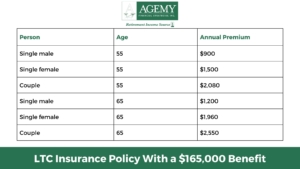
Long-term care insurance can help retirees pay for the cost of care without dipping into their savings. Before deciding, research and understanding the different types of policies available and their coverage is important. According to the American Association for Long-Term Care Insurance, you should expect to pay the following for a long-term care insurance policy with a $165,000 benefit:

Long-term care insurance can be significantly more costly than other types of insurance, but as we saw earlier, long-term care will likely cost thousands of dollars per month without insurance. Therefore, these premiums can be expensive, but they’re worth it for people anticipating a need for LTC.

Medicare Does Not Cover Most Long-Term Care Expenses

Medicare does not pay for most long-term care expenses because it is primarily designed to cover acute care services for short-term illnesses and injuries. Long-term care is more focused on providing support for individuals with chronic conditions or disabilities that require ongoing assistance with activities of daily living, such as bathing, dressing, and eating. This type of care is considered custodial and is not covered by traditional Medicare.

Medicare only covers a limited amount of skilled nursing facility (SNF) care following a hospital stay, and even then, the covered care must be considered medically necessary. In-home care assisted living facilities and Medicare does not cover adult day care.

Many individuals opt for private long-term care insurance, Medicaid, or a combination of both to cover the cost of long-term care. Medicaid is a joint federal-state program that provides health coverage for individuals, but eligibility requirements and covered services vary by state. Long-term care insurance, on the other hand, is a private insurance product that individuals can purchase to help cover the cost of long-term care services.

Retirees should understand what their Medicare coverage includes and plan accordingly. Working with a fiduciary advisor can help you differentiate between the available types of care.

Strategic Planning For Long-Term Care

Planning for long-term care needs is essential to ensure that retirees have the necessary resources to receive the care they require. This can involve creating a financial plan, researching care options, and discussing wishes with loved ones.

At Agemy Financial Strategies, our team of fiduciary advisors helps individuals navigate the complexities of long-term care planning. We’ll evaluate your current financial and healthcare situation, identify potential risks, and develop a personalized plan to meet your long-term care needs.

By recognizing that healthcare costs can pose a significant threat to your retirement nest egg, we will identify potential gaps in your current retirement plan and make adjustments where needed. This includes factors like inflation, insurance coverage, potential health changes, and the impact of long-term care expenses on your savings.

Let’s Get Started

Agemy Financial Strategies can help individuals navigate the complexities of long-term care planning. Our team of fiduciaries can assist you in evaluating your current financial situation and developing a customized plan to meet your long-term care needs.

By working with the Agemy team, you can have peace of mind knowing that you have a solid plan to address the potential challenges of needing – and paying – for care throughout your golden years.

If you have any questions or want to set up a complimentary strategy session, contact the retirement income experts at Agemy Financial here today.

February 17th is National Caregivers Day – a day that honors individuals who selflessly provide personal care, and physical and emotional support to those who need it most. It’s also a great time to think about your own care needs in retirement, and what you can do to prepare for the monumental costs that come with it. 

If you know a caregiver, show them some extra love today. While it can bring a lot of joy, caregiving can also take a toll on emotional and physical well-being.

While no one approaching retirement likes to think they’ll necessarily want or need caregiving as they age, it’s a probability many cannot deny. In fact, someone turning 65 today has almost a 70% chance of needing some type of long-term care services and support in their remaining years.

Long-term care is an essential aspect of planning for one’s later years. It offers the necessary support to help seniors live as independently and safely as possible, even as their health and abilities decline.

What is Long-Term Care?

Long-term care refers to the ongoing support and assistance required by people who are unable to perform daily living activities due to chronic illness, disability, or old age. It includes a range of services like bathing, dressing, eating, and more. As the population ages and life expectancy increases, the need for long-term care becomes more prevalent, making it a crucial concern for retirees.

There are about 65,600 regulated long-term care facilities in the United States, according to a study from the National Center for Health Statistics. Together, these institutions serve over 8.3 million residents, including:

  • 286,300 people in day-based caregiving
  • 811,500 people in assisted living facilities
  • 1,347,600 people in nursing homes

Over the next 10 years, the number of residents in each of these facilities is expected to grow sharply. If trends hold up, the number of nursing home residents could double by 2030.

Understanding the Types of Long-Term Care

It’s important to understand the differences between types of long-term care facilities. When people hear the term, “long-term care” it’s often misinterpreted to mean a senior is very ill and can’t take care of themselves. However, long-term care can refer to anything from helping with daily activities, to those in a nursing home that requires around the clock care.

There are three main types of long-term care facilities in America:

  • Nursing Homes provide skilled nursing, rehabilitation services, and 24-hour health services.
  • Assisted Living Residences combine home, health, and supportive services while promoting self-direction and resident independence.
  • Residential Care Homes provide room, board, personal care, medication management, and some nursing “overview,” but are restricted in the level of care they can provide and generally do not provide full-time nursing care.

Each type of care provides varying levels of support and assistance. Independent living facilities, for example, offer a more self-sufficient lifestyle. While assisted living communities and continuing care retirement communities fall somewhere in between. Providing varying levels of care based on an individual’s needs.

Long-Term Care is Costly

The cost of long-term care can be substantial, and it’s not covered by traditional health insurance or Medicare. On average, a year in a nursing home can cost around $100,000, and the cost of in-home care can be just as high.

In 2023 without insurance, monthly long-term care costs could see you paying:

  • $5,148 for a home health aide
  • $1,690 for adult day care
  • $4,500 for assisted living
  • $7,908 for a semi-private room in a nursing home
  • $9,034 for a private room in a nursing home

As mentioned, individuals 65 or older have a 70 percent chance of needing long-term care services in the future, but only 11 percent purchase long-term care insurance. The rest are left scrambling to cover costs when the time comes.

Long-Term Care Insurance Options

Long-term care insurance can help retirees pay for the cost of care without dipping into their savings. It’s important to research and understand the different types of policies available and their coverage before making a decision.

According to the American Association for Long-Term Care Insurance, you should expect to pay the following for a long-term care insurance policy with a $165,000 benefit:

Person Age Monthly Premium
Single male 55 $185
Single female 55 $308
Couple 55 $418.75
Single male 65 $261.25
Single female 65 $438.75
Couple 65 $595.83

Long-term care insurance can be significantly more costly than other types of insurance, but long-term care will likely cost thousands of dollars per month. The premiums can be expensive, but they’re definitely worth it for people anticipating a need for care.

Medicare Does Not Cover Most Long-Term Care Expenses

Medicare does not pay for most long-term care expenses because it is primarily designed to cover acute care services for short-term illnesses and injuries. Long-term care is more focused on providing support for individuals with chronic conditions or disabilities that require ongoing assistance with activities of daily living, such as bathing, dressing, and eating. This type of care is considered custodial in nature and is not covered by traditional Medicare.

Medicare only covers a limited amount of skilled nursing facility (SNF) care following a hospital stay, and even then, the covered care must be considered medically necessary. In-home care, assisted living facilities, and adult day care are not covered by Medicare.

To cover the cost of long-term care, many individuals opt for private long-term care insurance, Medicaid, or a combination of both. Medicaid is a joint federal-state program that provides health coverage for individuals with low income, but eligibility requirements and covered services vary by state. Long-term care insurance, on the other hand, is a private insurance product that individuals can purchase to help cover the cost of long-term care services.

Retirees should understand what their Medicare coverage includes and plan accordingly.

Planning is Key

Planning ahead for long-term care needs is essential to ensure that retirees have the resources they need to receive the care they require. This can involve creating a financial plan, researching care options, and discussing wishes with loved ones.

With the likelihood of needing long-term care increasing with age, it’s crucial to consider this aspect in your overall retirement plan. By taking a comprehensive approach to financial planning, individuals can ensure that they have the resources necessary to pay for the level of care they may require in the future.

Let’s Get Started

Agemy Financial Strategies can help individuals navigate the complexities of long-term care planning. Our team of Fiduciariescan assist in evaluating your current financial situation, identifying potential risks, and developing a customized plan to meet your long-term care needs.

By working with Agemy Financial Strategies, you can have peace of mind knowing that you have a solid plan in place to address the potential challenges of needing – and paying – for care throughout your golden years.

If you have any questions or want to set up a complimentary strategy session, contact the retirement income experts at Agemy Financial here today.

Beginning a Roth Conversion journey in 2024 requires understanding the current tax intricacies and tailoring the approach to match your individual financial situation.

If you have a traditional IRA, you might be interested in turning some or all of it into a Roth IRA. Roth conversions have maintained their status as a tried-and-true financial strategy, offering a path to enhance your retirement savings over the years.

In this blog, we’ll break down the key things you should understand about Roth conversions, how taxes come into play during conversion, and tips to help you make smart decisions for your retirement planning. Let’s dive in.

What is a Roth Conversion?

To understand the significance of a Roth conversion, it’s crucial to grasp the differences between traditional and Roth retirement accounts. A traditional IRA allows tax-deductible contributions, meaning you can deduct them from your income in the contribution year.

However, upon retirement, you’ll be subject to income taxes on the distributions, and you must start taking required minimum distributions (RMDs) at age 73, regardless of your immediate financial needs.

Conversely, a Roth IRA involves contributions made with after-tax dollars, foregoing the upfront tax deduction. These conversions offer tax-free growth on earnings, and you can make tax-free withdrawals in retirement, given certain qualifying conditions. While traditional and Roth IRAs are the most popular accounts for Roth conversions, it’s essential to note that you can convert a variety of retirement plans into a Roth IRA, including:

  • 401(k)s.
  • 403(b)s.
  • 457(b)s.
  • Traditional IRAs.
  • SEP IRAs.
  • SIMPLE IRAs.

Now, consider the allure of having the best of both financial worlds: enjoying tax deductions during high-income years while securing tax-free growth for the future. This is precisely where Roth IRA conversions come into play as a savvy retirement strategy.

How A Roth Conversion Works

A Roth conversion involves transferring funds from a traditional IRA or 401(k) into a Roth IRA. The main advantage is that you pay taxes upfront on the converted amount, while all future withdrawals from the Roth IRA remain tax-free, provided you meet specific criteria. This strategy can be particularly beneficial if you anticipate a higher tax bracket during retirement.

Here’s a step-by-step breakdown of how it operates:

  • Determine the Conversion Amount: Your first step is to decide how much money you intend to transfer from your traditional IRA to your Roth IRA. This decision involves careful consideration, as the converted amount will be subject to immediate taxation.
  • Initiate the Conversion: Contact your financial advisor to kickstart the conversion process. They will typically guide the necessary steps to complete the conversion.
  • Settle the Tax Obligation: Report the converted amount as part of your annual income and fulfill the corresponding tax obligations. You can pay these taxes directly from the converted amount or use external sources to cover the tax liability.

For a more comprehensive understanding of how Roth conversions work and to tailor the strategy to your unique financial situation, it’s recommended to consult with a fiduciary advisor. They can provide personalized guidance, helping you make informed decisions about the conversion process and optimize your retirement planning.

Understanding The Roth Conversion Ladder

For 2024, the Roth conversion ladder strategy remains valuable for retirement planning. It involves gradually moving funds from a traditional IRA to a Roth IRA over several years. This strategy focuses on lower tax brackets, reducing tax liability. After a five-year waiting period, converted funds are tax-free income during retirement.

Unlike Roth IRA contributions, there is no limit on the amount you can convert. The $7,000 annual contribution limit (or $8,000 if you’re 50 or older) doesn’t apply to conversions. This approach aligns with your unique financial circumstances, maximizing Roth IRA benefits. The strategy includes:

  • Gradual Conversion: Instead of one large conversion, break it into smaller, annual steps to stay within lower tax brackets and minimize taxes.
  • Tax Efficiency: Convert in low-income years to reduce tax liability, especially if your income varies.
  • Access to Funds: After each conversion, a five-year waiting period applies. Once it lapses, you gain tax-free access to the converted amount, providing tax-free retirement income. However, you must be 59.5 years old to get the funds out tax-free.

The Roth conversion ladder empowers you to manage retirement assets strategically, reduce overall tax burdens, and create a tax-efficient income stream during retirement. It aligns with your financial circumstances and maximizes Roth IRA tax benefits.

Managing Required Minimum Distributions (RMDs)

The SECURE Act 2.0, enacted in late 2022, changed over 90 rules about IRAs and other qualified retirement plans, including RMDs. RMDs are primarily associated with traditional Individual Retirement Accounts (IRAs) and employer-sponsored retirement plans such as 401(k)s and 403(b)s. Roth IRAs do not require RMDs during the account owner’s lifetime; they are funded with after-tax dollars. However, beneficiaries of Roth IRAs may have RMD obligations.

You must calculate the RMD for each account separately if you own multiple traditional IRAs. However, you can aggregate the total RMD amount and withdraw it from one or more of your IRAs. This flexibility allows you to choose which account(s) to withdraw from as long as you satisfy the total RMD requirement.

You can use the IRS’s Uniform Lifetime Table to determine the amount you need to withdraw. The RMD amount is calculated based on your account balance and life expectancy to deplete the account over your expected lifetime. If you haven’t yet done so, estimate your personal RMD withdrawals with our free online RMD Calculator here.

Tax liability is one of the most significant factors to consider when contemplating a Roth conversion. 2024 tax laws are subject to change, so staying updated with the latest tax brackets and rates is essential. A financial advisor can help you assess the tax implications of a Roth conversion and determine the optimal amount to convert each year to minimize your tax burden.

Working With A Fiduciary

Tax laws can change over time, potentially affecting the benefits of Roth conversions. It’s essential to remain flexible in your retirement planning and adapt your strategy to align with any legislative changes that may occur in 2024 and beyond. Working alongside a fiduciary advisor can be beneficial.

Fiduciaries are committed to helping you achieve your financial goals without being influenced by commissions or fees tied to specific financial products. Choosing to work with a fiduciary can be a game-changer for your retirement planning for several reasons:

  • Reducing Risk: Fiduciaries help you make informed investment decisions that align with your risk tolerance and long-term objectives. They can design a diversified portfolio tailored to your unique circumstances, which can be crucial for managing risk in retirement.
  • Staying Informed: The financial landscape continually evolves, with new regulations and investment options emerging regularly. Fiduciaries stay current with these changes, ensuring your retirement strategy aligns with current best practices.
  • Peace of Mind: Working with a fiduciary can provide peace of mind, knowing that your financial future is in capable hands. You can trust that your advisor is always working in your best interests.

Final Thoughts

In 2024, Roth conversions will continue to be a valuable tool for retirement planning, offering the potential for tax-free withdrawals in the future. However, navigating the rules and strategies surrounding Roth conversions requires careful consideration and guidance.

It’s crucial to stay informed about tax law changes so your retirement planning remains on the right track. At Agemy Financial Strategies, we are committed to educating our clients on various financial matters, including retirement planningwealth managementtax planning, and more.

With over 30 years of experience in helping individuals reach retirement stress-free, our unwavering dedication to educating and serving our clients remains at the core of our mission. Our financial guide to retirement planning is one of the many tools we offer to help you take control of your finances and plan for the future.

Contact us today to learn how we can help you achieve financial security.

Working hard to save a million dollars in your 401(k) is a significant achievement on the road to a comfortable retirement. However, Uncle Sam can put a damper on your parade.

Saving six figures for retirement is an impressive accomplishment, but many Americans must understand that taxes can be pivotal in how much of that million dollars you get to keep. In this blog, we’ll explore various strategies for managing your wealth, 401(k), and other retirement accounts while keeping taxes in check. Here’s what you need to know.

Why Is Tax Planning So Important?

Why is tax planning crucial for individuals with $1 million or more in their 401(k)s or IRAs? Because, likely, you won’t find yourself in a lower tax bracket in the future. One of the primary reasons for tax planning is to help ensure you’re not caught off guard by changing tax brackets and liability. Your tax bracket may shift up or down. And the order in which you tap your retirement accounts and other savings could have a big impact on how much tax you owe — and consequently, how long your retirement assets could last.

Tax planning can also help preserve your future assets. By carefully selecting when and how you withdraw funds from your retirement accounts, you can help ensure that your savings last longer and provide financial stability throughout your retirement years. This can result in more money for living expenses and a more financially secure retirement.

The U.S. tax laws consider most forms of retirement income fair game, including Social Security benefits, pensions, and withdrawals from your 401(k)s and traditional IRAs. And unless you live in a state without an income tax, you can expect your home state to hit you in retirement as well. So which are the tax-free states? As of 2024, nine states — Alaska, Florida, Nevada, New Hampshire, South Dakota, Tennessee, Texas, Washington and Wyoming — have no income taxes.

Ready to dive into some strategies that can help you protect your retirement savings? Let’s get started.

Retirement Account Contributions and Withdrawals

Effectively managing your retirement accounts, such as 401(k)s and Roth IRAs, involves a strategic approach that maximizes tax benefits throughout your financial journey. During your working years, making the most of contributions to these accounts can be smart, as they often come with the advantage of being tax-deductible. This tax deduction lowers your taxable income, setting the stage for a more tax-efficient retirement.

One of the key aspects of retirement planning is understanding the contribution limits for retirement accounts such as 401(k)s and IRAs. These limits determine how much you can contribute to these accounts each year, helping you build a robust nest egg for retirement. Let’s take a look at the expected contribution limits for 2024:

  • 401(k) Plans: The contribution limit for 401(k) plans is projected to increase to $23,000 in 2024, up from $22,500 in 2023. For those aged 50 and older, an additional catch-up contribution of $7,500 will remain the same. It’s important to note that these new amounts apply to 403(b) and most 457 plans.
  • IRA Contribution Limits: Individual Retirement Accounts (IRAs) are another popular retirement savings option. The contribution limits are to remain relatively stable for IRAs. For 2024, individuals under 50 can contribute up to $7,000, up from $6,500 in 2023. Catch-up contributions for adults 50 and older will remain at $1,000.
  • Roth IRA Contribution Limits: Beginning in 2024, more Americans will qualify for Roth IRA contributions, with the AGI range rising between $146,000-$161,000 for single filers, up from $138,000-$153,000 in 2023. The Roth IRA contribution phaseout for married couples filing together will rise to between $230,000 and $240,000 in 2024, up from between $218,000 and $228,000.

It’s essential to consult with a financial advisor or check the latest IRS guidelines to confirm these limits for 2024 and adjust your retirement savings strategy accordingly.

Enhancing Tax Efficiency Through Income Source Diversification

Diversifying your income sources is a crucial strategy when protecting your million-dollar 401(k) from potential tax complications. Relying solely on your 401(k) for retirement income can expose you to substantial tax liabilities.

Exploring other income streams, such as investment returns, rental income, or income from a business venture, is important to mitigate this risk. This diversification offers financial flexibility and empowers you to manage and optimize your taxable income during retirement. Furthermore, the choice of assets within your 401(k) portfolio plays a pivotal role in shaping your tax scenario.

Different investments carry varying tax implications, and some are inherently more tax-efficient than others. Take municipal bonds, for instance; they often enjoy federal tax-exempt status, and in certain cases, they are also exempt from state taxes. Allocating a portion of your investment portfolio to tax-efficient assets effectively lowers your overall tax burden, thus contributing to a more tax-friendly retirement strategy.

Managing Medicare Costs Effectively

When managing Medicare costs effectively, one important thing to consider is the Medicare Income-Related Monthly Adjustment Amount (IRMAA). This can lead to higher premiums if your income exceeds a certain limit. Remember that the IRMAA calculation examines your income from the last two years. So, it’s a good idea to start considering how it might affect your Social Security benefits as soon as you’re eligible.

Many people worry about the cost of healthcare, with 80% expressing concerns about how to pay for it. Surprisingly, only 56% of those nearing retirement have included healthcare costs and long-term care costs in their plans, and even among those who have, 50% might be underestimating these expenses. To deal with these challenges, taking a strategic approach to managing your retirement account withdrawals is important.

This strategic approach serves a dual purpose: reducing your taxable income and potentially avoiding Medicare surcharges. The ultimate goal is to ensure that the hard work you’ve put into building your million-dollar 401(k) isn’t eroded by increasing healthcare expenses during your retirement years.

Last Thoughts

If you are worried about protecting your million-dollar 401(k), working with a qualified fiduciary advisor like the fiduciary advisors at Agemy can help provide valuable guidance and transparency regarding retirement planning. Founder Andrew A. Agemy, MRFC®, and son Daniel J. Agemy, CPM®, RFC®, can help you develop a personalized retirement plan, optimize your investment strategy, and stay on track to achieve your financial goals.

At Agemy Financial Strategies, we are committed to educating our clients on various financial matters, including retirement planningwealth managementtax planning, and more. With over 30 years of experience in helping individuals reach retirement stress-free, our unwavering dedication to educating and serving our clients remains at the core of our mission. Our financial guide to retirement planning is one of the many tools we offer to help you take control of your finances and plan for the future.

Contact us today to learn how we can help you achieve financial security.

Wealth management is a critical aspect of retirement planning for couples in Connecticut, Colorado, and throughout the United States. It involves maximizing financial assets, reducing taxes and financial risks, and preserving wealth for future generations. This Valentine’s Day, give the gift of a secure financial future with Agemy Financial Strategies.

Retirement planning as a couple can present a unique set of challenges and considerations. Unlike individual retirement planning, couples must work together to align their financial goals and make decisions that will impact their joint future. Importantly, managing joint wealth.

Many pre-retirees think managing money in retirement gets a little easier than before. After all, you only have the money you have, so your options are somewhat simpler and more limited. However, the rules of money management shift in retirement so it could be more complicated for the both of you, especially after the turbulent year of 2022. Although overall inflation is starting to cool, Americans haven’t seen much relief in terms of everyday prices such as groceries, which were up 11.8% in December compared with a year earlier.

With the increased cost of living for us all, it is more important than ever for couples to plan and manage their wealth effectively to ensure a comfortable and secure retirement.

In this blog, we will explore why wealth management is an important aspect of retirement planning, and how it can help couples achieve financial goals, focusing on our residing and practicing states of Connecticut and Colorado.

Here’s what you need to know.

Create a Budget

When creating a budget for retired couples in Colorado and Connecticut, it is important to consider the unique financial challenges and opportunities that come with living in these states.

One of the biggest expenses for retirees in Colorado and Connecticut is healthcare. The average cost of healthcare in Colorado is $8,289 per person. The average cost of healthcare in Connecticut is $12,754 per person. And when you factor in long-term care costs, the numbers get even more eye-watering. Someone turning age 65 today has about a 70 percent chance of needing some type of long term care during their lifetime. While one-third may never need long term care, 20 percent will need it for longer than 5 years. The average length of time people need long term care services is 3 years.

In Connecticut, the average cost of nursing home care is approximately $462 per day, or $168,700 annually, according to the Connecticut Partnership for Long Term Care in its most recent quarterly update and recent annual studies.

In Colorado, the same care will cost $116,709 per year, and it’s projected to $632,367 annually by 2042.

There are ways you can try and combat high costs, such as purchasing long-term care insurance, contributing to a health savings account (more on this below), or setting aside funds to cover medical expenses.

Another important factor to consider when creating a budget is the cost of living in Colorado and Connecticut. In 2023, Connecticut’s cost of living index was 115.4 making it 15.4% higher than the national average. Colorado’s cost of living index is 120.5, 20.4% higher than the national average.

It is important to budget for housing, utilities, food, and transportation. Another factor to consider is any planned or anticipated expenditures, such as travel in retirement or home repairs. By considering these factors and creating a comprehensive budget, retired couples can ensure that they are making the most of their retirement savings and enjoying a comfortable retirement.

Maximize Your Joint Retirement Income

Maximizing retirement cash flow as a couple requires careful planning and management of your financial assets. When it comes to your big-picture finances—such as getting the most out of your retirement plans, coordinating strategies is a must:

Retirement Accounts: Couples in Colorado and Connecticut can maximize their retirement savings by making the most of their retirement accounts, such as IRAs and 401(k)s. This may include contributing the maximum amount allowed each year, or rolling over old retirement accounts into a new account to take advantage of higher interest rates or lower fees. As a couple, you need to coordinate your retirement accounts and plan how you will access your funds in retirement. This may include consolidating accounts, reallocating investments, or creating a joint investment strategy.

Tax-Advantaged Accounts: There are several tax-advantaged accounts available in Colorado and Connecticut, including health savings accounts (HSAs) and flexible spending accounts (FSAs), that can help retirees further reduce their tax liability and maximize their retirement savings.

HSAs offer a number of benefits beyond spending for the short-term, such as saving for longer-term qualified medical expenses, including those in retirement. Because an HSA is one of the most tax-efficient savings options available, consider contributing the maximum and paying for current health care expenses from other sources of personal savings. Consider investing a portion of your HSA assets intended for long-term savings in an asset mix that works in conjunction with your other retirement assets.

For 2023, the self-only coverage limit will increase to $3,850, and the annual family limit will increase to $7,750. The IRS treats married couples as a single tax unit, which means you must share one family HSA contribution limit of $7,300, or $7,750 in 2023. If you and your spouse have self-only coverage, you may each contribute up to $3,650, or $3,850 in 2023, annually into your separate accounts.

Diversify Investments: The first step in coming to a compromise on your investment approach as a couple is identifying your joint investing goals. The second is to make sure those investments are diversified. Diversification is the golden rule of investment, and it becomes critical upon retirement. It simply means not putting all your eggs in one basket to ensure you have a stable retirement income. This may include investing in stocks, bonds, real estate, and alternative investments, such as precious metals or commodities.

Be Mindful of Taxes: Taxes are an important consideration for couples retiring in Colorado and Connecticut. Here are some tips for understanding and managing taxes in these states:

  1. Colorado State Income Tax: Colorado imposes a state income tax on residents, which includes retirees. Retirees who receive retirement benefits may be subject to state income tax on those benefits.
  2. Connecticut Estate Tax: Connecticut imposes an estate tax on residents who pass away with a taxable estate. This tax can impact retirees who have a significant amount of assets and want to leave them to their beneficiaries.
  3. Sales Tax: Both Colorado and Connecticut have a state sales tax, which can impact retirees who live in these states. It is important to budget for sales tax when creating a retirement plan.
  4. Property Tax: Both Colorado and Connecticut have property taxes, which can be a significant expense for retirees who own a home. It is important to factor in property tax when creating a retirement budget.

Talking of taxes, it is important to be mindful of the other tax implications of your financial decisions, particularly when it comes to withdrawing money from your retirement accounts and filing taxes jointly.

Married couples have the option to file jointly or separately on their federal income tax returns. The IRS strongly encourages most couples to file joint tax returns by extending several tax breaks to those who file together. In the vast majority of cases, it’s best for married couples to file jointly, but there may be a few instances when it’s better to submit separate returns. Couples who file together qualify for multiple tax credits, including the Earned Income Credit (EIC), the child and dependent care credit, the American opportunity tax credit (AOTC), the lifetime learning credit (LLC), and the saver’s tax credit.

Aligning Your Financial Goals

It is essential for couples to have open and honest conversations about their financial goals and priorities for retirement. This includes discussing when each partner wants to retire, how much money they need to live on, and how they plan to allocate their resources.  It’s important for couples to understand all of their sources of retirement income, including Social Security, pensions, annuities, and investment portfolios.

Another big factor to consider is agreeing on retirement age. One partner may want to retire earlier or later than the other, which can impact retirement planning and Social Security benefits. Couples should consider the impact of individual retirement ages on their joint financial plan and determine a strategy that works for both partners.

Final Thoughts

In conclusion, wealth management and retirement planning as a couple requires open communication, collaboration, and a shared commitment to their joint financial future. By considering these key differences, couples can work together to create a comprehensive and effective retirement plan.

Working with a Fiduciary advisor is an important aspect of retirement planning for couples. A Fiduciary advisor can help couples make informed decisions about their finances, create a comprehensive retirement plan, and invest in income-generating assets. All without emotions involved.

At Agemy Financial Strategies, we offer personalized and expert guidance to help couples achieve their wealth management goals. This includes helping couples understand taxes, develop a budget, and invest in income-generating assets.

We ensure that all of our clients receive unbiased and objective advice from trusted professionals who are committed to acting in their best interests. If you’re a retired couple in Colorado or Connecticut, contact us here today to schedule an appointment. 

Inheriting wealth and managing an estate can be a complex and emotional process. It is important to remember that inheriting wealth is not just about the money, but also the responsibility that comes with it.

Death is not something anyone likes to talk about, yet it’s an unavoidable part of life and something you must prepare for, especially when you have people who depend on you financially. Effective estate management enables you to manage your affairs during your lifetime and control the distribution of your wealth after death. An effective estate strategy can spell out your healthcare wishes and ensure that they’re carried out – even if you are unable to communicate. It can even designate someone to manage your financial affairs should you be unable to do so.

One of the most important decisions you can make as you plan for the distribution of your wealth is who to name as your beneficiaries. Most retirees name their spouse and/or children as their beneficiaries, but it doesn’t always have to be planned that way.

Here are a few tips to consider as you make this decision.

Consider Your Heirs and Their Financial Needs/Responsibilities

It is important to consider the current financial situation of your beneficiaries and their ability to manage the inheritance responsibly. If you have beneficiaries who are still in school, have large debts, or are otherwise financially unstable, it may make sense to hold off on leaving them a large inheritance until they are in a better position to handle it. Once you have decided on your beneficiaries, remember to factor in the following:

  • Review the beneficiaries on all accounts.
  • Changing beneficiaries may require your spouse’s consent.
  • List secondary beneficiaries in case your primary beneficiary dies before you.
  • Your retirement accounts pass to beneficiaries without going through probate court, but if you leave a retirement account to your estate, it may have to go through probate before the assets can be distributed.

Long-term Impact of Your Inheritance

Inheriting wealth can be a great opportunity, but it can also be a source of stress and conflict if not handled properly. Consider how the inheritance may affect the beneficiaries’ relationships with each other and with you.

Another important step is to determine the best way to distribute the assets. This may involve selling real estate or other assets, or it may involve holding onto them and renting them out. It is important to consider the needs of all beneficiaries, as well as any potential tax implications, when making these decisions.

Consider Charitable Giving

If you’re not sure who to leave your wealth to, consider leaving it to a charity or organization that aligns with your values and passions. Inheriting wealth can provide an opportunity to make a difference in the lives of others, whether it be through charitable donations, supporting a cause you care about, or investing in socially responsible initiatives.

When considering charitable giving as part of your estate plan, there are a few things to keep in mind:

  • Research and Select charities that align with your values and passions.
  • Understand the different types of charitable giving – charitable trusts, charitable gift annuities, and charitable remainder trusts.
  • Always consult with a financial advisor or attorney.
  • Be thoughtful about your timing.

Tax Implications

Estate Tax is a tax on property (cash, real estate, stock, and other assets) transferred from deceased persons to their heirs. A state applies a tax rate to the value of an estate that exceeds a certain threshold; both the rate and the exemption threshold differ by state. A typical state with an estate tax exempts $2 to $5 million per estate and applies rates ranging from 1 percent to 16 percent to the value of property left to any heirs except a spouse. On average, fewer than 3 percent of estates — very large ones owned by the wealthiest individuals — owe state estate taxes.

The estate tax is different from the inheritance tax. Referred to as the “death tax”, inheritance tax is levied after the money has passed on to the heirs of the recently deceased.

There is no inheritance tax in Colorado. Some states might charge an inheritance tax if the decedent dies in the state even if the heir lives elsewhere. In Kentucky, for instance, inheritance tax must be paid on any property in the state, even if the heir lives elsewhere.

Colorado also has no gift tax. The federal gift tax exemption is $16,000 per recipient per year for 2022 and $17,000 per recipient per year for 2023. Gifting one person more than that limit in a single year will count against your lifetime exemption of $12.92 million.

If you live in Connecticut however, there is an estate tax. As of 2023, there is a flat estate tax rate of 12%. There is no inheritance tax in Connecticut. However, another state’s inheritance tax may apply to you if your grantor lived in a state that has an inheritance tax. 

Seek Professional Advice

Seeking professional advice is crucial when it comes to inheritance for many reasons. Here are a few reasons why:

    • Legal considerations – it is important to consult with a financial advisor and/or attorney to ensure that your estate plan is legally sound and that your beneficiaries are protected. 
    • Tax implications – As seen above, it’s also greatly beneficial to understand the tax implications of these assets to ensure that you are making the most of your inheritance.
    • Investment and asset management – Inheriting assets, such as real estate or stocks, can be a great opportunity, but it can also be a source of stress and conflict if not handled properly. 
    • Communication –  Proper communication with beneficiaries can help prevent misunderstandings and conflicts.

Final Thoughts

It is important to carefully consider who you want to inherit your wealth and how you want it to be distributed. By taking the time to carefully consider who you want to inherit your wealth, you can ensure that your legacy is one of love and support for your family and the causes that you care about.

Working with a qualified Fiduciary financial planner is a great way to ensure that your finances are in good standing now and in the future. It’s important to have a trusted advisor at your side when it comes to your family’s finances—someone who can help you make informed decisions about estate planning, retirement planning, and everything else in between.

At Agemy Financial Strategies, our mission is simple: we want our clients to feel confident knowing they have someone looking out for them and their estate planning needs. To schedule a consultation and discuss your options for estate planning, contact Agemy Financial Strategies here today.

Increasingly, Americans are responsible for making their own savings decisions in order to accumulate sufficient resources to retire at the desired age and have an adequate retirement income. But you don’t have to go it alone. Here’s how to take charge of your golden years with Agemy Financial Strategies.

In our ever-changing world, financial literacy is more important than ever. There are so many ways to learn about money, but what’s most important is that you take it seriously and start early!

By learning about personal finance management, budgeting, investing and other financial skills, you’re setting yourself up for success in retirement. The earlier you start understanding how money works for YOU, the better off you’ll be when you need it.

If you’re looking to become better at managing your finances, continue reading below.

What is Financial Literacy?

Financial literacy is one of the most important assets you can equip yourself with. We believe that financial literacy is a fundamental skill for everyone to have. Financial literacy gives you a better understanding of how money works, how to make good decisions with it, and how to reach your dreams by investing.

However, lacking financial literacy can be damaging to an individual’s long-term financial success. Research shows that 66% of Americans struggle with financial literacy. Being financially illiterate can lead to poor credit, bankruptcy, and other negative consequences.

Why Does Financial Literacy Matter in Retirement?

From day-to-day expenses to long-term budget forecasting, financial literacy is crucial for managing these factors. But when it comes to planning for retirement, financial literacy could mean the difference between a care-free retirement or one you’re struggling to maintain.

As Americans approach retirement, we face some common questions. Do we have enough savings? When should we retire? What should we do with our super? And how do we go about building a steady income in retirement?

To successfully answer these questions and solve the retirement income puzzle, you need a good understanding of how the world of super and investment works.

That means you need at least a basic level of financial literacy which, unfortunately, is something many of us lack. 

A lower level of financial literacy is associated with:

  • Lower super balances
  • Lower willingness to take financial risk
  • Shorter savings horizons
  • Being less likely to set up a retirement plan
  • Being less informed about pension rules
  • Paying higher investment fees
  • Not diversifying pension assets
Source: Retirement Income Review – Final Report, July 2020

Thankfully, there are so many resources available to educate yourself on the world of finance. Continue reading below to see how financial literacy can be improved.

Start a Budget

If you’re looking for a financial boost, start with your budget.

Creating a budget starts with an assessment: tracking each category of your spending and determining how much money goes to each category. That way, you’ll get to see exactly how much money is going where and what percentage of your income is going into your retirement portfolio.

Once you have this information in hand, it’s time to make some decisions: Are certain categories more important to you than others? Is there something that you could reduce or eliminate? Does something need more attention? Are you putting enough cash away and investing enough for retirement?

And then, once you’ve made those decisions, you’ll be able to see the bigger picture and build up your personal financial literacy.

Make Room for Financial Learning

There are some financial concepts that we all understand intuitively. After all, we use them every day: credit cards, savings accounts, retirement accounts. But there are other financial topics that can be more complex.

If you want to be able to make smart investments and feel confident about your retirement planning, it’s important to get up to speed on some of these topics. Here are some examples:

  • Investing
  • Estate planning
  • Personal and business credit

A great place to start is by utilizing free online learning resources, listening to online retirement planning podcasts, reading educational financial blogs, watching financial Youtube shows, and even attending free online webinars from the comfort of your own home.

Making room for an hour each week to go over financial literature can make a huge difference. Afterall, your financial future is more than worth setting aside time for.

Get In Touch With A Professional

Sometimes personal finances require a little more help than you thought.

In a report published by the United States Federal Reserve, almost half of those surveyed did not seek financial advice because they felt they had a decent handle on their finances. Many admitted, however, that they weren’t sure who to ask for help, and others felt that it would be too expensive to hire an expert to assist them.

In an eye-opening survey conducted by the Consumer Federation of America, almost one quarter of the respondents felt that winning the lottery was the most practical way for them to accumulate the wealth needed for retirement! While playing the lottery may be a fun pastime, it certainly isn’t a reliable source of retirement income.

The results of these surveys suggest that many people need help with finances and retirement planning. Chances are that you may be one of them. Don’t worry. You’re not alone!

qualified Fiduciary financial professional can answer your financial questions and help build your knowledge and confidence about day-to-day money management or more complex long-term financial topics. They can also assess your current situation, help you create a financial plan and get you on the right track for the future.

Final Thoughts

As we age and our lives change, sometimes personal finances require a little more help than we thought. Maybe you’ve done just fine that way, but now that retirement is (finally) in sight, maybe it’s time to lean on the experience of others. That’s where our Fiduciary advisors at Agemy Financial Strategies can help.

We’ll work with you to understand your current financial reality, and where you would ideally want to be based on your current age and financial goals. Not sure what your goals are? We can help with those too.

At Agemy Financial Strategies, our goal is to build a community around financial literacy where we can all learn from each other and grow together. Knowledge is power, and if you’re equipped with the correct tools, anything is possible.

Ready to get started on your financial literacy journey for 2023? Contact us today to get your complimentary consultation.