Posts

Gold looks attractive in 2026 as a long‑term diversifier and potential inflation hedge, but it is volatile, richly priced, and should be used as a supporting asset, not a core growth engine. 

For Agemy Financial Strategies clients, many of whom are pre‑retirees or retirees, the key question is not “Is gold good?” but “How much, in what form, and for what purpose?” within an overall financial plan.

Where Gold Stands in Early 2026

Is Gold a Good Investment (2)

Gold has just come through one of its strongest multi‑year runs on record, dramatically outpacing many traditional assets. Gold has surged past $5,000 — and forecasts from major banks are calling for $6,000 or more by year’s end. 

A few big forces are behind this surge:

  • Strong central bank buying, especially from emerging markets that are diversifying away from the U.S. dollar.
  • Rising allocations by retail investors and ETFs seeking a safe haven amid market volatility and policy uncertainty.
  • Expectations of lower real interest rates as central banks, including the Federal Reserve, continue or contemplate rate cuts.

At the same time, analysts stress two important realities: gold rallies can be sharp and emotional, and the same is true of corrections. That means investors considering gold in 2026 need a clear, plan‑driven rationale, not fear or greed.

Why Many Experts Still Like Gold

Professionals often describe gold as “portfolio insurance” rather than a speculative trade. Here are the main reasons 2026 still looks constructive for gold.

1. Hedge against inflation and currency risk: Gold has historically tended to hold its purchasing power over long periods, even as paper currencies lose value. With years of aggressive monetary policy behind us and ongoing concern about fiscal deficits, many investors see a continued role for hard assets like gold.

2. Diversification and crisis protection: Gold often behaves differently than stocks and, to a lesser degree, bonds, especially during periods of stress. When equities experience sharp drawdowns, gold has frequently held value or risen, which can help cushion portfolio losses for retirees drawing income.

  • Supportive macro backdrop
    • Central banks are expected to continue buying hundreds of tonnes of gold annually, representing a meaningful share of yearly mine output.
    • Retail and ETF demand jumped in 2025 and is projected to remain robust as investors seek safe‑haven exposure.
    • Forecasts from major banks cluster around the idea that gold can remain elevated, with many calling for prices at or above $5,000 per ounce by late 2026 if current trends persist.

3. Favorable real‑rate and dollar dynamics: Gold often has a negative relationship with real interest rates and the U.S. dollar. Analysts expect further rate cuts and a softer real‑rate environment, which historically has supported gold prices, especially if the dollar weakens.

For long‑term, risk‑aware investors, these factors make gold a reasonable candidate for a modest allocation in 2026.

The Major Risks and Drawbacks in 2026

Our advisors would emphasize what gold is not: it is not a guaranteed winner, a substitute for income‑producing assets, or a one‑way bet.

  1. Elevated prices and the risk of buying “after the run”: Gold’s huge gains in 2025 and early 2026 mean new buyers are entering at historically high levels. Some analysts warn that if sentiment shifts, a sharp pullback is possible, especially for investors focused on short‑term gains.
  2. High volatility: Recent years have shown that gold can swing sharply in both directions within short periods. Those fluctuations can be unsettling for retirees who need stability around withdrawals, particularly if gold is over‑weighted.
  3. No income, no dividends: Unlike bonds or dividend‑paying stocks, gold does not produce interest or cash flow. For income‑oriented investors, this means gold must be funded by other assets that do produce income, or it risks undermining a retirement paycheck strategy.
  4. Opportunity cost if rates rise again: If inflation cools or central banks turn more hawkish, real yields could rise, making cash and bonds relatively more attractive than gold. In that scenario, gold prices could stagnate or decline while interest‑bearing assets provide positive income.
  5. Behavioral risk: Because headlines about “record highs” are so attention‑grabbing, investors may be tempted to chase gold late in the cycle, then panic‑sell at the first pullback. That pattern, buying high, selling low, is generally the opposite of what our planning‑driven approach aims to achieve.

Ways to Invest in Gold in 2026

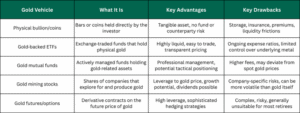
If gold fits into your plan, the next decision is how to gain exposure. Different vehicles carry different risks, costs, and logistical considerations. 
Is Gold a Good Investment (2)

For many retirement‑focused investors, a simple combination of a low‑cost, gold‑backed ETF or fund and possibly a modest amount of physical bullion is often the most practical approach. More speculative vehicles, such as futures or highly leveraged mining stocks, are usually better left to experienced, risk‑tolerant traders, not those relying on their nest egg.

How Agemy Might Position Gold in a 2026 Plan

From the perspective of a holistic retirement planning firm like Agemy Financial Strategies, the decision is less about timing the perfect entry point and more about integrating gold thoughtfully into an overall strategy.

  1. Clarify your purpose for owning gold
    • Hedge against inflation and currency risk.
    • Diversify equity and bond exposure.
    • Provide psychological comfort (“sleep‑at‑night” insurance).
      Each goal may justify a different target allocation and vehicle.
  2. Right‑size your allocation: Many experts view gold as a “satellite” holding rather than a core position, with allocations often in the mid‑single‑digit to low‑double‑digit percentage range depending on risk tolerance and objectives. Too little may not move the needle; too much can crowd out productive assets and add volatility.
  3. Integrate with income and withdrawal planning: For retirees, a key question is how gold interacts with income‑producing holdings. One approach is to let gold sit as a long‑term store of value while using dividends, interest, and systematic withdrawals from other assets to fund lifestyle needs.
  4. Set expectations and time horizon: Experts frequently stress that gold works best as a long‑term holding, not a short‑term trade. That means being prepared for periods when gold underperforms stocks or even declines in price, while keeping the focus on its role as insurance rather than as a primary growth engine.
  5. Stay diversified and disciplined: Even with bullish forecasts pointing toward the possibility of gold moving higher into and beyond 2026, concentration in any single asset is dangerous. A disciplined rebalancing plan, trimming gold after large run‑ups and adding modestly after pullbacks, can help manage risk and keep the allocation aligned with your plan.

So, Is Gold a Good Investment in 2026?

Is Gold a Good Investment (2)

For many, the answer is: gold can be a good investment in 2026 as part of a diversified, plan‑driven portfolio, not as a stand‑alone bet. The macro backdrop of strong central bank demand, elevated geopolitical and economic uncertainty, and a potentially favorable interest‑rate environment all support a constructive long‑term outlook for gold.

At the same time, today’s high prices and the possibility of sharp corrections mean investors should approach gold thoughtfully, with realistic expectations and a long‑term mindset. The most appropriate allocation, vehicle, and timing will depend on your age, risk tolerance, income needs, and broader retirement goal, factors that a personalized plan can help you balance.

If you’re wondering whether gold belongs in your 2026 portfolio, the next step is to review your current holdings, risk profile, and retirement timeline with an advisor who understands how to use tools like gold as part of a comprehensive income and wealth‑protection strategy.

Contact us at agemy.com.


Investment advisory services are offered through Agemy Wealth Advisors, LLC, a Registered Investment Advisor and fiduciary to its clients. Agemy Financial Strategies, Inc. is a franchisee of Retirement Income Source®, LLC. Agemy Financial Strategies, Inc. and Agemy Wealth Advisors, LLC are associated entities. Agemy Financial Strategies, Inc. and Agemy Wealth Advisors, LLC entities are not associated with Retirement Income Source®, LLC. The information contained in this e-mail is intended for the exclusive use of the addressee(s) and may contain confidential or privileged information. Any review, reliance or distribution by others or forwarding without the express permission of the sender is strictly prohibited. If you are not the intended recipient, please contact the sender and delete all copies. To the extent permitted by law, Agemy Financial Strategies, Inc and Agemy Wealth Advisors, LLC, and Retirement Income Source, LLC do not accept any liability arising from the use or retransmission of the information in this e-mail.

Understanding the Difference Can Make or Break Your Retirement

You’ve worked hard to build a nest egg. Maybe you’ve recently retired or are planning to. You have savings, a 401(k), maybe even a buyout offer or pension lump sum, and now you’re asking the million-dollar question:

How should I invest this money to last the rest of my life?

Too many retirees fall into a trap: they think they’re investing when they’re really speculating, and that mistake can lead to stress, losses, and the fear of running out of money.

At Agemy Financial Strategies, we’ve spent over 30 years helping people retire and stay retired. One of the most important conversations we have with new clients is this: Are you a speculator or an investor? Understanding this distinction isn’t just financial jargon; it’s critical to helping protect your retirement lifestyle.

What’s the Real Difference?

Let’s get clear on what these terms actually mean. The financial world uses them loosely, but at Agemy, we define them in a simple, meaningful way:

✅ Investor:

An investor puts money into assets that produce consistent, predictable income, regardless of short-term price movements. Think dividends, interest, rental income, or fixed-income strategies. You don’t have to “hope” for gains; your money is working for you now.

❌ Speculator:

A speculator puts money into assets hoping they’ll go up in value. There’s no guaranteed return. Speculators often chase “hot stocks,” time the market, or follow media hype, trying to buy low and sell high.

A Tale of Two Retirees: George and Betty

Imagine George. He’s just taken an early retirement package and received a sizeable lump sum. Excited but unsure, he turns on a financial news network. A panel of TV “experts” enthusiastically recommends a trending tech stock. George jumps online and buys it.

Six months later, the stock has tanked.

George is confused. He thought he was investing. But what he really did was speculate. He acted on a tip, without understanding the fundamentals of the company or having an income strategy in place.

Meanwhile, his friend Betty took the same buyout but worked with a fiduciary. Her retirement portfolio pays her $70,000 a year in steady income through interest, dividends, and other reliable sources. Her plan isn’t flashy, but it’s dependable.

George is hoping.

Betty is planning.

Why This Matters More in Retirement

Before retirement, time is on your side. You can ride out volatility, recover from losses, and afford to take risks. But in retirement, the rules change. You’re no longer adding to your portfolio; you’re drawing from it. And that makes every decision matter.

Here’s what happens when retirees continue to speculate instead of invest:

  • They may see their portfolio grow during good years, only to suffer big losses during market downturns.
  • If those losses occur early in retirement, they can permanently reduce the income their portfolio can generate (this is called sequence-of-returns risk).
  • They start withdrawing principal, not income, which can drain their savings faster than expected.

The Biggest Retirement Fear Is Real

According to a study by the Employee Benefit Research Institute, more than 40% of retirees fear outliving their money. That fear is justified, especially when portfolios are overly reliant on market growth instead of income.

At Agemy Financial Strategies, we believe retirement should not be a gamble. It should be a strategy.

TR = I + G: The Formula for Retirement Success

One concept we teach frequently is simple but powerful:

Total Return = Income + Growth (TR = I + G)

Too many people focus only on growth. But if your account grows without producing income, you’re relying on hope.

A Strong Retirement Strategy Includes:

  • I (Income): Regular, predictable payments from interest, dividends, rental income, annuities, or structured notes.
  • G (Growth): Moderate, stable growth to keep pace with inflation and allow for future flexibility.

You need both, but income becomes the priority in retirement. After all, you can’t spend percentage points or stock charts; you spend cash.

How Financial Media Leads You Astray

TV finance programs, online blogs, and social media influencers often blur the lines between investing and speculating. They present tips, trends, and trade ideas under the guise of “investment advice,” when really, they’re offering entertainment.

These media outlets don’t know your goals, your risk tolerance, or your timeline. And many of the “experts” already own the stocks they’re hyping. They profit when you jump in after them, providing liquidity for their exit.

The result? People like George buy high, sell low, and repeat the cycle.

Are You Aligned With Your Goals?

One of the most common disconnects we see is between what people say they want and how their portfolios are actually structured.

  • A client says, “I’m conservative,” but 85% of their portfolio is in high-risk mutual funds.
  • Another says, “I want income,” but everything they own requires capital appreciation to pay off.

This is what we call incongruence. And it’s dangerous.

When markets drop and fear kicks in, people realize their portfolios don’t match their comfort zone. They sell at the wrong time, miss the recovery, and lock in losses.

That’s why clarity and congruence are essential to retirement planning.

Self-Assessment: Are You a Speculator or an Investor?

Take a few minutes to ask yourself these five key questions:

  1. What is your primary investment goal?
    a. Generate steady income
    b. Grow wealth slowly
    c. Make quick profits through market timing

  2. How often do you check your investments?
    a. Once a quarter
    b. Monthly
    c. Daily or with every market swing

  3. What is your typical holding period for an investment?
    a. Several years
    b. One to two years
    c. A few weeks or months

  4. How do you respond to market volatility?
    a. Stay calm and stick to the plan
    b. Get anxious, but try to wait it out
    c. Panic and sell quickly

  5. What’s more important to you in retirement?
    a. Income that covers your lifestyle
    b. Higher returns
    c. Beating the market

If most of your answers were A, you’re likely an investor. If they were mostly C, you’re likely a speculator, even if you didn’t realize it. And if most of your answers were B, you fall into what we might call the “Hybrid Investor” category. You’re not fully speculative, but you’re also not fully income-focused.

You Can Have a Play Account, Just Keep It Small

At Agemy Financial Strategies, we don’t believe speculation is inherently bad. In fact, some of our clients have small “fun money” accounts they use to buy individual stocks or chase growth ideas.

But we always separate that from their core retirement portfolio. That portfolio must:

  • Provide income
  • Protect principal
  • Last as long as they do

Speculation can be entertainment. Your retirement strategy should be your lifeline.

Why Working With a Fiduciary Matters

We’ve seen countless examples where people unknowingly received guidance from advisors who don’t differentiate between speculation and investing. Or worse, they sell products based on commissions, not client outcomes.

At Agemy Financial Strategies, our advisors are fiduciaries. That means we are legally and ethically bound to act in your best interest, not ours.

We view our role as your CFO, while you remain the CEO of your finances. We bring clarity, structure, and strategies designed around your goals, risk tolerance, and timeline.

You’ve worked hard for your money. It’s time your money worked just as hard for you.

The Path Forward: Income, Clarity, Confidence

Your retirement years should be full of freedom, not fear. And they certainly shouldn’t depend on guessing what the market will do next.

If you’re within 5–10 years of retirement, or already there, now is the time to pivot toward:

Let us help you align your money with your mission and build a plan that pays you to live the retirement you deserve.

Final Thoughts: Build a Retirement Strategy That Works for You

Whether you’re a steady income investor, a hopeful speculator, or somewhere in between, the key to a successful retirement isn’t luck; it’s alignment. Your investment strategy should reflect your goals, your lifestyle, and your need for reliable, long-term income.

At Agemy Financial Strategies, we believe retirement should be about freedom, not financial uncertainty. That’s why we focus on educating and empowering our clients to understand where they stand—so they can take control of where they’re going.

Speculation has its place, but your core retirement plan should be grounded in confidence, not hope.

Let our team help you answer the question: Are you a speculator or an investor, and is your money working the way it should?

Visitwww.agemy.com to schedule your complimentary retirement review.

We’ll help you build a personalized strategy that prioritizes what matters most: security, income, and peace of mind.

Retire with purpose. Stay retired with confidence. That’s the Agemy way.


FAQs: Understanding Speculation vs. Investing in Retirement

1. What’s the main risk of speculating in retirement?
Speculation involves putting your money into assets that may or may not increase in value, often without generating income. In retirement, this strategy can be especially risky because losses can derail your income plan, and you may not have time to recover. If the market drops early in retirement, you could be forced to withdraw from a declining portfolio, increasing the risk of outliving your money.

2. Is it okay to have a portion of my portfolio in speculative assets?
Yes, but with caution. Some retirees choose to allocate a small percentage of their portfolio (often called a “play account”) for speculative opportunities. The key is to ensure your core retirement strategy is built around income, safety, and consistency. Speculation should never be the foundation of your retirement plan.

3. How can I tell if I’m investing or speculating?
Ask yourself: Does this asset pay me regularly? If not, you’re likely speculating. True investments, such as dividend-paying stocks, bonds, or income-generating real estate, provide predictable returns. If your portfolio relies solely on asset growth and market timing, you’re taking a speculative approach, even if unintentionally.

4. Can income-based investing still offer growth potential?
Absolutely. At Agemy Financial Strategies, we help clients design income-first portfolios that also include moderate, sustainable growth. The goal isn’t to eliminate growth, but to prioritize reliable income, then layer in growth for flexibility and inflation protection.

5. Why is working with a fiduciary so important for retirees?
A fiduciary is legally obligated to act in your best interest. Many financial salespeople push speculative products for commissions, not because they align with your retirement goals. At Agemy, we’re fiduciaries who focus on educating and guiding clients toward investment strategies that prioritize income, risk management, and long-term retirement success.


Disclaimer: This content is for educational purposes only and should not be considered financial or investment advice. Please consult with the fiduciary advisors at Agemy Financial Strategies before making any investment decisions.

Ongoing reports and headlines highlight a mixed economic outlook, with some sectors showing resilience while others face headwinds due to tariffs and uncertainty.

The recent contraction of the U.S. economy by 0.3% in the first quarter of 2025 may appear modest on paper, but for individuals approaching or in retirement, it can serve as a key signal. Even small shifts in economic indicators can have ripple effects across investment markets, interest rates, consumer confidence, and ultimately, your retirement income security.

At Agemy Financial Strategies, we understand that affluent retirees and pre-retirees can’t afford to make reactive decisions based on short-term headlines. Instead, it’s about strategic foresight, proper risk management, and intentional wealth preservation. Here’s what you need to know.

A Closer Look at the Q1 Contraction

The 0.3% dip in GDP followed a period of steady growth, raising concerns about the broader economic trend. Here’s what contributed to the slowdown:

While these may seem like economic metrics for policymakers, they directly relate to retirement strategies, especially for those with significant assets at stake.

Key Areas Where Economic Slowdowns Impact Your Retirement Plan

1. Investment Strategy and Portfolio Diversification

Volatility and contractions in the economy often hit equity markets first—and hardest. For retirees, the priority isn’t chasing returns, but protecting wealth while maintaining sufficient growth.

  • Evaluate your exposure to equities, bonds, and alternative assets.
  • Consider dividend-generating or inflation-hedged investments.
  • Avoid the “sequence of returns” risk by maintaining enough cash or liquid assets to help avoid drawing down principal during market dips.

Agemy Financial Strategies can help review your current allocation and stress test your portfolio against different market scenarios.

2. Interest Rates, Inflation, and Income Streams

In a cooling economy, the Fed may shift to lower interest rates to encourage spending. While this could help borrowing costs, it also has implications for:

  • Fixed-income yields (which may decline)
  • Inflation pressures, especially if supply-chain constraints persist
  • Real purchasing power, particularly for retirees on fixed incomes

It’s essential to align your income strategy with both current interest rates and inflation forecasts. Agemy helps clients integrate TIPS, laddered bonds, and diversified income vehicles to protect purchasing power.

3. Tax Planning in an Evolving Landscape

Lower GDP often prompts fiscal policy adjustments, including potential tax reforms. As your retirement income sources vary—from IRAs to pensions to capital gains—it’s important to assess how changing tax rates might impact:

Our fiduciary advisors at Agemy are experienced in proactive tax strategy to help ensure your income remains as tax-efficient as possible, no matter the economic cycle.

4. Estate Planning Amid Market Volatility

A drop in asset values might affect the total size of your estate. If this impacts your legacy goals, it may be time to:

Volatility can create estate planning opportunities, especially if you anticipate a market rebound or plan to transfer assets to heirs soon.

5. Rising Healthcare Costs and Longevity Risk

In times of economic pressure, federal healthcare funding could face cuts. Meanwhile, costs for long-term care and medical expenses continue to rise, regardless of the economic climate.

A sound retirement plan must account for:

  • Long-term care insurance
  • Health Savings Accounts (HSAs)
  • Medicare and supplemental coverage strategies

Planning for healthcare costs early can help prevent sudden financial strain later.

How to Navigate Economic Uncertainty with Confidence

1. Conduct Regular Portfolio Checkups

Just like your annual physical, your portfolio needs a checkup too. Reviewing it during times of uncertainty helps ensure you’re not overexposed to risk and that your investments are working in your favor.

2. Reaffirm Your Financial Goals

Are your current retirement strategies still aligned with your goals? As economic conditions shift, your financial objectives might need to be adjusted. Agemy’s advisors can help you identify blind spots and fine-tune your plan.

3. Maintain a Long-Term Perspective

Economic contractions, no matter how uncomfortable, are part of a normal business cycle. Staying the course and focusing on your long-term goals helps avoid impulsive decisions that can hurt your retirement outlook.

4. Work with a Trusted Fiduciary Partner

At Agemy Financial Strategies, our fiduciary duty is to put your best interests first. We offer personalized wealth planning that evolves with you and the broader market landscape.

Final Thoughts: Your Retirement Deserves a Resilient Strategy

The 0.3% GDP contraction in Q1 2025 is a reminder that even mild economic changes can have real implications for those nearing retirement. The good news? You don’t have to navigate this alone.

With over 30 years of experience guiding clients through all market conditions, Agemy Financial Strategies helps affluent families, professionals, and retirees adapt, preserve, and grow their wealth in the face of change.

How Agemy Financial Strategies Can Help

In uncertain economic times, your retirement strategy needs more than guesswork—it requires deep knowledge, personalization, and foresight. That’s where Agemy Financial Strategies comes in.

With over three decades of experience guiding affluent individuals and families, our team provides comprehensive, fiduciary-based financial planning focused on long-term security and short-term flexibility.

Here’s how we help you stay on course—even when the economy wavers:

  • Customized Retirement Income Planning: We analyze all your income streams—Social Security, pensions, investments—and structure a reliable, tax-efficient plan to help cover your expenses for life.
  • Strategic Investment Management: Our advisors actively monitor market conditions and adjust your investment mix to help protect against downside risk while capturing growth opportunities when available.
  • Proactive Tax Optimization: We build tax strategies into every part of your plan, including Roth conversions, tax-loss harvesting, and distribution planning to help you keep more of what you’ve earned.
  • Healthcare & Long-Term Care Strategy: Rising healthcare costs are one of retirement’s biggest threats. We help you prepare with smart coverage options, LTC planning, and health savings strategies.
  • Legacy and Estate Planning Coordination: Your wealth should support not only your lifestyle but also your legacy. We collaborate with estate attorneys and CPAs to help align your goals with your estate structure.
  • Stress Testing for Peace of Mind: We run your plan through multiple economic and market scenarios to help ensure your strategy holds up, even if the economy doesn’t.

A Plan That Evolves as Life and the Market Do

At Agemy Financial Strategies, we don’t believe in one-size-fits-all retirement planning. Instead, we take time to understand your lifestyle, your priorities, and your legacy goals, building a roadmap that adapts with you and the world around you.

Ready to strengthen your retirement plan with a team that puts your best interests first?

Schedule a no-obligation consultation today, and let’s build a future that’s as resilient as it is rewarding.

Frequently Asked Questions

Q: What if my retirement portfolio lost value due to the Q1 slowdown?
A: Don’t panic. Reassess your asset allocation and consult with a fiduciary advisor. Market dips can be an opportunity for rebalancing and tax optimization.

Q: Should I consider a Roth conversion now?
A: If you anticipate higher taxes later or if your portfolio temporarily dips, a Roth conversion may be advantageous. Always consult with your advisor before moving forward.

Q: How can I help protect against inflation in retirement?
A: Diversify into inflation-resistant assets like TIPS or real estate. Consider dynamic withdrawal strategies that adjust to inflation.

Q: What healthcare costs should I plan for in retirement?
A: Medicare, supplemental insurance, and long-term care expenses. Begin planning early to help ensure you can cover these costs without compromising your lifestyle.

Q: Is now a good time to gift assets to my heirs?
A: If asset values are temporarily down, it could be an ideal time to transfer wealth while minimizing tax implications. Discuss this with your financial advisor.

Disclaimer: This content is for educational purposes only and should not be considered financial or investment advice. Please consult with the fiduciary advisors at Agemy Financial Strategies before making any investment decisions.