Posts

Spring has sprung, and so has the annual rush of tax preparation—filled with calculations, paperwork, and looming deadlines. Surprisingly, 31% of Americans admit to putting off their tax filings, while 1 in 4 feel unprepared to tackle their 2025 returns.

For Connecticut residents, understanding the state’s tax laws is essential to helping maximize deductions, avoiding penalties, and securing a seamless filing process. With over 35 years of experience in comprehensive tax and financial planning, Agemy Financial Strategies has helped clients navigate Connecticut’s evolving tax landscape.

As a Connecticut-based fiduciary firm with offices in Colorado, we provide personalized guidance to help your tax strategy align with your broader wealth management plan. In this blog, we’ll explore everything you need to know about filing your Connecticut taxes, including recent tax changes, key deductions, and proven strategies to help reduce your tax burden. Let’s dive in!

Connecticut State Income Tax 

Connecticut implemented its first state income tax on August 22, 1991, with a flat 4.5% rate to address a $963 million budget deficit. Since then, the state has transitioned to a progressive income tax system, which now includes seven tax brackets–ranging from 2% to 6.99% for the 2024 tax year (the taxes you’ll file in 2025). 

The state taxes you owe depend on your income, filing status, and any deductions or credits you qualify for. Connecticut’s tiered tax system means that as your taxable income increases, so does your tax rate. Wondering how these tax brackets apply to your filing status? Below is a breakdown of Connecticut’s income tax brackets and rates for single filers, married couples, and other filing categories.

Connecticut Sales Tax

As of 2025, Connecticut maintains a statewide sales tax rate of 6.35%, applicable to the retail sale, lease, or rental of most goods and taxable services. Notably, Connecticut does not impose additional local sales taxes, resulting in a uniform rate across the state.

Exceptions to the Standard Sales Tax Rate: 

  • Rental Vehicles: The rental or leasing of a passenger motor vehicle for 30 consecutive calendar days or less is taxed at 9.35%.
  • Computer and Data Processing Services: A reduced tax rate of 1% is applied to computer and data processing services.
  • Luxury and Specific Items: A tax rate of 7.75% applies to most motor vehicles over $50,000. Jewelry (real or imitation) priced over $5,000. Articles of clothing or footwear, handbags, luggage, umbrellas, wallets, or watches are over $1,000. 

Connecticut Property Tax

Connecticut’s property taxes are among the highest in the United States. The state’s average effective property tax rate is 1.92%, significantly higher than the national average of 1.07%. Unlike many states where counties administer property taxes, Connecticut assigns this responsibility to individual cities and towns. Each municipality sets its mill rate, which determines the tax payable per $1,000 of assessed property value.

Connecticut Inheritance and Estate Tax

Connecticut does not impose an inheritance tax. However, it does have an estate tax that applies to estates exceeding certain thresholds. Connecticut imposes a flat 12% tax on estates valued at more than $13.61 million (i.e., the federal estate tax threshold for 2024). It’s important to note that if the decedent resided in a state that imposes an inheritance tax, beneficiaries may be liable for that state’s inheritance tax regardless of their state of residence.

Therefore, it’s advisable to consult the specific laws of the decedent’s state to determine any potential tax obligations. For personalized guidance on navigating Connecticut’s tax landscape, Agemy Financial Strategies is here to assist. Our team of fiduciary advisors is committed to acting in your best interest, helping you find solutions tailored to your individual needs and financial goals.

Recent Tax Changes in Connecticut

Tax laws constantly evolve, and staying informed about the latest updates can help you maximize savings and avoid surprises when filing your return. The Connecticut Department of Revenue Services (DRS) has introduced key changes that may impact your 2024 tax return. These updates affect income tax brackets, deductions, and credits, potentially influencing your overall tax liability.

Here’s what you need to know about the latest Connecticut tax changes and how they might impact your filing:

1. Retirement Income Tax Exemptions

Connecticut has expanded its retirement income tax exemptions, offering greater relief for retirees. Here’s how these changes may benefit you:

  • If you receive individual retirement account (IRA) distributions (not including Roth IRAs), you can deduct 50% of those amounts, with deductions increasing to 100% by 2026.
  • If you receive income from the Teachers’ Retirement System (TRS), you can deduct 50% of it from your state taxes.
  • If you’re retired from the railroad (tier I and tier II railroad retirement benefits) or military, you can deduct 100% of your retirement pay.

2. Income Taxes Paid to Other Jurisdictions 

Wealthier individuals with out-of-state income (from investments, rental properties, or remote work) can claim a credit for taxes paid to other states, reducing double taxation.

3. Historic Homes Rehabilitation Tax Credit 

A 30% refundable credit (up to $30,000) on the costs of rehabilitating historic homes can benefit high-income homeowners and investors who restore qualifying properties.

4. Green Energy Credits

Connecticut offers various credits and incentives to encourage sustainability, including the Residential Clean Energy Credit (30% of the cost of solar panels and battery storage), rebates for energy-efficient home upgrades, and the CHEAPR program for electric vehicle purchases.

Common Tax Mistakes to Avoid

Navigating Connecticut’s tax laws can be complex, and even small errors can lead to unnecessary penalties or missed opportunities for savings. Awareness of common tax mistakes can help you stay compliant and optimize your financial strategy. Here are some key pitfalls to watch out for:

1. Failing to File on Time 

Missing tax deadlines can lead to costly penalties and accrued interest, making filing on time or requesting an extension essential. Even if you can’t pay your full tax bill immediately, filing on time can help you avoid additional penalties. Here are some key deadlines to look out for:

  • April 15, 2025 – Deadline to file 2024 Connecticut and federal tax returns.
  • October 15, 2025 – Extended tax return deadline (if requested by April 15).

The fiduciary advisors at Agemy Financial Strategies can help you stay ahead of tax deadlines, file correctly, and plan for any payments to minimize penalties and interest.

2. Misreporting Income
Even if you don’t receive a W-2 or 1099, you’re still responsible for reporting all taxable income to the state. Failing to report all income sources accurately can lead to audits, penalties, and unexpected tax liabilities. Connecticut taxes various income streams, including:

  • Wages
  • Self-employment earnings
  • Rental income
  • Certain investment gains

Confirming that the income reported on your tax return matches what the IRS and the Connecticut Department of Revenue Services (DRS) receive from employers and financial institutions is important. Agemy Financial Strategies can help you track and report all income sources accurately, helping provide compliance while identifying potential deductions to reduce your taxable income.

3. Not Claiming Available Deductions & Credits
Many Connecticut residents overpay on taxes simply because they don’t take advantage of available deductions and credits. These tax-saving opportunities can help reduce your taxable income or lower your overall tax liability. Failing to claim these deductions and credits can mean leaving money on the table! The fiduciary advisors at Agemy can help you identify and maximize every tax-saving opportunity.

4. Neglecting to Pay Estimated Taxes
If you’re self-employed, own a business, or have significant investment income, failing to make quarterly estimated tax payments can lead to unexpected tax bills, penalties, and interest charges. Unlike W-2 employees who have taxes withheld from their paychecks, freelancers, independent contractors, business owners, and investors must calculate and pay taxes on their income throughout the year. Planning ahead is key to avoiding surprises at tax time. Agemy Financial Strategies can help you estimate your tax liability and implement strategies to help minimize your tax burden.

Tax Planning Strategies to Reduce Your Liability

Smart tax planning can help you keep more of your hard-earned money while helping ensure compliance with Connecticut tax laws. Leveraging strategic deductions, credits, and investment choices can help reduce your potential tax burden and enhance your long-term financial security. Below are key strategies to help minimize your tax liability.

1. Maximize Retirement Contributions

Saving for retirement isn’t just about securing your future—it’s also a powerful tax-saving strategy. These contributions can help reduce your taxable income while helping you build long-term wealth.

  • 401(k) and Traditional IRA Contributions: Pre-tax contributions lower your taxable income, reducing your tax bill today while allowing your investments to grow tax-deferred.
  • Health Savings Account (HSA): If you have a high-deductible health plan, HSA contributions are triple tax-advantaged—meaning they reduce taxable income, grow tax-free, and can be withdrawn tax-free for qualified medical expenses.
  • Roth conversions: Converting a traditional IRA to a Roth IRA can be a strategic move. This allows for tax-free withdrawals in retirement, which is especially useful if you expect to be in a higher tax bracket later.

2. Utilize Tax-Loss Harvesting

Investment losses aren’t always bad—they can be used strategically to help reduce your tax liability. Tax-loss harvesting involves selling underperforming investments to offset capital gains from winning investments, lowering your taxable income.

  • Offset Capital Gains – If you’ve realized capital gains, selling investments at a loss can help neutralize the tax impact.
  • Carry Forward Losses – If your losses exceed your gains, you can use up to $3,000 to offset ordinary income each year and carry forward any remaining losses to future tax years.

3. Consider Charitable Giving

Donating to charity supports causes you care about and offers valuable tax benefits.

  • Donate Appreciated Stocks – Instead of selling stocks and paying capital gains taxes, you can donate them directly to a charity, avoiding capital gains while still receiving a tax deduction.
  • Donor-Advised Fund (DAF)– A DAF allows you to bundle multiple years’ worth of donations, helping you exceed the standard deduction in a year while distributing funds over time. This strategy can be particularly effective for high-income earners looking to maximize tax savings.

4. Review Your Tax Withholding

If you’re not reviewing your tax withholding regularly, you could be overpaying (giving the government an interest-free loan) or underpaying (leading to a surprise tax bill).

  • Check Your W-4 Form – Make sure the amount withheld from your paycheck aligns with your expected tax liability. Adjustments may be needed if you’ve experienced income changes, marriage, dependents, or significant deductions.
  • Avoid Penalties – Underpaying taxes throughout the year can result in penalties and interest. Ensuring accurate withholding can prevent unexpected tax bills when you file.

Final Thoughts

Tax planning is a critical part of wealth management. By staying informed about Connecticut’s tax laws and making the most of available deductions and credits, you can optimize your strategy and avoid unnecessary penalties.

At Agemy Financial Strategies, we provide personalized tax planning guidance designed to align with your unique financial goals. As fiduciary advisors, we are committed to acting in your best interest—helping you find the right solutions for your needs. Our comprehensive financial planning helps ensure your taxes and investments work together to support your long-term success.

Contact us today for more information on our tax and financial planning services.


FAQs About Connecticut Tax Filing

Who is required to file a Connecticut income tax return?

Anyone who lives in Connecticut, earns income or operates a business must file a state income tax return if their income meets the required threshold. Agemy Financial Strategies can assist you in navigating state tax requirements, helping ensure compliance while maximizing deductions and minimizing tax liabilities.

Can I file my Connecticut taxes electronically?

You can file online using MyConnectCT or authorized e-file providers. Our team can assist you through the tax filing process and help determine the best filing method for your financial situation.

What if I work remotely for a company outside Connecticut?

Under the convenience of the employer rule, Connecticut may still tax your income unless you can prove you are working out of state for business necessity. Our team can help you navigate state tax laws to avoid unnecessary taxation while staying compliant.

Are estimated tax payments required in Connecticut?

If you expect to owe more than $1,000 in state taxes, you must make quarterly estimated tax payments. Our fiduciaries can help you calculate and plan your estimated payments to avoid penalties and keep your finances on track.

What happens if I miss the tax filing deadline?

If you miss the deadline, you may face penalties and interest charges. Filing for an extension gives you until October 15th, 2025, but payments are still due by April 15th, 2025. We can assist in managing deadlines, filing extensions if necessary, and creating a proactive tax plan to prevent costly penalties.


Disclaimer: This article is for informational purposes only and should not be considered tax, legal, or financial advice. Consult the qualified fiduciary advisors at Agemy Financial Strategies for guidance specific to your situation.

For high-net-worth individuals (HNWIs), effective tax planning is just as important as investment growth when it comes to long-term wealth preservation. With the top marginal tax rate in the U.S. at 37% and potential estate tax exemptions set to decline after 2025, strategic tax planning can make a significant impact on reducing liabilities and maximizing financial efficiency.

A well-structured tax strategy allows HNWIs to legally minimize tax burdens, provide compliance with evolving regulations, and preserve more wealth for future generations. In this blog, we explore four essential tax planning strategies to help you optimize your financial position while staying ahead of tax obligations.

Why Having a Tax Strategy is Important

Without strategic tax planning, these factors can significantly erode wealth over time. A proactive tax strategy minimizes tax liability and helps ensure that your investments, estate, and philanthropic efforts align with your long-term financial goals.

  • Preserve Wealth: Reducing tax liabilities allows you to keep more earnings and investment gains.
  • Enhances Investment Returns: Tax-efficient investing can improve net returns by providing the right assets in the most tax-advantaged accounts.
  • Optimizes Charitable Giving: Smart gifting strategies allow you to support causes you care about while receiving tax benefits.
  • Safeguards Your Estate: Proper estate planning can help reduce the tax burden on heirs, allowing more of your wealth to be passed down.

By implementing a proactive tax strategy, you can maximize your financial efficiency, maintain compliance with evolving tax laws, and make informed decisions about wealth management. Let’s explore four key tax planning strategies to help you achieve these goals.

1. Optimize Charitable Giving with Strategic Donations

Charitable giving is a powerful tool for tax planning. It allows you to support causes that matter to you while reducing your taxable income. HNWIs have multiple avenues to help structure their giving to maximize tax benefits. Here are some key strategies for charitable giving:

  • Donor-Advised Funds (DAFs): These allow you to donate assets and receive an immediate tax deduction while deciding which charities to support later.
  • Qualified Charitable Distributions (QCDs): If you’re 70½ or older, you can donate up to $100,000 directly from an IRA to a charity without counting it as taxable income.
  • Charitable Remainder Trusts (CRTs): These provide income during your lifetime while benefiting a charity upon passing, offering estate and income tax benefits.

With recent changes in tax laws, considering long-term charitable strategies can enhance your philanthropic impact while securing favorable tax advantages.

2. Leverage Tax-Advantaged Accounts for Retirement and Investment Growth

Even for HNWIs, tax-advantaged accounts provide valuable opportunities to defer or reduce taxes on investment gains. Proper allocation across these accounts can help yield potential benefits over time. Here are some types of tax-advantaged accounts to consider:

  • Roth IRA Conversions: While you’ll pay taxes on the conversion amount, your investments grow tax-free, and withdrawals in retirement are not subject to income tax.
  • Health Savings Accounts (HSAs): For those with high-deductible health plans, HSAs offer triple tax benefits: contributions are tax-deductible, investments grow tax-free, and withdrawals for qualified medical expenses are tax-free.
  • Life Insurance as an Estate Planning Tool: Properly structured life insurance policies can provide tax-free income to beneficiaries while helping mitigate estate tax burdens.

Implementing a strategic approach to utilizing these accounts can help ensure tax efficiency in both the short and long term. Working alongside a fiduciary advisor can help you leverage these accounts.

3. Minimize Capital Gains Taxes Through Tax-Loss Harvesting and Asset Location

Capital gains taxes can significantly impact wealth accumulation, particularly for HNWIs with diversified investment portfolios. You can reduce tax liabilities and optimize after-tax returns by strategically managing how and when you sell investments.

  • Tax-Loss Harvesting: Offsetting capital gains by selling underperforming investments can help lower your tax bill while maintaining a similar asset allocation.
  • Holding Period Strategies: Long-term capital gains rates are significantly lower than short-term rates. Holding investments for more than one year before selling can help reduce taxes.
  • Asset Location Optimization: Placing tax-inefficient investments (such as bonds and REITs) in tax-advantaged accounts while keeping tax-efficient investments (like index funds) in taxable accounts can improve overall tax efficiency.

Understanding how different investments are taxed—and strategically aligning them—can help you preserve more of your returns. Working with a knowledgeable advisor helps your portfolio be structured in a way that optimizes tax efficiency while supporting your long-term financial goals.

4. Plan for Estate and Gift Taxes to Preserve Generational Wealth

Estate and gift taxes can take a significant portion of wealth if not strategically managed. Understanding how these taxes operate and interact is essential for crafting a comprehensive wealth preservation strategy. Let’s explore each tax in detail:

By proactively planning your estate, you can maximize the wealth passed to future generations while reducing unnecessary tax liabilities.

How Agemy Can Help You with Tax Planning

Navigating the complexities of tax planning can be overwhelming, especially with ever-changing tax laws, investment implications, and estate planning considerations. At Agemy Financial Strategies, our fiduciary advisors work alongside you to create a tailored tax strategy that aligns with your wealth management goals. With a focus on transparency and strategy, our team helps HNWIs:

  • Identify Tax-Efficient Investment Strategies: We analyze your investment portfolio to help optimize asset location, maximize tax efficiency, and manage capital gains.
  • Mitigate Estate and Gift Tax Burdens: Our team helps structure estate plans to minimize tax liability and protect generational wealth.
  • Optimize Retirement and Tax-Advantaged Accounts: We guide you on Roth conversions, tax-efficient withdrawals, and leveraging accounts like HSAs and IRAs.
  • Strategize Philanthropic Giving: We help structure charitable contributions through donor-advised funds, trusts, and other vehicles that can potentially benefit your estate and the causes you care about.

Final Thoughts

Effective tax planning is a crucial component of wealth preservation for HNWIs. Staying informed and proactive in your tax strategy helps ensure that your wealth continues to work for you and your family, both now and in the future.

At Agemy Financial Strategieswe help HNWIs develop tax-efficient wealth management plans tailored to their unique financial goals. Our fiduciary advisors provide guidance to help you maximize tax savings, protect your assets, and build a strong financial future.

Contact us today to schedule your complimentary consultation and start planning for a more tax-efficient future.


Frequently Asked Questions (FAQs)

1. How do tax laws impact HNWIs differently than average taxpayers?

HNWIs often face higher marginal tax rates, exposure to estate and gift taxes, and alternative minimum tax (AMT) considerations. Strategic tax planning is essential to help mitigate these factors. Our fiduciary advisors help HNWIs navigate complex tax laws by implementing strategies that help optimize tax efficiency while staying compliant.

2. Are Roth conversions a good strategy for HNWIs?

Roth conversions can be beneficial if done strategically, particularly in lower-income years or before RMDs begin. They help lock in tax-free growth and withdrawals in retirement. Agemy Financial Strategies provides personalized guidance on timing and executing Roth conversions to minimize tax liability and maximize long-term benefits.

3. What happens if the estate tax exemption is reduced?

If the exemption decreases, more estates will be subject to taxation. Proactive gifting strategies can help mitigate the impact. Our advisors work closely with you to help structure your wealth transfers efficiently, allowing more of your assets to be preserved for future heirs and beneficiaries.

4. Can tax-loss harvesting be done year-round?

Tax-loss harvesting can be executed throughout the year, but many investors optimize it toward year-end to offset capital gains from other investments. If you want to integrate tax-loss harvesting into your investment approach, our fiduciary advisors can help you.

5. How do charitable donations reduce my tax bill?

Charitable contributions can lower taxable income, and depending on the donation type (cash, stocks, trusts), they may provide additional tax benefits such as avoiding capital gains taxes. Agemy Financial Strategies helps clients develop a strategic giving plan that maximizes their charitable impact and tax efficiency.


Disclaimer: This blog is for informational purposes only and should not be considered specific tax, legal, or investment advice. Tax laws are subject to change, and individual circumstances vary. Please consult with the qualified financial professionals at Agemy Financial Strategies before implementing any of the strategies discussed.

Tax laws are shifting, and for individuals committed to preserving their wealth, staying ahead of these changes is more important than ever. 

With new adjustments to estate, gift, and generation-skipping transfer (GST) tax exemptions on the horizon, your decisions could have a lasting impact on your financial legacy. For high-net-worth individuals (HNWIs), understanding these updates isn’t just beneficial—it provides a decisive strategic advantage.

In this blog, we’ll break down the key changes and explore how Agemy Financial Strategies can assist you in navigating the complexities of these taxes, turning challenges into opportunities to help secure your future.

What Are Estate, Gift, and Generation-Skipping Transfer Taxes? 

The federal government employs estate, gift, and generation-skipping transfer (GST) taxes to help ensure wealth transfers are subject to taxation. In turn, this limits the accumulation of untaxed wealth across individuals and generations. Understanding how these taxes operate and interact is essential for crafting a comprehensive wealth preservation strategy. Let’s explore each tax in detail:

1. Estate Tax

The estate tax is a levy imposed on the total value of an individual’s estate that exceeds the federal exemption threshold at the time of their death. This tax applies to assets such as real estate, investments, cash, and other valuables included in the estate. The federal estate tax doesn’t apply unless you hit a certain exemption amount.

  • The exemption amount for people who pass away in 2025 is $13.99 million (up from $13.6 million last year).
  • Married couples can expect their exemption to be $27.98 million (up from $27.22 million last year).

Proper estate planning can help mitigate this tax burden, allowing more wealth to be passed on to your heirs.

2. Gift Tax

The gift tax applies to transferring money or assets during your lifetime that exceeds the annual or lifetime exemption limits. The annual gift tax exclusion sets the amount you can give each recipient without impacting your lifetime exemption. The IRS has announced an increase in the annual gift tax exclusion for 2025:

Maximizing annual gift exclusions helps reduce your taxable estate while providing financial support to loved ones. However, exceeding these limits without careful planning can lead to unnecessary tax liabilities. Working alongside a fiduciary can help you integrate gifting strategies into your broader estate plan.

3. Generation-Skipping Transfer (GST) Tax

The Generation-Skipping Transfer (GST) tax is designed to prevent individuals from avoiding taxation by skipping over a generation and transferring wealth directly to beneficiaries who are at least two generations younger. It is an additional tax on top of the federal gift or estate tax. For the tax year 2025, the GST tax exemption amount is set at $13.99 million per individual.

Transfers to these younger-generation beneficiaries are only tax-free up to the GST tax exemption limit. Any amount exceeding this exemption is subject to the GST tax, which, like the estate tax, has a top rate of 40%. This tax most commonly affects:

  1. Direct Transfers: Gifts or inheritances given directly to grandchildren or other younger-generation individuals.
  2. TrustsTrusts established for the benefit of grandchildren or great-grandchildren, especially when structured to avoid intermediate taxation on the parent generation.

A fiduciary can help you by providing tailored advice for your estate plan accounts. With proactive planning and guidance, you can better protect your financial legacy and help ensure it benefits your family for years.

Why Understanding These Taxes Matters 

Proper planning for estate, gift, and GST taxes is essential to help protect your financial legacy. Failing to account for these taxes can result in significant financial losses for your heirs and complicate wealth transfer strategies. For example:

  • Overlooking Gift Tax Exclusions: Missing annual or lifetime gift tax exclusions can unintentionally trigger higher tax liabilities.
  • Missing the Current Exemptions: Failing to take advantage of the higher exemptions before they are reduced in 2026 could expose your estate to substantial federal taxes.
  • Mismanaging GST Tax Liabilities: Poor planning could undermine the long-term benefits of trusts and other wealth transfer strategies to skip generations.

Working with a fiduciary can help you have the guidance needed to navigate the nuances of these taxes. A trusted fiduciary can help you maximize available exemptions and create a plan to help preserve your wealth for future generations.

Key Changes to Tax Exemptions for 2025

The Tax Cuts and Jobs Act (TCJA) of 2017 significantly increased the exemptions for estate, gift, and GST tax. However, these enhancements are set to sunset at the end of 2025, potentially altering how wealth can be transferred tax-efficiently. Here’s what to expect:

Post-2025 Adjustments

  • The lifetime estate and gift tax exemptions are scheduled to be cut in half after 2025 to approximately $7 million per individual (adjusted for inflation).
  • Without action, gifts or estate transfers exceeding these reduced limits could face federal taxes at rates as high as 40%.

If you have a large estate, taking advantage of the higher exemptions in 2025 can help reduce your tax liabilities and preserve wealth for future generations. Early planning is essential to avoid the financial burden of potential reductions.

State Estate Taxes: Another Layer to Consider


In addition to federal estate taxes, many states impose their own estate or inheritance taxes, often with lower exemption thresholds. For residents of states like Connecticut, where state-level estate taxes can be significant, careful planning is crucial to help avoid unexpected tax liabilities. 

The current Connecticut estate tax exemption is $13.61, and the flat tax rate is 12%. Any taxable gifts or estates exceeding this exemption amount will be subject to a 12% tax. Thus, it is vital for Connecticut residents to integrate state tax considerations into their overall estate planning strategy.

The absence of a state estate tax offers a significant advantage for Colorado residents. Without an additional layer of taxation, residents can pass on their wealth to loved ones without incurring state-level estate taxes. This benefit particularly appeals to retirees seeking to preserve their legacy and help maximize the financial resources available to their families.

With dedicated offices in Connecticut and Colorado, Agemy Financial Strategies has extensive experience helping residents navigate these state-specific tax laws. Whether navigating Connecticut’s estate tax thresholds or taking advantage of Colorado’s tax benefits, our team helps protect your financial legacy for future generations.

How Agemy Financial Strategies Can Help 

The upcoming changes to estate, gift, and GST tax exemptions present a valuable opportunity to help optimize your financial legacy and minimize future tax burdens for your heirs. However, navigating these complex tax structures requires skilled guidance and thoughtful planning. At Agemy Financial Strategies, we help simplify financial complexities, equipping you with the tools and knowledge to make confident, informed decisions about your wealth. Here’s how we can help:

  1. Tailored Estate Planning: We can design personalized estate plans that align with your unique goals, helping ensure your wealth transitions smoothly and tax-efficiently.
  2. Proactive Gifting StrategiesOur team will guide you in leveraging exemptions, avoiding common pitfalls, and making tax-savvy decisions.
  3. Trust Design and Management: Whether you’re setting up a trust or optimizing an existing one, we provide solutions to help maximize benefits for you and your heirs.
  4. Holistic Financial Advice: Estate planning works best when integrated with your broader financial goals. We offer comprehensive advice to help ensure all aspects of your financial life are aligned.
  5. Staying Ahead of Legislative Changes: Tax laws change frequently, and we keep you informed, adapting strategies as needed.

Preparing for the Future: Start Today

The adjustments to estate, gift, and generation-skipping tax exemptions represent a pivotal moment for estate planning. With potential tax savings at stake, proactive planning in 2025 and beyond is more important than ever.

Whether you’re seeking to preserve wealth for future generations or minimize tax liabilities, the key is working with a knowledgeable advisor who understands your needs. Agemy Financial Strategies is here to assist you in navigating these changes and helping secure your financial legacy.

Contact us today to learn how we can help you make the most of this critical tax planning period.


Frequently Asked Questions (FAQs)

How will these exemptions change in 2026?

Unless new legislation is passed, the exemptions will revert to $5 million per individual (indexed for inflation) on January 1, 2026, which is expected to be approximately $7 million per individual.

What Happens If You Exceed the Annual Limit?

Gifts exceeding the annual exclusion are deducted from your lifetime gift and estate tax exemption. If your total lifetime gifts surpass the federal exemption threshold, the remaining amount may be subject to federal gift taxes, which are taxed at a maximum rate of 40%.

How can I take advantage of the current exemptions?

The higher exemptions in 2025 can be used to make large lifetime gifts, establish trusts, or utilize other tax-efficient wealth transfer strategies. Consulting a fiduciary advisor can help ensure your plan is effective and compliant.

What is a Spousal Lifetime Access Trust (SLAT)?

SLAT is an irrevocable trust that allows one spouse to gift assets to the other while retaining indirect access to the assets. It is a popular tool for utilizing the higher gift exemptions before they are reduced.

How do state-level estate taxes affect my plan?

Some states impose their own estate or inheritance taxes, with exemption thresholds often lower than federal limits. A comprehensive estate plan should account for both federal and state tax implications.

How does Agemy Financial Strategies help with these taxes?

Agemy Financial Strategies provides personalized estate planning services, including wealth analysis, trust creation, and tax-efficient gifting strategies. We help clients navigate complex tax laws and align their plans with long-term goals.

How do I get started with estate planning?

Start by scheduling a consultation with Agemy Financial Strategies. We’ll help you by reviewing your financial situation, discussing your goals, and designing a tailored estate plan to meet your needs. Visit us today to get started.


Disclaimer: The information provided in this blog is for educational purposes only and should not be considered specific investment, tax, legal, or financial advice. Agemy Financial Strategies does not guarantee results, and past performance does not indicate future results. Tax laws are subject to change, and any strategies discussed should be reviewed in the context of current legislation and individual circumstances.

If you have substantial wealth, the need for estate planning becomes even more significant due to the complexity of your financial situation. But when should you start estate planning if you fall into the HNWI category?

Estate planning is crucial for managing your wealth and protecting your assets so that they are distributed according to your wishes after your passing.  In this blog, we will explore the importance of early estate planning for high-net-worth individuals and the key considerations to remember. Here’s what you need to know…

The Importance of Early Estate Planning

Estate planning is a solid guide on how you wish your assets to be distributed after passing. Whether your goal is to establish a lasting legacy or secure the financial well-being of your loved ones, starting estate planning early helps to ensure that your intentions are documented and legally binding.

A recent survey showed 73% of respondents had no estate plan. What’s even more surprising is that among respondents aged 75 and older, 72% were found to be without an estate plan. While it can be an uncomfortable topic to think about and discuss, postponing estate planning for too long can lead to potential complications and difficulties.

Let’s look deeper at some of the benefits of estate planning for high-net-worth individuals.

The Benefits of Establishing A Trust

As a HNWI, establishing a trust can be a powerful tool for achieving various financial goals and protecting your assets. Trusts offer flexibility, control, and numerous benefits, making them popular among individuals with substantial wealth.

There are various types of trusts, each designed to serve different purposes. Common types include revocable living trusts, irrevocable trusts, charitable trusts, and special needs trusts. Trusts can help shield your assets from creditors, lawsuits, and other threats. High-net-worth individuals can benefit from using irrevocable trusts for asset protection and estate tax planning.

Some trusts allow you to serve as the trustee, maintaining control while enjoying the benefits of asset protection and tax planning. The federal estate tax ranges from 18% to 40% and generally only applies to assets over $12.92 million in 2023 or $13.61 million in 2024. It’s important to consult with a financial advisor who can help you navigate the complexities of trusts to preserve, protect, and distribute your wealth according to your wishes.

Selecting Trustees and Beneficiaries

Estate planning transcends the mere allocation of assets; it involves pivotal decisions regarding the inheritors of your wealth. For high-net-worth individuals, the meticulous selection of trustees and beneficiaries is paramount in crafting a robust estate plan.

Beneficiaries, slated to inherit your assets upon your passing, can encompass a range of individuals or entities, from beloved family members and friends to charitable organizations close to your heart.

Trustees, on the other hand, assume the pivotal role of overseeing and executing the distribution of assets in alignment with your meticulously outlined estate plan. Their role is instrumental in ensuring the proper management of your wealth.

By thoughtfully handpicking both beneficiaries and trustees, you lay the foundation for effectively realizing your estate plan’s objectives. Furthermore, this strategic selection significantly reduces the likelihood of conflicts and delays, assuring you that your assets will be disbursed precisely as you intended.

Minimizing Tax Liabilities

Reducing taxes on what you leave behind is a common estate-planning goal. Estate planning is about protecting your loved ones from potential IRS tax burdens. Essential to estate planning is transferring assets to heirs to create the smallest possible tax burden. Here are some key points to consider:

  • Asset Distribution: An estate plan allows you to specify how you want your assets, including property, investments, and personal belongings, to be distributed among your beneficiaries. Without a clear plan, your assets might be subject to intestate laws, which can lead to unintended outcomes.
  • Business Succession Planning: If you own a business, an estate plan can outline how it will be managed or transferred to successors, providing its continuity and your family’s financial future.

Life is constantly changing, and so should your estate plan. Changes in your family structure, financial situation, or legal regulations might necessitate updates to your plan to guarantee it remains aligned with your goals. A fiduciary advisor can help you with any changes that life may bring and help you adapt your plan accordingly.

Regularly Review and Update Your Plan

Estate planning can be challenging — especially for those with a high net worth. You want to protect your family, assets, and business and gain peace of mind knowing you’re prepared and in control. Therefore, it’s essential to regularly review and update your estate plan to confirm it remains aligned with your goals and takes advantage of any new tax-saving opportunities.

An experienced fiduciary advisor can provide valuable advice and guidance regarding estate planning. At Agemy Financial Strategies, our team of skilled fiduciaries excels in assisting clients with creating robust estate plans. We are committed to providing our clients with the highest level of service, and we will work with you every step of the way to confirm that your estate plan needs are taken care of.

Last Thoughts

Estate planning is not just about wealth preservation; it’s about leaving a lasting legacy that reflects your values and priorities. Working with professionals to establish trust is essential to help guarantee your wishes are met, and your assets are protected.

At Agemy Financial Strategies, you can rest assured knowing that your financial affairs are in capable hands. If you want to learn more about how trusts can benefit your estate planning needs, schedule a complimentary strategy session with us today.


Disclaimer: This content is for educational purposes only and should not be considered financial or investment advice. Please consult with the fiduciary advisors at Agemy Financial Strategies before making any investment decisions.

As we approach the end of 2024, reviewing your retirement goals is a prime opportunity. One essential aspect to consider? Required Minimum Distributions (RMDs).

RMDs are a cornerstone of many retirement strategies, yet their complex rules and tax implications can make them challenging to navigate. Planning ahead can help you stay on track and optimize your retirement withdrawals.

With new RMD regulations set for 2025, understanding these changes can help you optimize your financial plans. In this blog, we’ll break down the fundamentals of RMDs, highlight the upcoming updates, and share practical tips to help you manage your distributions effectively.

Understanding Required Minimum Distributions (RMDs) 

RMDs are mandatory withdrawals from certain retirement accounts once you reach a specific age. These withdrawals, which have grown tax-deferred over time, help retirement funds become taxable income. RMDs apply to the following accounts:

  • Traditional IRAs
  • SEP IRAs
  • SIMPLE IRAs
  • 401(k), 403(b), and 457(b) plans (excluding Roth 401(k)s).

The annual amount you must withdraw is calculated based on your age, life expectancy, and account balance at the end of the previous year. Failing to take the required amount can result in significant tax penalties. Let’s take a look at key changes to look for in 2025.

Key Changes to RMDs for 2025

As retirement planning continues to evolve, the latest updates to RMDs reflect efforts to provide more flexibility and tax advantages for retirees. The SECURE 2.0 Act introduced several new rules that impact how and when retirees must take distributions from certain accounts and adjust penalties. Below are the main changes for 2025 and beyond, designed to give retirees more control over their withdrawals and tax planning:

1. Increased RMD Starting Age: The age at which individuals must begin taking RMDs has been raised. In 2023, the age increased from 72 to 73, and it will further rise to 75 beginning in 2033.

2. Reduced Penalties for Missed RMDs: The penalty for failing to take an RMD has been reduced from 50% to 25% of the missed amount. If the missed RMD is corrected promptly, the penalty can decrease to 10%. Remember that the IRS has waived penalties for failing to take RMDs for certain inherited IRAs. For more information, see here.

3. Elimination of RMDs for Roth 401(k)s: Previously, Roth 401(k) accounts were subject to RMDs. Under the new rules, RMDs are no longer required for Roth 401(k)s, aligning them with Roth IRAs. It’s important to note that post-death minimum distribution rules, which also apply to Roth IRAs, still apply.

4. Annuities and RMDs: The SECURE 2.0 Act introduces provisions to make certain annuities more attractive within retirement plans. It allows certain types of annuity payments and clarifies qualifying longevity annuity contracts (QLACs) rules, including increasing the dollar limit to $200,000 and removing the 25% account balance cap.

5. RMDs for Surviving SpousesSurviving spouses can now elect to be treated as the deceased account owner for RMD purposes, potentially delaying the start of RMDs if the surviving spouse is younger than the deceased. This election is irrevocable and requires notifying the account administrator.

6. Qualified Charitable Distributions (QCDs): The annual limit for QCDs, which count toward RMDs, is now indexed for inflation, starting at $105,000 in 2024. A one-time QCD of up to $50,000 is also allowed through certain charitable remainder trusts or gift annuities.

Why These Changes Matter 

The recent adjustments to RMD rules are more than just technical updates—they bring valuable flexibility that can significantly benefit retirees. Here are some of the primary advantages of these changes:

1. Enhanced Growth Potential for Retirement Savings: Delaying RMDs means retirement accounts can stay invested and grow tax-deferred for longer. This change can be particularly beneficial for retirees who do not immediately need income from their retirement accounts, as it gives their investments more time to compound, potentially increasing their overall retirement nest egg.

2. More Control Over Roth 401(k) Withdrawals: With the removal of RMD requirements for Roth 401(k) accounts, retirees now have the same control as they do with Roth IRAs. This means they can choose when or if they want to withdraw from these accounts, providing a tax-free income source that can be preserved and used strategically within their broader retirement plan.

3. Reduced Penalties for Missed RMDs: The lower penalties for missed RMDs, combined with an opportunity for further reduction if corrected promptly, provide relief for retirees who may inadvertently miss their RMD deadline. This change reduces the financial impact of an honest mistake, making the RMD system more forgiving and manageable.

4. Options for Legacy and Charitable Planning: The increased flexibility around QCDs and the inflation-indexed annual limits make charitable giving a viable strategy for retirees looking to meet their RMD requirements while supporting causes they care about.

How to Calculate Your RMD in 2025

Calculating your Required Minimum Distribution (RMD) in 2025 is straightforward, with a few key steps. The IRS provides tables that determine your life expectancy factor based on your age, which you’ll use to calculate your RMD. Here’s a step-by-step guide:

  1. Determine Your Account Balance: Start with your retirement account balance as of December 31st of the previous year. This amount will serve as the basis for your RMD calculation.
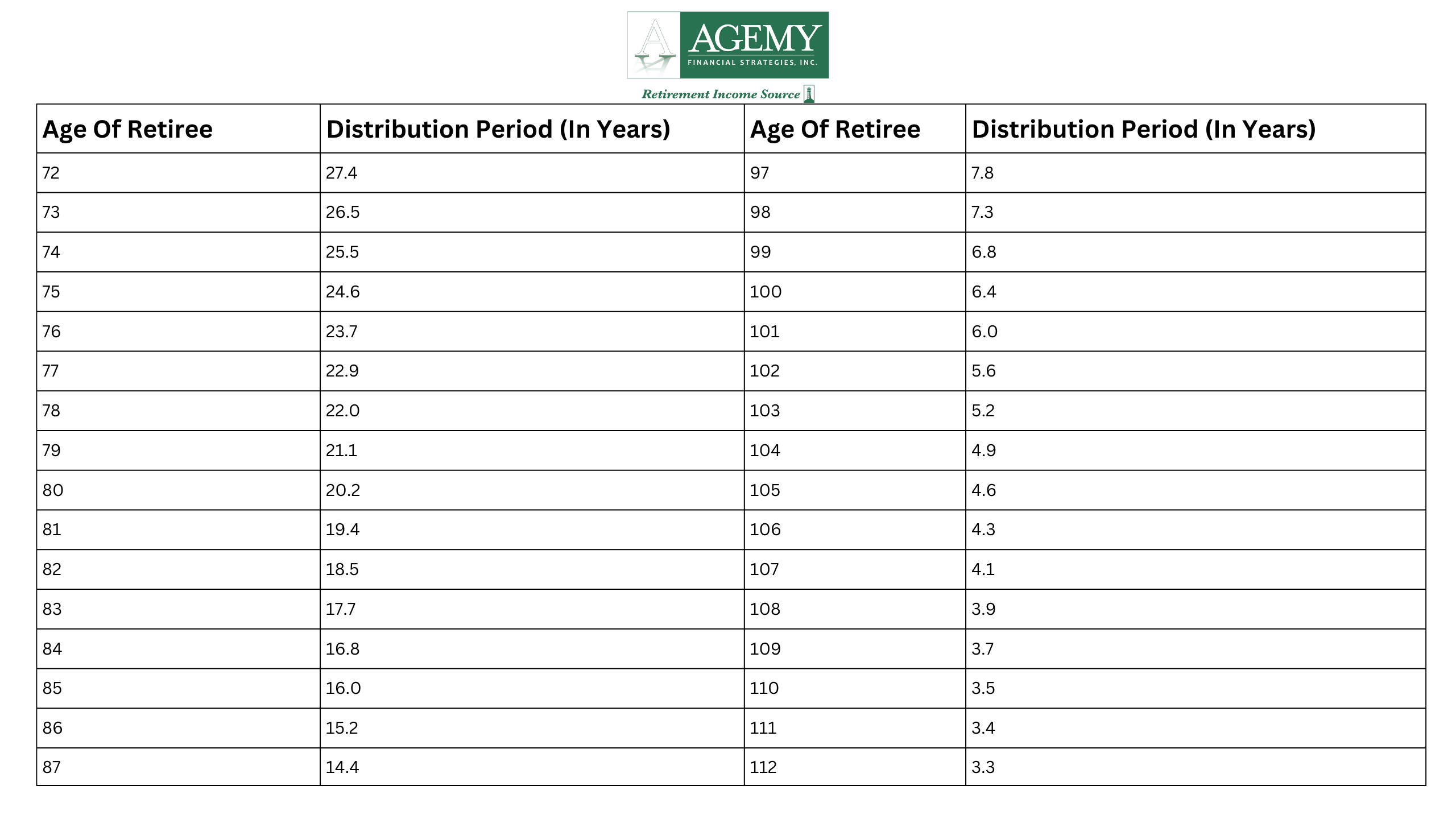
  2. Find Your Life Expectancy Factor: Using the IRS Uniform Lifetime Table, locate the life expectancy factor corresponding to your age. This factor is updated periodically, so make sure you use the latest table for accuracy.
  3. Calculate the RMD: Divide your account balance by the life expectancy factor. The result is the minimum amount you must withdraw from your account for the year.

Below is a portion of the IRS Uniform Lifetime Table to illustrate life expectancy factors by age:

Source: Internal Revenue Service (IRS)

Common Mistakes to Avoid

Navigating RMDs can be challenging; even small missteps can have significant financial consequences. Being mindful of some of the most frequent pitfalls can help you protect your retirement savings and maximize the benefits of these withdrawals. Here are three key mistakes to watch out for when planning your RMDs:

  • Missing the Deadline: Missing your RMD deadline can lead to hefty penalties. Know your required distribution date and withdraw the correct amount.
  • Not Planning for Taxes: RMDs can push you into a higher tax bracket. Working with a fiduciary advisor can help you create a strategy to manage these distributions in a tax-efficient manner.
  • Overlooking Beneficiary Designations: Your beneficiaries will have their own RMD requirements based on the inherited RMD rules. Regularly review your designations to align with your estate and financial goals.

Working with a fiduciary can help ensure that your RMDs are managed to align with your financial goals and help you make the most of your retirement savings.

Working With an Advisor 

New tax laws, potential shifts in Medicare premiums, income bracket adjustments, and evolving rules around charitable giving mean that your retirement income strategy may need some fine-tuning. Staying informed is essential for making the most of these adjustments and preparing your RMDs effectively.

At Agemy Financial Strategies, we provide personalized insights into your RMD responsibilities and tax-efficient strategies to help you manage these distributions. Our fiduciary advisors are dedicated to helping you meet your RMD obligations while optimizing your financial situation within IRS guidelines. We’ll work closely with you to assess your income needs in retirement and develop a plan that aligns with your financial goals and adapts to new regulations.

As part of our commitment to supporting your financial well-being, we offer tools like our free online RMD Calculator to help you estimate your required withdrawals. For more details on our services, please see our service offerings page here.

Final Thoughts

Navigating RMDs effectively requires staying informed about changing rules and understanding how these mandatory withdrawals impact your retirement income. Planning, keeping abreast of IRS updates, and consulting with financial advisors can help ensure that RMDs work in your favor while minimizing tax liabilities.

At Agemy Financial Strategies, our team is here to provide personalized guidance and support tailored to your financial needs and goals. Let us help ensure your tax obligations are appropriately managed throughout your retirement.

Preparing for 2025 doesn’t have to be overwhelming—let us help guide you toward a well-planned and prosperous new year. Contact us today to schedule your complimentary consultation.


Disclaimer: The information provided in this blog is for educational purposes only and is not intended as specific financial or investment advice. Each individual’s financial situation is unique, and any changes to your retirement income strategy or RMD planning should be discussed with a qualified financial advisor. We recommend consulting with our team at Agemy Financial Strategies to ensure your decisions align with your financial goals, risk tolerance, and the latest IRS regulations.

For high-net-worth individuals (HNWIs) nearing retirement, preparing for tax season now can make a significant difference in preserving your wealth.

Wealthy Americans contribute a significant share of the nation’s tax burden. According to a recent study, the top 1% of earners will contribute 23.9% of all taxes despite earning only 20.1% of total income. This disparity highlights the need for strategies that minimize tax liabilities and protect your hard-earned wealth.

Focusing on tax efficiency in your portfolio can help optimize your wealth preservation strategy and avoid surprises when tax laws shift. From smart asset location strategies to planning for long-term capital gains, now is the time to take proactive steps to keep more of what you’ve earned. Here’s what you need to know.

Why Tax Efficiency Matters in Retirement Planning 

Without proper planning, taxes can erode a significant portion of your retirement income. According to the Tax Foundation, high-income individuals in the U.S. can face marginal tax rates as high as 37% at the federal level. Factors in state taxes, capital gains taxes, possible future law changes, and the need for a tax-efficient portfolio become clear. For retirees, particularly HNWIs, managing tax liability is more than compliance; it’s about creating sustainable wealth for years. A tax-efficient approach can help you:

  • Minimize taxes on investment returns.
  • Protect long-term gains.
  • Align your portfolio with changing tax policies.

Understanding how and where your assets are invested can be key to achieving this. Let’s look at some strategies to help you prioritize tax efficiency.

1. Smart Asset Location: Putting Investments in the Right Accounts

One of the most powerful tax efficiency strategies is asset location, which involves strategically placing different types of assets in specific accounts to help minimize tax liability. Asset location is separate from asset allocation, which involves diversifying investments. Instead, asset location focuses on which accounts hold which investments.

Tax-Deferred Accounts (e.g., 401(k), Traditional IRA)

Tax-deferred accounts are ideal for investments that generate income or frequent dividends, as these will be taxed later when withdrawn, typically in retirement. Examples include bonds (interest payments), actively managed funds, and real estate investment trusts (REITs).

Taxable Accounts

Taxable brokerage accounts can be better suited for investments that are tax-efficient by nature, such as:

  • Certain individual stocks (held for long-term gains).
  • Certain index funds (low turnover and fewer taxable events).
  • Certain municipal bonds (potentially tax-free interest income).

Tax-Free Accounts (e.g., Roth IRA, Roth 401(k))

Tax-free accounts, where withdrawals in retirement are generally not taxed, are potentially valuable for assets with the potential for high growth, such as:

  • Certain stocks are expected to appreciate significantly over time.
  • Certain mutual funds or ETFs.

Placing your investments in the right accounts can help reduce the taxes you owe over your lifetime. As always, it’s important to consult your advisor to see if these investments are a good fit for you and your specific situation.

2. Leveraging Long-Term Capital Gains for Greater Tax Efficiency

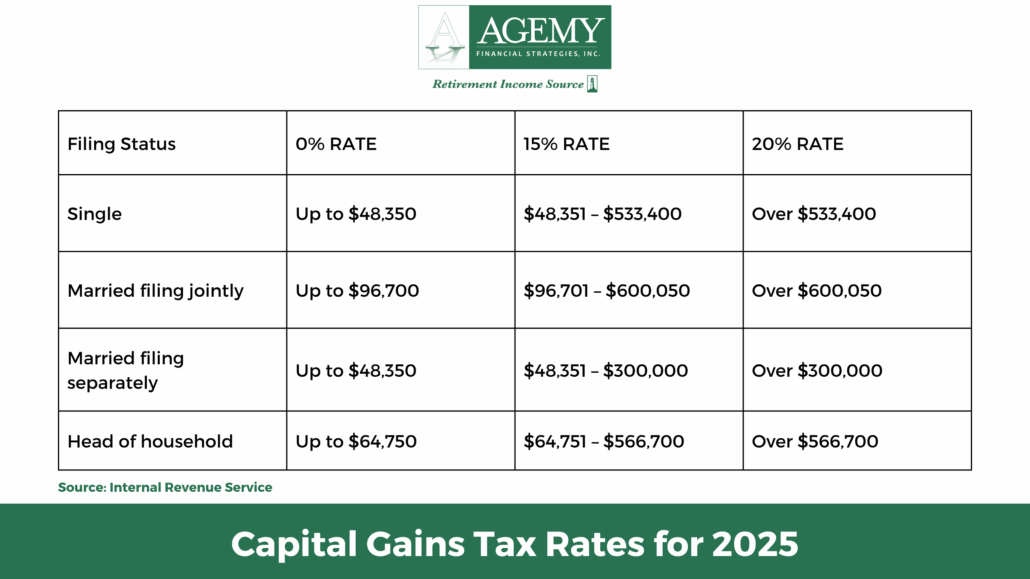
Understanding the distinction between short-term and long-term capital gains is essential when creating a tax-efficient portfolio. Short-term capital gains (on assets held less than one year) are taxed as ordinary income, while long-term capital gains (on assets held for more than a year) enjoy significantly lower rates. The table below shows the capital gains tax rates for 2025:

Capital gains tax


For HNWIs, long-term strategies are particularly important. Here are some ways to help you optimize:

  • Hold Investments Longer: You can benefit from lower long-term rates by holding onto assets for over a year.
  • Tax-Loss Harvesting: Offsetting capital gains with losses from other investments can help reduce your taxable income.
  • Gifting Appreciated Assets: Gifting long-term appreciated assets to family members in lower tax brackets can help minimize overall tax exposure while supporting your loved ones.

3. Proactively Planning for Future Tax Law Changes 

Tax laws can change, and for HNWIs, staying informed and flexible is key to tax efficiency. For instance, the Tax Cuts and Jobs Act (TCJA) lowered tax rates but will sunset at the end of 2025, which could mean higher taxes for many individuals. Being proactive now can help mitigate the impact of these changes later. Here are some key strategies to consider:

  • Roth Conversions: Converting assets from a traditional IRA to a Roth IRA can help you pay taxes at today’s lower rates, locking in tax-free growth for the future.
  • Diversifying Tax Buckets: Balancing your investments across taxable, tax-deferred, and tax-free accounts can help you remain flexible as tax laws change.
  • Monitor Income Thresholds: Keeping taxable income below certain thresholds can help you avoid the Medicare surtax and other income-related taxes.

Working closely with a fiduciary advisor who monitors the tax landscape can help ensure you remain one step ahead.

4. Maximizing Retirement Account Contributions

Retirement accounts provide valuable tax advantages, and maximizing your contributions now can lead to significant long-term benefits. For 2025, contribution limits are as follows:

  • 401(k): Up to $23,500, with an additional $7,500 catch-up contribution for those aged 50 and older.
  • IRA: Up to $7,000, with an additional $1,000 catch-up contribution for individuals aged 50 and older.

Maximizing contributions to tax-advantaged accounts can defer income taxes and allow your investments to grow tax-deferred or tax-free, depending on the account type. To make the most of these opportunities, consider consulting a fiduciary advisor who can help you develop a strategy tailored to your financial goals.

5. Prioritizing Tax-Efficient Investments

Certain types of investments are inherently more tax-efficient than others, making them more ideal for taxable accounts.

  • Index Funds and ETFs: These investments are known for low turnover and fewer capital gains distributions, helping reduce your tax burden.
  • Municipal Bonds: For investors in high tax brackets, municipal bonds offer interest income often exempt from federal taxes (and sometimes state taxes).
  • Tax-Managed Funds: These funds are actively managed to help minimize capital gains distributions, making them suitable for taxable accounts.

Prioritizing tax-efficient investments can help you enhance after-tax returns and preserve more of your wealth.

The Importance of Proactive Tax Planning 
Tax efficiency is not a once-a-year activity; it requires a year-round, proactive approach. At Agemy Financial Strategies, we pride ourselves on providing personalized, fiduciary-based advice that prioritizes your best interests. Here are some areas where we can help:

  • Continuously monitor the tax implications of your investments to identify opportunities to save.
  • Adjust your strategies as tax laws evolve, allowing your portfolio to remain optimized under current regulations.
  • Implement charitable giving, Roth conversions, and tax-loss harvesting techniques at the right time to help minimize your tax burden.
  • Provide personalized guidance to help you balance short-term needs with long-term tax planning strategies tailored to your financial goals.

Our team is dedicated to helping you incorporate tax efficiency into your retirement planning strategy, which can help you prepare for tax season and a tax-optimized future.

Plan Now for a Tax-Efficient Retirement

Getting ahead of tax season means more than filing your return early. It means building a retirement portfolio to minimize taxes and maximize long-term wealth. Focusing on strategies like asset location, long-term capital gains, and proactive planning can help you take control of your tax liability and create a more stable financial future.

At Agemy Financial Strategies, we help individuals optimize their portfolios for tax efficiency. Our fiduciaries understand the importance of wealth preservation and proactive planning for HNWIs approaching retirement.

Contact us today to learn more about how we can help you navigate tax-efficient strategies tailored to your financial goals.


Disclaimer: This blog is for informational purposes only and does not constitute financial, tax, or investment advice. The content is not intended to be a solicitation or recommendation for any specific financial product or service. Tax laws and regulations are subject to change, and the information presented may not apply to your individual circumstances. Please consult the fiduciary advisors at Agemy Financial Strategies for personalized advice regarding your financial situation.