Posts

How Proactive Tax Planning Can Help Create More Retirement Income Flexibility

Summer often brings a natural lull — tax season is behind you, and next April still feels far away. But this quieter stretch of the year can actually be one of the most useful times to revisit your tax situation. For many retirees and pre-retirees, taxes represent one of the most significant financial considerations they will navigate throughout retirement. While taxes are an unavoidable part of financial planning, proactive strategies may help individuals better understand their options and make informed decisions about their retirement income.

Tax planning is not just something to consider when preparing an annual tax return. It is an ongoing process that involves reviewing your income sources, retirement accounts, investment decisions, and long-term financial goals. With a clearer picture of your year-to-date income and still enough time to act before year-end deadlines, summer is a natural checkpoint along the way.

At Agemy Financial Strategies, we believe comprehensive retirement planning goes beyond simply accumulating wealth. It involves creating a thoughtful strategy designed around your goals, priorities, and the challenges that may arise throughout retirement.

Small, intentional planning decisions may help improve the flexibility of your retirement strategy over time.

Important Note: Tax planning involves complex rules that vary based on individual circumstances. This article is intended for educational purposes only and should not be considered tax, legal, or individualized financial advice. Please consult with your qualified tax and legal professionals before making decisions related to your specific situation.

Why Tax Planning Matters in Retirement

During your working years, managing taxes may look very different from how it does in retirement.

Many individuals receive predictable employment income, contribute to retirement accounts, and benefit from employer-sponsored plans that offer tax advantages.

Retirement often changes the way income is generated.

Instead of receiving a paycheck, retirees may rely on a combination of income sources, including:

Each source of income may have different tax considerations. The timing and coordination of withdrawals can influence your overall financial picture.

A thoughtful retirement tax strategy may involve evaluating questions such as:

  • How should retirement accounts be accessed over time?
  • Could Roth conversions be appropriate for your circumstances?
  • How might required minimum distributions affect future income?
  • How can you create greater flexibility among different account types?
  • How might changes in tax laws impact your retirement strategy?

The earlier these considerations are addressed, the more opportunities you may have to evaluate potential strategies.

Tax Planning

Why Summer Is a Smart Time to Revisit Your Tax Strategy

It may seem counterintuitive to think about taxes while you’re planning summer vacations, but mid-year is one of the most useful windows for tax planning all year. Tax filing season is behind you and next April is still a long way off, which makes now a good time to start lining up strategies to help reduce your 2026 tax bill.

A mid-year checkup can help you avoid being surprised by a potentially large tax bill later and may help uncover ways to save for the rest of the year. This year in particular, several recent law changes make a summer review especially worthwhile: the standard deduction for 2026 has risen to $16,100 for single filers and $32,200 for married couples filing jointly, and recent tax legislation increased the state and local tax (SALT) deduction cap to $40,000 (subject to income phaseouts) for tax years 2025 through 2028 — a change that may make itemizing worth a second look for some retirees. 

At the same time, starting in 2026, the value of itemized deductions is capped at 35% for those in the 37% tax bracket, which can affect how charitable giving strategies are structured. 

For retirees weighing Roth conversions, RMD timing, or charitable giving, a summer review offers a clearer picture of year-to-date income than you’ll have in January, plus enough runway to actually implement changes before December 31 deadlines arrive.

Small Tax Planning Move #1: Review Your Tax Bracket Each Year

One of the simplest tax planning steps is understanding your current tax situation.

Your taxable income can change from year to year based on factors such as:

Many retirees assume their tax situation will remain consistent throughout retirement. However, income levels can fluctuate significantly depending on life events and financial decisions.

Reviewing your projected income annually may help identify opportunities to evaluate before the end of the tax year.

For example, some individuals experience a period between retirement and the beginning of required minimum distributions when their taxable income may differ from future years. This timeframe may be worth reviewing with your financial and tax professionals.

Small Tax Planning Move #2: Evaluate Whether Roth Conversions May Fit Your Retirement Strategy

Roth conversions are one strategy many retirees and pre-retirees consider when evaluating their long-term tax planning options.

A Roth conversion involves transferring assets from a traditional retirement account, such as a traditional IRA, into a Roth IRA. The amount converted is generally included as taxable income for that year.

The potential benefit of a Roth IRA is that qualified withdrawals may generally be tax-free if certain requirements are met.

However, Roth conversions are not appropriate for everyone.

Before considering a conversion, it is important to evaluate factors such as:

  • Current and projected future tax brackets
  • Retirement income needs
  • Available funds to pay potential taxes
  • Time horizon
  • Estate planning considerations
  • Future changes in tax laws

A Roth conversion may be beneficial for some individuals depending on their circumstances, but it may also increase taxable income and should be carefully evaluated with qualified financial and tax professionals.

Small Tax Planning Move #3: Understand Required Minimum Distributions (RMDs)

Required minimum distributions (RMDs) are an important consideration for many retirement savers.

Generally, owners of traditional IRAs and certain employer-sponsored retirement plans must begin taking required withdrawals once they reach their applicable RMD age under current law.

RMD rules have changed in recent years, including updates from the SECURE Act and SECURE 2.0 Act. Because requirements may vary based on factors such as birth year, account type, and individual circumstances, it is important to review the current rules that apply to you.

RMDs can affect several areas of retirement planning, including:

Planning ahead may help you better understand how future required withdrawals could affect your overall retirement strategy.

Small Tax Planning Move #4: Consider Qualified Charitable Distributions (QCDs)

For individuals who regularly support charitable organizations, qualified charitable distributions (QCDs) may be a strategy worth discussing with a qualified professional.

A QCD allows eligible individuals to make a charitable donation directly from an IRA to a qualified charitable organization.

When eligibility requirements are met, QCDs may allow certain individuals to satisfy all or part of their required minimum distribution obligation while receiving potentially favorable tax treatment.

QCD rules, including age requirements and annual limits, are subject to change.

This strategy may be worth exploring for individuals who:

  • Give regularly to charitable organizations
  • Are required to take RMDs
  • Want to incorporate charitable giving into their retirement planning

As with any tax-related decision, coordination with your tax professional is important.

Small Tax Planning Move #5: Build Flexibility Through Different Account Types

Tax Planning

Tax diversification can be an important consideration when preparing for retirement.

Different types of accounts may receive different tax treatment, including:

  • Tax-deferred accounts such as traditional IRAs and many employer-sponsored plans
  • Tax-free accounts, such as Roth IRAs, when qualified withdrawal requirements are met
  • Taxable investment accounts

Having assets across different account types may provide additional flexibility when evaluating retirement income strategies.

For those still working and contributing, summer can be a good time to check in on how much you’ve set aside so far this year. For 2026, employees can generally contribute up to $24,500 to eligible 401(k) plans, with December 31 as the final date to make contributions. If you’re behind pace toward that limit — or toward any personal savings goal — mid-year gives you several months to adjust contributions gradually rather than scrambling in December. And if you’re 50 or older, don’t forget to factor in available catch-up contributions.

For example, having multiple sources of retirement assets may allow individuals to consider different approaches when determining how to meet income needs throughout retirement.

The appropriate strategy depends on your specific circumstances, goals, and financial situation.

Small Tax Planning Move #6: Review the Tax Impact of Investment Decisions

Investment decisions and tax planning are closely connected.

Certain investment activities may create tax considerations, including:

  • Selling investments with gains
  • Realizing capital losses
  • Receiving dividends
  • Rebalancing a portfolio

Tax-loss harvesting is one example of a strategy investors may discuss with qualified professionals. It involves selling certain investments at a loss to potentially offset capital gains, subject to applicable rules and limitations.

However, taxes should not be the only factor considered when making investment decisions.

Investment choices should continue to align with your broader financial objectives, risk tolerance, and retirement goals.

Small Tax Planning Move #7: Coordinate Retirement Income Withdrawals

Many retirees have multiple sources of retirement savings.

Determining how and when to access these accounts is an important part of retirement planning.

Potential income sources may include:

  • Traditional retirement accounts
  • Roth accounts
  • Brokerage accounts
  • Cash reserves

There is no single withdrawal strategy that works for every retiree.

A coordinated approach may involve reviewing:

  • Income needs
  • Tax considerations
  • Investment objectives
  • Legacy goals
  • Changing personal circumstances

Creating a retirement income strategy involves balancing today’s needs with future financial considerations.

Small Tax Planning Move #8: Consider How Income Decisions May Affect Other Retirement Expenses

Tax planning does not happen in isolation.

Certain retirement income decisions may also interact with other financial considerations, including healthcare costs.

For example, Medicare premiums may be affected by income levels through income-related monthly adjustment amounts (IRMAA).

Understanding how different financial decisions may influence multiple areas of retirement planning can help individuals make more informed choices.

This is why a comprehensive approach is often valuable when evaluating retirement decisions.

The Importance of a Comprehensive Retirement Strategy

Tax Planning

Tax planning is one important piece of a broader retirement plan.

Investment management, retirement income planning, estate considerations, charitable giving, and risk management all work together.

A decision that appears beneficial in one area may have additional considerations elsewhere.

For example:

  • A larger retirement account withdrawal may increase taxable income.
  • A Roth conversion may affect taxes in the year it occurs.
  • Delaying withdrawals may impact future required distributions.
  • Selling investments may create taxable events.

Understanding these connections may help you evaluate decisions within the context of your overall retirement goals.

Planning for the Retirement You Envision

At Agemy Financial Strategies, we believe retirement planning should be centered around more than account balances. It should reflect your lifestyle goals, family priorities, and vision for the future.

Tax planning is one component of creating a comprehensive retirement strategy.

By reviewing your options, staying informed about changing regulations, and working with qualified professionals, you can take proactive steps toward building a retirement approach designed around your unique circumstances.

Small planning decisions made over time may help create greater clarity and flexibility as you navigate retirement.

Start Building a More Confident Retirement Strategy

Tax laws and retirement regulations continue to evolve. Strategies that may be appropriate today may need to be reviewed as your circumstances and financial goals change.

At Agemy Financial Strategies, we help individuals and families evaluate retirement planning strategies designed around their unique goals and priorities.

If you are approaching retirement or are already retired, a comprehensive review may help you better understand your options and prepare for the years ahead.

Tax Planning


Disclosure: Agemy Financial Strategies, Inc. is a registered investment adviser. Registration with the SEC does not imply a certain level of skill or training. This material is provided for informational and educational purposes only and is not intended to provide tax, legal, or investment advice. Individuals should consult with qualified tax and legal professionals regarding their specific circumstances. Tax laws and regulations are subject to change. Investment advisory services are offered through Agemy Wealth Advisors, LLC.


For high-net-worth individuals (HNWIs), effective tax planning is just as important as investment growth when it comes to long-term wealth preservation. With the top marginal tax rate in the U.S. at 37% and potential estate tax exemptions set to decline after 2025, strategic tax planning can make a significant impact on reducing liabilities and maximizing financial efficiency.

A well-structured tax strategy allows HNWIs to legally minimize tax burdens, provide compliance with evolving regulations, and preserve more wealth for future generations. In this blog, we explore four essential tax planning strategies to help you optimize your financial position while staying ahead of tax obligations.

Why Having a Tax Strategy is Important

Without strategic tax planning, these factors can significantly erode wealth over time. A proactive tax strategy minimizes tax liability and helps ensure that your investments, estate, and philanthropic efforts align with your long-term financial goals.

  • Preserve Wealth: Reducing tax liabilities allows you to keep more earnings and investment gains.
  • Enhances Investment Returns: Tax-efficient investing can improve net returns by providing the right assets in the most tax-advantaged accounts.
  • Optimizes Charitable Giving: Smart gifting strategies allow you to support causes you care about while receiving tax benefits.
  • Safeguards Your Estate: Proper estate planning can help reduce the tax burden on heirs, allowing more of your wealth to be passed down.

By implementing a proactive tax strategy, you can maximize your financial efficiency, maintain compliance with evolving tax laws, and make informed decisions about wealth management. Let’s explore four key tax planning strategies to help you achieve these goals.

1. Optimize Charitable Giving with Strategic Donations

Charitable giving is a powerful tool for tax planning. It allows you to support causes that matter to you while reducing your taxable income. HNWIs have multiple avenues to help structure their giving to maximize tax benefits. Here are some key strategies for charitable giving:

  • Donor-Advised Funds (DAFs): These allow you to donate assets and receive an immediate tax deduction while deciding which charities to support later.
  • Qualified Charitable Distributions (QCDs): If you’re 70½ or older, you can donate up to $100,000 directly from an IRA to a charity without counting it as taxable income.
  • Charitable Remainder Trusts (CRTs): These provide income during your lifetime while benefiting a charity upon passing, offering estate and income tax benefits.

With recent changes in tax laws, considering long-term charitable strategies can enhance your philanthropic impact while securing favorable tax advantages.

2. Leverage Tax-Advantaged Accounts for Retirement and Investment Growth

Even for HNWIs, tax-advantaged accounts provide valuable opportunities to defer or reduce taxes on investment gains. Proper allocation across these accounts can help yield potential benefits over time. Here are some types of tax-advantaged accounts to consider:

  • Roth IRA Conversions: While you’ll pay taxes on the conversion amount, your investments grow tax-free, and withdrawals in retirement are not subject to income tax.
  • Health Savings Accounts (HSAs): For those with high-deductible health plans, HSAs offer triple tax benefits: contributions are tax-deductible, investments grow tax-free, and withdrawals for qualified medical expenses are tax-free.
  • Life Insurance as an Estate Planning Tool: Properly structured life insurance policies can provide tax-free income to beneficiaries while helping mitigate estate tax burdens.

Implementing a strategic approach to utilizing these accounts can help ensure tax efficiency in both the short and long term. Working alongside a fiduciary advisor can help you leverage these accounts.

3. Minimize Capital Gains Taxes Through Tax-Loss Harvesting and Asset Location

Capital gains taxes can significantly impact wealth accumulation, particularly for HNWIs with diversified investment portfolios. You can reduce tax liabilities and optimize after-tax returns by strategically managing how and when you sell investments.

  • Tax-Loss Harvesting: Offsetting capital gains by selling underperforming investments can help lower your tax bill while maintaining a similar asset allocation.
  • Holding Period Strategies: Long-term capital gains rates are significantly lower than short-term rates. Holding investments for more than one year before selling can help reduce taxes.
  • Asset Location Optimization: Placing tax-inefficient investments (such as bonds and REITs) in tax-advantaged accounts while keeping tax-efficient investments (like index funds) in taxable accounts can improve overall tax efficiency.

Understanding how different investments are taxed—and strategically aligning them—can help you preserve more of your returns. Working with a knowledgeable advisor helps your portfolio be structured in a way that optimizes tax efficiency while supporting your long-term financial goals.

4. Plan for Estate and Gift Taxes to Preserve Generational Wealth


Estate and gift taxes can take a significant portion of wealth if not strategically managed. Understanding how these taxes operate and interact is essential for crafting a comprehensive wealth preservation strategy. Let’s explore each tax in detail:

By proactively planning your estate, you can maximize the wealth passed to future generations while reducing unnecessary tax liabilities.

How Agemy Can Help You with Tax Planning

Navigating the complexities of tax planning can be overwhelming, especially with ever-changing tax laws, investment implications, and estate planning considerations. At Agemy Financial Strategies, our fiduciary advisors work alongside you to create a tailored tax strategy that aligns with your wealth management goals. With a focus on transparency and strategy, our team helps HNWIs:

  • Identify Tax-Efficient Investment Strategies: We analyze your investment portfolio to help optimize asset location, maximize tax efficiency, and manage capital gains.
  • Mitigate Estate and Gift Tax Burdens: Our team helps structure estate plans to minimize tax liability and protect generational wealth.
  • Optimize Retirement and Tax-Advantaged Accounts: We guide you on Roth conversions, tax-efficient withdrawals, and leveraging accounts like HSAs and IRAs.
  • Strategize Philanthropic Giving: We help structure charitable contributions through donor-advised funds, trusts, and other vehicles that can potentially benefit your estate and the causes you care about.

Final Thoughts

Effective tax planning is a crucial component of wealth preservation for HNWIs. Staying informed and proactive in your tax strategy helps ensure that your wealth continues to work for you and your family, both now and in the future.

At Agemy Financial Strategieswe help HNWIs develop tax-efficient wealth management plans tailored to their unique financial goals. Our fiduciary advisors provide guidance to help you maximize tax savings, protect your assets, and build a strong financial future.

Contact us today to schedule your complimentary consultation and start planning for a more tax-efficient future.


Frequently Asked Questions (FAQs)

1. How do tax laws impact HNWIs differently than average taxpayers?

HNWIs often face higher marginal tax rates, exposure to estate and gift taxes, and alternative minimum tax (AMT) considerations. Strategic tax planning is essential to help mitigate these factors. Our fiduciary advisors help HNWIs navigate complex tax laws by implementing strategies that help optimize tax efficiency while staying compliant.

2. Are Roth conversions a good strategy for HNWIs?

Roth conversions can be beneficial if done strategically, particularly in lower-income years or before RMDs begin. They help lock in tax-free growth and withdrawals in retirement. Agemy Financial Strategies provides personalized guidance on timing and executing Roth conversions to minimize tax liability and maximize long-term benefits.

3. What happens if the estate tax exemption is reduced?

If the exemption decreases, more estates will be subject to taxation. Proactive gifting strategies can help mitigate the impact. Our advisors work closely with you to help structure your wealth transfers efficiently, allowing more of your assets to be preserved for future heirs and beneficiaries.

4. Can tax-loss harvesting be done year-round?

Tax-loss harvesting can be executed throughout the year, but many investors optimize it toward year-end to offset capital gains from other investments. If you want to integrate tax-loss harvesting into your investment approach, our fiduciary advisors can help you.

5. How do charitable donations reduce my tax bill?

Charitable contributions can lower taxable income, and depending on the donation type (cash, stocks, trusts), they may provide additional tax benefits such as avoiding capital gains taxes. Agemy Financial Strategies helps clients develop a strategic giving plan that maximizes their charitable impact and tax efficiency.


Disclaimer: This blog is for informational purposes only and should not be considered specific tax, legal, or investment advice. Tax laws are subject to change, and individual circumstances vary. Please consult with the qualified financial professionals at Agemy Financial Strategies before implementing any of the strategies discussed.

For high-net-worth individuals (HNWIs) nearing retirement, preparing for tax season now can make a significant difference in preserving your wealth.

Wealthy Americans contribute a significant share of the nation’s tax burden. According to a recent study, the top 1% of earners will contribute 23.9% of all taxes despite earning only 20.1% of total income. This disparity highlights the need for strategies that minimize tax liabilities and protect your hard-earned wealth.

Focusing on tax efficiency in your portfolio can help optimize your wealth preservation strategy and avoid surprises when tax laws shift. From smart asset location strategies to planning for long-term capital gains, now is the time to take proactive steps to keep more of what you’ve earned. Here’s what you need to know.

Why Tax Efficiency Matters in Retirement Planning 

Without proper planning, taxes can erode a significant portion of your retirement income. According to the Tax Foundation, high-income individuals in the U.S. can face marginal tax rates as high as 37% at the federal level. Factors in state taxes, capital gains taxes, possible future law changes, and the need for a tax-efficient portfolio become clear. For retirees, particularly HNWIs, managing tax liability is more than compliance; it’s about creating sustainable wealth for years. A tax-efficient approach can help you:

  • Minimize taxes on investment returns.
  • Protect long-term gains.
  • Align your portfolio with changing tax policies.

Understanding how and where your assets are invested can be key to achieving this. Let’s look at some strategies to help you prioritize tax efficiency.

1. Smart Asset Location: Putting Investments in the Right Accounts
One of the most powerful tax efficiency strategies is asset location, which involves strategically placing different types of assets in specific accounts to help minimize tax liability. Asset location is separate from asset allocation, which involves diversifying investments. Instead, asset location focuses on which accounts hold which investments.

Tax-Deferred Accounts (e.g., 401(k), Traditional IRA)

Tax-deferred accounts are ideal for investments that generate income or frequent dividends, as these will be taxed later when withdrawn, typically in retirement. Examples include bonds (interest payments), actively managed funds, and real estate investment trusts (REITs).

Taxable Accounts

Taxable brokerage accounts can be better suited for investments that are tax-efficient by nature, such as:

  • Certain individual stocks (held for long-term gains).
  • Certain index funds (low turnover and fewer taxable events).
  • Certain municipal bonds (potentially tax-free interest income).

Tax-Free Accounts (e.g., Roth IRA, Roth 401(k))

Tax-free accounts, where withdrawals in retirement are generally not taxed, are potentially valuable for assets with the potential for high growth, such as:

  • Certain stocks are expected to appreciate significantly over time.
  • Certain mutual funds or ETFs.

Placing your investments in the right accounts can help reduce the taxes you owe over your lifetime. As always, it’s important to consult your advisor to see if these investments are a good fit for you and your specific situation.

2. Leveraging Long-Term Capital Gains for Greater Tax Efficiency

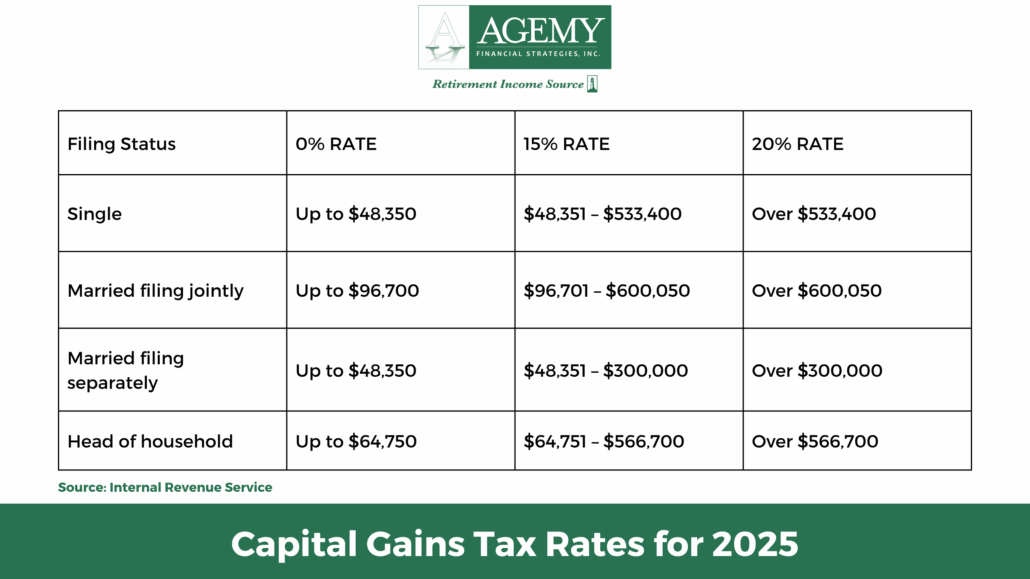
Understanding the distinction between short-term and long-term capital gains is essential when creating a tax-efficient portfolio. Short-term capital gains (on assets held less than one year) are taxed as ordinary income, while long-term capital gains (on assets held for more than a year) enjoy significantly lower rates. The table below shows the capital gains tax rates for 2025:

Capital gains tax


For HNWIs, long-term strategies are particularly important. Here are some ways to help you optimize:

  • Hold Investments Longer: You can benefit from lower long-term rates by holding onto assets for over a year.
  • Tax-Loss Harvesting: Offsetting capital gains with losses from other investments can help reduce your taxable income.
  • Gifting Appreciated Assets: Gifting long-term appreciated assets to family members in lower tax brackets can help minimize overall tax exposure while supporting your loved ones.

3. Proactively Planning for Future Tax Law Changes 

Tax laws can change, and for HNWIs, staying informed and flexible is key to tax efficiency. For instance, the Tax Cuts and Jobs Act (TCJA) lowered tax rates but will sunset at the end of 2025, which could mean higher taxes for many individuals. Being proactive now can help mitigate the impact of these changes later. Here are some key strategies to consider:

  • Roth Conversions: Converting assets from a traditional IRA to a Roth IRA can help you pay taxes at today’s lower rates, locking in tax-free growth for the future.
  • Diversifying Tax Buckets: Balancing your investments across taxable, tax-deferred, and tax-free accounts can help you remain flexible as tax laws change.
  • Monitor Income Thresholds: Keeping taxable income below certain thresholds can help you avoid the Medicare surtax and other income-related taxes.

Working closely with a fiduciary advisor who monitors the tax landscape can help ensure you remain one step ahead.

4. Maximizing Retirement Account Contributions

Retirement accounts provide valuable tax advantages, and maximizing your contributions now can lead to significant long-term benefits. For 2025, contribution limits are as follows:

  • 401(k): Up to $23,500, with an additional $7,500 catch-up contribution for those aged 50 and older.
  • IRA: Up to $7,000, with an additional $1,000 catch-up contribution for individuals aged 50 and older.

Maximizing contributions to tax-advantaged accounts can defer income taxes and allow your investments to grow tax-deferred or tax-free, depending on the account type. To make the most of these opportunities, consider consulting a fiduciary advisor who can help you develop a strategy tailored to your financial goals.

5. Prioritizing Tax-Efficient Investments

Certain types of investments are inherently more tax-efficient than others, making them more ideal for taxable accounts.

  • Index Funds and ETFs: These investments are known for low turnover and fewer capital gains distributions, helping reduce your tax burden.
  • Municipal Bonds: For investors in high tax brackets, municipal bonds offer interest income often exempt from federal taxes (and sometimes state taxes).
  • Tax-Managed Funds: These funds are actively managed to help minimize capital gains distributions, making them suitable for taxable accounts.

Prioritizing tax-efficient investments can help you enhance after-tax returns and preserve more of your wealth.

The Importance of Proactive Tax Planning 

Tax efficiency is not a once-a-year activity; it requires a year-round, proactive approach. At Agemy Financial Strategies, we pride ourselves on providing personalized, fiduciary-based advice that prioritizes your best interests. Here are some areas where we can help:

  • Continuously monitor the tax implications of your investments to identify opportunities to save.
  • Adjust your strategies as tax laws evolve, allowing your portfolio to remain optimized under current regulations.
  • Implement charitable giving, Roth conversions, and tax-loss harvesting techniques at the right time to help minimize your tax burden.
  • Provide personalized guidance to help you balance short-term needs with long-term tax planning strategies tailored to your financial goals.

Our team is dedicated to helping you incorporate tax efficiency into your retirement planning strategy, which can help you prepare for tax season and a tax-optimized future.

Plan Now for a Tax-Efficient Retirement

Getting ahead of tax season means more than filing your return early. It means building a retirement portfolio to minimize taxes and maximize long-term wealth. Focusing on strategies like asset location, long-term capital gains, and proactive planning can help you take control of your tax liability and create a more stable financial future.

At Agemy Financial Strategies, we help individuals optimize their portfolios for tax efficiency. Our fiduciaries understand the importance of wealth preservation and proactive planning for HNWIs approaching retirement.

Contact us today to learn more about how we can help you navigate tax-efficient strategies tailored to your financial goals.


Disclaimer: This blog is for informational purposes only and does not constitute financial, tax, or investment advice. The content is not intended to be a solicitation or recommendation for any specific financial product or service. Tax laws and regulations are subject to change, and the information presented may not apply to your individual circumstances. Please consult the fiduciary advisors at Agemy Financial Strategies for personalized advice regarding your financial situation.