Beginning a Roth Conversion journey in 2024 requires understanding the current tax intricacies and tailoring the approach to match your individual financial situation.

If you have a traditional IRA, you might be interested in turning some or all of it into a Roth IRA. Roth conversions have maintained their status as a tried-and-true financial strategy, offering a path to enhance your retirement savings over the years.

In this blog, we’ll break down the key things you should understand about Roth conversions, how taxes come into play during conversion, and tips to help you make smart decisions for your retirement planning. Let’s dive in.

What is a Roth Conversion?

To understand the significance of a Roth conversion, it’s crucial to grasp the differences between traditional and Roth retirement accounts. A traditional IRA allows tax-deductible contributions, meaning you can deduct them from your income in the contribution year.

However, upon retirement, you’ll be subject to income taxes on the distributions, and you must start taking required minimum distributions (RMDs) at age 73, regardless of your immediate financial needs.

Conversely, a Roth IRA involves contributions made with after-tax dollars, foregoing the upfront tax deduction. These conversions offer tax-free growth on earnings, and you can make tax-free withdrawals in retirement, given certain qualifying conditions. While traditional and Roth IRAs are the most popular accounts for Roth conversions, it’s essential to note that you can convert a variety of retirement plans into a Roth IRA, including:

  • 401(k)s.
  • 403(b)s.
  • 457(b)s.
  • Traditional IRAs.
  • SEP IRAs.
  • SIMPLE IRAs.

Now, consider the allure of having the best of both financial worlds: enjoying tax deductions during high-income years while securing tax-free growth for the future. This is precisely where Roth IRA conversions come into play as a savvy retirement strategy.

How A Roth Conversion Works

A Roth conversion involves transferring funds from a traditional IRA or 401(k) into a Roth IRA. The main advantage is that you pay taxes upfront on the converted amount, while all future withdrawals from the Roth IRA remain tax-free, provided you meet specific criteria. This strategy can be particularly beneficial if you anticipate a higher tax bracket during retirement.

Here’s a step-by-step breakdown of how it operates:

  • Determine the Conversion Amount: Your first step is to decide how much money you intend to transfer from your traditional IRA to your Roth IRA. This decision involves careful consideration, as the converted amount will be subject to immediate taxation.
  • Initiate the Conversion: Contact your financial advisor to kickstart the conversion process. They will typically guide the necessary steps to complete the conversion.
  • Settle the Tax Obligation: Report the converted amount as part of your annual income and fulfill the corresponding tax obligations. You can pay these taxes directly from the converted amount or use external sources to cover the tax liability.

For a more comprehensive understanding of how Roth conversions work and to tailor the strategy to your unique financial situation, it’s recommended to consult with a fiduciary advisor. They can provide personalized guidance, helping you make informed decisions about the conversion process and optimize your retirement planning.

Understanding The Roth Conversion Ladder

For 2024, the Roth conversion ladder strategy remains valuable for retirement planning. It involves gradually moving funds from a traditional IRA to a Roth IRA over several years. This strategy focuses on lower tax brackets, reducing tax liability. After a five-year waiting period, converted funds are tax-free income during retirement.

Unlike Roth IRA contributions, there is no limit on the amount you can convert. The $7,000 annual contribution limit (or $8,000 if you’re 50 or older) doesn’t apply to conversions. This approach aligns with your unique financial circumstances, maximizing Roth IRA benefits. The strategy includes:

  • Gradual Conversion: Instead of one large conversion, break it into smaller, annual steps to stay within lower tax brackets and minimize taxes.
  • Tax Efficiency: Convert in low-income years to reduce tax liability, especially if your income varies.
  • Access to Funds: After each conversion, a five-year waiting period applies. Once it lapses, you gain tax-free access to the converted amount, providing tax-free retirement income. However, you must be 59.5 years old to get the funds out tax-free.

The Roth conversion ladder empowers you to manage retirement assets strategically, reduce overall tax burdens, and create a tax-efficient income stream during retirement. It aligns with your financial circumstances and maximizes Roth IRA tax benefits.

Managing Required Minimum Distributions (RMDs)

The SECURE Act 2.0, enacted in late 2022, changed over 90 rules about IRAs and other qualified retirement plans, including RMDs. RMDs are primarily associated with traditional Individual Retirement Accounts (IRAs) and employer-sponsored retirement plans such as 401(k)s and 403(b)s. Roth IRAs do not require RMDs during the account owner’s lifetime; they are funded with after-tax dollars. However, beneficiaries of Roth IRAs may have RMD obligations.

You must calculate the RMD for each account separately if you own multiple traditional IRAs. However, you can aggregate the total RMD amount and withdraw it from one or more of your IRAs. This flexibility allows you to choose which account(s) to withdraw from as long as you satisfy the total RMD requirement.

You can use the IRS’s Uniform Lifetime Table to determine the amount you need to withdraw. The RMD amount is calculated based on your account balance and life expectancy to deplete the account over your expected lifetime. If you haven’t yet done so, estimate your personal RMD withdrawals with our free online RMD Calculator here.

Tax liability is one of the most significant factors to consider when contemplating a Roth conversion. 2024 tax laws are subject to change, so staying updated with the latest tax brackets and rates is essential. A financial advisor can help you assess the tax implications of a Roth conversion and determine the optimal amount to convert each year to minimize your tax burden.

Working With A Fiduciary

Tax laws can change over time, potentially affecting the benefits of Roth conversions. It’s essential to remain flexible in your retirement planning and adapt your strategy to align with any legislative changes that may occur in 2024 and beyond. Working alongside a fiduciary advisor can be beneficial.

Fiduciaries are committed to helping you achieve your financial goals without being influenced by commissions or fees tied to specific financial products. Choosing to work with a fiduciary can be a game-changer for your retirement planning for several reasons:

  • Reducing Risk: Fiduciaries help you make informed investment decisions that align with your risk tolerance and long-term objectives. They can design a diversified portfolio tailored to your unique circumstances, which can be crucial for managing risk in retirement.
  • Staying Informed: The financial landscape continually evolves, with new regulations and investment options emerging regularly. Fiduciaries stay current with these changes, ensuring your retirement strategy aligns with current best practices.
  • Peace of Mind: Working with a fiduciary can provide peace of mind, knowing that your financial future is in capable hands. You can trust that your advisor is always working in your best interests.

Final Thoughts

In 2024, Roth conversions will continue to be a valuable tool for retirement planning, offering the potential for tax-free withdrawals in the future. However, navigating the rules and strategies surrounding Roth conversions requires careful consideration and guidance.

It’s crucial to stay informed about tax law changes so your retirement planning remains on the right track. At Agemy Financial Strategies, we are committed to educating our clients on various financial matters, including retirement planningwealth managementtax planning, and more.

With over 30 years of experience in helping individuals reach retirement stress-free, our unwavering dedication to educating and serving our clients remains at the core of our mission. Our financial guide to retirement planning is one of the many tools we offer to help you take control of your finances and plan for the future.

Contact us today to learn how we can help you achieve financial security.

Working hard to save a million dollars in your 401(k) is a significant achievement on the road to a comfortable retirement. However, Uncle Sam can put a damper on your parade.

Saving six figures for retirement is an impressive accomplishment, but many Americans must understand that taxes can be pivotal in how much of that million dollars you get to keep. In this blog, we’ll explore various strategies for managing your wealth, 401(k), and other retirement accounts while keeping taxes in check. Here’s what you need to know.

Why Is Tax Planning So Important?

Why is tax planning crucial for individuals with $1 million or more in their 401(k)s or IRAs? Because, likely, you won’t find yourself in a lower tax bracket in the future. One of the primary reasons for tax planning is to help ensure you’re not caught off guard by changing tax brackets and liability. Your tax bracket may shift up or down. And the order in which you tap your retirement accounts and other savings could have a big impact on how much tax you owe — and consequently, how long your retirement assets could last.

Tax planning can also help preserve your future assets. By carefully selecting when and how you withdraw funds from your retirement accounts, you can help ensure that your savings last longer and provide financial stability throughout your retirement years. This can result in more money for living expenses and a more financially secure retirement.

The U.S. tax laws consider most forms of retirement income fair game, including Social Security benefits, pensions, and withdrawals from your 401(k)s and traditional IRAs. And unless you live in a state without an income tax, you can expect your home state to hit you in retirement as well. So which are the tax-free states? As of 2024, nine states — Alaska, Florida, Nevada, New Hampshire, South Dakota, Tennessee, Texas, Washington and Wyoming — have no income taxes.

Ready to dive into some strategies that can help you protect your retirement savings? Let’s get started.

Retirement Account Contributions and Withdrawals

Effectively managing your retirement accounts, such as 401(k)s and Roth IRAs, involves a strategic approach that maximizes tax benefits throughout your financial journey. During your working years, making the most of contributions to these accounts can be smart, as they often come with the advantage of being tax-deductible. This tax deduction lowers your taxable income, setting the stage for a more tax-efficient retirement.

One of the key aspects of retirement planning is understanding the contribution limits for retirement accounts such as 401(k)s and IRAs. These limits determine how much you can contribute to these accounts each year, helping you build a robust nest egg for retirement. Let’s take a look at the expected contribution limits for 2024:

  • 401(k) Plans: The contribution limit for 401(k) plans is projected to increase to $23,000 in 2024, up from $22,500 in 2023. For those aged 50 and older, an additional catch-up contribution of $7,500 will remain the same. It’s important to note that these new amounts apply to 403(b) and most 457 plans.
  • IRA Contribution Limits: Individual Retirement Accounts (IRAs) are another popular retirement savings option. The contribution limits are to remain relatively stable for IRAs. For 2024, individuals under 50 can contribute up to $7,000, up from $6,500 in 2023. Catch-up contributions for adults 50 and older will remain at $1,000.
  • Roth IRA Contribution Limits: Beginning in 2024, more Americans will qualify for Roth IRA contributions, with the AGI range rising between $146,000-$161,000 for single filers, up from $138,000-$153,000 in 2023. The Roth IRA contribution phaseout for married couples filing together will rise to between $230,000 and $240,000 in 2024, up from between $218,000 and $228,000.

It’s essential to consult with a financial advisor or check the latest IRS guidelines to confirm these limits for 2024 and adjust your retirement savings strategy accordingly.

Enhancing Tax Efficiency Through Income Source Diversification

Diversifying your income sources is a crucial strategy when protecting your million-dollar 401(k) from potential tax complications. Relying solely on your 401(k) for retirement income can expose you to substantial tax liabilities.

Exploring other income streams, such as investment returns, rental income, or income from a business venture, is important to mitigate this risk. This diversification offers financial flexibility and empowers you to manage and optimize your taxable income during retirement. Furthermore, the choice of assets within your 401(k) portfolio plays a pivotal role in shaping your tax scenario.

Different investments carry varying tax implications, and some are inherently more tax-efficient than others. Take municipal bonds, for instance; they often enjoy federal tax-exempt status, and in certain cases, they are also exempt from state taxes. Allocating a portion of your investment portfolio to tax-efficient assets effectively lowers your overall tax burden, thus contributing to a more tax-friendly retirement strategy.

Managing Medicare Costs Effectively

When managing Medicare costs effectively, one important thing to consider is the Medicare Income-Related Monthly Adjustment Amount (IRMAA). This can lead to higher premiums if your income exceeds a certain limit. Remember that the IRMAA calculation examines your income from the last two years. So, it’s a good idea to start considering how it might affect your Social Security benefits as soon as you’re eligible.

Many people worry about the cost of healthcare, with 80% expressing concerns about how to pay for it. Surprisingly, only 56% of those nearing retirement have included healthcare costs and long-term care costs in their plans, and even among those who have, 50% might be underestimating these expenses. To deal with these challenges, taking a strategic approach to managing your retirement account withdrawals is important.

This strategic approach serves a dual purpose: reducing your taxable income and potentially avoiding Medicare surcharges. The ultimate goal is to ensure that the hard work you’ve put into building your million-dollar 401(k) isn’t eroded by increasing healthcare expenses during your retirement years.

Last Thoughts

If you are worried about protecting your million-dollar 401(k), working with a qualified fiduciary advisor like the fiduciary advisors at Agemy can help provide valuable guidance and transparency regarding retirement planning. Founder Andrew A. Agemy, MRFC®, and son Daniel J. Agemy, CPM®, RFC®, can help you develop a personalized retirement plan, optimize your investment strategy, and stay on track to achieve your financial goals.

At Agemy Financial Strategies, we are committed to educating our clients on various financial matters, including retirement planningwealth managementtax planning, and more. With over 30 years of experience in helping individuals reach retirement stress-free, our unwavering dedication to educating and serving our clients remains at the core of our mission. Our financial guide to retirement planning is one of the many tools we offer to help you take control of your finances and plan for the future.

Contact us today to learn how we can help you achieve financial security.

Wealth management is a critical aspect of retirement planning for couples in Connecticut, Colorado, and throughout the United States. It involves maximizing financial assets, reducing taxes and financial risks, and preserving wealth for future generations. This Valentine’s Day, give the gift of a secure financial future with Agemy Financial Strategies.

Retirement planning as a couple can present a unique set of challenges and considerations. Unlike individual retirement planning, couples must work together to align their financial goals and make decisions that will impact their joint future. Importantly, managing joint wealth.

Many pre-retirees think managing money in retirement gets a little easier than before. After all, you only have the money you have, so your options are somewhat simpler and more limited. However, the rules of money management shift in retirement so it could be more complicated for the both of you, especially after the turbulent year of 2022. Although overall inflation is starting to cool, Americans haven’t seen much relief in terms of everyday prices such as groceries, which were up 11.8% in December compared with a year earlier.

With the increased cost of living for us all, it is more important than ever for couples to plan and manage their wealth effectively to ensure a comfortable and secure retirement.

In this blog, we will explore why wealth management is an important aspect of retirement planning, and how it can help couples achieve financial goals, focusing on our residing and practicing states of Connecticut and Colorado.

Here’s what you need to know.

Create a Budget

When creating a budget for retired couples in Colorado and Connecticut, it is important to consider the unique financial challenges and opportunities that come with living in these states.

One of the biggest expenses for retirees in Colorado and Connecticut is healthcare. The average cost of healthcare in Colorado is $8,289 per person. The average cost of healthcare in Connecticut is $12,754 per person. And when you factor in long-term care costs, the numbers get even more eye-watering. Someone turning age 65 today has about a 70 percent chance of needing some type of long term care during their lifetime. While one-third may never need long term care, 20 percent will need it for longer than 5 years. The average length of time people need long term care services is 3 years.

In Connecticut, the average cost of nursing home care is approximately $462 per day, or $168,700 annually, according to the Connecticut Partnership for Long Term Care in its most recent quarterly update and recent annual studies.

In Colorado, the same care will cost $116,709 per year, and it’s projected to $632,367 annually by 2042.

There are ways you can try and combat high costs, such as purchasing long-term care insurance, contributing to a health savings account (more on this below), or setting aside funds to cover medical expenses.

Another important factor to consider when creating a budget is the cost of living in Colorado and Connecticut. In 2023, Connecticut’s cost of living index was 115.4 making it 15.4% higher than the national average. Colorado’s cost of living index is 120.5, 20.4% higher than the national average.

It is important to budget for housing, utilities, food, and transportation. Another factor to consider is any planned or anticipated expenditures, such as travel in retirement or home repairs. By considering these factors and creating a comprehensive budget, retired couples can ensure that they are making the most of their retirement savings and enjoying a comfortable retirement.

Maximize Your Joint Retirement Income

Maximizing retirement cash flow as a couple requires careful planning and management of your financial assets. When it comes to your big-picture finances—such as getting the most out of your retirement plans, coordinating strategies is a must:

Retirement Accounts: Couples in Colorado and Connecticut can maximize their retirement savings by making the most of their retirement accounts, such as IRAs and 401(k)s. This may include contributing the maximum amount allowed each year, or rolling over old retirement accounts into a new account to take advantage of higher interest rates or lower fees. As a couple, you need to coordinate your retirement accounts and plan how you will access your funds in retirement. This may include consolidating accounts, reallocating investments, or creating a joint investment strategy.

Tax-Advantaged Accounts: There are several tax-advantaged accounts available in Colorado and Connecticut, including health savings accounts (HSAs) and flexible spending accounts (FSAs), that can help retirees further reduce their tax liability and maximize their retirement savings.

HSAs offer a number of benefits beyond spending for the short-term, such as saving for longer-term qualified medical expenses, including those in retirement. Because an HSA is one of the most tax-efficient savings options available, consider contributing the maximum and paying for current health care expenses from other sources of personal savings. Consider investing a portion of your HSA assets intended for long-term savings in an asset mix that works in conjunction with your other retirement assets.

For 2023, the self-only coverage limit will increase to $3,850, and the annual family limit will increase to $7,750. The IRS treats married couples as a single tax unit, which means you must share one family HSA contribution limit of $7,300, or $7,750 in 2023. If you and your spouse have self-only coverage, you may each contribute up to $3,650, or $3,850 in 2023, annually into your separate accounts.

Diversify Investments: The first step in coming to a compromise on your investment approach as a couple is identifying your joint investing goals. The second is to make sure those investments are diversified. Diversification is the golden rule of investment, and it becomes critical upon retirement. It simply means not putting all your eggs in one basket to ensure you have a stable retirement income. This may include investing in stocks, bonds, real estate, and alternative investments, such as precious metals or commodities.

Be Mindful of Taxes: Taxes are an important consideration for couples retiring in Colorado and Connecticut. Here are some tips for understanding and managing taxes in these states:

  1. Colorado State Income Tax: Colorado imposes a state income tax on residents, which includes retirees. Retirees who receive retirement benefits may be subject to state income tax on those benefits.
  2. Connecticut Estate Tax: Connecticut imposes an estate tax on residents who pass away with a taxable estate. This tax can impact retirees who have a significant amount of assets and want to leave them to their beneficiaries.
  3. Sales Tax: Both Colorado and Connecticut have a state sales tax, which can impact retirees who live in these states. It is important to budget for sales tax when creating a retirement plan.
  4. Property Tax: Both Colorado and Connecticut have property taxes, which can be a significant expense for retirees who own a home. It is important to factor in property tax when creating a retirement budget.

Talking of taxes, it is important to be mindful of the other tax implications of your financial decisions, particularly when it comes to withdrawing money from your retirement accounts and filing taxes jointly.

Married couples have the option to file jointly or separately on their federal income tax returns. The IRS strongly encourages most couples to file joint tax returns by extending several tax breaks to those who file together. In the vast majority of cases, it’s best for married couples to file jointly, but there may be a few instances when it’s better to submit separate returns. Couples who file together qualify for multiple tax credits, including the Earned Income Credit (EIC), the child and dependent care credit, the American opportunity tax credit (AOTC), the lifetime learning credit (LLC), and the saver’s tax credit.

Aligning Your Financial Goals

It is essential for couples to have open and honest conversations about their financial goals and priorities for retirement. This includes discussing when each partner wants to retire, how much money they need to live on, and how they plan to allocate their resources.  It’s important for couples to understand all of their sources of retirement income, including Social Security, pensions, annuities, and investment portfolios.

Another big factor to consider is agreeing on retirement age. One partner may want to retire earlier or later than the other, which can impact retirement planning and Social Security benefits. Couples should consider the impact of individual retirement ages on their joint financial plan and determine a strategy that works for both partners.

Final Thoughts

In conclusion, wealth management and retirement planning as a couple requires open communication, collaboration, and a shared commitment to their joint financial future. By considering these key differences, couples can work together to create a comprehensive and effective retirement plan.

Working with a Fiduciary advisor is an important aspect of retirement planning for couples. A Fiduciary advisor can help couples make informed decisions about their finances, create a comprehensive retirement plan, and invest in income-generating assets. All without emotions involved.

At Agemy Financial Strategies, we offer personalized and expert guidance to help couples achieve their wealth management goals. This includes helping couples understand taxes, develop a budget, and invest in income-generating assets.

We ensure that all of our clients receive unbiased and objective advice from trusted professionals who are committed to acting in their best interests. If you’re a retired couple in Colorado or Connecticut, contact us here today to schedule an appointment. 

Inheriting wealth and managing an estate can be a complex and emotional process. It is important to remember that inheriting wealth is not just about the money, but also the responsibility that comes with it.

Death is not something anyone likes to talk about, yet it’s an unavoidable part of life and something you must prepare for, especially when you have people who depend on you financially. Effective estate management enables you to manage your affairs during your lifetime and control the distribution of your wealth after death. An effective estate strategy can spell out your healthcare wishes and ensure that they’re carried out – even if you are unable to communicate. It can even designate someone to manage your financial affairs should you be unable to do so.

One of the most important decisions you can make as you plan for the distribution of your wealth is who to name as your beneficiaries. Most retirees name their spouse and/or children as their beneficiaries, but it doesn’t always have to be planned that way.

Here are a few tips to consider as you make this decision.

Consider Your Heirs and Their Financial Needs/Responsibilities

It is important to consider the current financial situation of your beneficiaries and their ability to manage the inheritance responsibly. If you have beneficiaries who are still in school, have large debts, or are otherwise financially unstable, it may make sense to hold off on leaving them a large inheritance until they are in a better position to handle it. Once you have decided on your beneficiaries, remember to factor in the following:

  • Review the beneficiaries on all accounts.
  • Changing beneficiaries may require your spouse’s consent.
  • List secondary beneficiaries in case your primary beneficiary dies before you.
  • Your retirement accounts pass to beneficiaries without going through probate court, but if you leave a retirement account to your estate, it may have to go through probate before the assets can be distributed.

Long-term Impact of Your Inheritance

Inheriting wealth can be a great opportunity, but it can also be a source of stress and conflict if not handled properly. Consider how the inheritance may affect the beneficiaries’ relationships with each other and with you.

Another important step is to determine the best way to distribute the assets. This may involve selling real estate or other assets, or it may involve holding onto them and renting them out. It is important to consider the needs of all beneficiaries, as well as any potential tax implications, when making these decisions.

Consider Charitable Giving

If you’re not sure who to leave your wealth to, consider leaving it to a charity or organization that aligns with your values and passions. Inheriting wealth can provide an opportunity to make a difference in the lives of others, whether it be through charitable donations, supporting a cause you care about, or investing in socially responsible initiatives.

When considering charitable giving as part of your estate plan, there are a few things to keep in mind:

  • Research and Select charities that align with your values and passions.
  • Understand the different types of charitable giving – charitable trusts, charitable gift annuities, and charitable remainder trusts.
  • Always consult with a financial advisor or attorney.
  • Be thoughtful about your timing.

Tax Implications

Estate Tax is a tax on property (cash, real estate, stock, and other assets) transferred from deceased persons to their heirs. A state applies a tax rate to the value of an estate that exceeds a certain threshold; both the rate and the exemption threshold differ by state. A typical state with an estate tax exempts $2 to $5 million per estate and applies rates ranging from 1 percent to 16 percent to the value of property left to any heirs except a spouse. On average, fewer than 3 percent of estates — very large ones owned by the wealthiest individuals — owe state estate taxes.

The estate tax is different from the inheritance tax. Referred to as the “death tax”, inheritance tax is levied after the money has passed on to the heirs of the recently deceased.

There is no inheritance tax in Colorado. Some states might charge an inheritance tax if the decedent dies in the state even if the heir lives elsewhere. In Kentucky, for instance, inheritance tax must be paid on any property in the state, even if the heir lives elsewhere.

Colorado also has no gift tax. The federal gift tax exemption is $16,000 per recipient per year for 2022 and $17,000 per recipient per year for 2023. Gifting one person more than that limit in a single year will count against your lifetime exemption of $12.92 million.

If you live in Connecticut however, there is an estate tax. As of 2023, there is a flat estate tax rate of 12%. There is no inheritance tax in Connecticut. However, another state’s inheritance tax may apply to you if your grantor lived in a state that has an inheritance tax. 

Seek Professional Advice

Seeking professional advice is crucial when it comes to inheritance for many reasons. Here are a few reasons why:

    • Legal considerations – it is important to consult with a financial advisor and/or attorney to ensure that your estate plan is legally sound and that your beneficiaries are protected. 
    • Tax implications – As seen above, it’s also greatly beneficial to understand the tax implications of these assets to ensure that you are making the most of your inheritance.
    • Investment and asset management – Inheriting assets, such as real estate or stocks, can be a great opportunity, but it can also be a source of stress and conflict if not handled properly. 
    • Communication –  Proper communication with beneficiaries can help prevent misunderstandings and conflicts.

Final Thoughts

It is important to carefully consider who you want to inherit your wealth and how you want it to be distributed. By taking the time to carefully consider who you want to inherit your wealth, you can ensure that your legacy is one of love and support for your family and the causes that you care about.

Working with a qualified Fiduciary financial planner is a great way to ensure that your finances are in good standing now and in the future. It’s important to have a trusted advisor at your side when it comes to your family’s finances—someone who can help you make informed decisions about estate planning, retirement planning, and everything else in between.

At Agemy Financial Strategies, our mission is simple: we want our clients to feel confident knowing they have someone looking out for them and their estate planning needs. To schedule a consultation and discuss your options for estate planning, contact Agemy Financial Strategies here today.

Increasingly, Americans are responsible for making their own savings decisions in order to accumulate sufficient resources to retire at the desired age and have an adequate retirement income. But you don’t have to go it alone. Here’s how to take charge of your golden years with Agemy Financial Strategies.

In our ever-changing world, financial literacy is more important than ever. There are so many ways to learn about money, but what’s most important is that you take it seriously and start early!

By learning about personal finance management, budgeting, investing and other financial skills, you’re setting yourself up for success in retirement. The earlier you start understanding how money works for YOU, the better off you’ll be when you need it.

If you’re looking to become better at managing your finances, continue reading below.

What is Financial Literacy?

Financial literacy is one of the most important assets you can equip yourself with. We believe that financial literacy is a fundamental skill for everyone to have. Financial literacy gives you a better understanding of how money works, how to make good decisions with it, and how to reach your dreams by investing.

However, lacking financial literacy can be damaging to an individual’s long-term financial success. Research shows that 66% of Americans struggle with financial literacy. Being financially illiterate can lead to poor credit, bankruptcy, and other negative consequences.

Why Does Financial Literacy Matter in Retirement?

From day-to-day expenses to long-term budget forecasting, financial literacy is crucial for managing these factors. But when it comes to planning for retirement, financial literacy could mean the difference between a care-free retirement or one you’re struggling to maintain.

As Americans approach retirement, we face some common questions. Do we have enough savings? When should we retire? What should we do with our super? And how do we go about building a steady income in retirement?

To successfully answer these questions and solve the retirement income puzzle, you need a good understanding of how the world of super and investment works.

That means you need at least a basic level of financial literacy which, unfortunately, is something many of us lack. 

A lower level of financial literacy is associated with:

  • Lower super balances
  • Lower willingness to take financial risk
  • Shorter savings horizons
  • Being less likely to set up a retirement plan
  • Being less informed about pension rules
  • Paying higher investment fees
  • Not diversifying pension assets
Source: Retirement Income Review – Final Report, July 2020

Thankfully, there are so many resources available to educate yourself on the world of finance. Continue reading below to see how financial literacy can be improved.

Start a Budget

If you’re looking for a financial boost, start with your budget.

Creating a budget starts with an assessment: tracking each category of your spending and determining how much money goes to each category. That way, you’ll get to see exactly how much money is going where and what percentage of your income is going into your retirement portfolio.

Once you have this information in hand, it’s time to make some decisions: Are certain categories more important to you than others? Is there something that you could reduce or eliminate? Does something need more attention? Are you putting enough cash away and investing enough for retirement?

And then, once you’ve made those decisions, you’ll be able to see the bigger picture and build up your personal financial literacy.

Make Room for Financial Learning

There are some financial concepts that we all understand intuitively. After all, we use them every day: credit cards, savings accounts, retirement accounts. But there are other financial topics that can be more complex.

If you want to be able to make smart investments and feel confident about your retirement planning, it’s important to get up to speed on some of these topics. Here are some examples:

  • Investing
  • Estate planning
  • Personal and business credit

A great place to start is by utilizing free online learning resources, listening to online retirement planning podcasts, reading educational financial blogs, watching financial Youtube shows, and even attending free online webinars from the comfort of your own home.

Making room for an hour each week to go over financial literature can make a huge difference. Afterall, your financial future is more than worth setting aside time for.

Get In Touch With A Professional

Sometimes personal finances require a little more help than you thought.

In a report published by the United States Federal Reserve, almost half of those surveyed did not seek financial advice because they felt they had a decent handle on their finances. Many admitted, however, that they weren’t sure who to ask for help, and others felt that it would be too expensive to hire an expert to assist them.

In an eye-opening survey conducted by the Consumer Federation of America, almost one quarter of the respondents felt that winning the lottery was the most practical way for them to accumulate the wealth needed for retirement! While playing the lottery may be a fun pastime, it certainly isn’t a reliable source of retirement income.

The results of these surveys suggest that many people need help with finances and retirement planning. Chances are that you may be one of them. Don’t worry. You’re not alone!

qualified Fiduciary financial professional can answer your financial questions and help build your knowledge and confidence about day-to-day money management or more complex long-term financial topics. They can also assess your current situation, help you create a financial plan and get you on the right track for the future.

Final Thoughts

As we age and our lives change, sometimes personal finances require a little more help than we thought. Maybe you’ve done just fine that way, but now that retirement is (finally) in sight, maybe it’s time to lean on the experience of others. That’s where our Fiduciary advisors at Agemy Financial Strategies can help.

We’ll work with you to understand your current financial reality, and where you would ideally want to be based on your current age and financial goals. Not sure what your goals are? We can help with those too.

At Agemy Financial Strategies, our goal is to build a community around financial literacy where we can all learn from each other and grow together. Knowledge is power, and if you’re equipped with the correct tools, anything is possible.

Ready to get started on your financial literacy journey for 2023? Contact us today to get your complimentary consultation.

It’s no secret we all dislike paying taxes, which is why many Americans tend to put off filing theirs until the last minute. If you want to avoid the April panic, planning ahead for the upcoming tax season is a smart move that can save you stress later on.

A solid tax plan is especially beneficial for retirees, and those near to retirement, as it can help you make the most of your retirement income while avoiding unexpected tax surprises. 20-25% of Americans wait until the final two weeks before the tax deadline to start preparing their tax returns. At that point, you only have two choices: rush to file your taxes or request a tax extension.

At Agemy Financial Strategies, our goal is to provide you with the necessary tools to make informed and on-time tax decisions. As we look ahead to preparing you for the upcoming tax season, here are some important tips to keep in mind.

Stay Organized

Having everything in one safe and designated place can help make the preparation of your income tax return easier. Some of the documents that might be required to complete the process include:

  • Form W-2 (your employer must mail the form, which shows your earnings and taxes withheld, by Jan. 31)
  • Form 1099-INT, for interest earned, such as from a savings account
  • Form 1098, Mortgage Interest Statement, shows mortgage interest paid on a loan for your home and receipts for all purchases and payments, including those for business, healthcare, and education.
  • Older adults have special tax situations and benefits, like Form 1040-SR.

Understanding how these forms can affect you and your taxes is paramount if you don’t want to unnecessarily overpay Uncle Sam. Get general information about how to file and pay taxes, including many free services, by visiting the IRS Individuals page.

Avoid Common Mistakes

Retirees should be particularly careful when filing their tax returns, as common mistakes can delay the processing of the return or the refund they are owed. One of the most significant errors is missing tax forms. This includes forms mentioned above, such as 1099’s, which may occur if you receive investment income.

Although it’s easy to overlook tax filing forms, the IRS receives copies and will expect that information to be included on your return. Other common mistakes include the following:

  • Incorrect spelling or digits for your name.
  • Incorrect birth date.
  • Incorrect Social Security number.
  • Incorrect bank account and routing number information.

It’s crucial to double-check all information before submitting your tax return. Review all information in detail before submitting your tax return, and consider filing electronically to streamline the process. Taking these steps can help ensure a smooth and stress-free tax filing experience.

Understand New Tax Bracket Adjustments

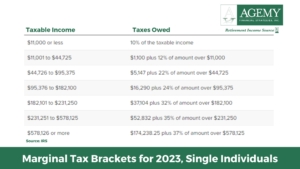
When preparing to file your tax return for the 2023 tax year, it’s important to take note of significant changes compared to 2022. While the tax rates have remained unchanged, there has been a notable 5.4% increase in the federal income tax brackets.

This increase effectively expands the taxable income thresholds within each bracket. You can calculate your taxable income within a bracket by subtracting the standard or itemized deductions from your adjusted gross income. Due to the increase, the standard deduction has also seen adjustments. Married couples filing together can now claim a standard deduction of $27,700, up from $25,900 in 2022. Single filers are eligible for a standard deduction of $13,850 in 2023, a marked increase from the previous year’s $12,950. See the following tables for a detailed view of how tax brackets will change based on your reported income.

Important Tax Considerations for Tax Season

In addition to understanding the tax bracket adjustments and standard deduction changes for the 2023 tax year, there are a few other essential factors that require your attention:

  • Tax Breaks for Vehicle Purchases and Home Energy Improvements: If you acquired a vehicle during 2023 or made energy-efficient enhancements to your home, you may qualify for valuable tax breaks. The Clean Vehicle Tax Credit carries a maximum cap of $7,500.
  • IRS Reporting Change Delay: It’s worth mentioning that the IRS postponed a reporting change scheduled for 2023 concerning business payments made through apps like PayPal or Venmo. Before this change, even a payment of $600 or more would have triggered the issuance of Form 1099-K, which reports such business payments to the IRS.

Stay informed and take advantage of these changes to help ensure your tax return for 2023 is as accurate and beneficial as possible.

You Can Get an Extension to File— But Not to Pay


For retirees who cannot file their tax returns by the April 18 deadline, the IRS allows them to request a six-month extension. This extension can be helpful in situations where a taxpayer is missing a tax form or needs additional time to prepare their return. Taxpayers can request an extension for free via IRS Free File, regardless of their income.

It’s essential to note that while an extension will give retirees additional time to file their returns, it doesn’t extend the deadline to pay their federal taxes. The tax bill has to be paid by the April 18 deadline. In cases where a taxpayer is missing a tax form, they can estimate their tax bill by using tax software and inputting estimates for any missing forms.

It’s also worth noting that requesting a federal extension doesn’t automatically extend the deadline for state tax returns. Those who need additional time to file their state tax returns must request a separate extension. There is no penalty for filing an extension. However, not paying on time or enough, or failing to file altogether, may cost you.

  • If you don’t pay the full amount you owe, the IRS will charge you interest on the unpaid balance until you pay the full amount.
  • You may be subject to a late payment penalty if you don’t pay at least 90% of what is owed. The penalty is usually half of 1% of the amount owed each month, up to a maximum of 25%.
  • You may be subject to a late filing penalty if you don’t file your return or Form 4868 by the tax filing deadline. The penalty is usually 5% of the amount you owe each month, up to a maximum of 25%.

After you file the extension, you’ll have until October 16 to gather your documents and finish your filing.  When you complete your return, you should include the amount you’ve already paid in the payments section of your Form 1040.

Tax Planning With Agemy Financial Strategies

Tax planning is an important aspect of an overall retirement strategy that should not be overlooked. Understanding your tax obligations now can help you enjoy a more secure financial future.

While certain taxes may be deferred, others can be minimized through tax-efficient investment planning. That is why a fiduciary advisor can be a valuable resource for those seeking to navigate the complexities of tax planning.

At Agemy Financial Strategies, we can help you explore your options to help ensure you’re not missing out on tax strategies that could boost your retirement savings. From reassessing your investments to postponing RMDs, Agemy Financial Strategies has over 32 years of experience in tax-strategizing to maximize retirement income in your golden years.

Let us help you create a personalized tax plan with a complimentary strategy session. Set yours up here today.

For high-net-worth individuals (HNWIs) nearing retirement, preparing for tax season now can make a significant difference in preserving your wealth.

Wealthy Americans contribute a significant share of the nation’s tax burden. According to a recent study, the top 1% of earners will contribute 23.9% of all taxes despite earning only 20.1% of total income. This disparity highlights the need for strategies that minimize tax liabilities and protect your hard-earned wealth.

Focusing on tax efficiency in your portfolio can help optimize your wealth preservation strategy and avoid surprises when tax laws shift. From smart asset location strategies to planning for long-term capital gains, now is the time to take proactive steps to keep more of what you’ve earned. Here’s what you need to know.

Why Tax Efficiency Matters in Retirement Planning 

Without proper planning, taxes can erode a significant portion of your retirement income. According to the Tax Foundation, high-income individuals in the U.S. can face marginal tax rates as high as 37% at the federal level. Factors in state taxes, capital gains taxes, possible future law changes, and the need for a tax-efficient portfolio become clear. For retirees, particularly HNWIs, managing tax liability is more than compliance; it’s about creating sustainable wealth for years. A tax-efficient approach can help you:

  • Minimize taxes on investment returns.
  • Protect long-term gains.
  • Align your portfolio with changing tax policies.

Understanding how and where your assets are invested can be key to achieving this. Let’s look at some strategies to help you prioritize tax efficiency.

1. Smart Asset Location: Putting Investments in the Right Accounts

One of the most powerful tax efficiency strategies is asset location, which involves strategically placing different types of assets in specific accounts to help minimize tax liability. Asset location is separate from asset allocation, which involves diversifying investments. Instead, asset location focuses on which accounts hold which investments.

Tax-Deferred Accounts (e.g., 401(k), Traditional IRA)

Tax-deferred accounts are ideal for investments that generate income or frequent dividends, as these will be taxed later when withdrawn, typically in retirement. Examples include bonds (interest payments), actively managed funds, and real estate investment trusts (REITs).

Taxable Accounts

Taxable brokerage accounts can be better suited for investments that are tax-efficient by nature, such as:

  • Certain individual stocks (held for long-term gains).
  • Certain index funds (low turnover and fewer taxable events).
  • Certain municipal bonds (potentially tax-free interest income).

Tax-Free Accounts (e.g., Roth IRA, Roth 401(k))

Tax-free accounts, where withdrawals in retirement are generally not taxed, are potentially valuable for assets with the potential for high growth, such as:

  • Certain stocks are expected to appreciate significantly over time.
  • Certain mutual funds or ETFs.

Placing your investments in the right accounts can help reduce the taxes you owe over your lifetime. As always, it’s important to consult your advisor to see if these investments are a good fit for you and your specific situation.

2. Leveraging Long-Term Capital Gains for Greater Tax Efficiency

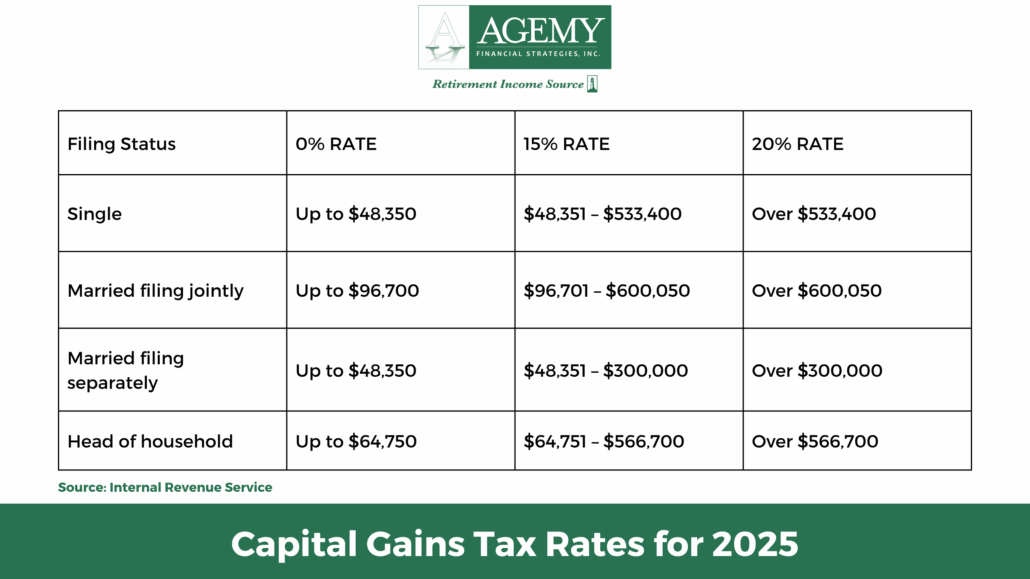
Understanding the distinction between short-term and long-term capital gains is essential when creating a tax-efficient portfolio. Short-term capital gains (on assets held less than one year) are taxed as ordinary income, while long-term capital gains (on assets held for more than a year) enjoy significantly lower rates. The table below shows the capital gains tax rates for 2025:

Capital gains tax


For HNWIs, long-term strategies are particularly important. Here are some ways to help you optimize:

  • Hold Investments Longer: You can benefit from lower long-term rates by holding onto assets for over a year.
  • Tax-Loss Harvesting: Offsetting capital gains with losses from other investments can help reduce your taxable income.
  • Gifting Appreciated Assets: Gifting long-term appreciated assets to family members in lower tax brackets can help minimize overall tax exposure while supporting your loved ones.

3. Proactively Planning for Future Tax Law Changes 

Tax laws can change, and for HNWIs, staying informed and flexible is key to tax efficiency. For instance, the Tax Cuts and Jobs Act (TCJA) lowered tax rates but will sunset at the end of 2025, which could mean higher taxes for many individuals. Being proactive now can help mitigate the impact of these changes later. Here are some key strategies to consider:

  • Roth Conversions: Converting assets from a traditional IRA to a Roth IRA can help you pay taxes at today’s lower rates, locking in tax-free growth for the future.
  • Diversifying Tax Buckets: Balancing your investments across taxable, tax-deferred, and tax-free accounts can help you remain flexible as tax laws change.
  • Monitor Income Thresholds: Keeping taxable income below certain thresholds can help you avoid the Medicare surtax and other income-related taxes.

Working closely with a fiduciary advisor who monitors the tax landscape can help ensure you remain one step ahead.

4. Maximizing Retirement Account Contributions

Retirement accounts provide valuable tax advantages, and maximizing your contributions now can lead to significant long-term benefits. For 2025, contribution limits are as follows:

  • 401(k): Up to $23,500, with an additional $7,500 catch-up contribution for those aged 50 and older.
  • IRA: Up to $7,000, with an additional $1,000 catch-up contribution for individuals aged 50 and older.

Maximizing contributions to tax-advantaged accounts can defer income taxes and allow your investments to grow tax-deferred or tax-free, depending on the account type. To make the most of these opportunities, consider consulting a fiduciary advisor who can help you develop a strategy tailored to your financial goals.

5. Prioritizing Tax-Efficient Investments

Certain types of investments are inherently more tax-efficient than others, making them more ideal for taxable accounts.

  • Index Funds and ETFs: These investments are known for low turnover and fewer capital gains distributions, helping reduce your tax burden.
  • Municipal Bonds: For investors in high tax brackets, municipal bonds offer interest income often exempt from federal taxes (and sometimes state taxes).
  • Tax-Managed Funds: These funds are actively managed to help minimize capital gains distributions, making them suitable for taxable accounts.

Prioritizing tax-efficient investments can help you enhance after-tax returns and preserve more of your wealth.

The Importance of Proactive Tax Planning 

Tax efficiency is not a once-a-year activity; it requires a year-round, proactive approach. At Agemy Financial Strategies, we pride ourselves on providing personalized, fiduciary-based advice that prioritizes your best interests. Here are some areas where we can help:

  • Continuously monitor the tax implications of your investments to identify opportunities to save.
  • Adjust your strategies as tax laws evolve, allowing your portfolio to remain optimized under current regulations.
  • Implement charitable giving, Roth conversions, and tax-loss harvesting techniques at the right time to help minimize your tax burden.
  • Provide personalized guidance to help you balance short-term needs with long-term tax planning strategies tailored to your financial goals.

Our team is dedicated to helping you incorporate tax efficiency into your retirement planning strategy, which can help you prepare for tax season and a tax-optimized future.

Plan Now for a Tax-Efficient Retirement

Getting ahead of tax season means more than filing your return early. It means building a retirement portfolio to minimize taxes and maximize long-term wealth. Focusing on strategies like asset location, long-term capital gains, and proactive planning can help you take control of your tax liability and create a more stable financial future.

At Agemy Financial Strategies, we help individuals optimize their portfolios for tax efficiency. Our fiduciaries understand the importance of wealth preservation and proactive planning for HNWIs approaching retirement.

Contact us today to learn more about how we can help you navigate tax-efficient strategies tailored to your financial goals.


Disclaimer: This blog is for informational purposes only and does not constitute financial, tax, or investment advice. The content is not intended to be a solicitation or recommendation for any specific financial product or service. Tax laws and regulations are subject to change, and the information presented may not apply to your individual circumstances. Please consult the fiduciary advisors at Agemy Financial Strategies for personalized advice regarding your financial situation.

With the evolution of Bitcoin and other digital assets dominating the financial headlines for more than a decade, it stands to reason that many retirement investors are wondering if crypto has a place in their 401(k). 

In this blog, we will explore the pros and cons of holding digital assets in a 401(k) or similar employer-sponsored retirement plan and explain how a financial advisor can be instrumental in making informed investment decisions. Here’s what you need to know.

What Are Digital Assets?

Digital assets are virtual or electronic representations of value that exist in digital form and can be owned or controlled by individuals or entities. These assets encompass a wide range of digital content and properties. This includes cryptocurrencies like Bitcoin and Ethereum, digital tokens, digital certificates, digital collectibles, digital media files (music, videos, and ebooks), and even virtual real estate in online games and virtual worlds. One research report predicts virtual gaming worlds alone could be worth $400 billion by 2025, with the broader metaverse industry worth over $1 trillion.

What sets digital assets apart is their existence in distributed ledger technology. This involves a blockchain, which provides transparency and security. Digital assets can be bought, sold, traded, or transferred digitally, and they have gained popularity as a form of investment, a means of conducting transactions, and a new way to represent ownership and value in the digital age. Let’s dive deeper into the pros and cons of digital assets.

Pros of Holding Digital Assets in a 401(k)

There can be advantages to having digital assets in a 401(k) account. Notably, Bitcoin has seen remarkable growth of 150% over the last decade, surpassing the returns typically seen with traditional 401(k) investments like mutual funds. Here’s a look at some of the advantages of having digital assets in your 401(k):

  1. Diversification: Including digital assets in your 401(k) can help diversify your investment portfolio. Cryptocurrencies and other digital assets have shown a relatively low correlation with traditional assets like stocks and bonds. This can help reduce the overall risk in your retirement portfolio.
  2. Growth Potential: Digital assets have the potential for substantial growth over the long term. Bitcoin, for example, has experienced significant price appreciation since its inception. Including such assets in your retirement account may help you benefit from this growth potential.
  3. Tax Advantages: Storing digital assets in a 401(k) allows you to delay taxes on gains until retirement withdrawals. This is a long-term advantage, especially for appreciating investments. If you’re already trading cryptocurrencies and have a secure retirement plan independent of crypto, utilizing a 401(k) for crypto trading can help reduce your tax liability. In particular, Roth 401(k) accounts offer tax advantages by exempting capital gains from crypto investments.
  4. Security: Some proponents argue that holding digital assets in a 401(k) may offer the potential for enhanced security and the opportunity for higher gains when compared to assets traditionally held in 401(k) accounts. However, it’s important to note that even well-established cryptocurrencies can be highly volatile, and the level of security can vary based on individual investment choices.

Cons of Holding Digital Assets in a 401(k)


One of the main disadvantages of holding digital assets in a 401k is the instability it offers investors. Digital assets such as cryptocurrency are unstable in several ways:

  1. Price Volatility: Digital assets are known for their price volatility. While this volatility can present investment opportunities, it can also lead to significant losses. Investors should be prepared for the rollercoaster of holding cryptocurrencies in their retirement accounts.
  2. Lack of Regulation: Since digital assets are still relatively new, they operate in an environment with limited regulatory oversight. This lack of clear long-term regulations can contribute to uncertainty surrounding the future of these assets, including their price trajectory and viability as a recognized asset class. It’s important to stay informed about any regulatory changes that may affect your investments.
  3. Limited Investment Choices: Not all 401(k) plans provide the flexibility to invest in digital assets. Therefore, your investment choices may be constrained by the plan offered by your employer, potentially limiting your investment diversification. It’s essential to check with your plan administrator to determine whether digital assets are available as an investment option within your specific 401(k) plan.
  4. Technical Know-How: Investing in digital assets can be challenging for individuals without a strong understanding of blockchain technology and the complexities of the digital asset market. If you lack familiarity with these concepts, making informed investment decisions may be daunting. Working alongside a skilled financial advisor can help you navigate this dynamic terrain confidently.

Finding Balance With a Financial Advisor

Working with a retirement income planner, especially a fiduciary advisor, can be helpful if you find it challenging to strike the ideal balance in managing your digital assets within your 401(k).

At Agemy Financial Strategies, one of the key advantages of working with our fiduciaries is our legal obligation to prioritize your best interests, offering impartial guidance to empower you in making well-informed choices. Here’s how we can help:

  • Risk Assessment: Our financial advisors can help you assess your risk tolerance and risk assessment, providing valuable insights to determine whether digital assets are a suitable addition to your 401k. We’ll work with you to comprehend the potential risks and rewards of your investment choices.
  • Asset Allocation: Our advisors will help you establish the ideal allocation of digital assets within your comprehensive retirement portfolio. Proper asset allocation can help you achieve a well-balanced approach that aligns perfectly with your financial goals.
  • Tax Implications: The taxation of cryptocurrencies can be intricate, and tax laws can vary across jurisdictions. Agemy Financial Strategies will be your guide, helping you navigate the complex tax implications of buying, holding, and selling digital assets within the context of your retirement plan.
  • Long-Term Strategy: Crafting a robust, long-term retirement strategy is essential. Our dedicated fiduciary advisors will work closely with you to set realistic goals, conduct periodic plan reviews, and make necessary adjustments to secure your financial well-being throughout your retirement journey.

Final Thoughts

Holding digital assets in a 401(k) can be a strategic move for some investors, offering diversification and growth potential. However, it’s essential to consider the risks and consult a financial advisor to make informed decisions that align with your financial goals.

At Agemy Financial Strategies, we are dedicated to helping clients navigate the intricacies of planning for retirement to help ensure you never outlive your savings. Our fiduciary advisors can be a valuable resource in helping you navigate the digital asset landscape, assess the risks, and help you integrate these assets into your retirement strategy to align with your financial goals and risk tolerance.

If you’re ready to explore the world of digital asset investing, contact us today to set up your complimentary consultation here.

When it comes to retirement planning, high net-worth individuals (HNWIs) aren’t just dabbling in financial foresight – they’re orchestrating a symphony of wealth, securing legacies, and creating financial strongholds for generations to come. 

What exactly defines a high net-worth individual? A HNWI is loosely described as someone with at least $1 million in liquid assets. And it’s no surprise that the United States boasts the highest number of HNWIs in the world.

If you are a HNWI, an aspiring HNWI, or even an Ultra High-Net-Worth Individual (UHNWI), let’s explore five essential retirement strategies to help you achieve your retirement goals with confidence and peace of mind. Let’s dive in!

1. Diversification and Long-Term Investing

Diversification is a fundamental strategy for any investor, but it holds even greater importance for HNWIs. Instead of putting all their eggs in one basket, diversifying their investment portfolio across various asset classes can help spread risk and potentially enhance returns. High net-worth investors should consider a mix of stocks, bonds, real estate, and alternative investments.

While the allure of chasing short-term gains may be compelling, the key to financial success for high-net-worth individuals lies in adopting a well-structured, long-term investment plan. This doesn’t entail suddenly shifting from 100% invested to 100% cash to time the market. Rather, it involves periodic rebalancing and reducing investments to maintain alignment with an acceptable risk level.

By consistently contributing to retirement accounts and adhering to a disciplined asset allocation strategy, HNWIs can lay the foundation for substantial wealth accumulation over time.

2. Tax Management

For high-net-worth investors, having a tax-savvy financial advisor by their side is not just a financial luxury – it’s a necessity. With their help, they can pave the way for tax preparation and the development of strategies that allow investors to harness the full potential of the tax code to their advantage. HNWIs often find themselves grappling with intricate tax scenarios, taking a hit of capital gains taxes, estate taxes, and income taxes.

Investments that are tax-efficient should be made in taxable accounts. Investments that aren’t tax-efficient are better off in tax-deferred or tax-exempt accounts. For example, suppose an investor in a high-income tax bracket wants to invest in an asset that produces high ordinary-income returns. In that case, they can use funds in an IRA or other tax-sheltered account, which might be better than defaulting to using after-tax money.

In the pursuit of minimizing tax liabilities, investors should explore an array of tax-efficient strategies, including:

  • Tax-Advantaged Accounts: Maximizing contributions to tax-advantaged retirement accounts such as 401(k)s and IRAs can significantly reduce tax burdens.
  • Tax-Loss Harvesting: The art of offsetting capital gains with capital losses is an effective tactic to curtail taxable income.
  • Charitable Giving: An avenue that allows investors to support their cherished causes and reap potential tax deductions simultaneously.
  • Trusts and Estate Planning: Establishing trusts and crafting an estate plan can help minimize estate taxes and help transfer wealth to heirs.

In navigating the intricate landscape of tax management, HNWIs can harness the power of these strategies to protect their wealth and make it work more efficiently for them.

3. Insurance and Risk Management

High-net-worth individuals need to recognize the need to shield their wealth from unexpected risks and potential liabilities. Robust insurance coverage emerges as the cornerstone of fortifying their financial security. As the saying goes, “There’s no wealth like your health,” this adage becomes increasingly pertinent as you age. Without the correct long-term care insurance, you could be facing monumental daily outgoings that even HNWI should be concerned about.

Type of care Average cost without insurance
Semi-private room in a nursing home $6,844 per month
Private room in a nursing home $7,698 per month
Assisted living facility, one bedroom $3,628 per month
Health aide $20.50 an hour
Homemaker services $20 an hour
Adult day care center $68 per day
Source: Administration for Community Living.

Without adequate insurance, these mounting costs can exert undue pressure on your investment portfolio withdrawals, potentially jeopardizing your financial stability.


As you diligently protect and nurture your wealth, protecting your health and comprehensive insurance coverage are equally indispensable for securing a prosperous and worry-free retirement.

4. Estate Planning

Estate planning is a solid guide on how you wish your assets to be distributed after passing. Whether your goal is to establish a lasting legacy or secure the financial well-being of your loved ones, taking part in estate planning early on helps to ensure that your intentions are documented and legally binding.

According to a recent UBS Investor Watch Survey, 83% of investors express concerns about the smooth transfer of their assets. It’s a common misconception that estate planning is a one-and-done thing, but it is hardly a one-and-done endeavor. Preparing the right legal documents today helps ensure that your intentions are crystal clear and that the fate of your assets doesn’t fall into a court’s discretion.

Laws evolve, tax codes undergo revisions, and the financial landscape shifts. Regularly reviewing and fine-tuning your estate plans is imperative to remain aligned with your current objectives in the ever-changing environment. After all, estate planning isn’t just about preserving your wealth; it’s about securing your legacy and helping your loved ones be taken care of according to your wishes.

5. Working with a Fiduciary Advisor

Collaborating with a fiduciary financial advisor can be a highly useful tool for HNWIs. Fiduciary advisors are legally obligated to act in their client’s best interests, providing objective advice. At Agemy Financial Strategies, we are dedicated to helping clients navigate the intricacies of planning for retirement to help ensure you never outlive your wealth while creating a legacy to last for future generations.

Here’s a glimpse into how we can make a meaningful difference in your financial journey:

  • Goal Setting: We will help you establish clear and attainable retirement goals, crafting a personalized financial blueprint to realize your retirement lifestyle aspirations.
  • Risk Assessment: Identifying potential financial risks is the cornerstone of our approach. We’ll work with you to develop sound strategies that not only identify these risks but also mitigate them effectively.
  • Portfolio Management: Our experience extends to implementing and managing a diversified investment portfolio meticulously aligned with your long-term objectives and risk tolerance.
  • Regular Reviews: Financial landscapes are ever-changing. That’s why we’re committed to consistently monitoring and fine-tuning your financial plan to ensure it remains in harmony with your evolving circumstances.

Final Thoughts

At Agemy Financial Strategies, you can rest assured knowing that your financial affairs are in capable hands. Our purpose is to educate retirees – whether that be planning for retirement, legacy planning, wealth management, or just holding your hand when it’s time to leap into retirement. Celebrating over 30 years in business, our question to you is, Where do you want your financial roadmap to take you?”

Our first priority is helping you take care of yourself and your family. We want to learn more about your personal situation, identify your dreams and goals, and provide you with the highest level of service. If you want to learn more about how we can help you manage your wealth, schedule a complimentary strategy session with us here today.