
When people think about retirement planning, they often focus on the goals they can see: maintaining their lifestyle, traveling, helping family members, paying for a grandchild’s education, or leaving a legacy.
But there is another question that deserves a place in the conversation:
What happens if you need care for an extended period of time?
Long-term care planning is not about predicting whether you will need care. It is about preparing for the financial and personal consequences if you do.
Long-term care can include assistance with everyday activities such as bathing, dressing, eating, transferring, toileting, and continence, as well as supervision related to severe cognitive impairment. Care may be provided at home, through community-based services, in an assisted living setting, or in a nursing facility.
For individuals who have spent decades building retirement savings and accumulating assets, an extended period of care can create a significant financial risk. That is why long-term care can be an important part of a broader retirement and wealth preservation strategy—not simply an issue to address after a health event occurs.
Why Long-Term Care Planning Matters

Long-term care expenses are different from many of the costs people typically anticipate in retirement.
You may have a retirement income strategy designed to cover housing, food, transportation, healthcare premiums, taxes, travel, and other living expenses. But the cost of ongoing care can be substantially different from your normal retirement spending.
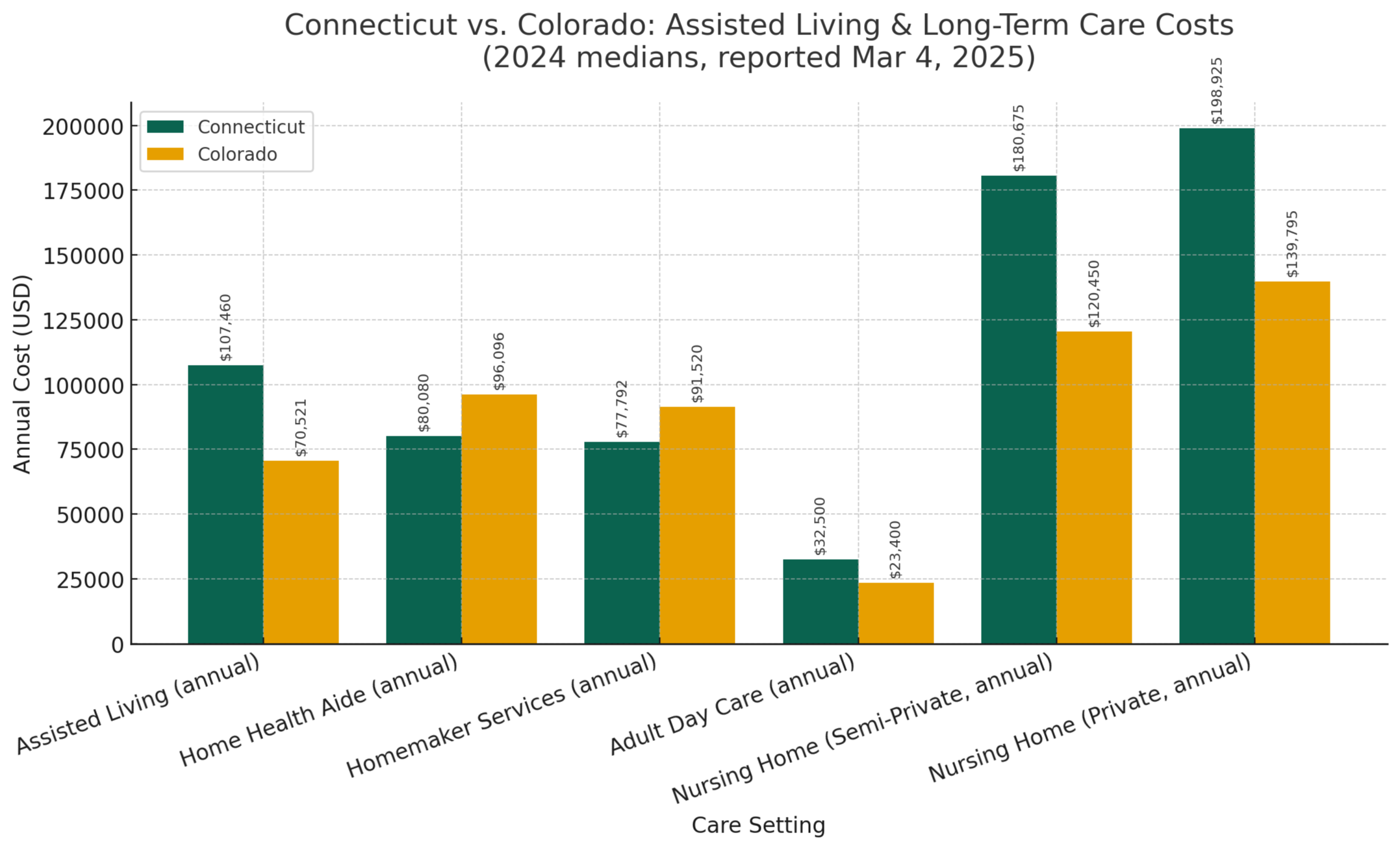
According to the CareScout Cost of Care Survey, the national median annual cost was approximately $80,080 for non-medical home care, $74,400 for an assisted living community, $114,975 for a semi-private nursing home room, and $129,575 for a private nursing home room. Actual costs can vary significantly based on location, provider, level of care, and individual circumstances.
Those figures illustrate why simply saying, “I’ll pay for it out of my savings,” may not be enough of a plan.
Instead, consider:
- How much could you afford to spend on care without compromising your retirement lifestyle?
- How long could your assets support those expenses?
- Would your spouse or partner remain financially secure?
- What assets would you want to preserve for your heirs?
- Would you prefer to receive care at home, if possible?
- Who would help make financial and healthcare decisions if you could no longer make them yourself?
- What role, if any, should insurance play?
- How could a prolonged care need affect your overall estate and legacy strategy?
These are financial planning questions, but they are also personal ones.
Does Medicare Pay for Long-Term Care?
One of the most common misconceptions about long-term care is that Medicare will cover it.
Generally, it does not.
Medicare does not generally cover long-term custodial care. It may, however, cover certain short-term skilled nursing or rehabilitation services when specific eligibility and medical-necessity requirements are met.
This distinction is important.
Someone may have Medicare and other health insurance coverage and still face significant out-of-pocket expenses if they eventually require ongoing assistance with daily activities.
Long-term care planning should therefore be considered separately from traditional healthcare planning.
What About Medicaid?
Medicaid may help cover certain long-term care expenses for individuals who meet applicable eligibility requirements. However, Medicaid is a joint federal and state program, and eligibility rules—including income, resource, transfer, and other requirements—can vary by state.
For households with substantial assets, Medicaid should not automatically be viewed as the first or only solution.
There is also an estate-planning consideration. Federal Medicaid rules generally require states to seek recovery from the estates of certain Medicaid recipients age 55 and older for specified benefits, including certain nursing facility and home- and community-based services. Important exceptions and hardship provisions may apply, and state laws can differ.
Because Medicaid eligibility, asset rules, transfer rules, and estate-recovery provisions are complex and state-specific, anyone considering Medicaid planning should consult an attorney or other qualified professional familiar with the laws applicable to their circumstances.
The takeaway is not that Medicaid should be avoided. Rather, it is that Medicaid planning should be approached carefully and coordinated with qualified professionals when appropriate.
How Can You Pay for Long-Term Care?

There is no single strategy that is right for everyone.
A comprehensive financial plan may consider several potential sources of funding, including personal assets, insurance, retirement income, and other resources.
1. Personal Savings and Investments
Some households may have sufficient assets to self-fund some or all of their potential long-term care expenses.
This approach may help provide flexibility and eliminate the need to pay insurance premiums, but it also means accepting the risk that care expenses could be substantial or continue for an extended period.
A key question is not simply:
“Do I have enough money?”
Instead, consider:
“How much of my retirement portfolio am I comfortable allocating toward a potential long-term care need?”
That distinction can be particularly important for households focused on wealth preservation and legacy planning.
2. Traditional Long-Term Care Insurance
Traditional long-term care insurance can help transfer some of the financial risk associated with extended care to an insurance company.
Policies can differ considerably. Important features may include the daily or monthly benefit, benefit period, elimination period, inflation protection, covered settings, eligibility requirements, and how benefits are paid.
Premiums, underwriting requirements, policy features, and benefits can also vary by carrier and individual circumstances.
For some individuals, insurance may be an appropriate way to address a portion of the potential risk. For others, the cost, available coverage, or personal circumstances may make another strategy more appropriate.
The goal should not be to purchase a particular product simply because long-term care is a possibility. The goal should be to determine how much risk you are comfortable retaining and whether insurance may have a role in your overall financial plan.
3. Hybrid Life Insurance and Long-Term Care Solutions
Certain insurance products combine life insurance with features that may provide benefits if the insured experiences a qualifying long-term care or chronic illness event.
One potential appeal is that the policy may provide a long-term care benefit if care is needed while potentially providing a death benefit if it is not.
However, these products can have complex terms, costs, guarantees, benefit structures, and limitations. They should be evaluated based on the policy’s specific contractual provisions and how the strategy fits within the individual’s broader financial plan.
A product should not be selected simply because it offers multiple potential benefits.
4. Retirement Income and Other Financial Resources
Depending on an individual’s circumstances, retirement income strategies may play a role in addressing potential care expenses.
For example, a household may evaluate how investment assets, guaranteed income sources, cash reserves, and other resources could be used if care expenses increase.
Annuities and other income strategies may be appropriate for some investors, but they are not automatically long-term care solutions. Different products involve different risks, costs, guarantees, tax considerations, and contractual provisions.
The appropriate approach depends on the individual’s goals, financial circumstances, and risk tolerance.
5. Medicaid, When Appropriate
For individuals who eventually meet applicable eligibility requirements, Medicaid may help pay for certain long-term care services.
However, Medicaid eligibility is not simply a matter of having limited income. Depending on the state and circumstances, eligibility may involve detailed rules concerning income, assets, transfers, marital status, and other factors.
Anyone considering Medicaid planning should seek individualized guidance from qualified professionals before taking action. Strategies that may affect Medicaid eligibility can also have tax, legal, and estate-planning consequences.
The “Self-Insure” Question
For households with substantial assets, one important question may be whether to purchase insurance or intentionally retain more of the potential long-term care risk within the household’s existing financial resources.
There is no universal asset level at which self-funding becomes the “right” answer.
Instead, consider the potential impact of different scenarios.
For example, a household with significant investable assets may be able to absorb a substantial care expense. But the same expense could become more consequential if care continues for several years, investment returns are unfavorable, or one spouse also has ongoing financial needs.
The decision depends on factors such as:
- Retirement income needs
- Investment assets and liquidity
- Age and health
- Family circumstances
- Risk tolerance
- Desired legacy
- Tax considerations
- Existing insurance coverage
- Preferred type of care
- Potential duration of care
A financial plan can help model different scenarios rather than relying on a single assumption about future care needs.
What If I Want to Stay at Home?

Long-term care planning does not automatically mean planning for a nursing home.
Many people would prefer to remain in their own homes for as long as reasonably possible.
That preference can be part of the planning conversation.
Home-based care may involve professional caregivers, home health services, transportation, meal services, home modifications, and other forms of support. Depending on the circumstances, family members may also become caregivers.
The financial impact can extend beyond the direct cost of professional care.
For example, if an adult child reduces working hours or leaves employment to provide care, there could be lost income, reduced retirement contributions, and other financial consequences.
A comprehensive plan should consider both the direct and indirect financial implications of a prolonged care need.
Long-Term Care Is Also a Family Conversation
Financial planning often focuses on dollars, investments, taxes, and income.
Long-term care planning also requires a conversation about people.
- Who would help you if you needed assistance?
- Who would make financial decisions?
- Who would communicate with healthcare providers?
- Would your family know your preferences?
- Would they know where important financial and legal documents are located?
These conversations can feel uncomfortable, but addressing them before a crisis may help reduce uncertainty for everyone involved.
Long-term care planning can also be coordinated with estate planning, powers of attorney, healthcare directives, and other legal documents.
A financial professional can help evaluate the financial implications of different scenarios, while an appropriately licensed attorney should provide legal advice and prepare or review legal documents.
Don’t Forget the Tax Considerations
Long-term care planning can also have tax implications.
Federal tax rules may allow certain qualified long-term care insurance premiums to be treated as medical expenses, subject to applicable limitations and requirements. These limits are adjusted periodically, so individuals should consult current IRS guidance and their tax professional when evaluating the potential tax treatment of premiums.
There is also a relatively new retirement-plan provision worth understanding.
Beginning with distributions made after December 29, 2025, SECURE 2.0 allows certain defined contribution retirement plans to offer qualified long-term care distributions that can be used to help pay premiums for certified long-term care insurance.
Importantly, this is an optional plan feature, not a requirement for every retirement plan.
For 2026, qualifying distributions are generally limited to the lesser of the applicable long-term care insurance premiums, 10% of the participant’s vested account balance, or $2,600. Additional eligibility, certification, documentation, and plan requirements may apply.
Because this provision is new and subject to specific rules, individuals should consult their retirement plan administrator and qualified tax professional to determine whether it applies to their circumstances.
More broadly, the tax consequences of paying for long-term care can depend on the source of funds, type of insurance, policy structure, and individual circumstances.
When Should You Start Planning?

One of the biggest mistakes is waiting until long-term care is immediately necessary.
By then, some options may be more limited.
Planning does not necessarily mean purchasing insurance today. It means understanding your potential exposure while you still have time to make informed decisions.
For many people, the conversation belongs in their 50s or 60s, but there is no universal “right age.”
The earlier you evaluate the risk, the more time you may have to:
- Assess your financial resources
- Explore potential insurance options
- Review your retirement income strategy
- Consider potential tax consequences
- Discuss care preferences with family
- Review estate-planning documents
- Stress-test your financial plan
- Determine how much risk you are comfortable retaining
Even if you ultimately decide not to purchase long-term care insurance, making that decision intentionally can be valuable.
Long-Term Care Should Fit Into Your Larger Financial Plan
Long-term care should not be viewed in isolation.
Purchasing insurance may affect cash flow. Self-funding care may affect portfolio withdrawals. Using certain assets first may have tax implications. A significant care event may change the surviving spouse’s financial picture. And preserving assets for heirs may require a different approach than maximizing current retirement spending.
This is why long-term care planning can be most effective when it is integrated into a broader financial plan.
At Agemy Financial Strategies, we believe retirement planning is about more than accumulating assets. It is about understanding how those assets may need to work throughout retirement—including when life does not go according to plan.
Long-term care considerations can be evaluated alongside retirement income, investment management, tax considerations, wealth preservation, and legacy goals.
So, Do You Need a Long-Term Care Plan?

For most people, the better question is not:
“Will I need long-term care?”
It is:
“What happens to my financial plan if I do?”
You cannot predict exactly what your future health, care needs, or costs will look like. But you can make decisions today about how you would want those expenses handled.
A thoughtful strategy may involve insurance. It may involve self-funding. It may involve a combination of approaches. And for some individuals, it may involve coordinating financial planning with Medicaid and estate-planning professionals.
The important thing is to make the decision before circumstances make it for you.
Long-term care planning is not about expecting the worst. It is about protecting the retirement and legacy you’ve worked hard to build—whatever the future holds.
If you are approaching retirement or already retired and want to understand how a potential long-term care need could affect your financial future, Agemy Financial Strategies can help you evaluate how long-term care considerations may fit within your broader retirement and wealth preservation strategy.
Important Disclosure
This material is provided for general informational and educational purposes only and should not be construed as individualized investment, tax, legal, insurance, or financial advice, or as an offer or solicitation to buy or sell any financial product or insurance product. The information presented is based on sources believed to be reliable but may not reflect the most current laws, regulations, or guidance and is subject to change. Long-term care insurance policies, life insurance policies, annuities, and other insurance or financial products involve costs, risks, limitations, and contractual terms that should be carefully reviewed before making a decision. Insurance products are offered only through appropriately licensed insurance professionals where applicable. Medicaid eligibility and estate-recovery rules vary by state and individual circumstances. Tax treatment depends on individual circumstances and may change. SECURE 2.0 provisions are subject to specific statutory, regulatory, and plan requirements. Consult with your qualified financial professional, tax professional, attorney, insurance professional, and/or retirement plan administrator before implementing any strategy. There is no guarantee that any financial or insurance strategy will achieve a particular result or protect against loss.













 How to Prepare Financially for Caregiving