Posts

Gold looks attractive in 2026 as a long‑term diversifier and potential inflation hedge, but it is volatile, richly priced, and should be used as a supporting asset, not a core growth engine. 

For Agemy Financial Strategies clients, many of whom are pre‑retirees or retirees, the key question is not “Is gold good?” but “How much, in what form, and for what purpose?” within an overall financial plan.

Where Gold Stands in Early 2026

Is Gold a Good Investment (2)

Gold has just come through one of its strongest multi‑year runs on record, dramatically outpacing many traditional assets. Gold has surged past $5,000 — and forecasts from major banks are calling for $6,000 or more by year’s end. 

A few big forces are behind this surge:

  • Strong central bank buying, especially from emerging markets that are diversifying away from the U.S. dollar.
  • Rising allocations by retail investors and ETFs seeking a safe haven amid market volatility and policy uncertainty.
  • Expectations of lower real interest rates as central banks, including the Federal Reserve, continue or contemplate rate cuts.

At the same time, analysts stress two important realities: gold rallies can be sharp and emotional, and the same is true of corrections. That means investors considering gold in 2026 need a clear, plan‑driven rationale, not fear or greed.

Why Many Experts Still Like Gold

Professionals often describe gold as “portfolio insurance” rather than a speculative trade. Here are the main reasons 2026 still looks constructive for gold.

1. Hedge against inflation and currency risk: Gold has historically tended to hold its purchasing power over long periods, even as paper currencies lose value. With years of aggressive monetary policy behind us and ongoing concern about fiscal deficits, many investors see a continued role for hard assets like gold.

2. Diversification and crisis protection: Gold often behaves differently than stocks and, to a lesser degree, bonds, especially during periods of stress. When equities experience sharp drawdowns, gold has frequently held value or risen, which can help cushion portfolio losses for retirees drawing income.

  • Supportive macro backdrop
    • Central banks are expected to continue buying hundreds of tonnes of gold annually, representing a meaningful share of yearly mine output.
    • Retail and ETF demand jumped in 2025 and is projected to remain robust as investors seek safe‑haven exposure.
    • Forecasts from major banks cluster around the idea that gold can remain elevated, with many calling for prices at or above $5,000 per ounce by late 2026 if current trends persist.

3. Favorable real‑rate and dollar dynamics: Gold often has a negative relationship with real interest rates and the U.S. dollar. Analysts expect further rate cuts and a softer real‑rate environment, which historically has supported gold prices, especially if the dollar weakens.

For long‑term, risk‑aware investors, these factors make gold a reasonable candidate for a modest allocation in 2026.

The Major Risks and Drawbacks in 2026

Our advisors would emphasize what gold is not: it is not a guaranteed winner, a substitute for income‑producing assets, or a one‑way bet.

  1. Elevated prices and the risk of buying “after the run”: Gold’s huge gains in 2025 and early 2026 mean new buyers are entering at historically high levels. Some analysts warn that if sentiment shifts, a sharp pullback is possible, especially for investors focused on short‑term gains.
  2. High volatility: Recent years have shown that gold can swing sharply in both directions within short periods. Those fluctuations can be unsettling for retirees who need stability around withdrawals, particularly if gold is over‑weighted.
  3. No income, no dividends: Unlike bonds or dividend‑paying stocks, gold does not produce interest or cash flow. For income‑oriented investors, this means gold must be funded by other assets that do produce income, or it risks undermining a retirement paycheck strategy.
  4. Opportunity cost if rates rise again: If inflation cools or central banks turn more hawkish, real yields could rise, making cash and bonds relatively more attractive than gold. In that scenario, gold prices could stagnate or decline while interest‑bearing assets provide positive income.
  5. Behavioral risk: Because headlines about “record highs” are so attention‑grabbing, investors may be tempted to chase gold late in the cycle, then panic‑sell at the first pullback. That pattern, buying high, selling low, is generally the opposite of what our planning‑driven approach aims to achieve.

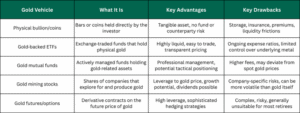
Ways to Invest in Gold in 2026

If gold fits into your plan, the next decision is how to gain exposure. Different vehicles carry different risks, costs, and logistical considerations. 

Is Gold a Good Investment (2)

For many retirement‑focused investors, a simple combination of a low‑cost, gold‑backed ETF or fund and possibly a modest amount of physical bullion is often the most practical approach. More speculative vehicles, such as futures or highly leveraged mining stocks, are usually better left to experienced, risk‑tolerant traders, not those relying on their nest egg.

How Agemy Might Position Gold in a 2026 Plan

From the perspective of a holistic retirement planning firm like Agemy Financial Strategies, the decision is less about timing the perfect entry point and more about integrating gold thoughtfully into an overall strategy.

  1. Clarify your purpose for owning gold
    • Hedge against inflation and currency risk.
    • Diversify equity and bond exposure.
    • Provide psychological comfort (“sleep‑at‑night” insurance).
      Each goal may justify a different target allocation and vehicle.
  2. Right‑size your allocation: Many experts view gold as a “satellite” holding rather than a core position, with allocations often in the mid‑single‑digit to low‑double‑digit percentage range depending on risk tolerance and objectives. Too little may not move the needle; too much can crowd out productive assets and add volatility.
  3. Integrate with income and withdrawal planning: For retirees, a key question is how gold interacts with income‑producing holdings. One approach is to let gold sit as a long‑term store of value while using dividends, interest, and systematic withdrawals from other assets to fund lifestyle needs.
  4. Set expectations and time horizon: Experts frequently stress that gold works best as a long‑term holding, not a short‑term trade. That means being prepared for periods when gold underperforms stocks or even declines in price, while keeping the focus on its role as insurance rather than as a primary growth engine.
  5. Stay diversified and disciplined: Even with bullish forecasts pointing toward the possibility of gold moving higher into and beyond 2026, concentration in any single asset is dangerous. A disciplined rebalancing plan, trimming gold after large run‑ups and adding modestly after pullbacks, can help manage risk and keep the allocation aligned with your plan.

So, Is Gold a Good Investment in 2026?

Is Gold a Good Investment (2)

For many, the answer is: gold can be a good investment in 2026 as part of a diversified, plan‑driven portfolio, not as a stand‑alone bet. The macro backdrop of strong central bank demand, elevated geopolitical and economic uncertainty, and a potentially favorable interest‑rate environment all support a constructive long‑term outlook for gold.

At the same time, today’s high prices and the possibility of sharp corrections mean investors should approach gold thoughtfully, with realistic expectations and a long‑term mindset. The most appropriate allocation, vehicle, and timing will depend on your age, risk tolerance, income needs, and broader retirement goal, factors that a personalized plan can help you balance.

If you’re wondering whether gold belongs in your 2026 portfolio, the next step is to review your current holdings, risk profile, and retirement timeline with an advisor who understands how to use tools like gold as part of a comprehensive income and wealth‑protection strategy.

Contact us at agemy.com.


Investment advisory services are offered through Agemy Wealth Advisors, LLC, a Registered Investment Advisor and fiduciary to its clients. Agemy Financial Strategies, Inc. is a franchisee of Retirement Income Source®, LLC. Agemy Financial Strategies, Inc. and Agemy Wealth Advisors, LLC are associated entities. Agemy Financial Strategies, Inc. and Agemy Wealth Advisors, LLC entities are not associated with Retirement Income Source®, LLC. The information contained in this e-mail is intended for the exclusive use of the addressee(s) and may contain confidential or privileged information. Any review, reliance or distribution by others or forwarding without the express permission of the sender is strictly prohibited. If you are not the intended recipient, please contact the sender and delete all copies. To the extent permitted by law, Agemy Financial Strategies, Inc and Agemy Wealth Advisors, LLC, and Retirement Income Source, LLC do not accept any liability arising from the use or retransmission of the information in this e-mail.

An educational guide for retirees and pre‑retirees, prepared by Agemy Financial Strategies

Estate planning is about far more than drafting a will. For those approaching and in retirement, it is a critical part of protecting what you’ve built, caring for loved ones, and helping ensure your money is transferred according to your wishes — not default rules or unnecessary taxes. One of the most misunderstood areas of estate planning is estate tax law.

While many retirees assume estate taxes only affect the ultra‑wealthy, the reality is more nuanced. Federal exemptions are high, but state estate taxes, income tax implications for heirs, and changing laws can still create unintended consequences without proper planning.

This guide explains estate tax laws retirees should understand, how current rules work, common misconceptions, and practical strategies to help preserve your legacy with confidence.

What Is an Estate Tax?

An estate tax is a tax imposed on the transfer of assets at death. It applies to the total value of everything you own at the time of your passing, known as your gross estate. This may include:

  • Cash and bank accounts
  • Investment portfolios
  • Retirement accounts (IRAs, 401(k)s, Roth accounts)
  • Real estate, including primary and vacation homes
  • Business interests
  • Life insurance proceeds (in certain situations)
  • Personal property such as vehicles, collectibles, and jewelry

If the value of your estate exceeds certain exemption thresholds, taxes may be owed before assets are distributed to heirs.

Importantly, estate taxes are different from inheritance taxes. Estate taxes are paid by the estate itself before assets are distributed. Inheritance taxes, which only apply in certain states, are paid by the beneficiary receiving the inheritance.

Estate Tax Laws

Federal Estate Tax Laws: The Basics for Retirees

Current Federal Estate Tax Exemption

Under current U.S. law, federal estate taxes apply only to estates above a generous exemption amount. As of 2026:

As of 2026: The federal estate/gift tax exemption is permanently set at $15 million per individual ($30 million for married couples), indexed for inflation going forward. This stability creates clear long-term planning—though state taxes, income tax basis planning, and asset growth still demand proactive strategies.

Only the portion above the exemption faces 40% federal tax.

Federal Estate Tax Rates

Federal estate tax rates are progressive, with a top rate of 40% on amounts above the exemption. While this rate is significant, proper planning can dramatically reduce — or eliminate — exposure.

The Unified Gift and Estate Tax System

The estate tax is unified with the gift tax. This means:

  • Gifts made during your lifetime count toward your lifetime exemption
  • The same exemption protects lifetime gifts and transfers at death

Large gifts do not usually trigger immediate tax, but they reduce the exemption available later.

Why Estate Tax Planning Still Matters for Retirees

Many retirees assume estate tax planning is unnecessary because their estate falls below federal thresholds. However, focusing only on the federal estate tax can be misleading.

Estate planning for retirees should also account for:

  • State estate or inheritance taxes
  • Income taxes heirs may owe on inherited assets
  • Distribution timing and control
  • Family dynamics, including blended families
  • Charitable goals
  • Protection against creditor or legal risk

Estate tax laws intersect with all of these considerations.

Estate Tax Laws

State Estate and Inheritance Taxes: A Hidden Risk

Even if your estate is not large enough to trigger federal estate tax, state‑level taxes may still apply.

Some states impose their own estate taxes with exemptions far lower than the federal level. Others levy inheritance taxes on beneficiaries, depending on their relationship to the deceased.

For retirees, this means:

  • An estate that owes no federal tax may still owe state tax
  • Planning strategies must account for where you live — and sometimes where your heirs live

State tax exposure is a common blind spot in retirement estate planning.

Estate Taxes and Retirement Accounts

Retirement accounts often represent one of the largest portions of a retiree’s estate — and they come with unique tax considerations.

Income Taxes for Heirs

Traditional IRAs and 401(k)s are funded with pre‑tax dollars. When heirs inherit these accounts, withdrawals are generally taxed as ordinary income.

Under current rules, many non‑spouse beneficiaries must withdraw inherited retirement accounts within a limited timeframe, accelerating income taxes.

This creates a double consideration:

  • The value of the account may count toward your taxable estate
  • Your heirs may face significant income taxes after inheriting

Roth Accounts

Roth IRAs offer different advantages. While still included in your estate value, qualified withdrawals by heirs are generally income‑tax‑free, making them a powerful legacy asset when coordinated properly.

Step‑Up in Basis: A Critical Tax Benefit for Heirs

One of the most valuable features of estate planning is the step‑up in cost basis.

Assets that pass through your estate typically receive a new tax basis equal to their fair market value at the date of death. This may reduce capital gains taxes for heirs who later sell the asset.

For example:

  • An investment purchased decades ago for $50,000 may be worth $500,000 at death
  • With a step‑up in basis, heirs may owe little or no capital gains tax if sold soon after

This is why gifting appreciated assets during life must be evaluated carefully — lifetime gifts do not receive a step‑up in basis.

Portability: What Married Retirees Should Know

Portability allows a surviving spouse to use any unused portion of a deceased spouse’s federal estate tax exemption.

This can be a powerful tool for married retirees, but it is not automatic. Certain elections must be made after the first spouse’s death to preserve unused exemptions.

While portability simplifies some planning, it may not replace the benefits of trusts, particularly when state taxes, asset protection, or remarriage risks are involved.

Trusts and Estate Tax Planning for Retirees

Trusts remain one of the most effective estate planning tools, even for retirees who do not expect to owe federal estate tax.

Common trust strategies include:

Credit Shelter (Bypass) Trusts

These trusts preserve the first spouse’s exemption while allowing the surviving spouse access to income or principal under defined terms.

Irrevocable Life Insurance Trusts (ILITs)

ILITs remove life insurance proceeds from the taxable estate, which can be critical for retirees with large policies.

Charitable Trusts

Charitable remainder and charitable lead trusts can provide income, tax benefits, and long‑term philanthropic impact.

Trust selection should align with your tax exposure, income needs, and family goals.

Estate Tax Laws

Charitable Strategies That Help Reduce Estate Taxes

For retirees with charitable intentions, philanthropy can be an effective estate planning tool.

Options may include:

  • Direct bequests to charities
  • Donor‑advised funds
  • Qualified charitable distributions (QCDs) from IRAs
  • Charitable trusts that provide lifetime income

Charitable gifts may reduce estate size while allowing you to support causes you value.

Common Estate Tax Mistakes Retirees Make

Even well‑intentioned retirees can make costly mistakes, including:

  • Assuming estate taxes will never apply
  • Failing to update beneficiary designations
  • Overusing joint ownership without understanding the consequences
  • Ignoring state estate or inheritance taxes
  • Not coordinating retirement income planning with estate planning

Estate planning should be revisited regularly, especially after retirement, the death of a spouse, or major tax law changes.

When Should Retirees Review Their Estate Plan?

You should review your estate plan:

  • At retirement
  • After major changes in tax law
  • After a significant change in net worth
  • Following marriage, divorce, or remarriage
  • After the birth of grandchildren
  • When relocating to a new state

Estate planning is not a one‑time event — it is an ongoing process.

Estate Tax Laws

How Agemy Financial Strategies Helps Retirees Plan Confidently

At Agemy Financial Strategies, estate tax planning is integrated into your broader retirement strategy. We help retirees:

  • Understand how estate taxes fit into their full financial picture
  • Coordinate income planning with legacy goals
  • Adjust strategies as laws and life circumstances evolve

Our goal is clarity, confidence, and continuity — so your wealth supports both your retirement and your legacy.

Final Thoughts

Estate tax laws may seem complex, but understanding how they apply to retirees is essential to protecting what you’ve earned. With thoughtful planning, most retirees can minimize taxes, reduce stress for loved ones, and help ensure assets are transferred efficiently and intentionally.

A proactive approach today can make a meaningful difference for generations to come.

If you’re approaching or already in retirement, now is the time to ensure your estate plan reflects current laws, your financial reality, and your long‑term wishes.

Contact us at agemy.com


Investment advisory services are offered through Agemy Wealth Advisors, LLC, a Registered Investment Advisor and fiduciary to its clients. Agemy Financial Strategies, Inc. is a franchisee of Retirement Income Source®, LLC. Agemy Financial Strategies, Inc. and Agemy Wealth Advisors, LLC are associated entities. Agemy Financial Strategies, Inc. and Agemy Wealth Advisors, LLC entities are not associated with Retirement Income Source®, LLC. The information contained in this e-mail is intended for the exclusive use of the addressee(s) and may contain confidential or privileged information. Any review, reliance or distribution by others or forwarding without the express permission of the sender is strictly prohibited. If you are not the intended recipient, please contact the sender and delete all copies. To the extent permitted by law, Agemy Financial Strategies, Inc and Agemy Wealth Advisors, LLC, and Retirement Income Source, LLC do not accept any liability arising from the use or retransmission of the information in this e-mail.

For individuals with substantial retirement savings — especially those navigating multi-million-dollar portfolios — Required Minimum Distributions (RMDs) can be one of the most complex and impactful aspects of retirement planning. 

RMDs are mandated by the IRS to help ensure that tax-deferred retirement assets eventually generate taxable income. While the rules can be straightforward for smaller portfolios, when you’re managing significant wealth, RMDs intersect with broader tax planning, estate strategies, income management, investment allocation, and legacy goals.

At Agemy Financial Strategies, we believe that RMDs should not be treated as a compliance exercise; they must be integrated into a thoughtful long-term financial plan. This blog unpacks what RMDs are, how they function in large portfolios, key strategies for management, and how proactive planning can minimize taxes, maximize flexibility, and support your broader financial goals.

1. Understanding RMD Fundamentals

What Are RMDs?

Required Minimum Distributions refer to the minimum amount that individuals must withdraw annually from certain tax-deferred retirement accounts once they reach a specific age. These include:

The purpose of RMDs is to ensure that retirement savings are eventually taxed. The IRS views these assets as tax-deferred, meaning contributions and earnings grow without annual tax until withdrawn.

When Do RMDs Start?

Following recent tax law changes, RMDs generally begin at age 73 for those who reach 72 after December 31, 2022; for those who reached 72 before this date, the prior RMD age still applies. The rules change over time, so periodic review with a financial advisor is critical.

How Are RMDs Calculated?

RMD amounts are based on your account balance as of December 31 of the prior year and your life expectancy factor from IRS tables. For high-net-worth individuals with multi-million-dollar accounts, this calculation often results in substantial distributions that can significantly impact taxable income.

For example, if your IRA balance was $4 million on December 31 and your IRS life expectancy divisor is 25.6 (a hypothetical from IRS tables), your RMD would be approximately:

$4,000,000 ÷ 25.6 = $156,250

This distribution is taxable as ordinary income and must be taken before the RMD deadline (generally December 31).

RMDs

2. RMD Challenges for Multi-Million-Dollar Portfolios

When account balances are significant, RMDs present unique challenges:

Tax Liability Can Increase Dramatically

Large distributions can push you into higher marginal tax brackets, increasing your overall tax burden. Even if you don’t “need” the money for living expenses, the IRS requires you to take these withdrawals and pay taxes on them.

Bracket Creep and the Impact on Cash Flow

“Bracket creep” occurs when RMDs increase your taxable income significantly enough to move you into a higher tax bracket. This shift can also affect how Social Security benefits are taxed, Medicare premiums, and eligibility for certain tax deductions or credits.

Compounding Effects Over Time

Because RMDs are recalculated annually based on the prior year’s balance, poor market performance or strategic rebalancing can increase or decrease future RMDs unpredictably.

3. Strategic Approaches to RMD Management

To stay ahead of RMD issues and optimize outcomes, high-net-worth investors should consider a suite of strategies:

A. Roth Conversions Before RMD Age

One of the most powerful tools in RMD planning is the Roth IRA conversion. Unlike traditional IRAs, Roth IRAs do not have RMDs during the owner’s lifetime.

How it helps:

  • Reduces future RMD amounts because assets moved to a Roth no longer count toward RMD calculations.
  • Grew absolutely tax-free — qualified withdrawals, including earnings, are not taxable.
  • Converts when tax rates are relatively low, potentially saving more in the long run.

Considerations:

  • Roth conversions are taxable events. You’ll owe income tax the year of conversion.
  • Timing matters: converting too much in a single year can spike your tax bracket.
  • A well-timed conversion plan can balance tax liability while reducing future RMDs.

B. Qualified Charitable Distributions (QCDs)

Charitable giving can be both philanthropic and tax-efficient through Qualified Charitable Distributions (QCDs).

What is a QCD?

  • A direct transfer from your IRA to a qualified charity.
  • Only available for individuals age 70½ and older.
  • Up to $100,000 per year can count toward your RMD without being included in taxable income.

Why it matters:

  • QCDs help reduce taxable RMD income.
  • They satisfy your RMD requirement while supporting causes you care about.
  • Especially useful for wealthy retirees with philanthropic goals.

C. Timing and Frequency of RMDs

Although RMDs must be completed by year-end, you have flexibility in when and how often withdrawals occur:

  • Lump sum: simple, but can spike income.
  • Periodic distributions (monthly, quarterly): smooths income and may help with tax planning.
  • Planned timing with cash flow needs: aligns distributions with expenses or investment rebalancing.

D. Tax Diversification: Balance Between Account Types

A diversified retirement portfolio should include:

  • Tax-deferred accounts (Traditional IRA/401k)
  • Tax-free accounts (Roth IRAs)
  • Taxable investment accounts

With these layers, you gain flexibility in withdrawal strategies that can help minimize the tax impact of RMDs. For example:

  • Use taxable accounts to fund spending needs early in retirement.
  • Defer tax-deferred withdrawals until required.
  • Use Roth assets strategically to manage income in high tax years.

E. Strategic Asset Location

This involves placing investments in the accounts where they’re most tax-efficient:

  • High-growth assets (like equities) may be better in tax-free or tax-deferred accounts.
  • Low-yield assets may live in taxable accounts.
  • Municipal bonds often suit taxable accounts because of tax-free interest.

Proper asset location can help reduce taxes over time and affect RMD outcomes.

RMDs

4. RMDs and Estate Planning

For high-net-worth individuals, RMDs intersect strongly with estate planning. The decisions you make now will shape how your assets pass to heirs, how taxes are applied, and how your legacy is preserved.

A. Stretch or Inherited IRAs

Prior to the SECURE Act of 2019, beneficiaries could “stretch” IRA distributions over their lifetime. Today, most non-spouse beneficiaries must distribute accounts within 10 years, accelerating taxable income.

Key impacts:

  • Heirs may face steep tax bills if distributions are large.
  • Strategic planning during your lifetime can mitigate tax shock for beneficiaries.

B. Trusts and Beneficiary Designations

Aligning beneficiary designations and trust structures with your overall estate plan helps ensure that assets flow as intended.

  • Carefully drafted trust language, especially for retirement accounts, can prevent unintended tax consequences.
  • Coordination between your financial advisor and estate attorney is vital.

C. Gifting Strategies

Gifting retirement assets before death can help reduce the size of your RMD base.

  • Lifetime gifts reduce the value of your taxable estate.
  • Some clients use gifts to transfer assets to children or trusts, aligning with legacy plans.

RMDs

5. Navigating RMD Pitfalls and Avoiding Costly Mistakes

Given the complexity of RMD rules, even sophisticated investors can make costly errors. Here are common pitfalls we help clients avoid:

A. Missing the Deadline

The deadline for taking an RMD is usually December 31, with one exception for the first RMD, which can be delayed until April 1 of the year after you reach the required age. However, delaying can lead to two RMDs in one year, doubling taxable income in that tax year.

Penalty for missing an RMD?
The IRS penalty used to be a shocking 50% of the amount not withdrawn. While it has been reduced (to 25% or potentially 10% for corrected distributions), it’s still significant.

B. Miscalculating the Amount

Using incorrect life expectancy tables or outdated IRS rules can lead to under-distribution, exposing you to penalties.

We always verify:

  • Current IRS life expectancy tables
  • Correct account values
  • Proper calculation methods
  • Updated rules after legislative changes

C. Ignoring Market Impact

If market values drop, RMDs based on prior high valuations can force distributions during unfavorable conditions:

Example:
If a portfolio fell 20% after December 31, you may be forced to liquidate assets at a loss to meet your RMD.

Solution?

  • Maintain sufficient liquidity outside of your retirement account.
  • Rebalance regularly to avoid forced selling.

D. Overlooking State Tax Implications

State income taxes vary widely. Some states tax retirement income; others do not. For high-net-worth retirees who split time between states or relocate in retirement, state tax planning is crucial.

6. Modeling RMD Impact: A Hypothetical Case Study

To illustrate the strategic power of RMD planning, let’s consider a hypothetical scenario.

Client Profile

  • Age: 74
  • Traditional IRA: $6,500,000
  • Roth IRA: $1,500,000
  • Taxable Investments: $3,000,000
  • Tax bracket: 32%
  • Charitable goals: $50,000/year

Scenario: No Strategy Applied

  • RMD calculated at $6.5M ÷ 22.0 (hypothetical divisor) = $295,455
  • Total taxable income jump due to RMD
  • No QCDs or Roth conversions
  • Result: higher tax bracket, increased Medicare premiums, reduced flexibility

Tax consequence? Potentially several tens of thousands more in taxes annually.

Strategic Plan Implemented

Year 1:

  • Roth conversion of $500,000
  • QCD of $50,000
  • RMD adjusted with a mix of periodic distributions and QCDs

Result:

  • Smaller future RMD base
  • Reduced taxable income year over year
  • Philanthropic goals met tax-efficiently

Long-term impact:

  • Reduced tax drag over decades
  • More assets left to heirs with favorable tax positioning
  • Greater control over income timing

7. Partnering with Agemy Financial Strategies for RMD Excellence

RMD planning isn’t one-and-done. It’s continuous. Changes in tax rules, market performance, personal goals, and estate priorities all influence the plan. That’s why high-net-worth investors choose a proactive partner.

What We Provide

  • Customized RMD modeling and forecasting
  • Roth conversion strategy tailored to your tax situation
  • Charitable planning using QCDs and donor-advised funds
  • Tax-efficient withdrawal sequencing
  • Coordination with estate and tax professionals
  • Ongoing review as laws and circumstances evolve

RMDs

8. Final Thoughts: RMDs as a Strategic Lever, Not a Mandate

For many retirees, RMDs are viewed with frustration as an unavoidable headache. But for wealthy investors, they are also a strategic lever for:

  • Tax planning
  • Cash flow management
  • Legacy design
  • Charitable impact

With thoughtful planning, RMDs don’t have to be a tax burden; they can be an opportunity to align retirement income with your long-term goals.

At Agemy Financial Strategies, we help our clients see beyond the numbers to the impact those withdrawals have on lifestyle, family, and legacy. If you’re managing a multi-million-dollar portfolio and want to ensure your RMD strategy is optimized for tax efficiency, flexibility, and peace of mind, we’re here to help.

Contact us today at agemy.com. 

Investment advisory services are offered through Agemy Wealth Advisors, LLC, a Registered Investment Advisor and fiduciary to its clients. Agemy Financial Strategies, Inc. is a franchisee of Retirement Income Source®, LLC. Agemy Financial Strategies, Inc. and Agemy Wealth Advisors, LLC are associated entities. Agemy Financial Strategies, Inc. and Agemy Wealth Advisors, LLC entities are not associated with Retirement Income Source®, LLC. The information contained in this e-mail is intended for the exclusive use of the addressee(s) and may contain confidential or privileged information. Any review, reliance or distribution by others or forwarding without the express permission of the sender is strictly prohibited. If you are not the intended recipient, please contact the sender and delete all copies. To the extent permitted by law, Agemy Financial Strategies, Inc and Agemy Wealth Advisors, LLC, and Retirement Income Source, LLC do not accept any liability arising from the use or retransmission of the information in this e-mail.

When it comes to managing your financial life, retirement planning, investing, estate strategies, or navigating market volatility, one of the most important decisions you’ll make is who you trust with your money. 

Yet for many people, understanding the difference between various types of financial professionals and the level of care they provide can be confusing. That’s where the concept of a fiduciary comes in.

In this deep-dive, we’ll explore:

  • What a fiduciary actually is
  • How the fiduciary standard compares to other standards
  • Why, and for whom, working with a fiduciary matters
  • Potential risks of non-fiduciary advice
  • How to find and verify a fiduciary advisor

Let’s begin with the basics.

What Is a Fiduciary?

A fiduciary is someone who is legally and ethically obligated to put your financial interests ahead of their own and to act in your best interest. The term comes from the Latin word fiducia, meaning trust, and that’s exactly what it represents: a professional relationship grounded in trust and legal duty.

In practical terms, when someone acts as your fiduciary, they must:

  • Put your goals first
  • Act with loyalty, care, and diligence
  • Avoid conflicts of interest
  • Disclose any compensation or relationships that could influence their advice

This standard may apply not only to investment decisions but also to other financial recommendations they make for you, depending on their role and how your engagement is structured.

Fiduciary vs. Suitability Standard: What’s the Difference?

Fiduciary Advisor

Understanding the fiduciary standard makes more sense when you contrast it with the alternative: the suitability standard.

The Fiduciary Standard

Under the fiduciary standard:

  • Advisors must recommend what’s best for you, not just what’s acceptable
  • They must fully disclose fees and conflicts of interest
  • They often operate as fee-only advisors or Registered Investment Advisors (RIAs), and may limit or avoid commissions tied to specific products

This level of transparency and accountability helps ensure alignment between your financial success and the advice you receive.

The Suitability Standard

In contrast, a professional under the suitability standard:

  • Must only recommend products that are suitable, not necessarily the best available
  • May earn commissions on products they recommend
  • May be permitted to offer advice that is suitable for you but could still be influenced by compensation structures or incentives that benefit them

For example, a broker can suggest a suitable mutual fund that pays them a higher commission, even if a lower-cost alternative exists, and that’s perfectly legal under the suitability rule.

Not All Financial Advisors Are Fiduciaries

The term “financial advisor” is broad and does not guarantee a fiduciary duty. Anyone can call themselves a financial advisor, even without formal training or transparency requirements. 

This means:

  • Insurance agents
  • Brokers and broker-dealers
  • Commission-based sales representatives

…might all legally offer financial advice while being held to standards such as suitability rather than a full fiduciary ‘best interest’ obligation. This higher standard typically applies when an advisor is registered as an investment adviser (such as an RIA) and/or explicitly agrees in writing to act as a fiduciary for you.

So before entering into a financial planning relationship, asking this question is crucial:

Are you a fiduciary 100% of the time?
And get it in writing.

Why Fiduciary Duty Matters: Real Financial Impact

Fiduciary Advisor

You might wonder: Does this really make a difference? The answer is yes, and here’s why.

More Comprehensive Planning

Fiduciary advisors tend to take a holistic view of your finances. They don’t just manage investments; they look at:

This broad perspective often leads to better outcomes because your plan isn’t built around isolated pieces, but your whole financial life.

Transparency Builds Trust

A fiduciary must disclose:

  • How they get paid
  • Any relationships with product providers
  • Any potential conflicts of interest

This transparency sets a foundation of trust, something that’s hard to quantify but deeply valuable when you’re making life-impacting financial decisions.

Who Should Work With a Fiduciary?

While nearly anyone can benefit from fiduciary guidance, it’s especially important for individuals who:

✔ Are Saving for Retirement

Retirement planning involves decisions about Social Security timing, investment strategies, tax management, and income distribution. A fiduciary’s comprehensive, unbiased perspective can be invaluable.

✔ Have Complex Financial Situations

If your financial life includes:

…a fiduciary’s integrated approach can help avoid costly mistakes.

✔ Are Nearing Major Life Transitions

Buying a home, retiring, divorce, or wealth transfer events create financial crossroads where conflicts of interest in advice can hurt you. Fiduciary oversight ensures guidance aligned with your goals.

How to Verify Your Advisor Is a Fiduciary

Here are practical steps to ensure your advisor operates under a fiduciary standard:

1. Ask Directly

A simple but essential question:

“Are you a fiduciary at all times with all clients?”

Get this confirmation in writing. 

2. Check Credentials

Look for credentials that require fiduciary duty, such as:

  • Certified Financial Planner (CFP)
  • Registered Investment Advisor (RIA)

These designations and registrations typically include fiduciary obligations. 

3. Review Form ADV

Registered advisors file a Form ADV with the SEC or state regulators, disclosing:

  • Their fee structures
  • Any conflicts of interest
  • Disciplinary history

You can request this or review it online.

Common Misconceptions About Fiduciaries

Myth: All Advisors Are Fiduciaries

Many advisors only meet the suitability standard, meaning their recommendations simply need to be appropriate, not optimal, for you. 

Myth: Fiduciary Means Perfect Advice

Fiduciary status means your advisor must put your interests first, but it doesn’t guarantee perfect performance. The market is unpredictable, and no advisor can foresee every outcome. What fiduciary duty does guarantee is that your advisor’s recommendations are made with your best financial interests at the forefront.

Myth: Fiduciary Guidance Is Only for the Wealthy

Anyone with financial goals, whether saving for college, buying a home, or planning for retirement, can benefit from unbiased, goal-aligned advice. In fact, households with fewer resources sometimes gain the most from solid financial planning guidance. 

Why Choose Agemy Financial Strategies as Your Fiduciary Partner

Fiduciary Advisor

At Agemy Financial Strategies, we don’t just offer financial advice; we provide a trusted partnership designed to help you navigate every stage of your financial journey. Our team of fiduciary advisors operates under the highest standard of care, ensuring that your goals always come first.

Here’s what sets us apart:

  • Comprehensive Retirement Planning: From assessing your current assets to designing a strategy that helps sustain your lifestyle in retirement, we focus on creating income solutions tailored to you.
  • Holistic Approach: We integrate investments, tax planning, estate strategies, risk management, and cash flow considerations to give you a full picture of your financial life.
  • Fiduciary Commitment: Every recommendation we make is aligned with your best interest; we never receive hidden commissions or incentives that could compromise your plan.
  • Experienced Guidance: Led by our senior advisors, including Andrew A. Agemy himself, our team blends decades of financial experience with a client-first philosophy. Think of us as your financial sherpas, guiding you down the mountain of retirement planning safely and confidently.

Working with Agemy Financial Strategies means having a team of fiduciaries who are dedicated to your success, helping you make informed decisions, avoid costly missteps, and achieve your long-term financial objectives.

Final Thoughts: Do You Need a Fiduciary?

Fiduciary Advisor

For many people, especially when planning for long-term goals like retirement, estate preservation, or major life transitions, the answer is yes.

A fiduciary’s legal and ethical obligation to act in your best interests, coupled with greater transparency, reduced conflicts, and a holistic planning approach, can provide both peace of mind and better financial outcomes.

Making this choice isn’t about avoiding risk entirely; it’s about minimizing unnecessary conflicts, hidden costs, and misaligned incentives that can quietly erode your financial future.

At Agemy Financial Strategies, we believe in putting clients first, not products, not sales targets, and not commissions. That’s what fiduciary care truly looks like: your goals guiding every decision, every recommendation, and every strategy.

If you’re ready to explore whether working with a fiduciary makes sense for you, we’re here to help you make that decision with confidence. Contact us today to get started.


Investment advisory services are offered through Agemy Wealth Advisors, LLC, a Registered Investment Advisor and fiduciary to its clients. Agemy Financial Strategies, Inc. is a franchisee of Retirement Income Source®, LLC. Agemy Financial Strategies, Inc. and Agemy Wealth Advisors, LLC are associated entities. Agemy Financial Strategies, Inc. and Agemy Wealth Advisors, LLC entities are not associated with Retirement Income Source®, LLC. The information contained in this e-mail is intended for the exclusive use of the addressee(s) and may contain confidential or privileged information. Any review, reliance or distribution by others or forwarding without the express permission of the sender is strictly prohibited. If you are not the intended recipient, please contact the sender and delete all copies. To the extent permitted by law, Agemy Financial Strategies, Inc and Agemy Wealth Advisors, LLC, and Retirement Income Source, LLC do not accept any liability arising from the use or retransmission of the information in this e-mail.

From changing Federal Reserve rates to evolving tax brackets, the financial landscape is shifting quickly. As you prepare for the 2026 tax year, now is an ideal time to revisit key retirement planning fundamentals. Notably, the Internal Revenue Service has announced important updates, allowing savers and investors to adjust their strategies and maximize their future security.

These changes impact how much you can set aside, who qualifies for deductions, and how the phase‑outs operate.

Here’s what you need to know. 

What’s Changing? A Snapshot of the 2026 Limits

IRA Limits 2026

The IRS recently released its cost‑of‑living adjustment notice for 2026, and the headline figures are:

  • The annual contribution limit for IRAs (traditional + Roth combined) is increasing from $7,000 to $7,500.
  • The catch‑up contribution (for those age 50 and older) is increasing from $1,000 to $1,100.
  • For traditional IRA deduction eligibility (when you or your spouse are covered by a workplace plan), the income phase‐out ranges are increasing:
    • For single filers covered by a workplace plan: $81,000–$91,000 (up from $79,000–$89,000)
    • For married filing jointly (spouse making the contribution covered by a workplace plan): $129,000–$149,000 (up from $126,000–$146,000)
  • For Roth IRA contribution eligibility, the phase‐out ranges increase to:
    • Singles/Heads of Household: $153,000–$168,000 (up from $150,000–$165,000)
    • Married filing jointly: $242,000–$252,000 (up from $236,000–$246,000)
  • The limit for SIMPLE IRAs also increases (though our focus here is the general IRA).

These adjustments may seem modest, but they reflect meaningful changes, especially when compounded over time, and they can alter your optimal retirement savings strategy.

Why These Changes Matter

1. Increased Contribution Room

By boosting the IRA limit to $7,500 (+$500 over 2025), savers gain additional tax‑advantaged space. While $500 may sound small, over a multi‑decade horizon and combined with investment growth, this extra buffer can meaningfully increase retirement assets.

2. Deductions and Eligibility Shift Upward

Because the income phase‑out thresholds have risen, a greater number of taxpayers can qualify for either the full or partial deductible traditional IRA contribution, or contribute to a Roth IRA when previously limited. That opens up strategic flexibility.

3. Inflation Protection

These annual adjustments reflect inflation and help preserve purchasing power for retirement savings. Without adjustments, over time, the value of tax‑advantaged contributions would erode.

4. Strategic Planning Opportunities

Higher limits and higher thresholds give financial advisors and their clients more flexibility to optimize tax treatment, asset allocation, and timing of contributions (especially for catch‑up contributions for older savers).

Strategic Implications for Different Groups

IRA Limits 2026

Here’s how these changes affect various types of savers, and what to consider.

A. Younger Savers (Under 50)

Key takeaway: You can now contribute up to $7,500 for 2026.

  • If you’re not covered by a retirement plan at work, you may still deduct your traditional IRA contribution fully.
  • If you are covered, check the phase‑out; it begins at $81,000 for singles in 2026.
  • Roth IRAs become more accessible due to higher phase‐out thresholds; consider whether Roth vs. traditional makes more sense based on your tax expectations.
  • Use the extra room ($500) to “max out” earlier in the year rather than waiting until year‑end.

B. Mid‑Career Savers (~50‑59)

Key takeaway: You now have a catch‑up allowance of $1,100 for IRAs on top of the base $7,500 (so, $8,600 total if you do the full catch‑up).

  • If you haven’t yet taken full advantage of retirement‑savings opportunities, now is the time.
  • Consider whether you should split contributions between traditional and Roth IRAs depending on your current vs. future tax rate expectations.
  • If you have a workplace plan with catch‑up capabilities, coordinate between your IRA and your employer plan to help optimize total savings.

C. Approaching Retirement (60‑63)

Key takeaway: While the $7,500 (plus catch‑up) applies for IRAs, for 401(k)/403(b)/457 plans, there is “super catch‑up” potential.

  • This is a time to accelerate savings and help ensure you’re leveraging every tool.
  • It may be wise to revisit your expected retirement income, required distributions (RMDs), tax brackets, and how your IRA vs. 401(k)/Roth allocations will play out.

D. High‑Income Earners & Those with Complex Coverage Scenarios

Key takeaway: With thresholds shifting upward, eligibility is broader—but caveats remain.

  • If your income exceeds the new phase‑out thresholds for deduction or Roth eligibility, you may need to consider “backdoor” strategies (e.g., nondeductible traditional IRAs rolled into a Roth), but also be aware of the tax and legislative risks of such moves.
  • Check whether your spouse is covered by a workplace plan that affects the deduction phase‑out for you.
  • For those with multiple retirement accounts and significant assets, this is a great year to revisit how you allocate contributions, manage tax diversification (pre‑tax vs. Roth), and integrate with estate‑planning goals.

Practical Planning Steps for 2026

IRA Limits 2026

To help maximize the benefit of these IRA limit changes, here are practical steps you can consider taking: 

  1. Mark Your Calendar and Update Savings Plan
    • Adjust your payroll or brokerage auto‑contribution settings for 2026 to reflect the $7,500 limit (or $8,600 if age 50+).
    • Consider splitting contributions (January vs. monthly installments) to help reduce the risk of missing contributions later.
  2. Revisit Your Traditional vs. Roth IRA Strategy
    • A traditional IRA offers an immediate deduction (subject to income/coverage rules).
    • Roth IRA offers tax‑free growth and withdrawals (in many cases).
    • With higher phase‑outs, more people may now qualify for a Roth or partial deductibility of a traditional IRA.
    • Ask: “What do I expect my tax rate to be in retirement vs now?” If you anticipate higher taxes later, Roth may be more appropriate; if you’re in a higher tax bracket now and expect to be lower later, traditional might win out.
  3. Review Income Phase‑Outs Early
    • If your modified adjusted gross income (MAGI) is near or above the phase‑out ranges, plan accordingly. For example:
      • Single & covered by a workplace plan: $81,000–$91,000.
      • Married filing jointly & contributor covered by a workplace plan: $129,000–$149,000.
    • If you’re outside eligibility for deduction or Roth, consider alternative strategies (e.g., nondeductible IRA + Roth conversion).
    • Keep an eye on contributions and income as the year progresses; you may need to adjust withholdings or timing of income/unrealized gains to stay within thresholds.
  4. Coordinate With Employer Plans
    • While this blog focuses on IRAs, don’t forget employer‑sponsored plans (401(k), 403(b)). The base contribution limit for 2026 is $24,500.
    • The interplay between your employer plan and IRA can determine your optimal tax‑advantaged savings strategy. For example, if you’re maxing out your 401(k) and still have capacity, then the IRA becomes another layer.
  5. Catch‑Up Contributions for Older Savers
    • If you’re age 50 or older, you now have $1,100 additional room in IRAs.
    • If you’re also using catch‑ups in your employer plan or in a SIMPLE plan, map out how all of your catch‑ups work together.
    • Consider your “tax brackets,” estate‑planning implications (RMDs), and whether Roth conversions make sense now vs. later.
  6. Monitor Legislative and Regulatory Risk
    • Rules can change (e.g., treatment of Roth conversions, taxation of high‑income earners, required minimum distributions).
    • It’s wise to revisit your retirement plan annually (or more often) and adjust for regulatory shifts, not just inflation‑indexed changes.
  7. Focus on Investment Growth & Tax Efficiency
    • Contribution limits matter, but arguably more important is what happens after the contribution. Regularly review your investment mix, fees, rebalancing, and tax efficiency within and outside of tax‑advantaged accounts.
    • Especially for IRA accounts (traditional or Roth), consider your long‑term withdrawal strategy, tax diversification, and how these accounts integrate with taxable and tax‑free buckets.

Why You Should Act Now (Even Though It’s for 2026)

  • Advance Planning Matters: Setting up your contribution strategy now (including payroll elections or brokerage automatic settings) puts you ahead of the game rather than scrambling later.
  • Benefit of Early Contributions: The earlier you contribute, the longer your money can potentially grow tax‑advantaged.
  • Year‑End Income Management: Because eligibility (deduction or Roth) depends on income, you may want to manage income, bonuses, or capital gains timing in 2026 to stay within favourable ranges.
  • Coordination Across Accounts: If you have multiple accounts (401(k), IRA, HSA, taxable brokerage), then building an integrated strategy now helps you avoid surprises.
  • Leverage the Extra Room: Given the ceilings are rising, every dollar of tax‑advantaged savings matters; take full advantage.

Common Questions About Roth IRAs

Q: “Can I contribute $7,500 to a Roth IRA and another $7,500 to a traditional IRA in 2026?”
A: No, the $7,500 (plus the $1,100 catch‑up if applicable) is the total contribution limit across all IRAs (traditional + Roth) for the tax year. That means you must allocate it between the two types. Strategically, we’ll help you decide the split that makes sense given your tax bracket, expected future tax, and income eligibility.

Q: “I’m covered by a workplace retirement plan; can I still deduct my traditional IRA contribution?”
A: Possibly, it depends on your filing status and MAGI. For 2026, if you’re single and covered by a workplace plan, the deduction is phased out between $81,000–$91,000. Above $91,000, your deduction is eliminated. We’ll review your projected income to determine whether a deduction applies, whether a Roth makes more sense, or whether a nondeductible IRA + conversion strategy is appropriate.

Q: “I earn too much for a Roth IRA. Now what?”
A: The 2026 phase‑out for Roth contributions (single: $153,000–$168,000; married filing jointly: $242,000–$252,000) gives more leeway. If your income still exceeds those levels, you may consider a backdoor Roth approach: contribute nondeductible to a traditional IRA, then convert to Roth. But there are nuances (tax on existing traditional IRA balances, timing, legislative risk). We’ll walk you through whether that strategy works for you.

Q: “Does the new limit mean I should increase my contribution from $7,000 to $7,500?”
A: If you’re in a position to do so, yes. Increasing your contribution gives you extra tax‑advantaged savings. But contributing the max isn’t always the correct move for everyone. We’ll assess your cash flow, emergency reserves, employer match (if applicable), debt management, and overall financial picture to decide whether prioritizing IRA max contributes to your strategy.

Q: “How do these changes affect my employer‑sponsored plan (like a 401(k))?”
A: While this blog focuses on IRAs, the 2026 401(k) limit is rising to $24,500 (from $23,500), and catch‑up for those 50+ becomes $8,000 (from $7,500). We’ll look at both IRA and employer plan contributions in tandem. Often, the optimal strategy is to first capture any employer match, then maximize tax‑advantaged contributions across all vehicles.

How Agemy Financial Strategies Can Help

IRA Limits 2026

At Agemy Financial Strategies, we’re highly experienced in tailored retirement and wealth‑planning solutions. Here’s how we bring value to this update:

  • Personalized Contribution Planning: We’ll run projections for your tax bracket now and in retirement, factoring in the new 2026 limits, to determine the optimal mix of traditional vs. Roth contributions.
  • Income & Tax Phase‑out Modeling: We’ll analyze your income trajectory to determine whether you fall into phase‑out zones for deduction or Roth eligibility, and help you stay within favourable thresholds when possible.
  • Integrated Account Strategy: We look across IRAs, 401(k)s, HSAs, taxable accounts, and brokerage accounts to build a holistic savings and withdrawal strategy. We’ll also consider RMDs, legacy goals, and tax‑efficient withdrawals.
  • Year‑End and Mid‑Year Reviews: We’ll monitor for the rest of 2025 and 2026 to verify that your contribution elections, withholding, investment allocations, and income management stay aligned with your goals and the shifting regulatory environment.
  • Ongoing Oversight and Adjustment: Retirement planning is not “set it and forget it.” We’ll regularly revisit accounts, investment performance, tax law changes, and market dynamics to help keep your strategy optimized.

Final Thoughts: Seize the Opportunity

The 2026 IRA contribution limit increase is modest but meaningful, especially when combined with higher income thresholds and broader access to Roth opportunities. For many clients of Agemy Financial Strategies, this is a chance to boost savings, refine tax strategies, and align contributions more closely with long‑term goals.

Whether you’re just beginning your savings journey, accelerating toward retirement, or somewhere in between, now is the time to update your plan:

  • Evaluate whether you can increase your IRA contribution to $7,500 (or $8,600 if you’re age 50+).
  • Reassess your traditional vs. Roth IRA allocation given the new phase‑out ranges.
  • Coordinate your contributions across IRAs and employer plans.
  • Discuss with your advisor the case for backdoor Roth conversions, catch‑up strategies, and tax‑efficient retirement withdrawal planning.

At Agemy Financial Strategies, we’re committed to helping you navigate these changes, optimize what you can control, and keep your retirement strategy resilient in a changing environment. 

If you’d like to review your 2026 retirement‑savings plan, contribution elections, or tax‑efficient strategies, let’s schedule a time to connect at agemy.com. 


Investment advisory services are offered through Agemy Wealth Advisors, LLC, a Registered Investment Advisor and fiduciary to its clients. Agemy Financial Strategies, Inc. is a franchisee of Retirement Income Source®, LLC. Agemy Financial Strategies, Inc. and Agemy Wealth Advisors, LLC are associated entities. Agemy Financial Strategies, Inc. and Agemy Wealth Advisors, LLC entities are not associated with Retirement Income Source®, LLC. The information contained in this e-mail is intended for the exclusive use of the addressee(s) and may contain confidential or privileged information. Any review, reliance or distribution by others or forwarding without the express permission of the sender is strictly prohibited. If you are not the intended recipient, please contact the sender and delete all copies. To the extent permitted by law, Agemy Financial Strategies, Inc and Agemy Wealth Advisors, LLC, and Retirement Income Source, LLC do not accept any liability arising from the use or retransmission of the information in this e-mail.

Retirement is often envisioned as a time of financial freedom, personal growth, and the ability to enjoy life on your own terms. Yet, for many Americans, retirement can turn into a period of stress, uncertainty, and financial insecurity. The reason? Traditional retirement planning approaches are failing more people than they are helping.

At Agemy Financial Strategies, we recognize that conventional wisdom around retirement, relying solely on pensions, 401(k)s, or Social Security, is no longer sufficient. Life expectancy is rising, economic landscapes are shifting, and personal financial needs are more complex than ever. Understanding why traditional retirement planning may be falling short, and what you can do to fix it, is critical for building the secure and fulfilling retirement you deserve.

Here’s what you need to know. 

The Traditional Retirement Planning Model

Most retirement planning follows a predictable pattern:

  1. Work for several decades while contributing to employer-sponsored plans like 401(k)s or IRAs.
  2. Rely on Social Security as a safety net.
  3. Invest conservatively in bonds and stocks, following standard allocation models (e.g., 60/40 stocks-to-bonds ratio).
  4. Expect a fixed retirement age around 65 or 67.

While this model worked reasonably well in the past, several key factors have shifted, exposing its vulnerabilities.

1. Longer Life Expectancy Means More Financial Risk

Retirement Planning

One of the most significant changes is longevity. According to the U.S. Social Security Administration, the average 65-year-old today can expect to live another 20 years or more. Women, in particular, may live into their late 80s or early 90s.

Longer lifespans are wonderful, but they create financial pressure. Traditional planning models often assume retirement will last 15 years or less, leading to insufficient savings. Running out of money in your 80s or 90s is a real risk if your plan doesn’t account for longevity.

What to do:

  • Consider longevity insurance as part of your retirement plan.
  • Reevaluate withdrawal rates: The traditional 4% rule may not be realistic in today’s low-interest-rate environment.
  • Build a diversified portfolio designed to sustain income for 25-30 years or more.

2. Inflation Erodes Buying Power

Traditional plans often underestimate the long-term impact of inflation. The cost of living rises every year, and even moderate inflation can significantly reduce your purchasing power over a multi-decade retirement.

For example, if you retire with $1 million today, at a 3% annual inflation rate, that money will only have the purchasing power of about $552,000 in 25 years.

What to do:

3. Over-Reliance on Social Security

Social Security was never designed to be the sole source of retirement income. Yet, many people overestimate how much it will provide.

What to do:

  • Treat Social Security as supplemental income, not the foundation of your retirement plan.
  • Maximize benefits by delaying claiming until full retirement age, or even age 70, if feasible.
  • Diversify retirement income sources with personal savings, investments, and other income streams.

4. Static Investment Strategies Are Risky

Retirement Planning

Many traditional plans rely on a “set it and forget it” approach to investing, typically with static allocations that don’t evolve with market conditions or life changes.

  • A 60/40 stock-to-bond allocation may not be ideal during periods of market volatility or low-interest rates.
  • Investors approaching retirement may face sequence-of-returns risk, where early losses drastically reduce the sustainability of their savings.

What to do:

  • Implement dynamic investment strategies that adjust based on market conditions and your personal retirement timeline.
  • Rebalance your portfolio periodically to help reduce risk as you age.
  • Consider alternative investments or income-focused strategies to supplement traditional portfolios.

5. Health Care Costs Are Often Underestimated

Healthcare is one of the largest and least predictable expenses in retirement. It’s estimated that a 65-year-old couple retiring today may need over $345,000 to cover healthcare costs in retirement, not including long-term care.

Many traditional plans ignore this, leaving retirees financially exposed.

What to do:

  • Include comprehensive health care cost projections in your retirement plan.
  • Explore Health Savings Accounts (HSAs) as a tax-advantaged way to cover future medical expenses.
  • Consider long-term care insurance to help protect against the high cost of assisted living or nursing care.

6. Ignoring Lifestyle Inflation and Personal Goals

Traditional retirement plans often focus solely on numbers, how much you need to save, and when you can retire, without accounting for the lifestyle you want.

  • Do you plan to travel extensively?
  • Do you want to maintain a second home or support family members?
  • How much do hobbies, entertainment, or charitable giving factor into your retirement vision?

Failing to incorporate these elements can lead to a mismatch between savings and lifestyle, leaving retirees disappointed or forced to compromise.

What to do:

  • Clearly define your retirement goals and lifestyle expectations.
  • Model retirement scenarios based on both conservative and aspirational lifestyles.
  • Plan for flexibility, life changes, unexpected expenses, and opportunities that may arise.

7. Taxes Can Be a Hidden Threat

Many retirees underestimate how taxes impact their retirement income. Traditional plans often overlook the tax implications of withdrawing from 401(k)s, IRAs, or other taxable accounts.

  • Withdrawals from traditional retirement accounts are taxed as ordinary income.
  • Failing to plan can push retirees into higher tax brackets, reducing net income.
  • Required Minimum Distributions (RMDs) after age 73 may create unexpected tax burdens.

What to do:

  • Consider using tax-efficient strategies, such as Roth conversions, to help manage future tax exposure.
  • Diversify between taxable, tax-deferred, and tax-free accounts.
  • Consult a financial advisor to model tax impacts across different retirement income scenarios.

8. Lack of Contingency Planning

Life is unpredictable. Market downturns, health crises, or unexpected family obligations can derail even the best-laid plans. Traditional planning often fails to incorporate contingencies.

What to do:

  • Maintain an emergency fund even in retirement.
  • Consider insurance options, such as long-term care or disability insurance, to help mitigate risk.
  • Revisit your retirement plan annually and adjust for changes in life circumstances.

Why Agemy Financial Strategies Offers a Better Approach

Retirement Planning

At Agemy Financial Strategies, we understand that the traditional “one-size-fits-all” retirement plan is outdated. Our approach emphasizes:

  1. Personalized Planning: Every client has unique goals, timelines, and risk tolerances. We design strategies that reflect your life, not a generic model.
  2. Dynamic Investment Management: We proactively adjust portfolios to reflect market conditions, minimize risk, and sustain income.
  3. Tax-Smart Strategies: We integrate tax planning into retirement strategies to help preserve wealth and maximize after-tax income.
  4. Comprehensive Risk Management: Our plans consider longevity, healthcare, and unexpected life events to protect your retirement security.
  5. Lifestyle Alignment: Retirement planning should reflect your desired lifestyle, not just your savings balance. We help you create a plan that aligns with your dreams.

By considering the whole picture, investments, taxes, healthcare, lifestyle, and risk, Agemy Financial Strategies helps clients bridge the gaps left by traditional retirement planning.

Actionable Steps to Revamp Your Retirement Plan

Even if you’ve been following a traditional approach, there’s time to course-correct. Here’s how to get started:

Step 1: Conduct a Comprehensive Retirement Assessment

  • Evaluate your current savings, investments, and projected income.
  • Identify potential shortfalls, considering inflation, healthcare costs, and lifestyle goals.

Step 2: Diversify Income Sources

  • Combine Social Security, pensions, retirement accounts, and other investments.
  • Consider alternative investments for steady income.

Step 3: Incorporate Tax Planning

  • Use Roth conversions, strategic withdrawals, and tax-efficient investments.
  • Plan for RMDs and their potential impact on taxes.

Step 4: Plan for Longevity and Healthcare

  • Include projected medical costs and long-term care needs.
  • Reassess your healthcare coverage and explore supplemental insurance options.

Step 5: Align Your Plan With Your Lifestyle Goals

  • Quantify the costs of your desired lifestyle.
  • Incorporate travel, hobbies, family support, and charitable giving into financial projections.

Step 6: Review and Adjust Regularly

  • Life and markets change; your plan should too.
  • Schedule annual reviews with a financial advisor to make necessary adjustments.

Common Retirement Planning Mistakes to Avoid

Even with good intentions, many retirees make mistakes that undermine their financial security:

  • Starting too late: Time is a critical asset in compounding wealth.
  • Underestimating inflation: Even small inflation rates can drastically reduce purchasing power.
  • Failing to diversify: Relying on a single account or investment type increases vulnerability.
  • Ignoring taxes: After-tax income is what truly matters in retirement.
  • Neglecting risk management: Unexpected life events can derail unprotected plans.

The Bottom Line

Retirement Planning

Traditional retirement planning may provide a basic framework, but it often falls short of meeting modern retirees’ needs. Longer lifespans, inflation, rising healthcare costs, and changing markets mean that relying solely on conventional methods can leave you financially exposed.

At Agemy Financial Strategies, we take a comprehensive, personalized approach to retirement planning. By considering your lifestyle, goals, risk tolerance, and the broader economic environment, we create strategies designed not just to survive retirement, but to thrive in it.

Your retirement should be a time of opportunity and freedom, not worry and compromise. Don’t leave it to chance, revamp your plan with a forward-thinking approach that addresses the shortcomings of traditional strategies.

Take Action Today

If you’re ready to move beyond outdated retirement models and secure a financially confident future, Agemy Financial Strategies is here to help. Schedule a consultation today and start building a retirement plan that works for you, because your golden years deserve more than a one-size-fits-all approach.


Investment advisory services are offered through Agemy Wealth Advisors, LLC, a Registered Investment Advisor and fiduciary to its clients. Agemy Financial Strategies, Inc. is a franchisee of Retirement Income Source®, LLC. Agemy Financial Strategies, Inc. and Agemy Wealth Advisors, LLC are associated entities. Agemy Financial Strategies, Inc. and Agemy Wealth Advisors, LLC entities are not associated with Retirement Income Source®, LLC. The information contained in this e-mail is intended for the exclusive use of the addressee(s) and may contain confidential or privileged information. Any review, reliance or distribution by others or forwarding without the express permission of the sender is strictly prohibited. If you are not the intended recipient, please contact the sender and delete all copies. To the extent permitted by law, Agemy Financial Strategies, Inc and Agemy Wealth Advisors, LLC, and Retirement Income Source, LLC do not accept any liability arising from the use or retransmission of the information in this e-mail.

When you’ve spent years building wealth, the last thing you want is to watch it quietly drain away at the finish line. Yet that’s exactly what happens to many high-net-worth individuals (HNWIs): not through one catastrophic mistake, but through dozens of small, fixable gaps, what professionals call estate leakage.

Estate leakage is the unintended loss of net worth across your lifetime and at death due to taxes, fees, legal friction, poor titling, outdated documents, family conflict, and inefficient structures. Think of it like a slow leak in a luxury yacht: you might not notice right away, but left unaddressed, it can compromise the whole voyage.

This guide breaks down the biggest sources of leakage, shows how they show up in real life, and outlines concrete moves to plug the leaks before they cost you and your heirs.

What Exactly Is “Estate Leakage”?

Estate leakage is any unnecessary reduction in the assets ultimately available to you, your heirs, or your philanthropic causes. It can occur:

  • During life (e.g., avoidable taxes, lawsuits, creditor claims, poor diversification, inefficient charitable giving).
  • At death (e.g., probate costs, state estate taxes, federal estate or generation-skipping transfer taxes, liquidity shortfalls, and forced sales).
  • After death (e.g., litigation among heirs, trustee mistakes, beneficiary missteps, tax law mismatches).

The hallmark of leakage is that it’s preventable with proactive planning. But planning doesn’t mean a stack of documents collecting dust. It means coordination across advisors (financial, legal, tax, insurance), ongoing updates, and a design that reflects your asset mix and family dynamics.

The Most Common Leaks and How They Drain Wealth

1) Outdated or Incomplete Estate Documents

What leaks: Assets pass in ways you didn’t intend; probate delays; guardianship uncertainty; family disputes.

Red flags:

  • Wills and trusts older than 3–5 years (or never reviewed after major life events).
  • No revocable living trust or pour-over will.
  • No powers of attorney or healthcare directives.

Plug it:

  • Create or update a revocable living trust, pour-over will, durable powers of attorney, and healthcare documents.
  • Add a “living balance sheet” to inventory accounts, entities, insurance, key documents, and passwords.
  • Establish a review cadence (at least every 2–3 years or after big life changes).

2) Beneficiary & Titling Mistakes

What leaks: Accounts bypass your will and trust unintentionally; assets land with the wrong person; ex-spouse inherits; avoidable taxes.

Red flags:

  • “Set it and forget it” beneficiaries on IRAs, 401(k)s, life insurance, and annuities.
  • Joint ownership that defeats trust planning.
  • Transfer-on-death (TOD/POD) designations that conflict with your tax or family plan.

Plug it:

  • Audit beneficiaries annually and after births, deaths, divorces, and remarriages.
  • Align account titling with your trust strategy (e.g., fund the revocable trust; use TOD/POD selectively).
  • For complex families, consider trusts as beneficiaries to help control timing, taxes, and protections.

3) Probate & Court Friction

What leaks: Public proceedings, delays, statutory fees, and legal costs. In some states, probate can be lengthy and expensive.

Red flags:

  • Sole ownership with no trust or TOD/POD.
  • Real estate across multiple states.

Plug it:

  • Use a revocable trust to help avoid probate and keep affairs private.
  • Use ancillary trusts or LLCs for out-of-state real estate to avoid multiple probates.
  • Keep your asset schedule updated so the trust is actually funded.

4) Federal & State Transfer Taxes (and the “Step-Up” Problem)

What leaks: Unnecessary estate, gift, or generation-skipping transfer (GST) taxes; lost basis step-ups; inefficient lifetime gifts.

Red flags:

  • Large individual estates that could face federal estate tax if thresholds change.
  • Residence or property in states with separate estate or inheritance taxes.
  • Gifting low-basis assets outright without a strategy.

Plug it:

  • Coordinate lifetime gifting (annual exclusion gifts, 529 “superfunding,” charitable gifts).
  • Use spousal lifetime access trusts (SLATs), grantor retained annuity trusts (GRATs), intentionally defective grantor trusts (IDGTs), or family LLC/LPs with valuation discounts where appropriate.
  • Manage basis: keep high-basis/step-up-eligible assets in the estate; consider swap powers in certain trusts.
  • Consider domicile planning if you split time among states with more favorable regimes.

5) Retirement Account Pitfalls (post-SECURE Act)

What leaks: Compressed distribution schedules; “income in respect of a decedent” (IRD) taxed at high rates; missed planning for special situations.

Red flags:

Plug it:

  • Coordinate Roth conversions in lower-tax years.
  • Consider charitable remainder trusts (CRTs) to spread taxable income for certain beneficiaries.
  • Update trust language to align with current distribution rules.
  • Align beneficiary choices with tax profiles (e.g., leave pre-tax assets to charity; after-tax to heirs).

6) Illiquidity & Forced Sales

What leaks: Fire-sale of concentrated positions, closely held businesses, or trophy real estate to raise cash for taxes or equalization.

Red flags:

  • An estate dominated by private business or illiquid real assets.
  • No buy-sell agreement or poor funding.
  • Estate tax due with no liquidity plan.

Plug it:

  • Maintain adequate liquidity and credit lines.
  • Use irrevocable life insurance trusts (ILITs) to provide tax-efficient liquidity.
  • Draft and fund buy-sell agreements; consider key person coverage.
  • Rehearse the “Day Two plan”: what gets sold, when, and at what minimums.

7) Concentration & Single-Asset Risk

What leaks: A sudden drop in a single stock, business, or sector wipes out decades of gains.

Red flags:

  • Employer stock, pre-IPO shares, or private company value >30–40% of net worth.
  • Emotional attachment to a legacy holding.

Plug it:

  • Engineer a systematic diversification plan (10b5-1 for insiders, exchange funds, collars, charitable strategies to manage taxes).
  • Think in tranches and time windows; hedge where appropriate.

8) Business Succession Gaps

What leaks: Leadership vacuums, valuation disputes, tax inefficiency, family conflict, and failed continuity.

Red flags:

  • No written succession plan or governance structure.
  • Unfunded or outdated buy-sell agreements.
  • Key leaders are uninsured; no incentive or retention plans.

Plug it:

  • Formalize a succession roadmap with roles, timelines, and decision rights.
  • Keep valuations current; fund buy-sell with life and disability insurance.
  • Use trusts and voting/nonvoting shares to separate control from economics.
  • Build a family employment policy and advisory board for accountability.

9) Creditor, Lawsuit, and Divorce Exposure

What leaks: Personal guarantees, professional liability, and marital property claims.

Red flags:

  • Personal assets commingled with business risks.
  • No umbrella liability coverage.
  • Gifting outright to children in volatile marriages or professions.

Plug it:

  • Use LLCs/LPs, proper titling, and tenancy by the entirety where available.
  • Maintain umbrella liability and a liability-aware investment strategy.
  • Favor discretionary, spendthrift trusts over outright gifts to heirs.

10) Cross-Border & Non-Citizen Spouse Issues

What leaks: Treaty misalignment, double taxation, blocked transfers to a non-citizen spouse, overlooked reporting.

Red flags:

  • Assets or heirs in multiple countries.
  • Non-citizen spouse or green card status in flux.

Plug it:

  • Use Qualified Domestic Trusts (QDOTs) for non-citizen spouse planning where needed.
  • Coordinate advisors across jurisdictions; review treaties, reporting, and situs rules.
  • Consider where trusts are established (situs) for creditor protection and tax efficiency.

11) Philanthropy Done the Hard Way

What leaks: High compliance costs, timing mismatches, and suboptimal asset selection for gifts.

Red flags:

  • Writing checks instead of gifting appreciated assets.
  • A private foundation, when a donor-advised fund (DAF) or charitable trust, would be simpler.
  • No policy on family participation or grantmaking.

Plug it:

  • Donate appreciated securities; avoid triggering gains.
  • Use a DAF for simplicity or CLTs/CRTs for tax and income engineering.
  • Draft a philanthropy charter so giving reflects your values and reduces conflict.

12) Digital Assets, Passwords, and the “Unknown Unknowns”

What leaks: Lost crypto, inaccessible accounts, domain names, or valuable IP; subscription creep.

Red flags:

  • No digital asset inventory or password vault.
  • No executor authority for digital assets.

Plug it:

  • Maintain a secure password manager with emergency access.
  • Add digital asset powers in estate documents.
  • Keep an updated list of domains, IP addresses, social handles, and subscription commitments.

Real-World Snapshots

  • The Concentrated Founder: A founder died with most wealth in pre-IPO stock. No liquidity plan; estate forced to sell during a lock-up trough. A prearranged hedging/diversification plan and ILIT-funded liquidity could have preserved millions.
  • The Two-State Homeowner: A couple held properties in several states under their personal names. Multiple probates delayed distribution for 18 months and racked up fees. Titling via revocable trusts and/or LLCs would have avoided it.
  • The Outdated Trust: A trust written before major tax law changes forced accelerated retirement distributions to a young beneficiary in a high tax bracket. Redrafting could have smoothed taxes and protected assets longer.
  • The Entrepreneur Without a Map: No buy-sell agreement, no valuation, and no key person insurance. After an unexpected death, creditors pressed, and a low-ball sale followed. A funded buy-sell and contingency plan might have saved the legacy.

The HNWI Playbook to Plug Leaks

Think of this as a sequence, not a one-time project. Each move supports the next. (This material is for educational purposes only and does not constitute individualized financial, legal, or tax advice.)

1) Assemble a Coordinated Team

  • Lead advisor/quarterback to coordinate your attorney, CPA, insurance professional, and investment team.
  • Agree on shared documents, a secure data room, and decision timelines.

2) Map Your Balance Sheet Like a Business

  • Produce a living balance sheet: entities, accounts, policies, liabilities, basis, beneficiaries, titling, and jurisdiction.
  • Add a family org chart: who’s involved, roles, and readiness.

3) Update the Core Documents

  • Revocable trust + pour-over will.
  • Financial and healthcare powers of attorney.
  • Guardianship (if applicable).
  • Letter of wishes and ethical will to share values and intent.

4) Engineer Tax Outcomes

  • Coordinate annual exclusion gifts, 529 plans, and intra-family loans.
  • Consider SLATs, GRATs, IDGTs, and family LLC/LPs to shift growth.
  • Manage basis and step-ups: evaluate which assets to retain vs. gift.
  • Align with state tax realities; review domicile and property situs.

5) Optimize Retirement Accounts

  • Model Roth conversions across your retirement income plan.
  • Update trust language for current distribution rules.
  • Consider CRTs or charities for large IRD assets.

6) Diversify & De-Risk

  • Build a multi-year plan for concentrated positions (trading windows, collars, exchange funds).
  • Use tax-aware rebalancing, loss harvesting, and charitable strategies.

7) Lock Down Business Continuity

  • Write and rehearse your succession plan.
  • Keep valuations current; fund buy-sell agreements.
  • Consider key person and disability buy-out policies.

8) Create Liquidity on Your Terms

  • Maintain cash buffers and committed credit lines.
  • Use ILIT-owned life insurance to create estate liquidity without swelling the taxable estate.
  • Pre-plan sales with price floors and governance.

9) Protect from Creditors & Claims

  • Separate risk with LLCs/LPs and proper titling.
  • Use spendthrift trusts for heirs.
  • Maintain umbrella liability and review policy alignment annually.

10) Make Philanthropy Efficient

  • Contribute appreciated assets to a DAF for instant deduction and flexible timing.
  • Use CLTs/CRTs to pair tax goals with income needs.
  • Involve family with a written giving mission and decision cadence.

11) Secure the Intangibles

  • Centralize passwords and digital assets.
  • Record IP ownership, licensing, and royalty flows.
  • Document family traditions, values, and stewardship expectations.

High-Impact Tools (and When They Fit)

  • Revocable Living Trust: Everyone with meaningful assets in multiple accounts or states, privacy, and probate avoidance.
  • ILIT (Irrevocable Life Insurance Trust): Estate tax liquidity and equalization among heirs without growing the taxable estate.
  • SLAT: Shift appreciation while keeping spousal access; best with strong marital stability and careful reciprocal trust design.
  • GRAT: Efficiently move appreciation of volatile or high-growth assets to heirs with minimal gift tax.
  • IDGT + Installment Note: Sell appreciating assets to a grantor trust for estate freeze and income tax efficiency.
  • Family LLC/LP: Centralize management, enable discounts where appropriate, and add governance.
  • DAF / CRT / CLT: Streamline giving, reduce concentration, manage income taxes, and involve family across generations.
  • Buy-Sell Agreement: Set clear exit mechanics and fund it; life and disability coverage aren’t optional.

The Human Side: Heirs, Governance, and Communication

Technical perfection doesn’t matter if your family can’t navigate the plan. Leakage often starts with silence.

  • Family meetings (annual or milestone-based) to explain the “why,” not just the “what.”
  • Governance documents: family charter, investment policy for trusts, philanthropy mission.
  • Stewardship education: introduce heirs to advisors, simulate real decisions with small “training” trusts, and set expectations.

A well-run family behaves like an enduring enterprise: clear purpose, role clarity, decision rules, and continuity of leadership.

An HNWI Estate Leakage Checklist

Use this for a quick self-audit:

  1. Do I have a current revocable trust, will, POAs, and healthcare directives (reviewed within 3 years)?
  2. Are all accounts and real estate titles to align with my trust and beneficiary strategy?
  3. Have I run a Roth conversion and retirement distribution analysis for tax smoothing?
  4. Do my trusts reflect modern retirement account rules and distribution objectives?
  5. Is there a plan to diversify concentrated positions over time (including hedging or charitable strategies)?
  6. Do I have a liquidity plan (cash, credit, ILIT) to avoid forced sales or rushed decisions?
  7. Is my business succession plan written, funded, and rehearsed?
  8. Have I addressed state estate/inheritance tax exposure and domicile questions?
  9. Are umbrella liability, property/casualty, and key person coverages aligned and sufficient?
  10. Is my philanthropy structured for tax efficiency (DAF, CRT/CLT) and family engagement?
  11. Do I maintain a living balance sheet (assets, debt, basis, beneficiaries, passwords) in a secure vault?
  12. Have I scheduled a family meeting and provided a letter of wishes?

If you can’t check these off with confidence, you’ve likely got leaks.

Why This Is Urgent Now

Laws evolve. Markets move. Families change. The “perfect” plan from five years ago can become misaligned overnight, especially for HNWIs with dynamic asset mixes (private enterprises, real estate, alternatives, equity comp). A proactive refresh is the single most cost-effective way to add seven figures of value without taking market risk.

How Agemy Financial Strategies Helps You Plug the Leaks

At Agemy Financial Strategies, we act as your financial quarterback, coordinating with your attorney, CPA, and insurance specialists to design, implement, and maintain a plan that helps keep more of your wealth where you want it:

  • Holistic Review: We map your entire financial ecosystem, entities, accounts, policies, titling, beneficiaries, basis, and highlight leak points.
  • Help Tax-Smart Design: We model multi-year tax outcomes (lifetime and at death) and suggest strategies like SLATs, GRATs, IDGTs, ILITs, and charitable vehicles when they genuinely fit.
  • Business & Liquidity Planning: From buy-sell funding to ILIT-based estate liquidity, we help you avoid forced sales and preserve control.
  • Concentration Management: We help you engineer systematic diversification with tax awareness, hedging, and philanthropic tactics to reduce single-asset risk.
  • Governance & Family Alignment: We help facilitate family meetings, create stewardship materials, and help ensure the next generation understands both the plan and the purpose behind it.
  • Ongoing Maintenance: We keep documents, titling, beneficiaries, and insurance aligned as your life and the law evolve, so small issues never become expensive problems.

Final Thought

Estate leakage isn’t one big hole; it’s dozens of pinpricks. The sooner you find and fix them, the more choice, control, and confidence you preserve for your family and your legacy.

Let’s plug the leaks. If you’re a business owner, an executive with concentrated equity, or a family with multi-state or cross-border complexity, now is the moment to get coordinated. Agemy Financial Strategies can help you turn a good plan into a resilient one, built to keep more of what you’ve earned.

Ready to start? Schedule a confidential review with Agemy Financial Strategies, and we’ll show you, line by line, where leakage is likely, what it could cost, and how to fix it with clarity and precision.

Disclaimer: This material is for educational purposes only and does not constitute individualized financial, legal, or tax advice. Consult your professional advisors about your specific situation and state-specific rules.

September is Life Insurance Awareness Month, a timely reminder that life insurance isn’t just for young families or people with large mortgages. For high-net-worth (HNW) retirees, the right policy can be one of the most efficient, flexible, and tax-smart tools in the entire estate and retirement planning toolkit. It can deliver liquidity when it’s needed most, protect loved ones and charitable causes, and even stabilize a retirement income plan.

If you’re retired (or near it) and your balance sheet looks strong on paper, you might wonder: Do I still need life insurance? The short answer for many affluent families is yes, though the why and the how look different than they did in your accumulation years.

This guide explains the strategic roles life insurance can play for HNW retirees, the policy types that fit those goals, the design and funding decisions that matter, and how to integrate coverage with your tax, estate, and philanthropic plans.

Why HNW Retirees Revisit Life Insurance

1) Liquidity for Estate Transfer

A portfolio heavy in real estate, privately held businesses, or concentrated stock can create a “wealth on paper” problem at death. Estate settlement costs, taxes, and equalization among heirs require cash, sometimes on a tight timeline. Properly owned and structured, life insurance can deliver immediate, income-tax-free liquidity to trusts or heirs, helping preserve assets that might otherwise be sold in a hurry or at a discount.

2) Smoother Wealth Equalization

If one child will inherit the family business or a large illiquid asset, a survivor policy (second-to-die) can supply equivalent value to non-participating heirs. That can help reduce tension, legal complexity, and the need to carve up cherished assets.

3) Tax Diversification in Retirement

Overfunded permanent life insurance can help provide tax-advantaged access to cash value (when structured and managed correctly) to supplement retirement cash flows. For affluent retirees navigating RMDs, Medicare IRMAA brackets, and capital gains exposure, having another tax-efficient bucket can be valuable for sequence-of-returns protection and opportunistic spending.

4) A Backstop for Long-Term Care (LTC) Costs

Hybrid life policies or policies with LTC/chronic-illness riders can help pay for extended care needs while preserving other assets or fulfilling legacy goals.

5) Philanthropy With Leverage

Life insurance can magnify charitable impact. Policies owned by, or benefiting, a charity or donor-advised fund can transform relatively modest premiums into substantial gifts at death. For HNW families, this may complement qualified charitable distributions, appreciated asset gifts, and CRTs.

6) Business Succession and Key-Person Risks

If you still own a closely held business, policies can fund buy-sell agreements or help protect enterprise value if a key leader passes away unexpectedly.

The Right Policy for the Right Job

Different goals call for different policy designs. Here’s how the most common types fit HNW retiree needs:

Term Life

  • Best for: Temporary coverage gaps (e.g., short-term business debt, financing a buy-sell for a limited window).
  • Pros: Low initial cost per dollar of death benefit.
  • Cons: Premiums rise sharply at renewal; typically no cash value; may expire before the need does.

Guaranteed Universal Life (GUL)

  • Best for: Affordable, lifetime death benefit for estate liquidity and legacy needs.
  • Pros: Premiums are designed to guarantee coverage to a stated age (e.g., 105 or lifetime). Often lower cost than whole life for pure death benefit.
  • Cons: Minimal cash value; limited flexibility if you later want to use the policy for income.

Whole Life

  • Best for: Permanent death benefit plus disciplined, contractual cash value accumulation.
  • Pros: Guarantees, dividends (not guaranteed), and stable cash value growth can add ballast to a conservative plan.
  • Cons: Higher premiums; less flexibility if underfunded early.

Indexed Universal Life (IUL)

  • Best for: Permanent death benefit with potential for cash value accumulation tied to an index (with caps/floors).
  • Pros: Downside protection via floor, policy design flexibility, potential for tax-advantaged withdrawals/loans when properly funded and managed.
  • Cons: Moving parts, caps, participation rates, and charges require conservative assumptions and active management.

Variable Universal Life (VUL)

  • Best for: Sophisticated investors comfortable with market exposure inside a policy.
  • Pros: Upside potential via sub-accounts; long time horizons can reward disciplined funding.
  • Cons: Market risk, higher cost structure, and greater monitoring required.

Survivorship (Second-to-Die) Policies

  • Best for: Estate tax and legacy planning for couples; equalization among heirs.
  • Pros: Lower cost per dollar of death benefit; pays at the second death when estate liquidity is often needed most.
  • Cons: No benefit at first death; must coordinate with trust/ownership structure.

Private Placement Life Insurance (PPLI)*

  • Best for: Ultra-HNW families seeking institutionally priced insurance wrappers for tax-efficient investment strategies.
  • Pros: Access to custom investment sleeves, favorable tax characteristics, and institutional pricing.
  • Cons: Accredited investor requirements, complexity, specialized due diligence, and higher minimums.

*Not appropriate for everyone; requires highly knowledgeable counsel and due care.

Advanced Uses for HNW Retirees

1) Estate Tax Liquidity With an ILIT

An Irrevocable Life Insurance Trust (ILIT) can own the policy, keeping the death benefit outside your taxable estate (when structured correctly). The trustee manages premiums and later distributes proceeds to pay estate costs or support heirs, without swelling the estate tax bill.

Design notes:

  • Coordinate annual exclusions or lifetime exemptions for gifts to the ILIT.
  • Use Crummey notices to qualify gifts for the annual exclusion.
  • Name a capable, independent trustee.
  • Align ILIT terms with your broader estate plan.

2) Equalizing Bequests

If a family property or business will pass to one heir, a survivorship policy, owned by an ILIT, can fund equitable distributions to others. This preserves the asset’s integrity while avoiding forced sales or fractional ownership disputes.

3) Premium Financing

For some HNW clients, premium financing (borrowing to pay premiums, using the policy as collateral) can be cost-effective. This strategy is complex and interest-rate sensitive. It demands careful stress testing, clear exit strategies, and a team (advisor, attorney, lender) aligned on roles and outcomes.

4) Split-Dollar Arrangements

Split-dollar (loan regime or economic benefit) can allocate premiums, cash values, and death benefits among parties (e.g., an individual and a trust or business). It’s powerful but technical; ongoing administration and tax reporting are essential.

5) Charitable Planning

  • Policy donations: Donate an existing policy or name a charity as beneficiary.
  • Leveraged giving: Use policy death benefits to replace assets given to charity during life (e.g., paired with a CRT).
  • DAF integration: Combine life insurance with donor-advised fund strategies for control and flexibility.

6) Long-Term Care via Riders or Hybrids

Life/LTC hybrids or chronic-illness riders can draw from the death benefit to cover qualifying care. This can be attractive if traditional LTC coverage is cost-prohibitive or if you want a “use it or not, something pays” structure.

Policy Design: Details That Make or Break Outcomes

Underwriting: Medical and Financial

HNW retirees often face rigorous medical underwriting, especially at older ages or for larger face amounts. Financial underwriting also matters: the insurer must see a clear economic need for the coverage amount (estate liquidity, business interests, charitable intent, etc.). Having your documentation ready (net worth statements, business valuations, estate plans) smooths the process.

Funding Levels and the MEC Line

Overfunding a policy can be attractive for cash value growth, but crossing the Modified Endowment Contract (MEC) threshold changes how distributions are taxed. A well-designed funding schedule targets strong cash value accumulation without MEC status, unless MEC is intentional for a pure death-benefit strategy.

Realistic Assumptions

For policies with non-guaranteed elements (dividends, IUL caps/participation, VUL sub-account returns), design with conservative, stress-tested assumptions. Your plan should work if returns are average or even below.

Charges, Loans, and Policy Hygiene

  • Understand policy charges (cost of insurance, administration, riders).
  • If you’ll use loans, monitor loan types (fixed vs. indexed or variable), loan spreads, and the relationship between credited rates and loan rates.**
  • Schedule periodic in-force illustrations and independent audits to catch underperformance early.

A word on “wash loans”: They’re not always truly “wash.” Terms change; loan rates can reset; and crediting rates can drop. Build a margin of safety and active oversight into your design.

Ownership and Beneficiaries

Misplaced ownership can create unwanted estate inclusion. Align policy owner, insured, and beneficiaries with your legal/estate plan. If using an ILIT or other trust, coordinate titling from day one.

Exit Strategy

What happens if your objectives change after a liquidity event, a business sale, or policy underperformance? Plan for:

  • 1035 exchanges to more suitable policies,
  • Reduced paid-up options,
  • Face amount reductions, or
  • Policy surrender (understanding tax implications).

Integrating Life Insurance With Your Broader Plan

Estate Planning

Your estate attorney should help determine whether to use an ILIT, SLAT, dynasty trust, or other vehicles. Life insurance proceeds can fund:

  • Taxes and administration costs without forced sales,
  • Bequests to heirs and charities,
  • Special-needs trusts,
  • Generational wealth strategies.

Important: Transfer-tax laws and exemption thresholds can change. Your plan should be flexible enough to adapt as the legal environment evolves.

Tax Planning

Coordinate with your CPA on:

  • Premium funding (gifts, loans, or private split-dollar),
  • Basis and gain considerations for policy exchanges or surrenders,
  • Charitable deductions for policy donations (where applicable),
  • Reporting associated with split-dollar and premium financing.

Investment & Retirement Income

Cash-value policies (when properly funded and managed) can act as a volatility buffer in down markets, providing tax-advantaged access to cash that helps reduce the need to sell depressed assets. Conversely, in strong markets, you may rely more heavily on portfolio withdrawals and let cash value continue to grow.

Risk Management & Asset Protection

In some states, policy cash values and death benefits receive creditor protection. These protections vary; coordinate with legal counsel for jurisdiction-specific guidance.

Colorado vs. Connecticut: Life Insurance Key Differences

Life insurance policies can differ between Colorado and Connecticut, mainly because life insurance is regulated at the state level in the U.S. While the basic types of policies (term, whole life, universal life, etc.) are available everywhere, the rules, benefits, and protections can vary depending on where you live. Here are the key differences to be aware of:

1. Regulation and Oversight

  • Colorado: Policies are regulated by the Colorado Division of Insurance. They set rules for policy provisions, disclosures, and licensing of insurers and agents.
  • Connecticut: Policies fall under the Connecticut Insurance Department, which may have slightly different requirements for policy terms, approval of premium rates, and consumer protections.

2. State-Specific Laws and Protections

  • Grace Periods & Free Look: Some states mandate a minimum period for reviewing/canceling a new policy without penalty. The number of days can differ.
  • Contestability Periods: While most states follow a 2-year rule, minor variations can exist in enforcement.
  • Nonforfeiture Benefits: States may have different rules on cash value accumulation and surrender options.

3. Taxes and Estate Planning

  • Colorado: No state inheritance or estate tax, so life insurance payouts are generally free of state-level estate taxes.
  • Connecticut: Does have a state estate tax (with exemptions), which could affect very high-value estates. Life insurance proceeds may be included in estate value for tax purposes if not structured properly.

4. Policy Availability and Premium Rates

  • Insurance companies may file different products and premium structures in each state. A specific policy or rider (like long-term care or chronic illness riders) might be available in Connecticut but not in Colorado, or vice versa.
  • Rates can also vary slightly based on each state’s regulatory environment, demographics, and cost of living.

Bottom Line

While the core idea of life insurance is the same across both states, the rules, taxes, and available products can differ. If you’re comparing policies between Colorado and Connecticut, it’s smart to check:

  1. The state’s insurance department website.
  2. State-specific tax rules for high-net-worth individuals.
  3. Whether certain riders or protections apply differently in each state.

Common Misconceptions for Affluent Retirees

“I’m self-insured; I don’t need life insurance.”
You might be self-insured for income replacement, but not necessarily for liquidity at death, equalization among heirs, or tax-efficient transfer. Insurance can be the cheapest, cleanest source of instant liquidity.

“Permanent policies are always too expensive.”
Cost per dollar of guaranteed, tax-free liquidity, delivered exactly when needed, can be highly competitive versus holding large pools of low-yielding cash for decades.

“My old policy is fine.”
Maybe. But assumptions (dividends, caps, loan rates) and your goals can change. An in-force review may reveal opportunities to reduce costs, right-size coverage, add riders, or 1035 exchange into a better design.

“I’m too old to qualify.”
Underwriting tightens with age, but carriers routinely insure healthy individuals well into their 70s and even early 80s. Face amounts and options may differ, but it’s rarely “too late” to explore.

What a High-Quality Policy Review Looks Like

A thorough review typically includes:

  1. Goal Mapping: Clarify the job description for your policy: estate liquidity, equalization, philanthropy, LTC backup, tax-efficient cash access, or business succession.
  2. Coverage Audit: Evaluate existing policies: guarantees, performance vs. original illustration, funding status, loan balances, riders, and ownership/beneficiary alignment.
  3. Stress Testing: Model conservative assumptions: lower caps/dividends, higher loan rates, and market volatility. Verify that coverage persists and your goals are met even in less-rosy scenarios.
  4. Design Optimization: If new coverage is warranted, consider survivorship vs. single-life, GUL vs. participating whole life vs. IUL/VUL, funding levels, and riders (LTC, chronic illness, waiver).
  5. Ownership & Trust Integration: Coordinate ILITs and other trusts to keep proceeds outside the taxable estate and aligned with your legacy intent.
  6. Implementation & Monitoring: Establish a service calendar: annual in-force illustrations, beneficiary/ownership checks, premium sufficiency confirmations, and periodic estate plan alignment.

Practical Checklist for HNW Retirees

  • Do we have a clear job for each policy we own or plan to buy?
  • Are ownership and beneficiaries aligned with our estate plan (ILIT if appropriate)?
  • Have we stress-tested non-guaranteed assumptions?
  • Are we below MEC limits (if tax-efficient access is a goal)?
  • Have we reviewed loan provisions and potential rate/cap changes?
  • Do we have the right riders (LTC/chronic illness, waiver)?
  • Is premium financing or split-dollar appropriate, and if so, fully documented and monitored?
  • Are we reviewing in-force illustrations annually and updating our plan as laws and markets evolve?

When to Reevaluate Your Coverage

  • Major life events (marriage, divorce, death of a spouse)
  • Sale or transition of a business
  • Significant changes in net worth or liquidity profile
  • New or updated estate documents
  • Material changes in health
  • Shifts in tax laws or exemption thresholds
  • Persistent policy underperformance vs. original assumptions

How Agemy Financial Strategies Can Help

At Agemy Financial Strategies, we’re experienced in integrated retirement and estate planning for affluent families. Our process is collaborative and transparent:

  1. Discovery & Goal Clarification: We start with your values: the people and causes you care about, the lifestyle you want to sustain, and the legacy you want to leave.
  2. Policy & Plan Audit: We analyze existing coverage, run fresh illustrations, and benchmark the market for competitive design, capturing both guarantees and flexibility.
  3. Tax-Smart Structuring: Working alongside your CPA and estate attorney, we design the most efficient ownership and funding approach, ILITs, survivorship strategies, or (when suitable) premium financing or split-dollar structures.
  4. Conservative Assumptions, Real-World Testing: We stress-test policies with sober assumptions and present clear, decision-useful comparisons to help you choose with confidence.
  5. Implementation & Ongoing Stewardship: We don’t “set and forget.” Expect periodic in-force reviews, service calendars, and proactive outreach when conditions change.

Our aim is simple: deliver the right amount of liquidity to the right place, at the right time, so your wealth goes exactly where you intend, with as little friction as possible.

Final Thoughts

Life insurance during retirement isn’t about fear; it’s about control. Control over taxes and timing. Control over family harmony. Control over which assets get preserved and which get spent. For high-net-worth retirees, the correct policy, properly owned, conservatively designed, and actively maintained, can be the quiet engine that keeps your plan running smoothly long after you’re gone.

Let’s Put Your Plan to the Test

If you haven’t reviewed your life insurance (or your broader estate and retirement plan) in the past 12 months, Life Insurance Awareness Month is the perfect time.

Schedule a complimentary Policy & Legacy Review with Agemy Financial Strategies.

We’ll map your goals, audit existing coverage, identify gaps and opportunities, and, if warranted, design a solution that fits your family, your numbers, and your values.

Ready to begin? Contact Agemy Financial Strategies today to book your review and take the next step toward a more secure, intentional legacy.

Disclaimer: This content is for educational purposes only and should not be considered financial or investment advice. Please consult with the fiduciary advisors at Agemy Financial Strategies before making any investment decisions. 
Every year on August 10, we celebrate National Connecticut Day, a time to recognize the state’s enduring legacy, cultural richness, and contributions to American history. Known as the “Constitution State” for its pivotal role in the formation of the U.S. government, Connecticut is home to storied towns, vibrant communities, and a quality of life that many retirees seek out when planning their next chapter.

But beyond the scenic coastlines and charming colonial towns, Connecticut offers much more, especially for those approaching or already in retirement. If you’ve ever considered retiring in this beautiful state, now is the perfect time to explore what makes Connecticut such a strong choice for your golden years.

But beauty and comfort come at a cost… New data from Black Enterprise shows that Connecticut is the 10th most expensive state to live comfortably, with individuals needing $105,165 annually and families of four requiring $290,368. While the state offers unmatched beauty and quality of life, these high costs make strategic financial planning essential—especially for retirees.

With our headquarters in Guilford, Agemy Financial Strategies understands the unique financial landscape of Connecticut. Our fiduciaries are here to help you build a personalized retirement income plan so you can enjoy the life you love, with confidence and peace of mind.

Why Retiring in Connecticut Is a Meaningful Choice

1. Natural Beauty & Outdoor Lifestyle

Connecticut delivers spectacular landscapes year-round. From its nearly 100 miles of coastline to peaceful forests and hills inland, nature-loving retirees enjoy everything from beach days in Madison to hiking in Litchfield Hills. The four-season climate offers snowy winters, blooming springs, vibrant autumns, and warm summers, ideal for those who want variety and outdoor adventure.

2. Small-Town Charm with Urban Access

Whether you love a quaint village or a vibrant city, Connecticut has both. Towns like Chester, Essex, and Mystic are packed with colonial charm and welcoming downtowns. Meanwhile, cities like New Haven and Hartford offer arts, dining, and culture, often fueled by world-renowned institutions like Yale University.

3. Lifelong Learning Opportunities

Connecticut is a hub of education. Retirees can tap into programs from UConn, Yale, Quinnipiac, and many community colleges. Seniors often receive discounted or free tuition for non-credit courses, lectures, and cultural events. This intellectual energy makes Connecticut an inspiring place for curious minds.

4. Access to High-Quality Healthcare

With medical systems such as Yale New Haven Health and Hartford HealthCare, Connecticut consistently ranks among the top states for healthcare access and quality. The state also boasts one of the highest life expectancies in the country, around 80.8 years, which speaks to the emphasis on well-being and preventative care.

5. Safe & Supportive Communities

Connecticut’s crime rate is consistently below the national average. Towns like Easton, Ridgefield, Wilton, and Madison regularly rank among the safest in the U.S., giving retirees and their families peace of mind. Many communities also host active senior centers, book clubs, walking groups, and arts programs to help retirees stay connected and involved.

6. Rich Cultural & Historic Experiences

Connecticut is steeped in American history and culture. From Mystic Seaport and Gillette Castle to Mark Twain’s house in Hartford and the Wadsworth Atheneum, there’s no shortage of sites to explore. Connecticut is also the birthplace of the lollipop, dictionary, and hamburger, and home to the famed New Haven-style apizza.

Financial Considerations for Retiring in Connecticut

Cost of Living & Housing

Connecticut’s median home price hovers around $466,000, depending on the region. Coastal areas and suburbs near NYC (like Fairfield County) tend to be pricier, while central and northern towns offer more affordability. Utilities, insurance, and groceries are slightly above national averages, but are often balanced by the quality of life.

Retirement Income & Taxes

Recent tax reforms have made Connecticut more retirement-friendly:

With the right financial planning, retirees can make the most of these tax benefits and live comfortably in the Constitution State.

Top Towns to Retire in Connecticut

  • Mystic: Historic seaport charm, coastal walks, and lively tourism.
  • West Hartford: Walkable with dining, shopping, and access to cultural events.
  • Chester: An artistic, small-town feel with galleries and weekly farmers markets.
  • Southbury: Known for its active adult communities and open green spaces.
  • Essex: A riverside gem with colonial architecture and a relaxed pace of life.

Celebrate National Connecticut Day in Retirement

National Connecticut Day is more than just a historical nod; it’s a chance to appreciate everything that makes this state special. Retirees can enjoy:

  • Historical tours in Mystic, Essex, and Hartford
  • Walking trails and coastal parks
  • Local festivals, like the Milford Oyster Festival in August
  • Performing arts, including the Goodspeed Opera House and Yale Repertory Theatre
  • New Haven apizza, steamed cheeseburgers, and fresh seafood from the Sound

Whether you’re a lifelong resident or a new transplant, August 10th is a perfect time to celebrate Connecticut’s heritage and your future in it.

How Agemy Financial Strategies Can Help You Retire Confidently in Connecticut

At Agemy Financial Strategies, we understand that retirement isn’t just about relaxing, it’s about living with clarity, control, and purpose. Connecticut offers the lifestyle. We help you secure the financial foundation to fully enjoy it.

Here’s how we make it happen:

1. Personalized Retirement Income Planning

We help you build a custom retirement income plan that accounts for your goals, lifestyle, and longevity, so you can enjoy Connecticut’s offerings without worrying about outliving your savings.

2. Tax-Smart Retirement Strategies

Connecticut has unique tax nuances for retirees. We’ll support you in navigating property taxes, Social Security thresholds, and distribution strategies to help maximize your income and minimize your tax bill.

3. Social Security & Medicare Optimization

Timing your benefits and managing AGI to avoid IRMAA penalties is crucial. Our team helps you make informed decisions so you get the most from Social Security and Medicare, while avoiding common pitfalls.

4. Legacy & Estate Planning

Whether you’re planning for long-term care or setting up a tax-efficient legacy, we’ll guide you through strategies to help protect your assets and your family’s future.

5. Fiduciary Investment Guidance

As fiduciaries, our advice is always in your best interest. We build steady, long-term investment strategies designed to weather market changes and keep your retirement on track.

At Agemy Financial Strategies, we’re experienced in helping retirees in Connecticut make the most of their resources, because your retirement deserves more than a one-size-fits-all approach.

📞 Ready to get started?Visit agemy.com to schedule your complimentary strategy session.


Retirement in Connecticut: Frequently Asked Questions

1. Is Connecticut a good state for retirement?

Yes. While it’s not the cheapest state, Connecticut offers high-quality healthcare, rich culture, beautiful surroundings, and recent tax reforms that make retirement more manageable, especially with proper planning.

2. What kind of tax benefits are available to retirees?

Social Security is exempt for many, and pensions/IRA withdrawals may also receive partial exemptions. There are no inheritance taxes, and several towns offer property tax relief programs for seniors.

3. How can Agemy Financial Strategies help me?

We offer comprehensive retirement planning, including income strategies, tax minimization, Social Security timing, Medicare guidance, investment management, and legacy planning, all from a fiduciary lens.

4. What are the best towns in Connecticut for retirees?

Top towns include Mystic, Chester, West Hartford, Essex, and Southbury, all offering a balance of culture, affordability, and community for retirees.

5. When should I start planning for retirement in Connecticut?

The sooner, the better. Starting 5–10 years before your ideal retirement date gives you time to optimize savings, manage taxes, and build a plan aligned with your lifestyle goals. But it’s never too late to get help!


Final Thoughts

National Connecticut Day is a reminder of everything this historic and beautiful state has to offer, not just as the birthplace of democracy, but as a wonderful place to enjoy retirement.

From coastline strolls and cultural outings to community bonds and high-quality healthcare, Connecticut invites you to retire with purpose and peace of mind.

And with Agemy Financial Strategies by your side, you can retire here confidently, knowing your finances are as solid as the foundation this state helped build for the country.

Contact us today at agemy.com for a complimentary consultation. 


Disclaimer: This content is for educational purposes only and should not be considered financial or investment advice. Please consult with the fiduciary advisors at Agemy Financial Strategies before making any investment decisions. 

Retirement is not just about reaching the end of your working years; it’s about financial independence, lifestyle freedom, and peace of mind. But how can retirees achieve a consistent income without the security of a regular paycheck? The answer lies in a carefully crafted retirement income strategy. At Agemy Financial Strategies, we support individuals and families in navigating retirement with confidence, using time-tested methods to help ensure income stability throughout retirement.

In this blog, we’ll explore how to create a consistent income in retirement, the key components of a reliable income plan, and how Agemy Financial Strategies can help you make the most of your golden years.
Why Consistent Income Matters in Retirement

Retirement Income 4

During your working years, income is typically steady and predictable, thanks to regular paychecks. Once you retire, the paychecks stop, but the bills don’t. From housing and healthcare to groceries and travel, your financial needs continue and may even increase with time.
Without a structured income plan:

  • You may run out of money too early.
  • You could end up relying too heavily on potentially disappearing Social Security.
  • You might not be able to maintain your desired lifestyle.
  • Market downturns could wipe out years of savings.

This is why replacing your paycheck with consistent, reliable income sources is essential to achieving a successful and stress-free retirement.

Step 1: Know Your Retirement Expenses

The first step in building a retirement income strategy is understanding what your expenses will look like in retirement. These generally fall into two categories:

Essential Expenses

These are non-negotiable, must-have costs such as:

Discretionary Expenses

These are lifestyle choices that add joy and fulfillment:

Having a clear picture of both helps you estimate how much income you’ll need every month. A good rule of thumb is to plan for 70–80% of your pre-retirement income, but the actual figure depends on your lifestyle goals.

Step 2: Maximize Guaranteed Income Sources

Retirement Income 4

Even for high-net-worth individuals, guaranteed income sources remain a cornerstone of a resilient retirement strategy. While HNWIs may not rely on these sources to meet basic living expenses, they can serve as powerful tools for risk mitigation, tax efficiency, estate planning, and legacy preservation.

Social Security: A Strategic Lever

Although Social Security may represent a relatively small portion of a high-net-worth retiree’s overall income, it’s still a valuable component of a well-optimized income plan. For married couples or those with significant longevity potential, a strategic claiming strategy can result in hundreds of thousands of dollars in additional lifetime benefits.

Key considerations include:

  • Delaying benefits until age 70 to lock in the maximum monthly payment is a strategy often used by HNWIs to create longevity insurance.
  • Coordinating spousal benefits to help maximize household income while minimizing taxation.
  • Integrating Social Security with other income streams to help reduce the impact of provisional income taxes.

At Agemy Financial Strategies, we help clients incorporate Social Security into their broader tax and cash flow strategies, ensuring it supports their total financial picture.

Private Pension and Executive Benefit Plans

For HNWIs who are corporate executives, business owners, or former partners in professional firms, access to non-qualified deferred compensation plans (NQDCs), supplemental executive retirement plans (SERPs), or private pensions adds another layer of guaranteed income.

Decisions around:

  • Lump sum vs. annuitized payouts
  • Timing of distributions to minimize tax brackets
  • Survivorship benefits or spousal continuation

This requires careful coordination with your retirement timeline and estate planning goals. These decisions can significantly affect lifetime income, legacy preservation, and tax exposure.

Annuities for Wealth Preservation and Longevity Risk

While annuities are often viewed as tools for middle-income retirees, HNWIs can use sophisticated annuity structures to help:

Types often used by HNWIs include:

  • Fixed Indexed Annuities (FIAs) with income riders for protected growth and lifetime income guarantees.
  • Deferred Income Annuities (DIAs) for longevity hedging and delayed income generation.
  • Private Placement Annuities (PPAs) offering tax-deferral benefits within a customized investment chassis.

Agemy Financial Strategies frequently incorporates high-end annuity strategies as part of a diversified retirement income approach, especially for clients seeking predictable income that complements a more aggressive or growth-oriented portfolio.

Disclaimer: Annuities are insurance products that may offer guarantees of income or principal protection, but they are not without risks. Annuities may involve fees, surrender charges, and limitations on liquidity. Guarantees are subject to the claims-paying ability of the issuing insurance company and are not backed by any government agency. Carefully consider your financial objectives, risk tolerance, and the terms of the annuity contract before purchasing. 

Step 3: Build a Diversified Investment Portfolio for Income

Guaranteed income may not cover all your expenses, which is why investment income plays a crucial role. A diversified portfolio can help generate steady cash flow while managing risk.

Dividend-Paying Stocks

Blue-chip companies with a strong history of dividend payments can provide income and potential for growth. These stocks often increase dividends over time, helping you keep up with inflation.

Bonds and Fixed Income Investments

Bonds offer more stability than stocks and can provide regular interest payments. Consider:

  • Government Bonds
  • Municipal Bonds (often tax-free)
  • Corporate Bonds
  • Bond ETFs or Mutual Funds

Real Estate Investment Trusts (REITs)

REITs offer exposure to real estate with the benefit of regular income through dividends. They can help diversify your income stream and add inflation protection.

Total Return Strategy

This approach focuses on balancing income and growth. Rather than chasing high-yield investments, it combines asset growth, dividends, and withdrawals to meet income needs sustainably.

Step 4: Create a Withdrawal Strategy

How you withdraw money from your accounts matters just as much as how you invest. A smart withdrawal strategy can help ensure you don’t outlive your savings.

The 4% Rule

A popular guideline suggests withdrawing 4% of your retirement savings annually. For example, if you have $1 million saved, you’d withdraw $40,000 in the first year.

However, this rule may be too simplistic. Here’s why:

  • It was based on outdated market assumptions from the 1990s, including higher bond yields and different market conditions than we face today.
  • It doesn’t account for sequence of returns risk, which can significantly impact portfolio longevity if poor market performance occurs early in retirement.
  • It ignores tax implications and doesn’t differentiate between taxable, tax-deferred, or tax-free accounts, a crucial consideration for HNWIs with complex financial landscapes.
  • Healthcare and long-term care costs have risen dramatically, often outpacing general inflation.
  • It fails to reflect lifestyle flexibility and dynamic spending patterns that many retirees now prefer, particularly those with the means to spend more in early retirement and scale back later.

Instead of relying on a fixed withdrawal rate, Agemy Financial Strategies takes a dynamic, personalized approach that considers:

For high-net-worth retirees, flexibility, precision, and active income management are far more valuable than outdated rules of thumb.

Step 5: Plan for Inflation and Longevity

Retirement Income 4

Inflation Protection

Even at modest levels, inflation erodes purchasing power over time. A $50,000 retirement income today might feel like $37,000 in 20 years if inflation averages 2%.

Inflation protection strategies include:

  • Investing in growth assets like stocks
  • Holding inflation-adjusted bonds (e.g., TIPS)
  • Choosing annuities with inflation riders
  • Delaying Social Security to increase monthly benefits

Longevity Planning

Living longer is a blessing, but it also increases the risk of outliving your assets. Planning for a 30+ year retirement is critical.

Strategies include:

Step 6: Don’t Overlook Healthcare and Long-Term Care Costs

Healthcare is one of the largest expenses in retirement. According to the latest Fidelity Retiree Health Care Cost Estimate, an average couple can expect to pay approximately $330,000 (after tax) to cover health care costs in retirement, and that number does not include the cost of long-term care.

Medicare Planning

Understanding when and how to enroll in Medicare is crucial. Parts A, B, C, and D offer different coverages and costs. You may also want supplemental coverage (Medigap).

Long-Term Care Insurance

This covers services not included in regular health insurance, such as in-home care, assisted living, or nursing homes. Planning ahead can preserve your assets and provide peace of mind for your family.

Step 7: Work with a Fiduciary Financial Advisor

Working with a fiduciary advisor like those at Agemy Financial Strategies helps ensure your best interest is always the top priority.

Here’s what a fiduciary advisor can help you with:

Our team at Agemy Financial Strategies brings decades of experience helping clients turn savings into sustainable income while helping protect against risk and uncertainty.

The Agemy Financial Strategies Approach

Retirement Income 4

At Agemy Financial Strategies, our mission is to help clients retire with confidence and clarity. Our proprietary income planning process is designed to help ensure your money works for you, no matter how long you live.

What Sets Us Apart:

Whether you’re five years away from retirement or already there, we help you build and maintain an income stream that lasts.

Contact us today to schedule a complimentary consultation.

Final Thoughts

Creating consistent income in retirement isn’t a one-size-fits-all formula; it’s a tailored strategy that requires careful planning, diversified investments, and a deep understanding of your goals and financial landscape.

By combining guaranteed income sources, a diversified portfolio, tax-efficient withdrawals, and long-term planning, you can enjoy retirement with confidence and peace of mind. The key is starting early and working with a trusted fiduciary who understands your unique situation.

At Agemy Financial Strategies, we help you do just that. Let us show you how to turn your hard-earned savings into a sustainable retirement paycheck for life.

Contact us today to get started. 

FAQs: Creating Consistent Income in Retirement

  1. What is the best way to create consistent income in retirement if I already have substantial assets?
    Even with significant wealth, consistent income requires intentional planning. Diversifying income sources, such as tax-efficient portfolio withdrawals, real estate income, annuities, and deferred compensation plans, can help ensure stability while managing taxes and preserving capital. A custom strategy tailored to your goals, time horizon, and legacy plan is essential.
  2. Do I still need Social Security if I have multiple income streams?
    Yes, Social Security can still play a valuable role. While it may not be a primary income source for HNWIs, it offers longevity insurance and can help reduce drawdowns from investment accounts. Coordinated claiming strategies can also maximize household benefits and tax efficiency.
  3. How can I protect my income strategy from market volatility?
    We use a combination of risk-managed investments, fixed income products, and guaranteed income vehicles like annuities to help insulate income from market swings. A “bucket strategy” or time-segmented approach can help ensure immediate income needs are met without selling growth assets in a downturn.
  4. What role do taxes play in my retirement income plan?
    A significant one. HNWIs often have assets spread across taxable, tax-deferred, and tax-free accounts. The order of withdrawals, timing of RMDs, and capital gains strategy can drastically impact net income. We design tax-efficient income plans to help preserve wealth and reduce lifetime tax liabilities.
  5. Is the 4% Rule a good guideline for someone with a multi-million-dollar portfolio?
    Not necessarily. The 4% Rule is a generalized rule of thumb that may not account for today’s lower interest rates, market dynamics, or your personal financial situation. For HNWIs, a more flexible, customized withdrawal strategy aligned with your spending, tax strategy, and estate goals can be far more effective.

Disclaimer: This content is for educational purposes only and should not be considered financial or investment advice. Please consult with the fiduciary advisors at Agemy Financial Strategies before making any investment decisions